Honda has built more than 100 million Super Cub series motorcycles since 1958, starting with a 49cc engine. That single number says more about durability than any spec sheet. Yet Honda didn’t stop there, and the same company’s Honda CB750 four went on to define what a big, reliable road engine could be.
Plenty of motorcycle engines make big power on a good day. Far fewer keep running through desert heat, cold starts, bad fuel and long miles without fuss. That second group is the one we care about here.
These are our picks for eight motorcycle engines that seem made to keep going when conditions turn ugly. The verdict is ours. However, the facts behind each pick come from maker records, period road tests and racing history we checked.
1. Honda CB750 SOHC inline-four
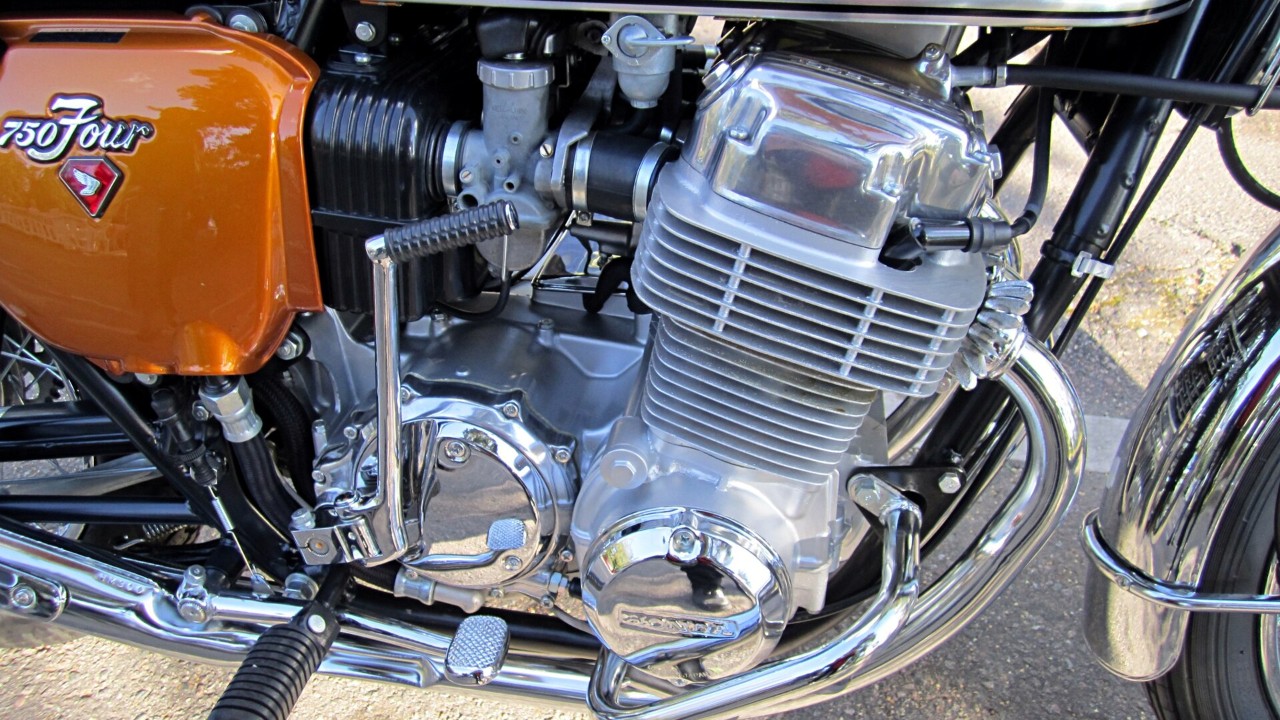
Honda showed the CB750 at the Tokyo show in November 1968 and put it on sale in 1969 for $1,495. Its engine was an air-cooled, transverse inline-four with a single overhead camshaft. It also used dry-sump lubrication, which Honda kept until the 1976 CB750A switched to a wet sump. The first 7,414 engines had cases made by permanent-mould casting before Honda moved to die casting.
The press noticed how carefully Honda had tested it. Cycle World praised the company’s durability testing and called the bike a “masterpiece.” Meanwhile, Cycle magazine called it “the most sophisticated production bike ever.” Over ten years, the line passed 400,000 units, which put a lot of these engines through every kind of weather.
Our take: the Honda CB750 four is the engine that made smoothness and reliability normal in a big motorcycle. Its dry-sump oil system keeps the supply steady, and the simple single-cam layout is easy to live with. In our view, a well-kept SOHC four is one of the safest bets in classic motorcycling. If you buy one, start with a fresh oil change and a look at the cam chain, because maintenance history matters more than mileage.
2. Kawasaki KLR650 single

Kawasaki introduced the KLR650 in 1987. Its 652cc single is liquid-cooled, with double overhead cams, four valves and dual counterbalancers to calm the vibration. It made 36.5 horsepower at 6,100 rpm and 35.2 lb-ft of torque at 4,600 rpm. Those modest numbers tell you the engine was built for long life rather than lap times.
The first generation ran from 1987 through 2007 with only small changes, such as reinforced engine cases in 1988 and crank and clutch updates in 1996. In addition, the U.S. military uses KLR650s modified by Hayes Diversified Technologies to burn diesel and other military fuels. Dr. Gregory Frazier also rode the KLR around the world in 2001 and 2002. That same year, 2001, Kawasaki moved assembly from Japan to Thailand.
Our take: the KLR engine is the definition of unglamorous toughness. It is heavy, slow and almost boring, and that’s exactly why riders trust it far from home. If you’re buying an older one, ask whether the idler-shaft lever, which owners call the “doohickey,” has been upgraded. It is a well-known upgrade, and a cheap one next to the alternative.
3. Suzuki DR650SE single
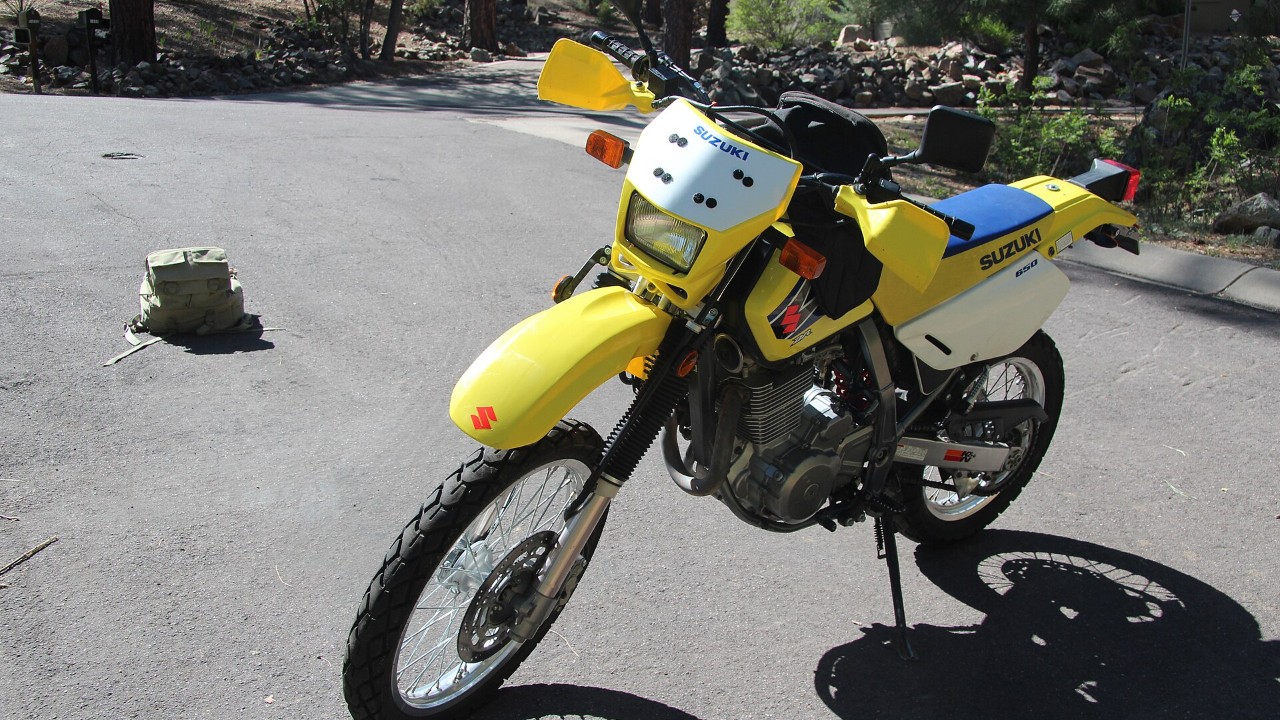
Suzuki has built the DR650 since 1990. The DR650SE arrived in 1996 with an electric starter and a reworked engine that gave up some power for smoother delivery. Its 644cc single is a four-stroke with a single overhead cam and four valves. It is cooled by air and oil rather than by water, and it breathes through a 40mm Mikuni carburetor.
That simplicity has kept it going. As of 2023, the bike was still in production after 27 years. It also became the best-selling motorcycle over 500cc in New Zealand. On the other hand, emissions rules pushed it out of Europe in 2001. New safety rules then ended Australian sales in late 2021.
Our take: the DR650’s air-and-oil-cooled engine has no radiator to puncture on a rocky trail and no fuel injection to diagnose by a campfire. For riders who travel far from dealers, that’s a real advantage. In our view, it’s one of the easiest big singles to keep alive anywhere. If you buy one, budget for basic carburetor care, since a clean carb is the key to an easy start.
4. Honda XR650L RFVC single
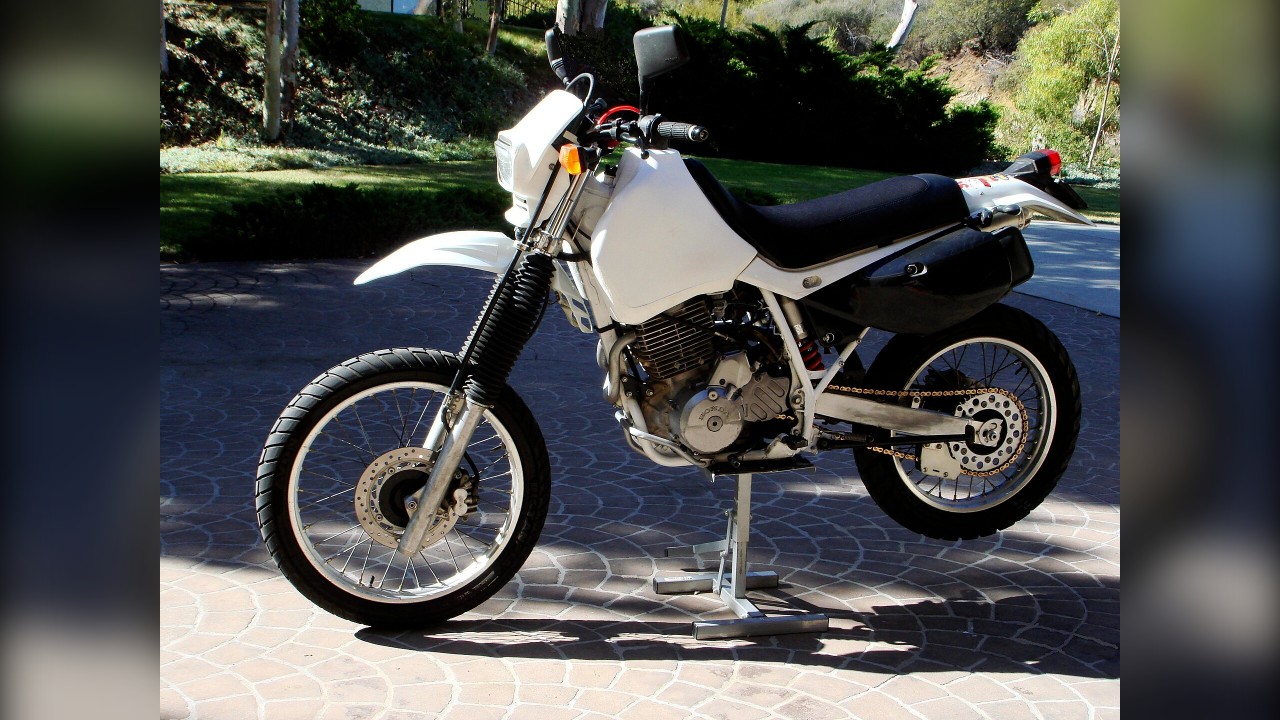
Honda released the XR650L in 1992 as a 1993 model, and it has barely changed since. Its 644cc single is air-cooled, with a single overhead cam and a dry-sump oil system. Honda took the engine from the NX650 Dominator. It uses Honda’s RFVC layout, short for Radial Four-Valve Combustion, which places the valves in a radial pattern around the chamber.
Honda paired that proven engine with a chassis derived from the off-road-only XR600R. As a result, the XR650L became a road-legal dual-sport bike with real dirt credentials. Meanwhile, the basic design has stayed in production for more than three decades, with remarkably few updates along the way.
Our take: the XR650L engine proves that an old design can still be the right design. Air cooling, a dry sump and a carburetor keep repairs simple. To us, that is exactly what you want when the nearest shop is a day’s ride away. On the other hand, like most big singles, it isn’t especially smooth on long highway runs. If you want one for travel, budget for a comfortable seat, because the engine will likely outlast your patience.
5. BMW R80 G/S boxer twin
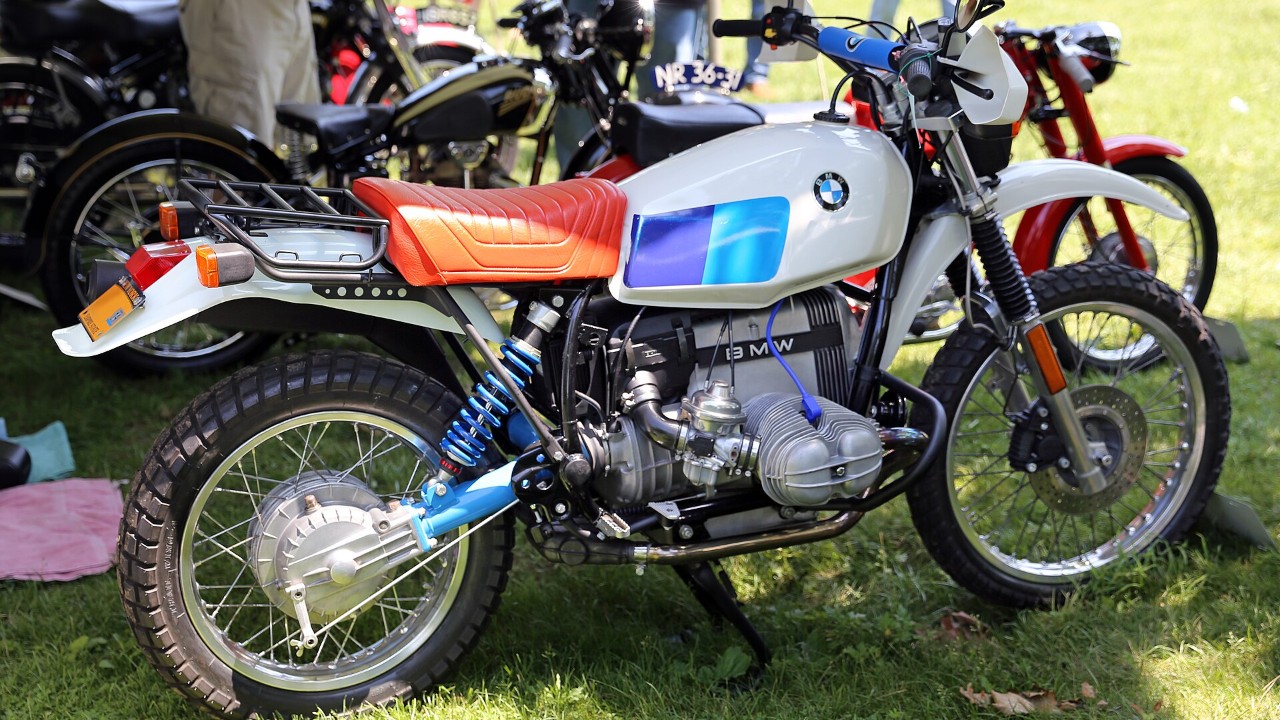
BMW launched the R80 G/S to the press in Avignon, France, in September 1980. Its 798cc boxer twin came from the R80 roadster and made 50 horsepower. According to Hagerty’s history of the G/S, the bike weighed 368 pounds dry. BMW hoped to sell about 3,000 in the first year and eventually built more than 6,500.
The boxer engine proved itself in the hardest race of all. G/S-based machines won the Paris-Dakar Rally four times in five years. Hubert Auriol won in 1981 and 1983, and Gaston Rahier won in 1984 and 1985. Moreover, the bike’s success helped revive BMW’s motorcycle division, which had nearly been shut down in the late 1970s.
Our take: the R80 G/S engine shows how well a simple, air-cooled twin can handle sand, heat and distance. The cylinders stick out into the breeze, and the shaft drive skips chain maintenance. It’s often considered the first adventure bike, and we’d agree it earned that title. If you buy one, check the shaft drive and the final drive splines, since those are the parts that take the abuse.
6. Royal Enfield Bullet 350 single
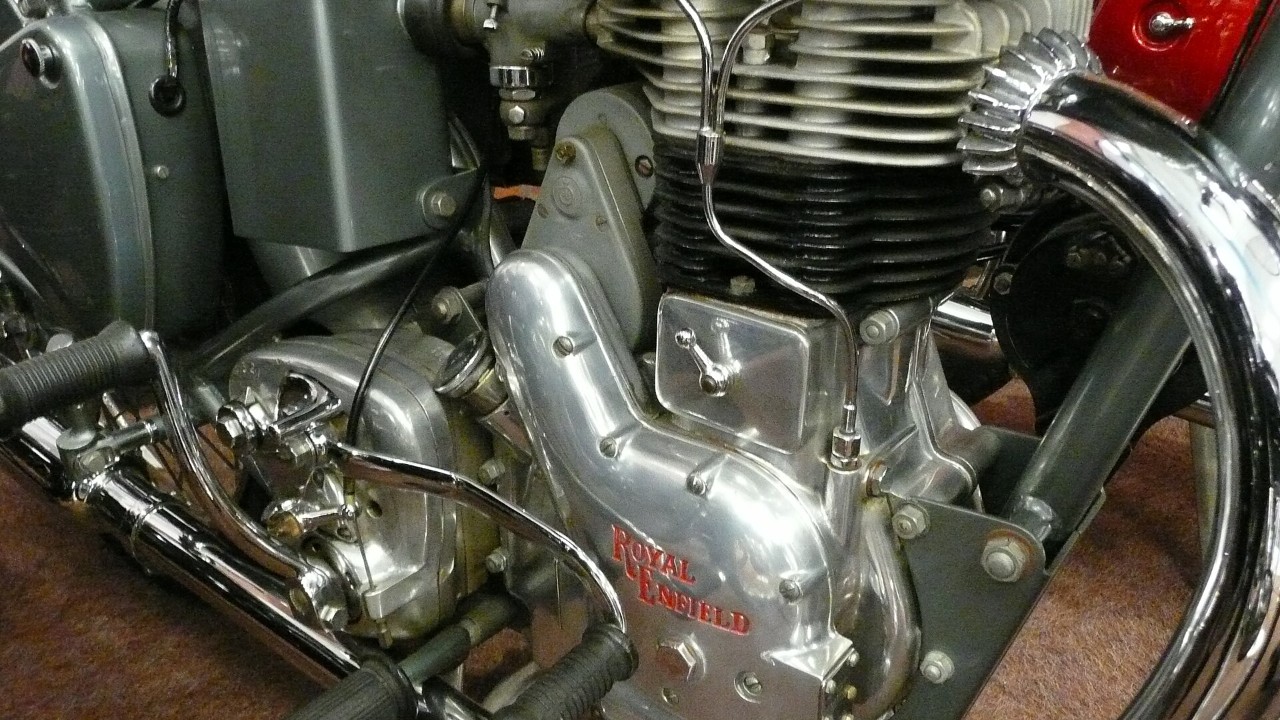
The Bullet first appeared in 1932, and it has stayed in continuous production ever since. That makes the Bullet one of the longest-running motorcycle names still in production. The 350’s single-cylinder four-stroke displaces 346cc. A 499cc version existed, too. Earlier, a Bullet prototype won a trophy at the 1948 International Six Days Trial, an early sign of its grit. In fact, the Indian Army ordered Bullets in 1949 for border patrol duty.
Then the story moved east. In 1955, the British factory in Redditch began sending 350cc Bullets to India in kit form. Enfield India then built complete motorcycles under licence in Madras. Over time, the Madras plant produced more than 20,000 Bullets a year.
Our take: the Bullet’s engine isn’t fast, and it doesn’t pretend to be. Instead, it’s slow-revving and simple, and to us it feels like an engine you could fix with basic tools. That’s a big reason it has survived decades of heavy use, and few designs have proved their staying power so plainly. If you buy an older one, expect regular maintenance, because the design rewards owners who check the oil often.
7. Honda Gold Wing GL1000 flat-four
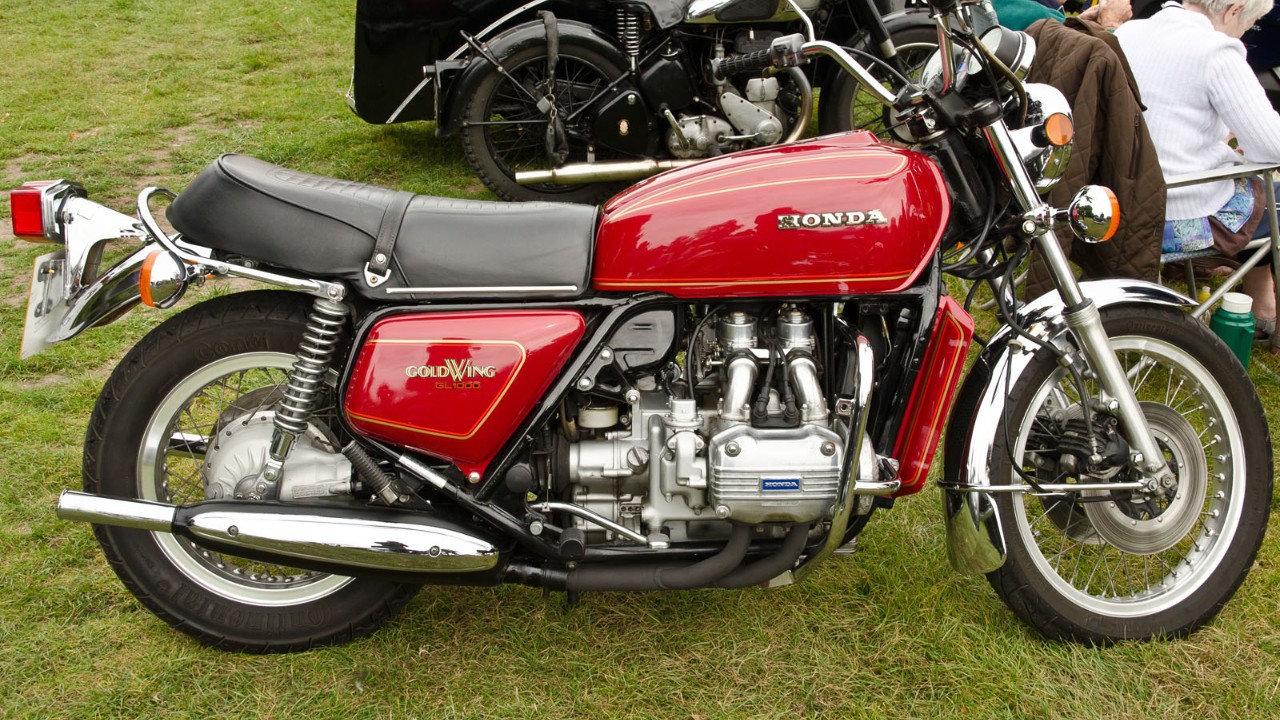
Honda showed the GL1000 Gold Wing to dealers in Las Vegas in September 1974. It then made its public debut at the Cologne show the following month. The engine was a 999cc liquid-cooled flat-four with belt-driven overhead cams. Shaft drive took the power to the rear wheel, and four 32mm Keihin carburetors fed it.
Like the Honda CB750 before it, the Gold Wing showed Honda’s habit of engineering out the flaws of big engines. A gear-driven generator spun in the opposite direction to cancel the engine’s torque reaction. The real fuel tank sat under the seat to keep weight low. The whole bike weighed 584 pounds dry. With the fuel moved down, the dummy tank up top held the radiator overflow, the electrics and the air filter instead.
Our take: the GL1000 engine was built for long days and long miles, and buyers responded. About 13,000 sold in the U.S. in 1975, and over 97,000 sold there through 1979. In our view, it’s one of the most durable touring engines of its era. If you buy one, replace the cam belts unless there’s a record of it, since rubber belts age even when a bike sits.
8. Honda Super Cub C100 engine
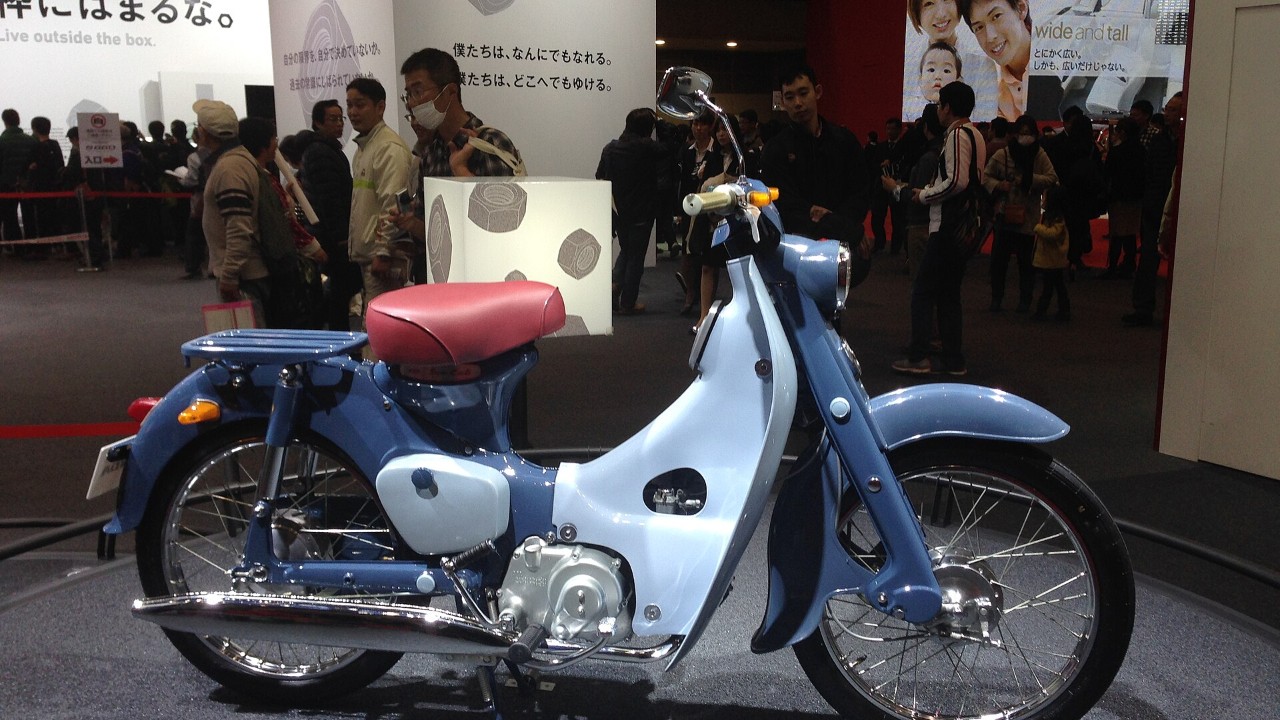
The first Super Cub, the C100, went into mass production in August 1958. Its engine was a 49cc air-cooled single with overhead valves, rated at 4.5 horsepower. At the time, most small bikes used two-strokes. Honda’s 100-million announcement describes this four-stroke as “highly economical and durable.” A centrifugal clutch also meant riders never needed a clutch lever.
That combination made the Super Cub easy for anyone to ride and hard to break. Production first spread overseas in 1961, when Taiwan began building them. Today, Honda builds Super Cub models at 16 plants in 15 countries and sells them in more than 160. In 1983, the Super Cub 50 Super Custom also reached 180 kilometers per liter in a steady 30 km/h test.
Our take: no engine on this list has worked harder in more places. In our view, it has carried goods, families and deliveries through more climates than any other motorcycle engine. If you want proof of toughness, the production count is it. In October 2017, cumulative Super Cub production passed 100 million units, and Honda marked the milestone at its Kumamoto factory.
More from Fast Lane Only