Chevrolet built its reputation on cars that were cheap, tough and easy to fix. Yet the bowtie also took real risks, and the Chevrolet Corvair is only the most famous example. Over nine decades, Chevy tried independent front suspension, all-steel wagons, rear engines, turbochargers, plastic bodies and plug-in power before most rivals did.
Many of those ideas paid off later, often for other brands. Others arrived so early that buyers didn’t know what to make of them. As a result, a lot of genuinely clever Chevrolets have faded from memory, overshadowed by the Bel Airs, Camaros and Corvettes everyone remembers.
These are our picks for 12 forgotten Chevrolets that were years ahead of the competition. Calling them “ahead” is our opinion. The engines, firsts and production figures that back each choice come from period specifications and model histories.
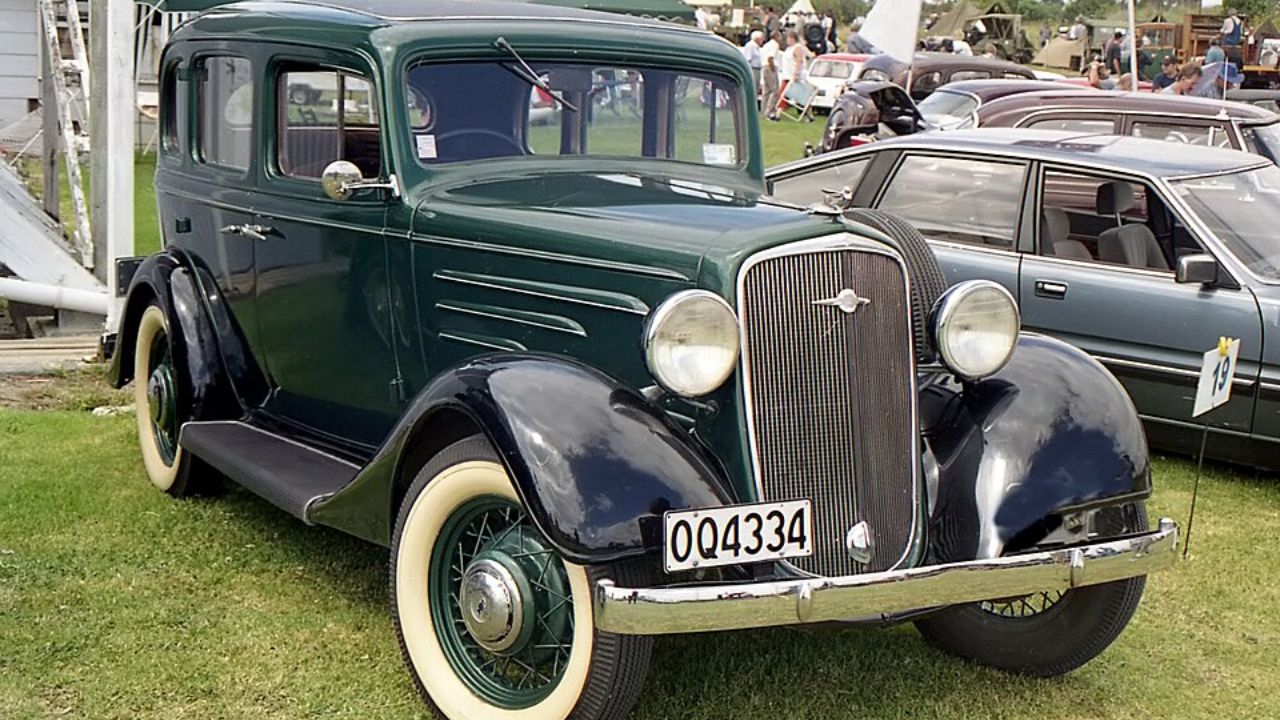
1. 1934 Chevrolet Master Deluxe sedan
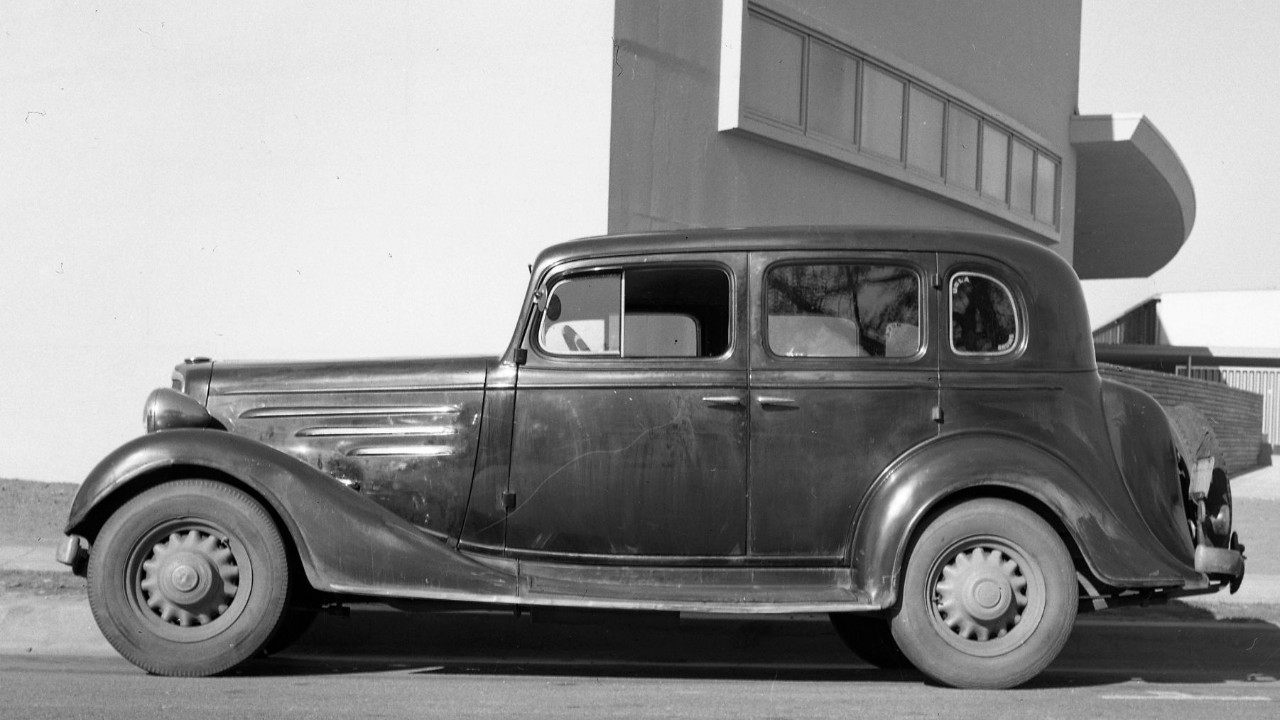
The 1934 Master Deluxe belonged to Chevrolet’s Series DA, and it brought a big change up front. GM’s new “Knee-Action” independent front suspension used trailing arms and coil springs instead of a solid axle. That was a sophisticated setup for a low-priced car in the middle of the Depression.
The engine also improved. Chevrolet’s 206-cubic-inch “Stovebolt” six now made 80 hp. In other words, a Chevy buyer got a smoother ride and more power without paying luxury-car prices.
In our view, the 1934 Master Deluxe sedan deserves more credit for bringing a premium idea to ordinary drivers. Today, independent front suspension is standard on almost every car. Back then, it was a reason to pick Chevrolet over the competition. Knee-Action was a GM idea, yet Chevrolet put it within reach of buyers on a tight Depression budget. If you want one, have the Knee-Action units inspected by someone who knows the design before you buy. Then budget for proper rebuilds, because a sorted front end is what makes this car worth driving. After that, you’ll have a prewar sedan that rides like a far newer car.
2. 1936 Chevrolet Suburban
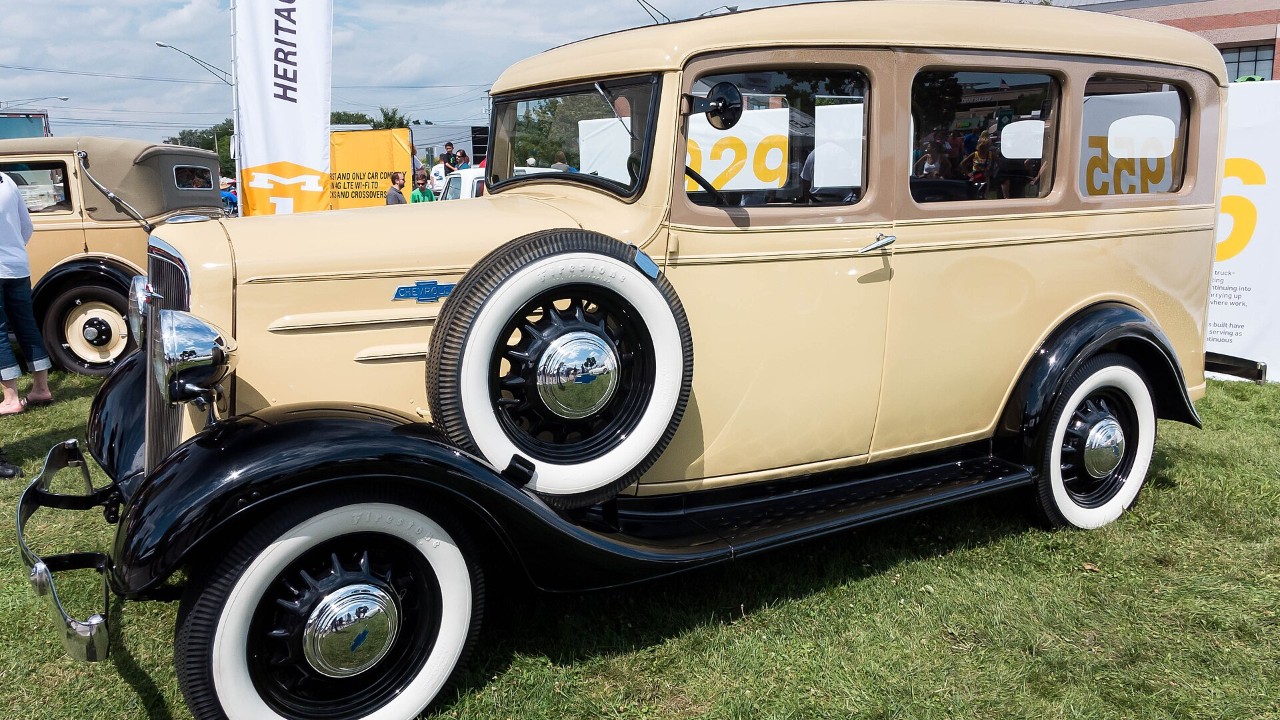
Chevrolet started selling the Carryall Suburban for 1935, and it was unlike any wagon of its day. Instead of the usual wooden wagon body, the Suburban had an all-steel body on a truck chassis, which made it one of the first metal-bodied wagons. It shared its frame and front sheet metal with the half-ton pickup of the same year.
According to Carscoops’ history of the Suburban, the original seated eight and used a straight six rated at 60 hp. Chevrolet calls the Suburban the longest-running nameplate in the industry. With the second-row seat folded and the third row removed, it offered 115.1 cubic feet of cargo space. A Chevrolet marketing executive even claimed the Suburban created the sport utility vehicle.
The 1936 truck in our photo is a second-year example, and it shows how simple the idea was. Take a sturdy pickup, add a steel box with seats, and you have a vehicle for work and family. We’d argue that’s the template for every full-size SUV sold today. Our tip: early Suburbans were working vehicles, so look for solid floors and an unbent frame before you worry about trim.
3. 1950 Chevrolet Styleline Deluxe sedan
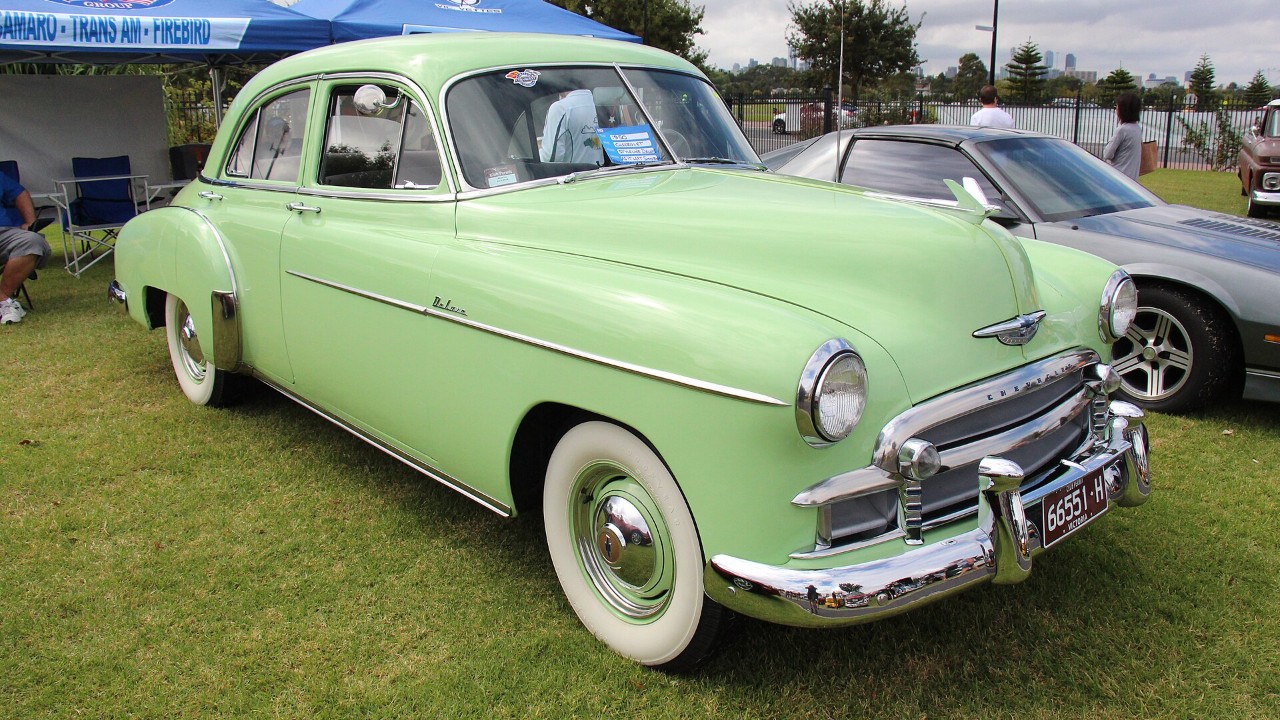
For 1950, Chevrolet added the two-speed Powerglide automatic to its lineup. At first, buyers could get it only in Deluxe and Bel Air models. Chevrolet paired it with a bigger 235.5-cubic-inch six rated at 105 hp. The bigger engine also ran a higher 6.7:1 compression ratio. By comparison, the standard 216.5-cubic-inch six with the three-speed manual made 92 hp.
That move put a self-shifting transmission within reach of the low-price market. The Styleline sedans were also hugely popular. In 1951, Chevrolet built more than 780,000 Styleline notchback sedans, compared with fewer than 200,000 fastback Fleetlines. Meanwhile, the Bel Air hardtop coupe joined the Deluxe range for 1950.
The 1950 Styleline Deluxe sedan in our photo is exactly the kind of car people walk past at shows. That’s a shame, in our view. Powerglide put two-pedal driving in a car that ordinary families could afford. If you buy one, find a car with Powerglide and the 235 together, because that’s the combination that tells the story. Also, check the transmission for slipping on the test drive.
4. 1961 Chevrolet Corvair Lakewood wagon
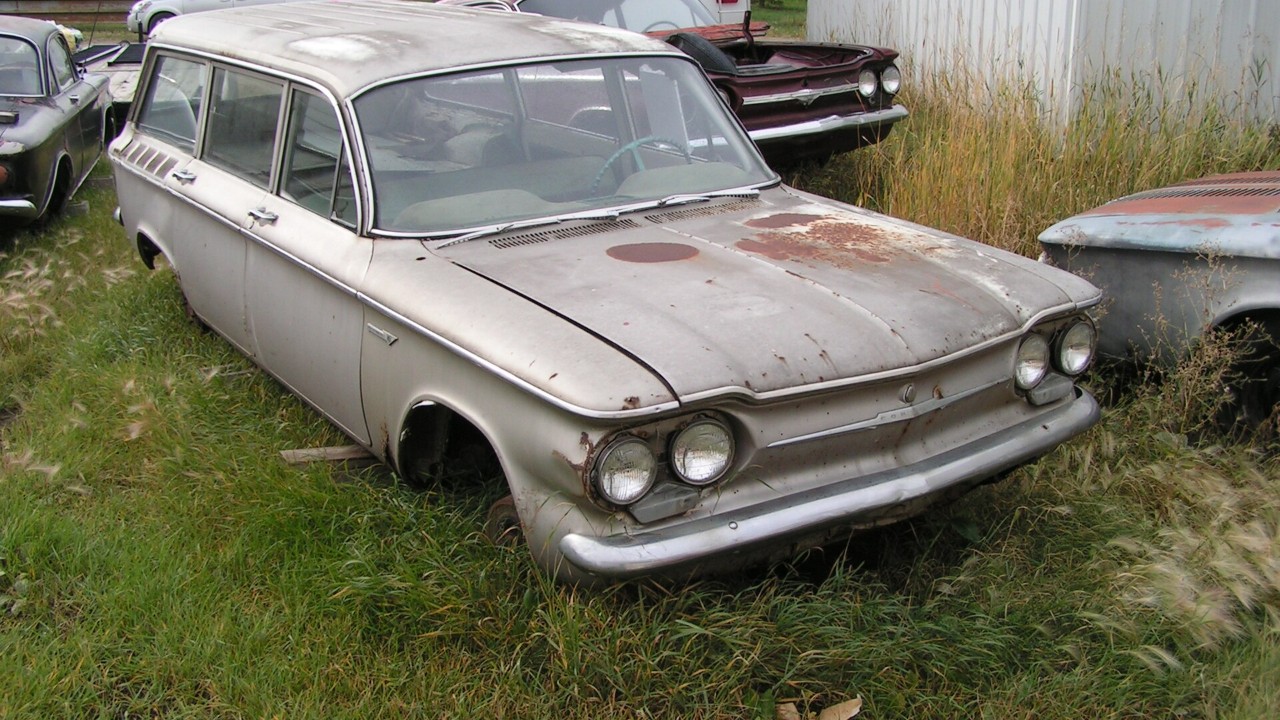
The Chevrolet Corvair already broke the rules with an air-cooled flat six mounted in the back. For 1961, Chevy stretched that idea into a station wagon called the Lakewood. Because the engine sat low under the rear floor, the Lakewood offered cargo space at both ends.
Chevrolet quoted 68 cubic feet of cargo room in total. That figure included 58 cubic feet in the main compartment and another 10 in the front trunk. In our view, that was remarkable packaging for an early-1960s compact. However, the Lakewood name lasted only one season. Chevrolet dropped it for 1962. Also, the flat six grew from 140 to 145 cubic inches for 1961, so the Lakewood got the larger engine from the start.
That short run is why the Lakewood is one of the most forgotten Corvairs of all. In our opinion, it was a genuinely clever family car. It offered the space of a larger wagon in a compact footprint. If you find one, check the engine’s cooling shrouds and seals for oil leaks, and confirm the rear hatch sits flush.
5. 1962 Chevrolet Corvair Monza Spyder
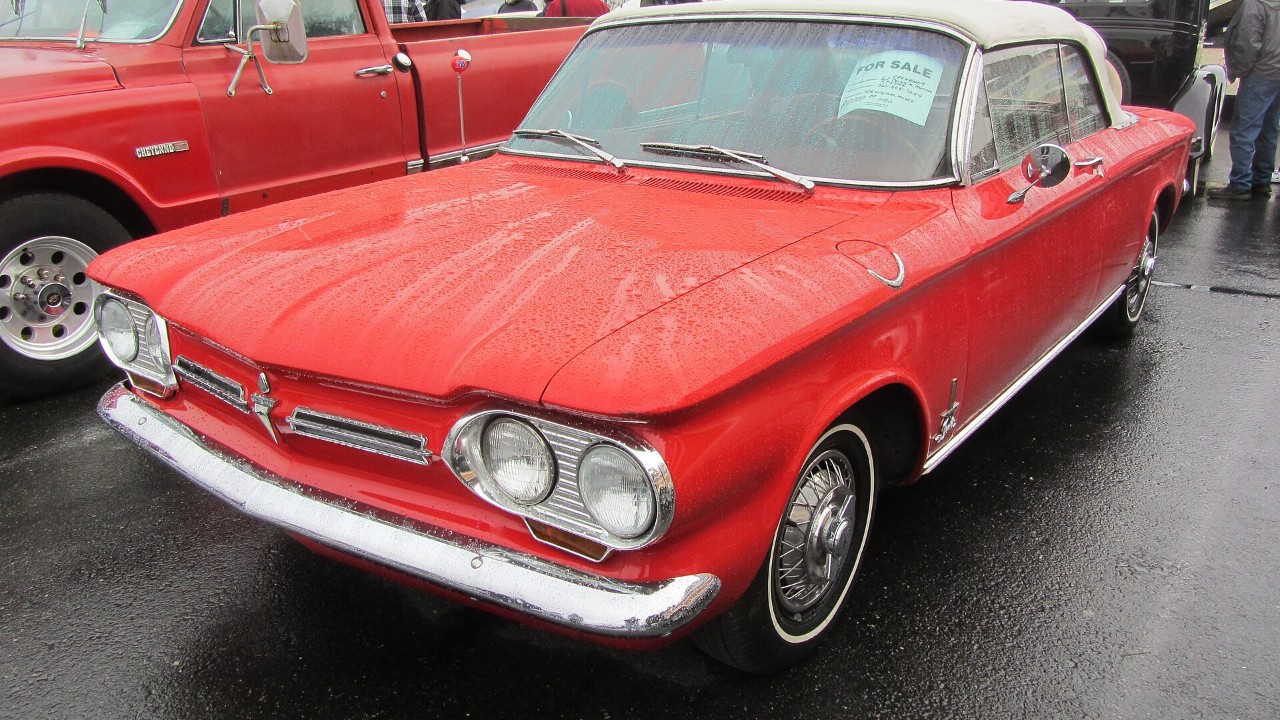
For 1962, Chevrolet offered the Monza coupe and convertible with a turbocharged option called the Spyder. The turbo flat six made 150 hp. That made the Corvair the second production car with a factory turbocharger, right after the Oldsmobile F-85 Turbo Jetfire.
The cockpit also matched the hardware. The Spyder package added a multi-gauge cluster with a tachometer, intake manifold pressure gauges and a cylinder head temperature gauge. In other words, Chevy gave a compact car the instruments of a sports car. Motor Trend had already named the Corvair its Car of the Year for 1960. The Spyder made it clear this was the enthusiast’s Corvair.
Turbocharging is now everywhere, from pickups to economy cars. In 1962, though, it was exotic, and Chevrolet put it in a car ordinary buyers could afford. That’s why we rank the Corvair Monza Spyder among the most forward-thinking Chevys ever built. Our buyer tip: early turbo setups need careful maintenance, so look for a car with a rebuilt turbocharger and good records. Also, check the rear suspension, since the early swing-axle design drew criticism for its handling.
6. 1962 Chevrolet Corvair Rampside pickup
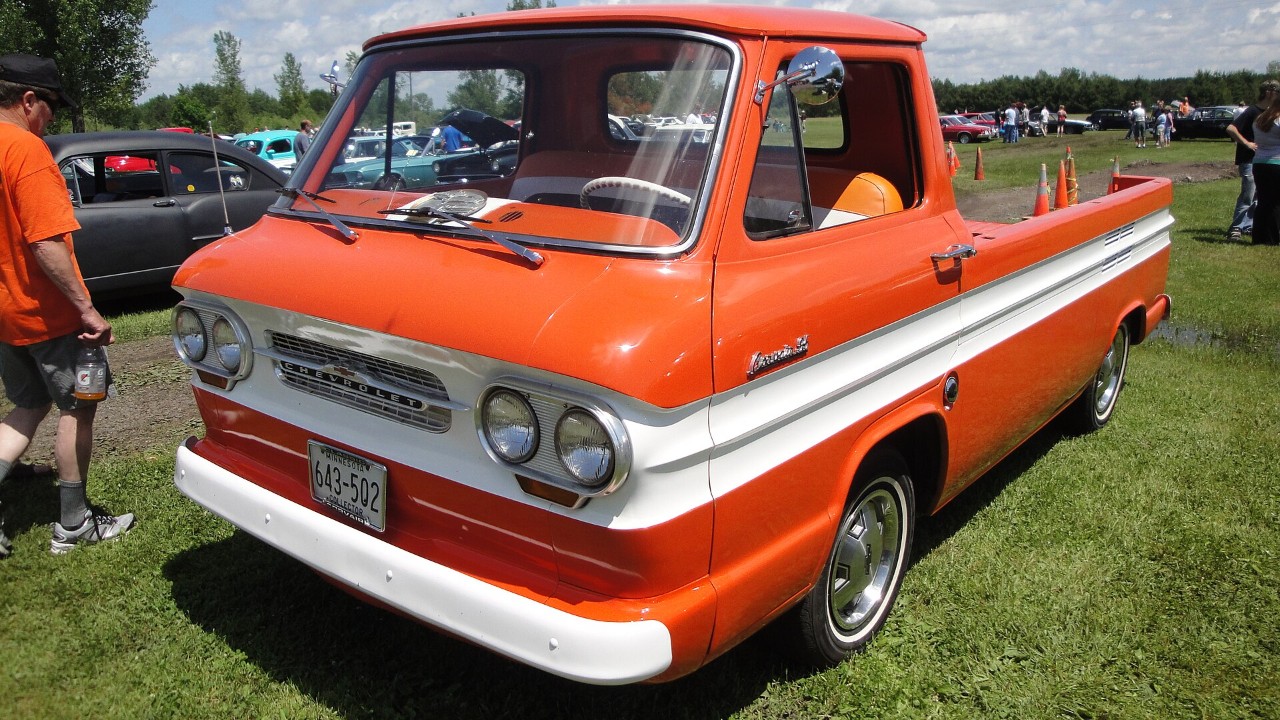
The Chevrolet Corvair 95 Rampside was a rear-engined pickup with a trick up its sleeve. A ramp hinged at the bottom of the cargo bay folded down on the right side. Rubber trim along the edge protected the paint during loading, and a rear tailgate was there too. By contrast, the Loadside version offered only the tailgate.
According to Silodrome’s profile of the Rampside, the Bell Telephone Company used them to roll cable drums on and off. The same report says Chevrolet built just 4,102 Rampsides for 1962. Power came from a 145-cubic-inch air-cooled flat six rated at 80 hp.
We love the Rampside because it solved a real problem in an original way. Instead of lifting heavy loads over a tall bed side, you simply wheeled them up the ramp. In our view, it remains one of the cleverest pickup beds ever sold. Even so, GM stopped building the Rampside after 1964. Our advice: inspect the ramp hinges and the bed floor, because years of hard use often left them bent or rusted.
7. 1964 Chevrolet Corvair Greenbrier Sportswagon
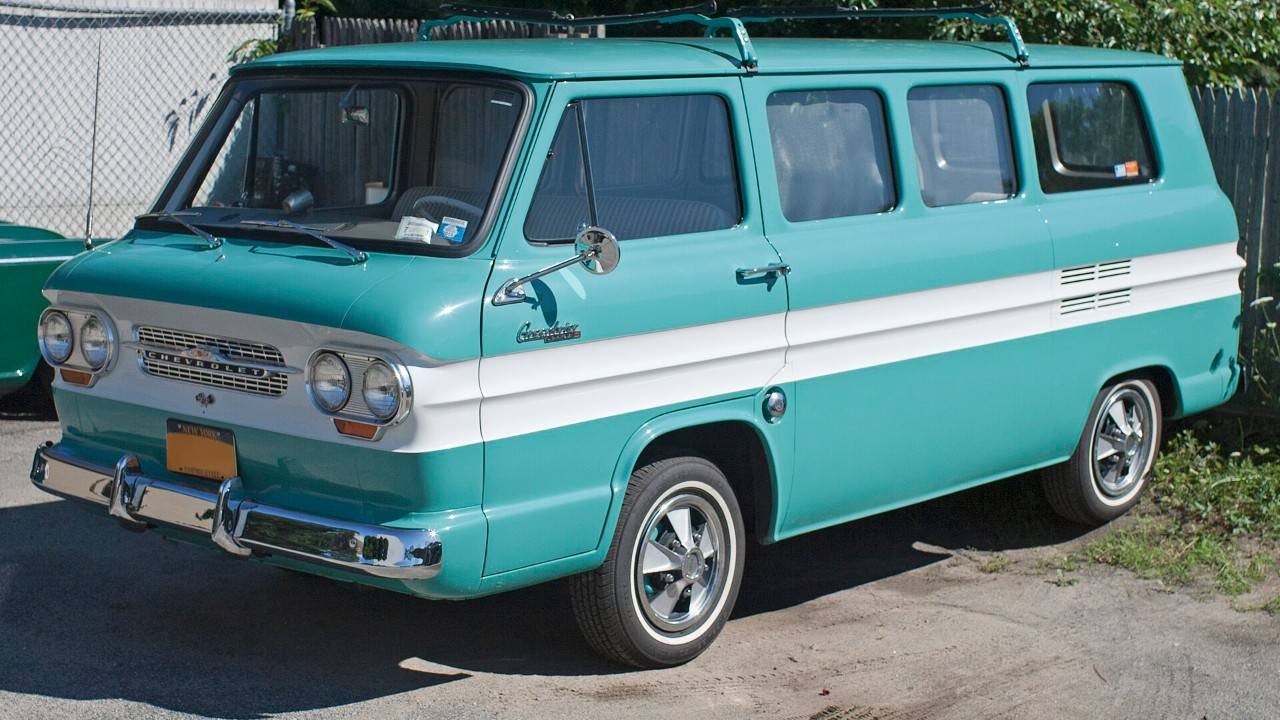
The Greenbrier was the passenger version of the Chevrolet Corvair 95 line, which Chevrolet built from 1961 to 1965. With the optional third-row seat, it carried nine people. Like the Rampside, it put its air-cooled flat six at the back under a slightly raised floor, leaving the front-seat passengers more room.
The 1964 model in our photo got a bigger engine. Displacement grew to 164 cubic inches that year, raising output to 95 hp. By 1965, the Greenbrier was the only Corvair 95 model left. Chevrolet kept it mainly for fleet orders and built just 1,528 for that final year. By then, Chevy had already moved to a front-engined, water-cooled design with the 1964 Chevy Van.
Today, everyone remembers the Volkswagen Bus. However, Chevrolet had a nine-passenger, rear-engined American van on sale at the same time, with a six-cylinder engine. In our opinion, the Greenbrier was the more practical vehicle for many American families. If you’re shopping, look for a complete interior with all three rows of seats, since those are hard to replace. Also, check the floor and sills for rust.
8. 1971 Chevrolet Vega Panel Express
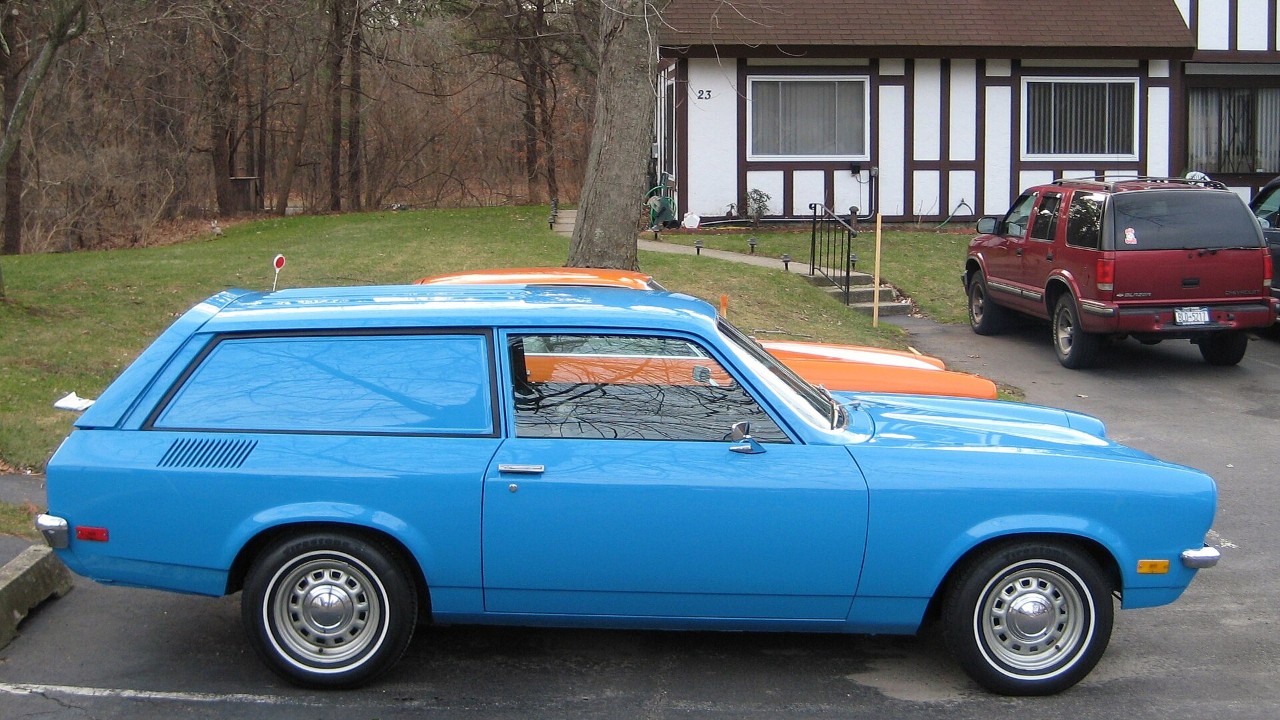
The Vega went on sale on September 10, 1970, as a 1971 model. Its 2.3-liter four had a lightweight aluminum-alloy block, rated at 90 hp in base form. Motor Trend named the Vega its Car of the Year for 1971. Chevrolet even shipped Vegas in special Vert-A-Pac rail cars that held 30 cars each, compared with 18 in a regular rack. GM kept those rail cars in service until after the 1977 model year.
The Panel Express was the delivery version of the Vega wagon. Steel panels replaced the rear side glass, and there was an enclosed storage area under the load floor. Chevrolet offered it from 1971 through 1975.
Not every idea in the Vega worked, of course. Early cars rusted badly, and the aluminum engine was linked to overheating and valve-stem seal leaks. Still, we think a small, economical panel van was a smart idea for its time. That’s why we think the Panel Express deserves a second look. Our buyer advice: find one with a rebuilt or replaced engine, and check the front fenders, which Chevrolet replaced by the thousands under warranty on 1971 to 1974 models.
9. 1980 Chevrolet Citation X-11
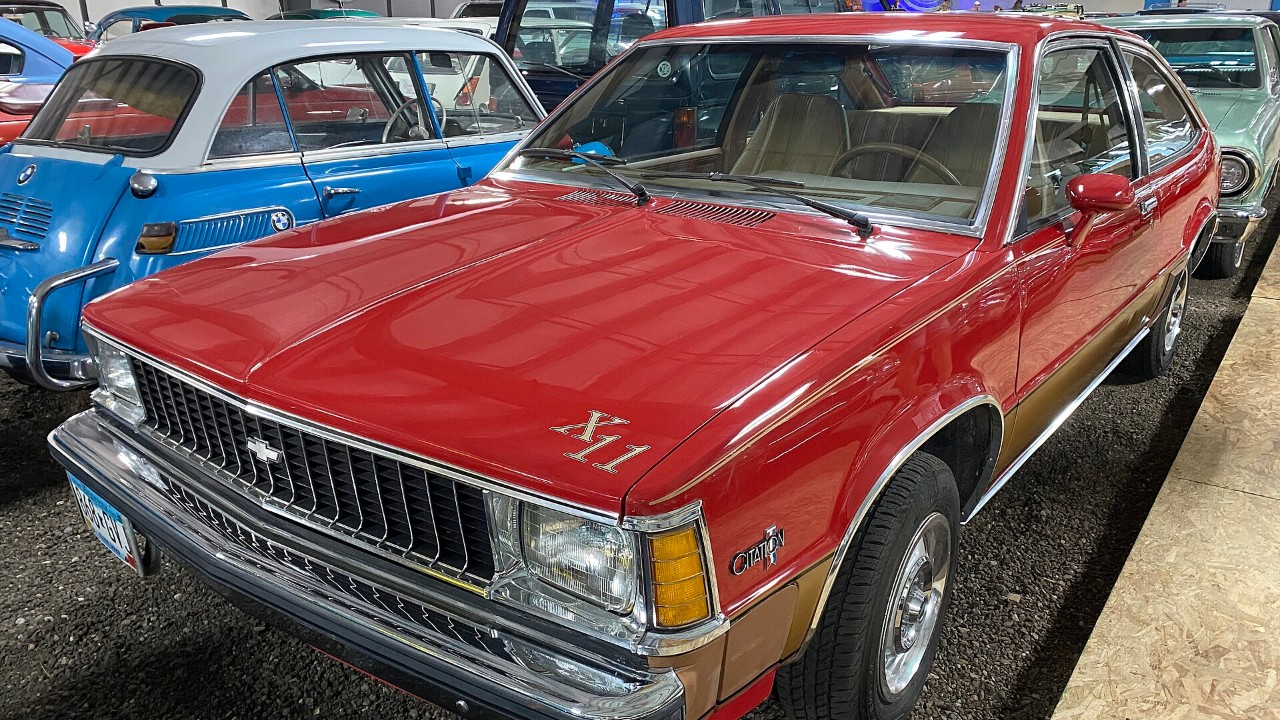
The Citation arrived in April 1979 as a 1980 model, and it was the first front-wheel-drive Chevrolet. Buyers also flocked to it. Chevrolet sold more than 810,000 in that first year, making it the best-selling car in America. Motor Trend also named it Car of the Year for 1980.
The X-11 package added the sporty side. For 1980, it offered a 2.8-liter V6 rated at 115 hp, along with stabilizer bars, a retuned sport suspension, a trunk spoiler and a full set of engine gauges. For 1981, a high-output V6 raised the rating to 135 hp. Buyers could also pair the 1980 X-11 package with a 90 hp 2.5-liter four.
The Citation’s story didn’t end well. In 1980 alone, Chevrolet recalled about 225,000 cars for a transmission hose linked to underhood fires, and quality complaints followed. In 2009, Car and Driver even criticized Motor Trend’s award, citing poor build quality. Even so, we think the X-11 deserves credit as an early front-drive American performance car. Our tip: buy the best-documented car you can find, and make sure every recall repair was done. Chevrolet dropped the Citation after 1985.
10. 1996 Chevrolet Lumina APV
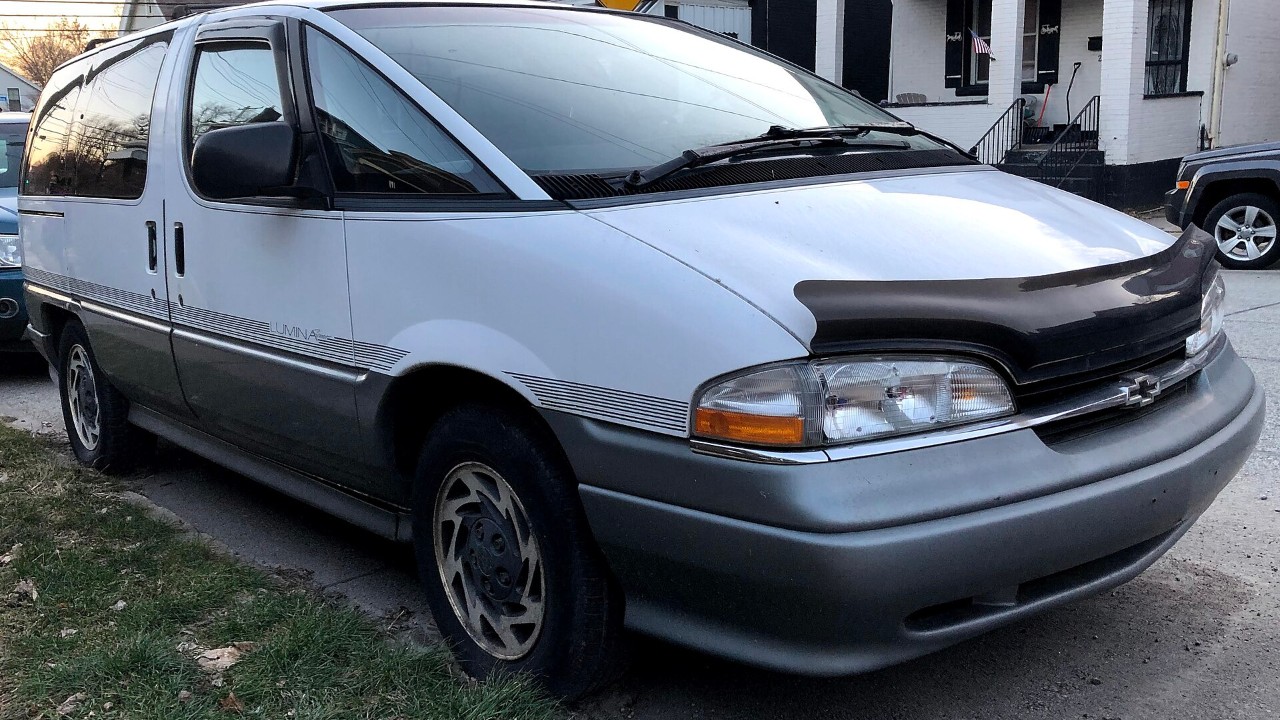
Chevrolet sold the Lumina APV from 1990 to 1996, and it was the first front-wheel-drive Chevy minivan. Underneath, a galvanized steel spaceframe carried body panels made of composite plastic. That meant the outer skin couldn’t rust, a real advantage in salt-belt states.
The van also changed over its life. For 1994, Chevrolet shortened the long front overhang by nearly three inches and fitted a new hood, a larger grille and bigger headlights. For 1996, the final year, a 3.4-liter V6 rated at 180 hp replaced both earlier engines. Those had been a 3.1-liter V6 rated at 120 hp and a 3.8-liter V6 rated at 170 hp.
Its pointed styling made it easy to mock at the time. However, the idea of a rust-proof composite body on a steel frame was years ahead of most family vehicles. That’s why we think a late 1996 Lumina APV, with its stronger V6, is the one to find. The final vans rolled off the line on June 27, 1996. Our buyer advice: check the steel spaceframe underneath for corrosion, since the plastic panels can hide it.
11. 2002 Chevrolet Avalanche Z71
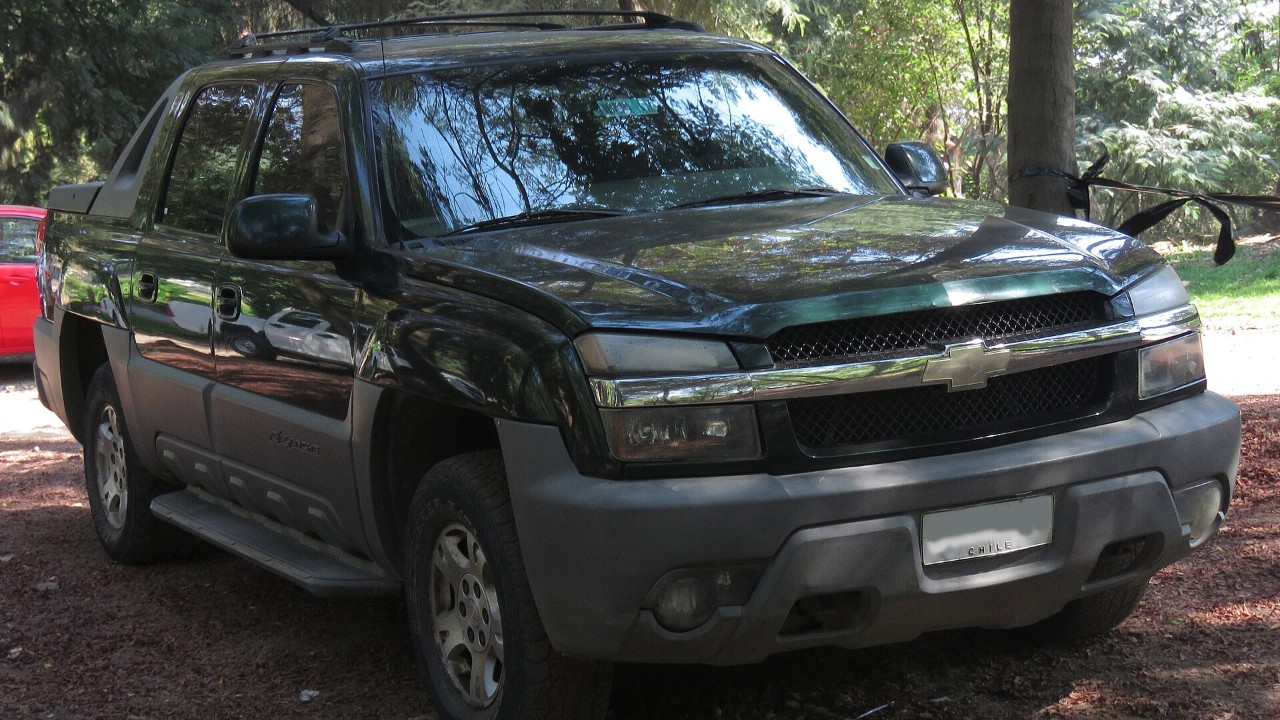
Chevrolet launched the Avalanche in September 2001 as a 2002 model. Its big idea was the Midgate, a panel behind the second row that folds down to lengthen the bed. Fold it, and a crew-cab pickup turns into a long-bed truck in seconds.
Power came from a 5.3-liter Vortec V8 rated at 285 hp. The Z71 Off-Road package added off-road suspension and GM’s AutoTrac four-wheel-drive system. In addition, first-year trucks wore light gray plastic cladding, a look that made the Avalanche easy to spot. From mid-2003, buyers could even order the truck without cladding. Motor Trend named it Truck of the Year for 2002.
We think the Avalanche was ahead of its time because it blurred the line between SUV and pickup. Today, many trucks offer clever bed and cab tricks. Back then, the Midgate was the whole point of the truck. Our buyer tip: look for a Z71 with its original suspension, since lifted trucks lose that factory balance. Also, check the Midgate seals for leaks, and inspect the cladding for sun fading or cracks. Chevrolet kept building the Avalanche through the 2013 model year.
12. 2011 Chevrolet Volt
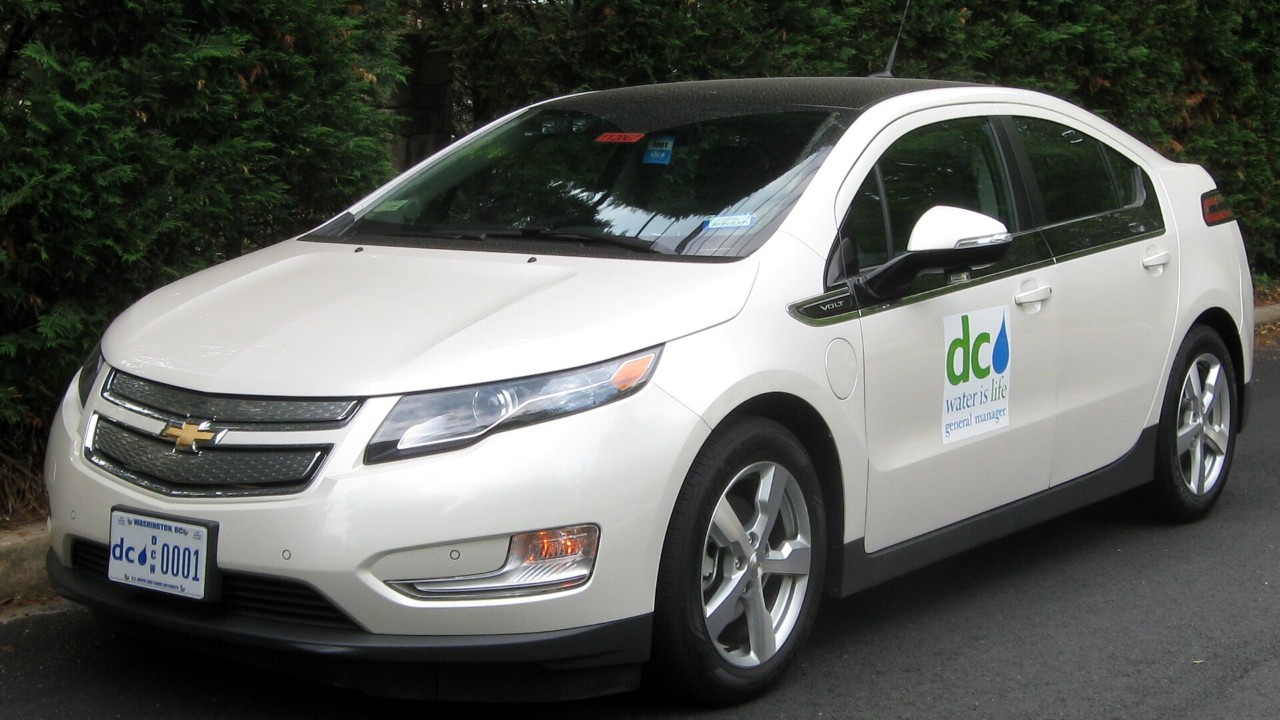
Chevrolet began delivering the Volt to retail customers in mid-December 2010. It carried a 16 kWh battery pack, though engineers allowed only about half of it to be used, to slow wear. Once the battery reached its limit, a 1.4-liter four-cylinder engine drove a generator. That let the car keep going without range anxiety. GM had confirmed that range-extender engine back in July 2008.
After that, the awards came quickly. The Volt won the 2011 Motor Trend Car of the Year and the 2011 North American Car of the Year. In Europe, it shared the 2012 European Car of the Year title with its Opel and Vauxhall Ampera twins.
Plug-in hybrids are common now. In 2011, though, the Volt was a bold bet, and US buyers took home only 7,671 that year. That’s why we see it as the most recent forgotten Chevy that was years ahead of rivals. Our tip: get the battery health checked before buying. Production ended in February 2019, and Chevrolet delivered 157,054 Volts in the US through the end of that year.
More from Fast Lane Only