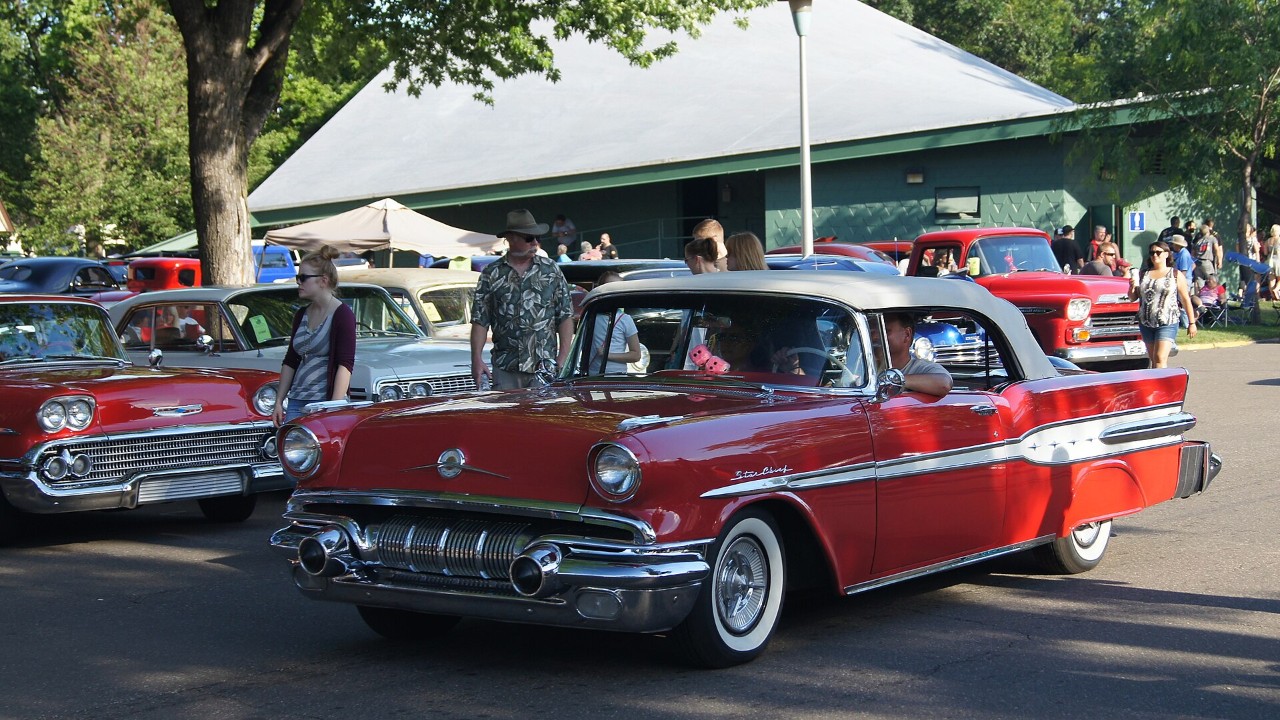
In December 2023, a 1957 Pontiac convertible that would not even start sold for $78,645. It had sat for at least 10 years, and its restoration was described as “driver quality.” Even so, buyers bid it up again and again.
That sale says a lot about Pontiac today. The brand built its last new model, the Vibe, at a California plant that closed during GM’s bankruptcy reorganization. Since then, some Pontiacs have climbed in value while others sit in garages and driveways, treated like old transportation.
These seven are our picks for the Pontiacs we think are worth more than many owners realize. That verdict is our opinion, and value always depends on condition and paperwork. The sale results, production numbers and specs come from auction records, period road tests and the cars’ published histories.
1. 1957 Pontiac Star Chief convertible
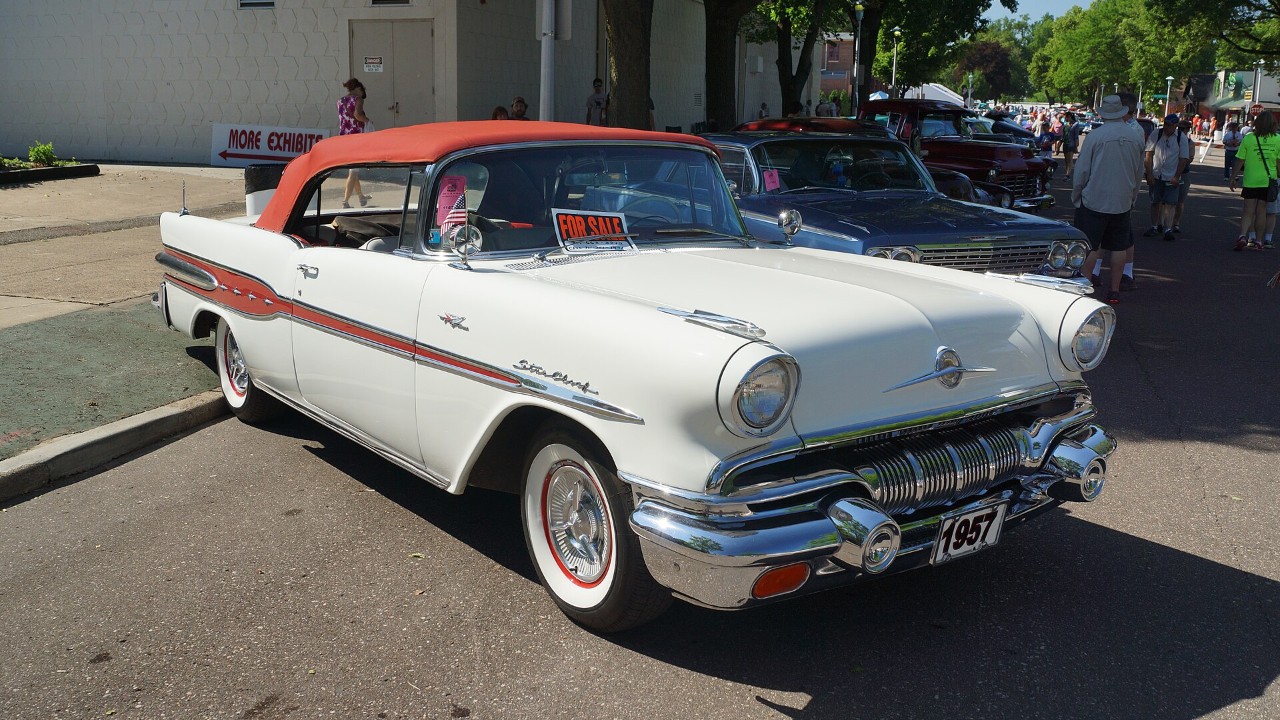
For 1957, the Star Chief dropped Pontiac’s famous silver streaks on the hood in favor of a new “Star Flight” design. Power came from a 347-cubic-inch V8. Meanwhile, that same year, Pontiac introduced the high-performance Star Chief Custom Bonneville, part of a push from its division chief to shake off a stodgy image.
The convertible is where the money is today. The car from our opening was a 1957 Star Chief convertible sold on Hagerty Marketplace for $78,645 in December 2023. It wore Starlight Yellow paint with a power white top. Its 347 V8 carried a four-barrel carburetor, rated at 270 horsepower in the listing. The seller offered it as is, after years in storage.
In our view, that result should make any owner of a solid 1957 Star Chief convertible take a fresh look at insurance. A running car with good documentation is a different proposition from a stalled project. Our take: this is the Pontiac convertible to watch most closely. If you own one, have it appraised properly, and keep every receipt and build record you can find.
2. 1963 Pontiac Tempest LeMans convertible
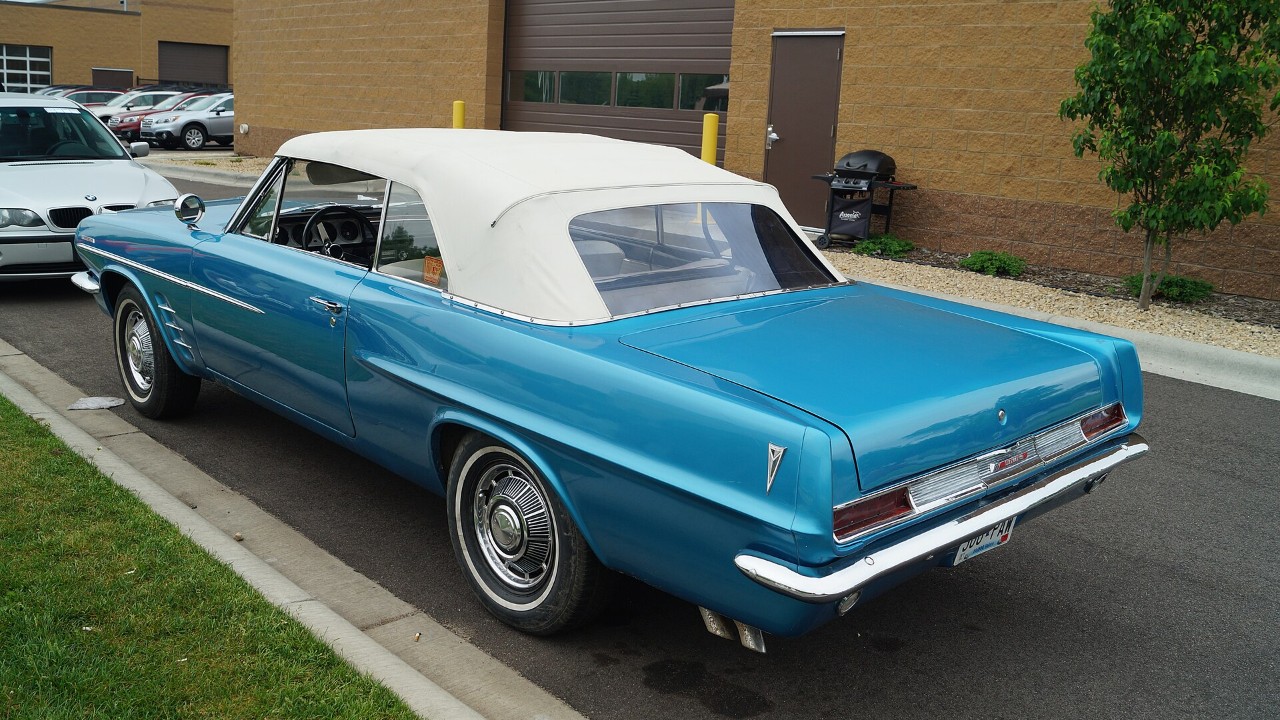
The early Tempest was one of the most daring cars GM ever sold. Its engine sat up front, but the transmission lived at the rear as a transaxle. A flexible torque shaft known as the “rope drive” linked the two. That layout gave the car a near 50/50 weight balance. Motor Trend named the Tempest its 1961 Car of the Year.
The base Trophy 4 engine was literally half of a V8. Pontiac built the 195-cubic-inch four from one cylinder bank of its 389. For 1963, though, buyers could order a 326 V8 that made 260 horsepower and 352 lb-ft of torque in high-compression form. That same year, the LeMans became its own series, and it accounted for nearly half of combined Tempest and LeMans production.
Our take: many people see an early Tempest as an odd compact, yet the engineering is far more interesting than that. We have featured forgotten Pontiacs that collectors are reviving, and this one belongs in that conversation. In our opinion, a 326-powered LeMans convertible is worth far more attention than it gets. It is a rare, clever car that rewards the owner who understands it.
3. 1975 Pontiac Grand Ville Brougham convertible
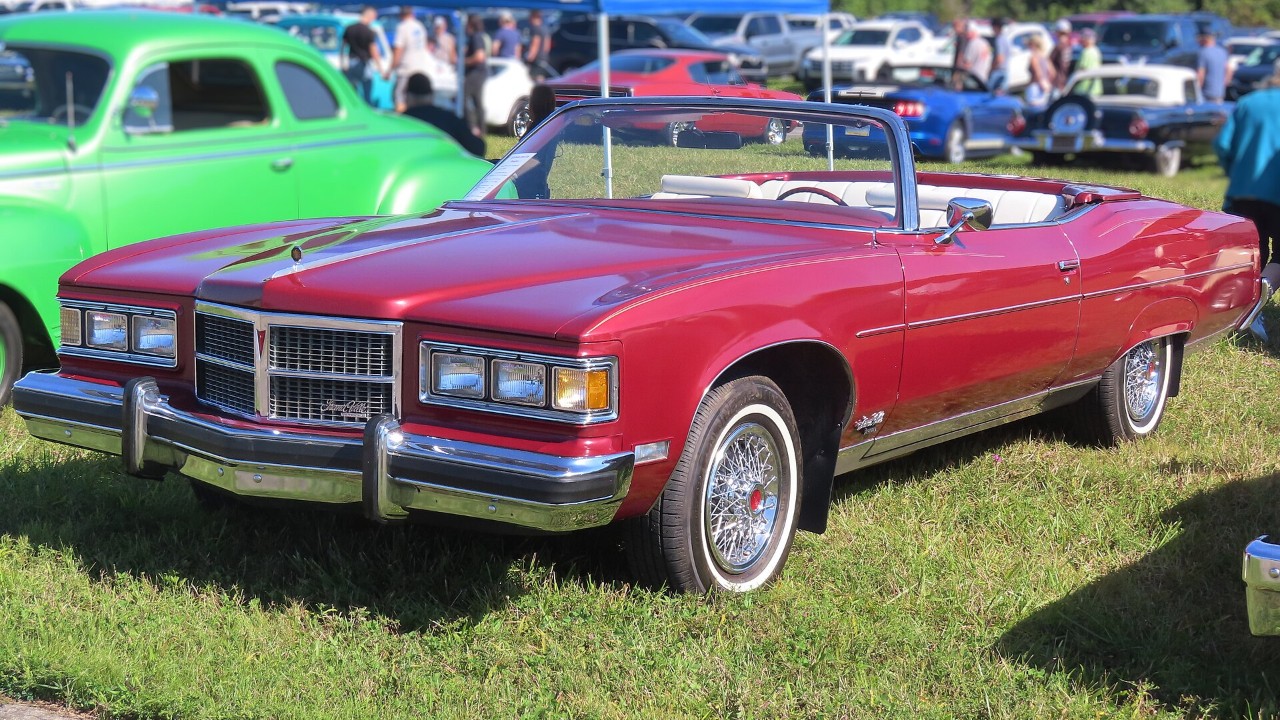
The 1975 model year was the last for the Grand Ville series. It also marked Pontiac’s last convertible until 1983. Pontiac built 4,519 Grand Ville convertibles for 1975. The car was enormous, stretching 226.2 inches long on a 123.4-inch wheelbase. A 400-cubic-inch V8 was standard, while the 455 was optional. In other words, a big V8 came standard either way.
Clearly, buyers are noticing. In November 2025, bidding on a one-owner 1975 Grand Ville Brougham convertible with 9,629 indicated miles reached $26,800 on Hagerty Marketplace. That car wore factory Honduras Maroon paint and a white vinyl bench seat. It had the 400 four-barrel V8 and an automatic. In fact, the auction drew 45 bids before it closed.
In our opinion, many owners treat these cars like used luxury barges. That is a mistake. A 1975 Grand Ville Brougham convertible is the last big drop-top Pontiac built before an eight-year gap. Therefore, owners who keep the original paint, top and paperwork are holding something with a clear place in history. We’d treat a low-mileage example as a collector car, not a cruiser.
4. 1984 Pontiac Fiero Indy Pace Car
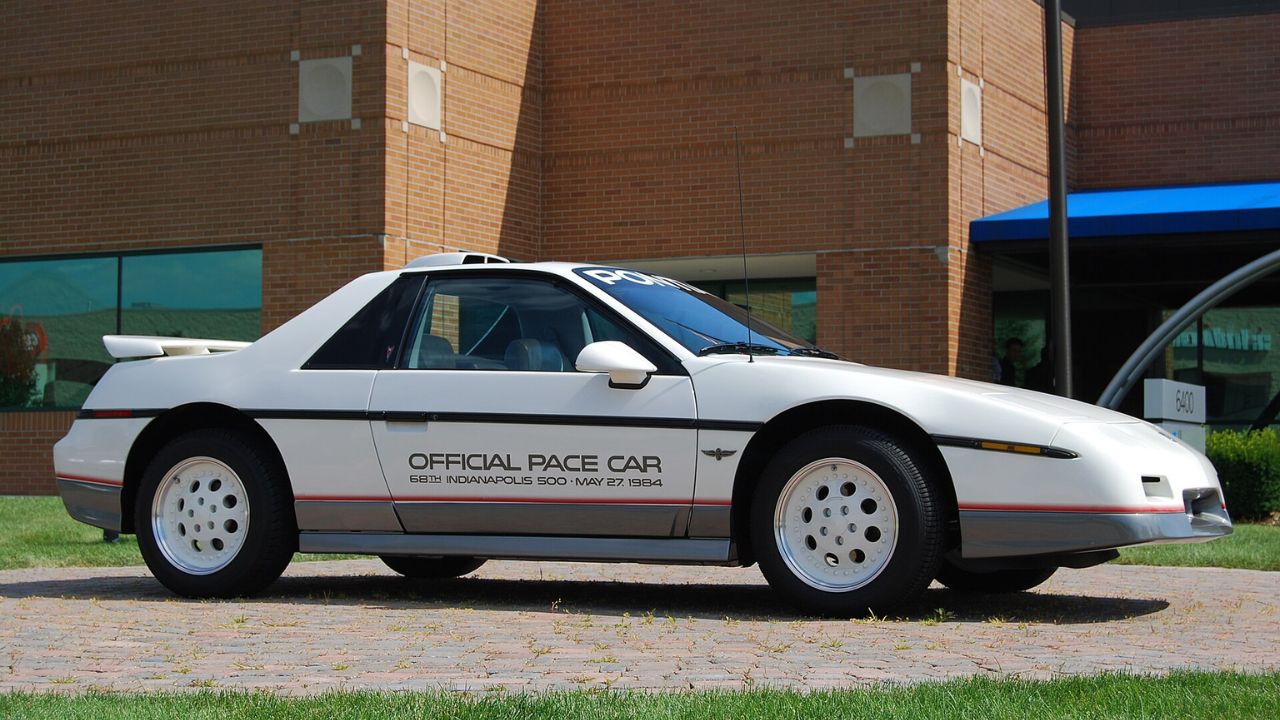
Pontiac sold nearly 137,000 standard Fieros in 1984, but only about 2,000 Indy Pace Car editions. Pontiac based these cars on the SE package, with Indy-themed decals, aero body cladding and new front and rear fascias. Under the rear deck, every one used the 2.5-liter Iron Duke four, rated at 92 horsepower.
The real pace cars were a different animal. According to Hagerty’s history of the Fiero pace car, Pontiac built three for race day. Each used a 2.7-liter Super Duty four making 232 horsepower, and one reached 136 mph on the banked oval. The production cars also lacked the roof-mounted scoop of the race-day cars. For comparison, the 1984 Corvette’s 5.7-liter V8 was rated at 205 horsepower. Later, for 1985, a 2.8-liter V6 with 140 horsepower joined the Fiero lineup.
Our take: the Indy edition is the Fiero to own. A mid-engine Pontiac in pace-car trim from the car’s first year has a story that sells itself. In our view, an original, unmodified example with its cladding intact is worth much more than a regular 1984 coupe. Owners should hold on to the window sticker and any Indy paperwork.
5. 1985 Pontiac 6000 STE

The 6000 STE, short for Special Touring Edition, arrived for 1983 as a sport-tuned family sedan. It used a high-output 2.8-liter V6 that made 135 horsepower, compared with 112 in the regular car. Also, front captain’s seats and power windows came standard. In 1984, it gained a digital gauge cluster with a bar-graph tachometer and a driver information center.
At the time, reviewers loved it. The STE made Car and Driver’s Ten Best list three times, from 1983 to 1985. It was not cheap, either. The STE cost upwards of 75 percent more than the lowest-priced 6000. As a result, STE sales stayed at just 10 to 15 percent of all 6000 sales. Later, for 1988, Pontiac even added all-wheel drive with a 3.1-liter V6. Then, for 1989, AWD became standard on the STE.
We have listed the 6000 STE among Pontiacs so rare even collectors rarely see them. In our opinion, that rarity is not yet reflected in how most owners treat these cars. A clean, original 1985 STE with its digital dash working is a genuine piece of 1980s Pontiac history.
6. 1989 Pontiac Firebird Turbo Trans Am
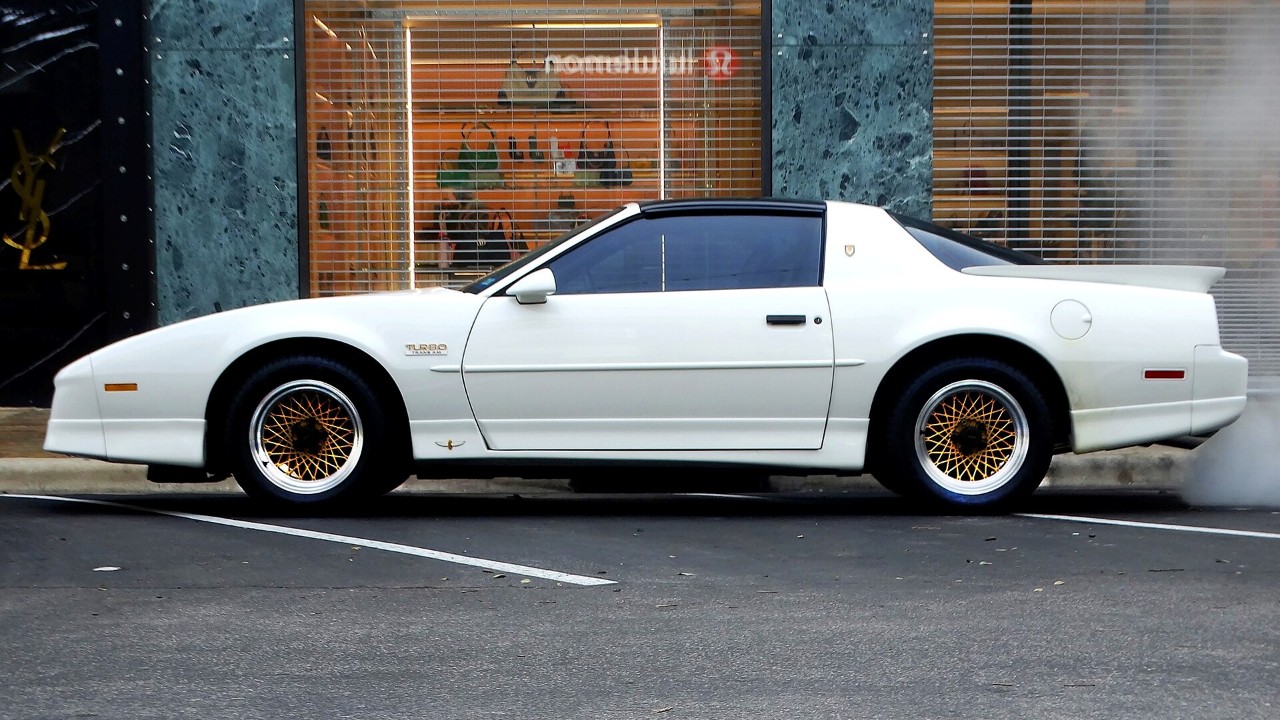
For the Trans Am’s 20th anniversary, Pontiac borrowed a more powerful version of Buick’s turbocharged 3.8-liter V6. Prototype Automotive Services handled the engine work. The rating was 250 horsepower. Pontiac built 1,555 of these Turbo Trans Am replicas for sale, including five test cars. Then the car paced the 73rd Indianapolis 500, the last time Pontiac received that honor. In addition, Pontiac picked three cars at random from the production run and sent them to Indianapolis as the actual pace cars.
Performance backed up the hype. Car and Driver recorded a 0–60 mph time of 4.6 seconds and called it the “quickest 0–60 sprinter available in any US production-car showroom.” As a result, collectors have taken notice. According to GM Authority, a two-owner example with just 3,900 miles sold on Bring a Trailer for $59,000 before fees.
Our take: the Turbo Trans Am is a late-model Pontiac that many people underestimate. It looks like other white third-generation Firebirds, yet its engine bay tells a different story. In our view, a documented, original example is a blue-chip Pontiac. Keep the paperwork, keep it stock and resist modifying that turbo V6.
7. 2010 Pontiac Vibe GT
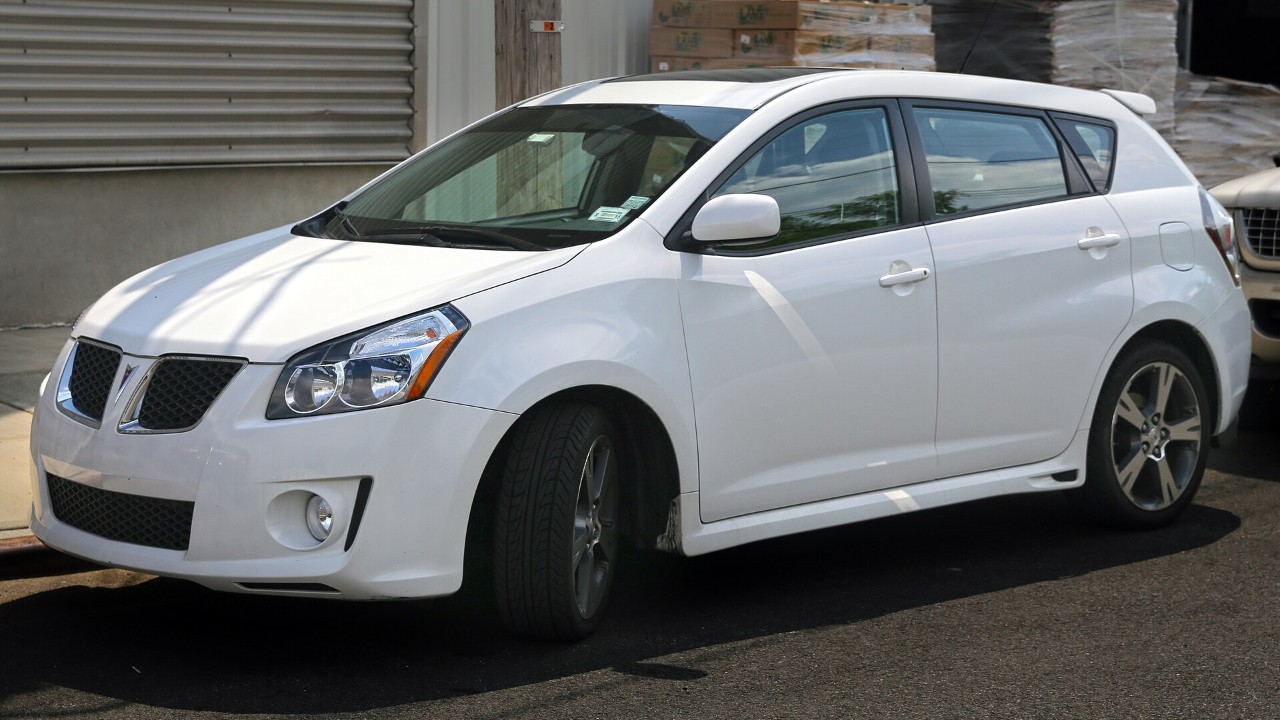
NUMMI built the Vibe, the GM-Toyota joint venture in Fremont, California, alongside its twin, the Toyota Matrix. The GT used Toyota’s 2.4-liter 2AZ-FE four, rated at 158 horsepower. Also, the all-wheel-drive Vibe shared that same engine. For the 2010 model year, the second-generation Vibe was Pontiac’s last new model and the brand’s only car.
However, the end came quickly. The last Vibe left the assembly line on August 17, 2009, as NUMMI closed under GM’s Chapter 11 reorganization. As a result, 2010 Vibes are scarce. The Vibe’s recorded U.S. total for calendar 2010 dropped to just 97, while Canada logged 1,559. That makes a 2010 GT one of the final Pontiacs ever sold new, so its place in the story is secure.
In our opinion, most Vibe owners see a sensible hatchback, and that is fair. Yet a low-mileage 2010 Vibe GT is also the closing chapter of a famous American brand. With a Toyota engine under the hood, it should keep running for a long time. We’d keep one clean and original, because the story attached to it will only get better with age.
More from Fast Lane Only