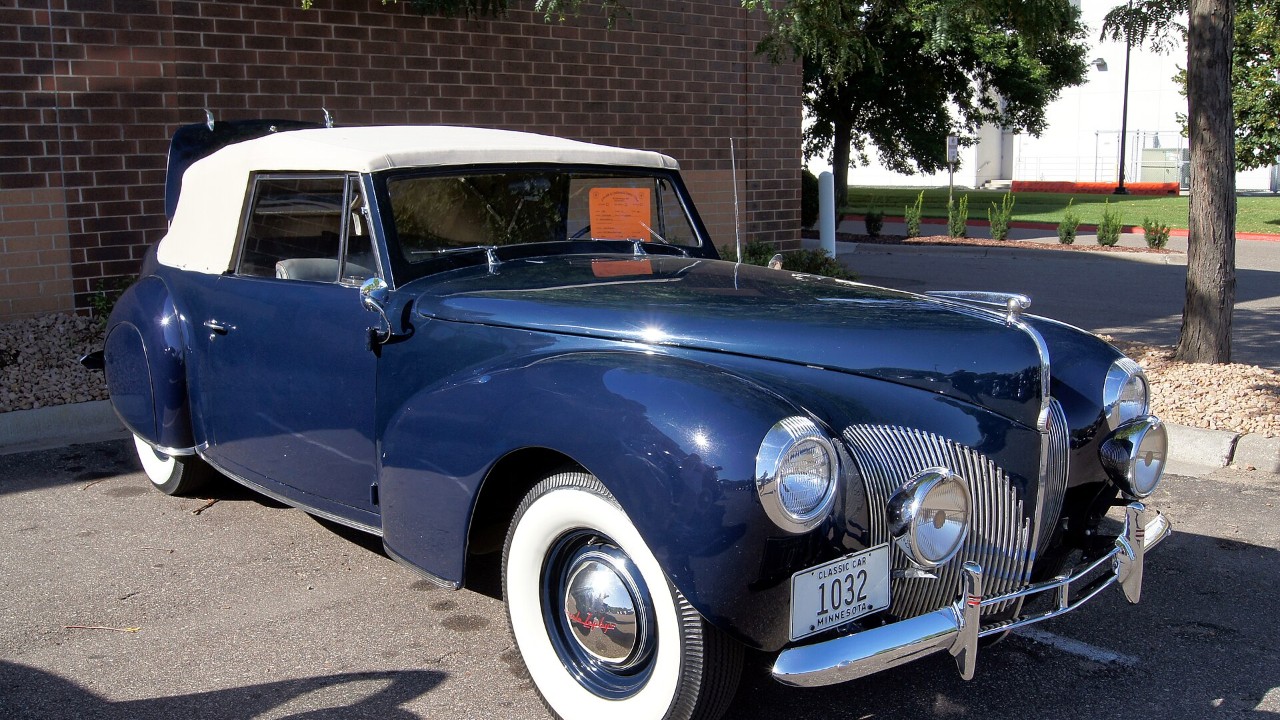
The first Lincoln Continental cabriolet began as one man’s vacation car. Edsel Ford wanted something European in feel for a trip in March 1939, and Lincoln’s stylists built it for him. As a result, the Continental name started life as a near one-off, and the rarest versions have stayed scarce ever since.
Not every Continental is hard to find, of course. Lincoln later sold the name on big, popular sedans, and plenty of those survive. However, some early cars, convertibles and special editions came in tiny numbers, so even serious collectors may wait years to see one change hands.
These seven are our picks for the Continentals we think you are least likely to see cross an auction block. The build figures come from auction records, period sources and production references. The rarity verdicts, though, are our opinion, and we only quote a number where a source gave one.
1. 1940 Lincoln Continental cabriolet

Edsel Ford sketched the idea after a trip to Europe in 1938. Then designer Bob Gregorie drew it on a Lincoln-Zephyr convertible instead of a Ford chassis. According to RM Sotheby’s history of the early Continental, he stretched the hood and fenders by about a foot and lowered the body by four inches.
Edsel took the car to Florida that winter. Legend says his friends liked it so much that 200 of them placed orders. So production began in December 1939, and a coupe soon followed. RM’s figures show 404 Continentals for 1940, compared with 1,250 for 1941.
Those 1940 cars are special for another reason. Lincoln had not yet built dies to press the body, so about 400 of them wore hand-hammered panels. In fact, machine-pressing only arrived for 1941. Most early production was cabriolets, which is why the open car defines the model. In our view, a 1940 Lincoln Continental cabriolet is the purest form of the idea, and the one we would most like to see. Meanwhile, the Classic Car Club of America recognizes the 1939 to 1948 Continental as a Full Classic.
2. 1946 Lincoln Continental coupe
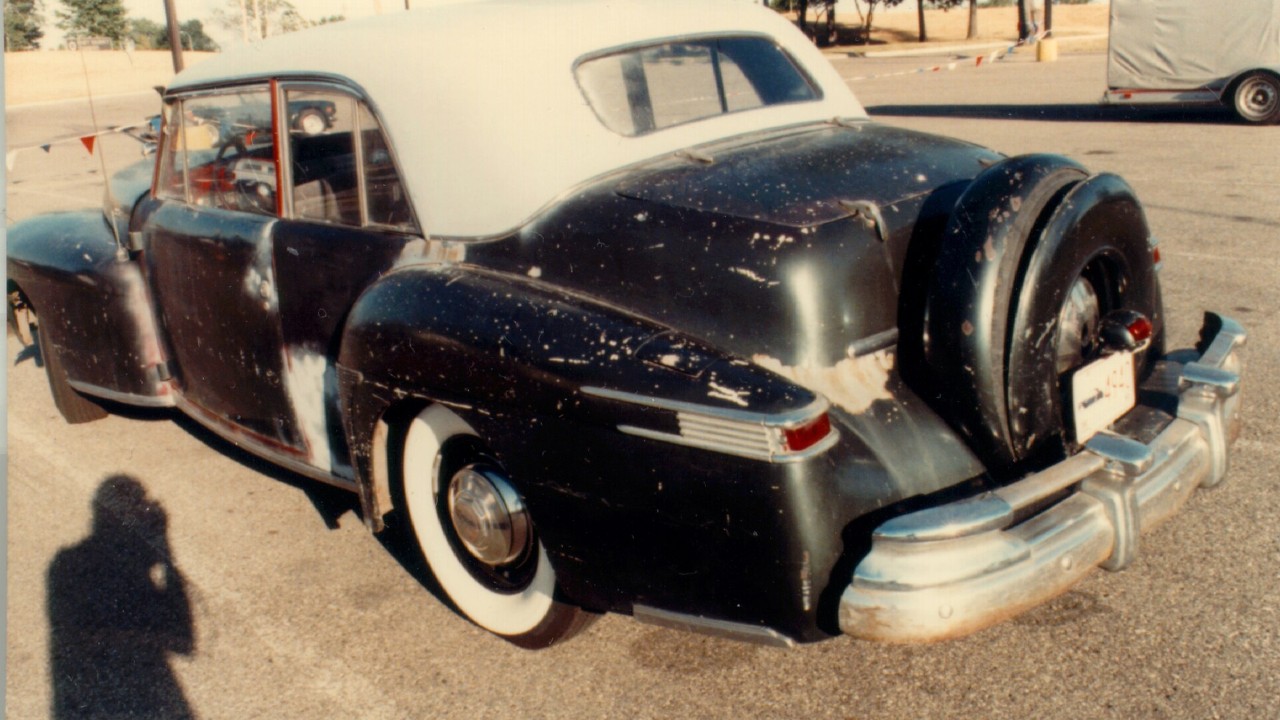
The Continental returned after the war in 1946. Lincoln based it on the standard postwar Lincoln and gave it updated trim. It also got a much more elaborate front grille and bumper, so the postwar car is easy to tell from a 1940 or 1941.
Power came from a 292-cubic-inch L-head V12 with a three-speed manual gearbox. Meanwhile, the open car took most of the spotlight. An RM Sotheby’s listing for a 1946 Continental notes that Lincoln built only 201 cabriolets that year. By comparison, the coupe was the closed alternative, sharing the same long-hood shape.
The coupe was also slightly cheaper. By 1948, it listed at $2,727, while the cabriolet cost $2,778. That year was the last for the first Continental, and the 1948 cars were the last V12 automobiles from a major American maker. Walnut interior trim arrived for 1947, too. Our take: the coupe gets less attention than the cabriolet, yet its tall, formal roof shows off Gregorie’s proportions just as well. In our view, that is exactly why a well-kept postwar coupe can be so hard to find.
3. 1956 Continental Mark II
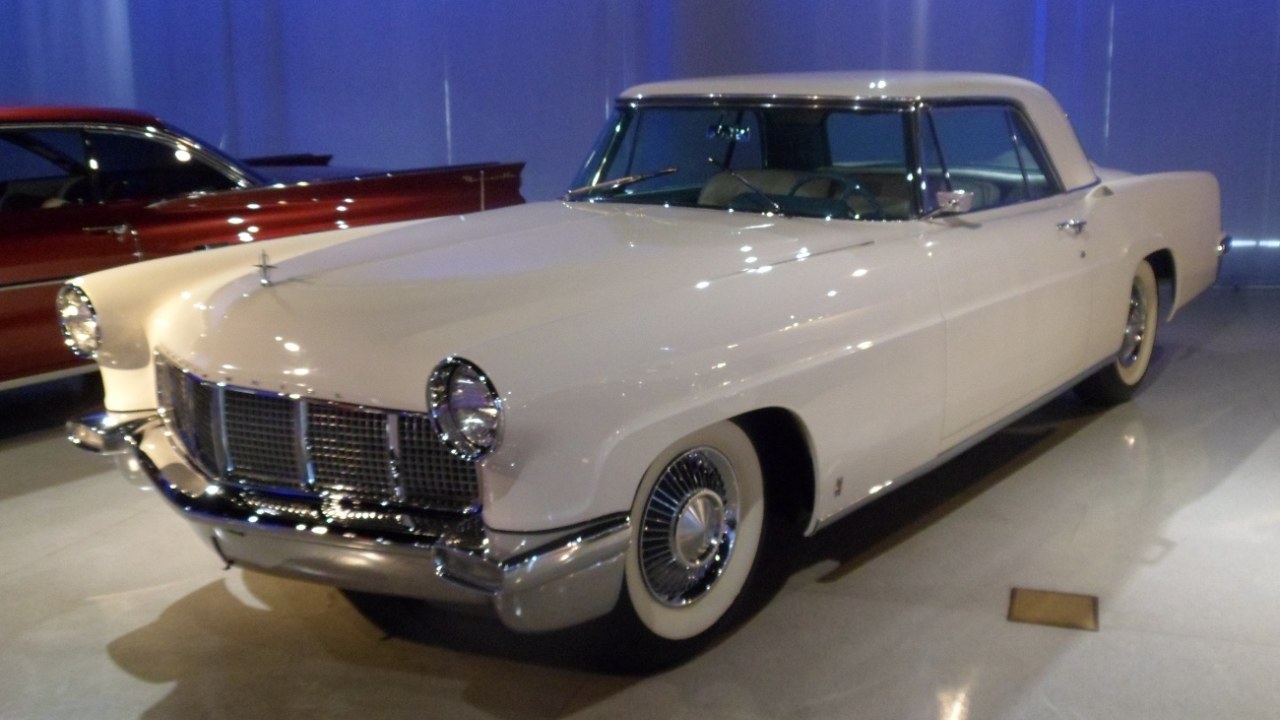
Ford launched the Continental Mark II as a car built with unusual care. Instead of a moving assembly line, workers pushed mobile carriers by hand from station to station. Each car passed 14 inspection points in the plant. In other words, Ford treated the Mark II more like a coachbuilt car than a mass-market one.
The engines got special treatment as well. Ford selected each 368-cubic-inch V8 from the Lincoln line, took it apart, inspected it and rebuilt it. For 1956, that engine made 285 horsepower. Then the price arrived: $9,966, which made it the most expensive car built in America at the time.
Even at that price, the numbers did not work. Ford estimated it lost nearly $1,000 on each car. Production ended at 3,005 across 1956 and 1957, including three prototypes and 13 pre-production cars. We told how the Mark II ignored the price tag in an earlier story. Our take this time: the true rarities are the two 1956 cars converted into convertibles, one by Hess & Eisenhardt and one by Derham. In our view, those two are about as rare as a Continental gets.
4. 1958 Continental Mark III convertible
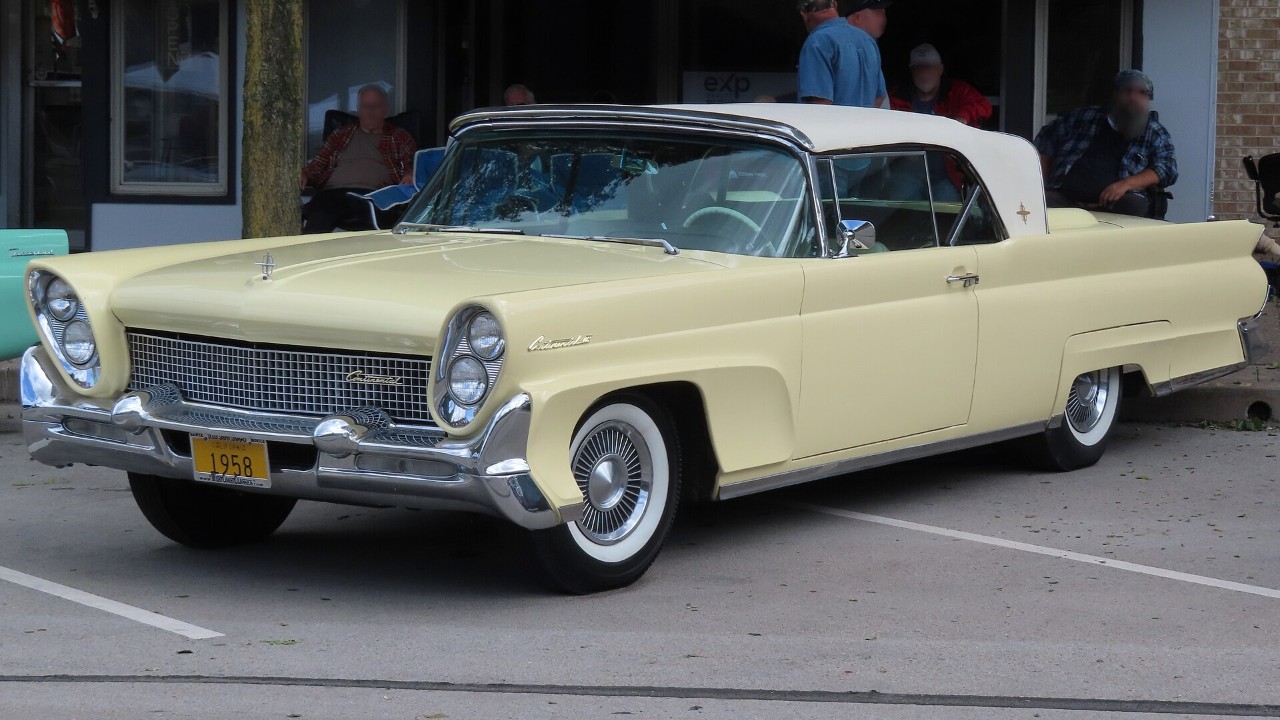
After the costly Mark II, Ford folded the Continental back into Lincoln for 1958. The new car rode on a unibody structure and carried “Continental III” badges. It became the top of Lincoln’s line, and it made up 62 percent of Lincoln sales that year, according to The Truth About Cars’ history of the Mark series.
Power came from a 430-cubic-inch MEL V8 rated at 375 horsepower. That was a big number for 1958. Meanwhile, the hardtops and sedans featured the Breezeway rear window. The convertible, however, traded that glass for a folding top and open-air glamour.
Lincoln built 12,550 Mark IIIs in all. Of those, 3,048 were convertibles, while the Landau hardtop led sales with 5,891. In fact, the convertible was the second most common Mark III body. That means only about one Mark III in four was an open car. Our take: a 1958 convertible is the big, bold Continental to own, because it pairs the 375-horsepower V8 with an open body. In our view, a solid, complete car seldom appears on the open market, so be ready when one does.
5. 1959 Lincoln Continental Mark IV convertible
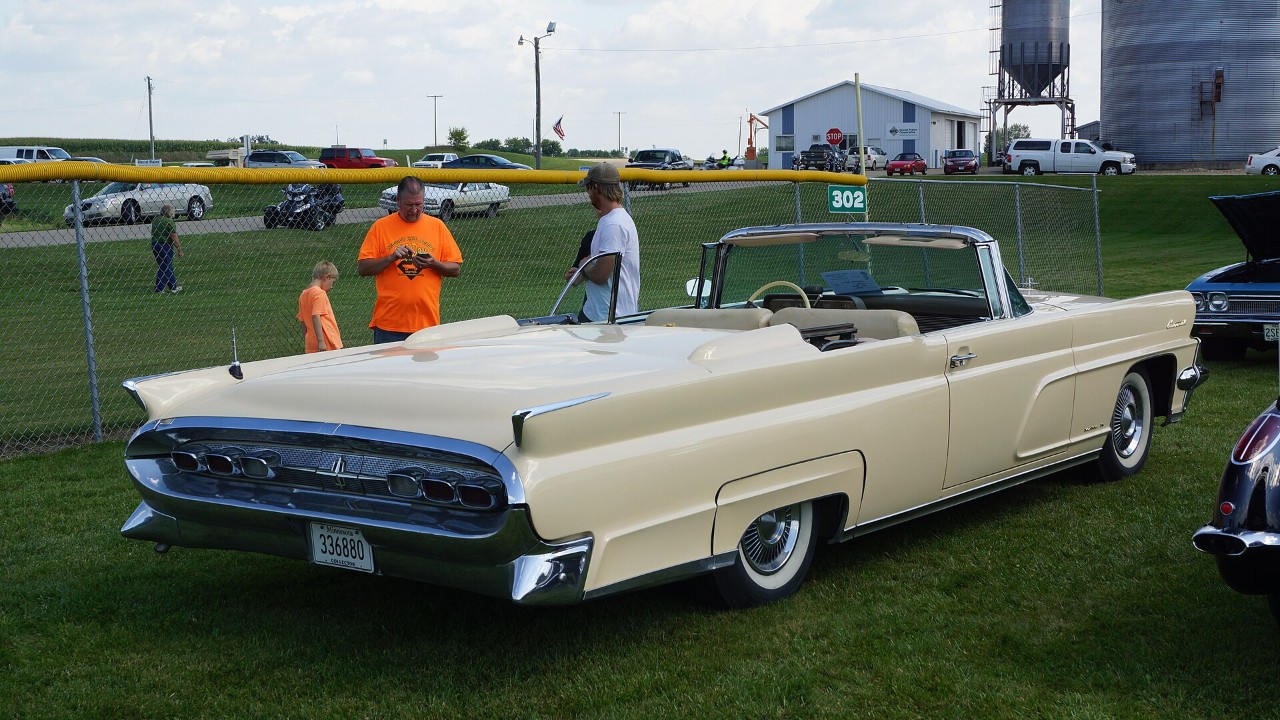
For 1959, Lincoln dropped the separate division branding and called the car the Mark IV Continental. Then it detuned the 430 MEL V8 from 375 to 350 horsepower. The car also shrank a little, from 229 inches long to 227.1.
The convertible was the heavyweight of the range at 5,330 pounds. In fact, it outweighed the sedan by 24 pounds and the coupe by 110. Lincoln built 2,195 Mark IV convertibles for 1959. By comparison, the Landau hardtop reached 6,146, nearly three times as many.
The 1959 lineup also hid two real oddities. Lincoln built just 78 Town Cars and 49 Limousines that year, and the Town Car swapped the reverse-slant rear window for a forward-angled one to free up legroom. Those two body styles are far scarcer than the convertible. Even so, we picked the convertible here, because it is the open Mark IV you are most likely to want and least likely to find. Our take: the 1959 car is the overlooked middle child of the three Mark years, so it rarely gets the attention its numbers deserve.
6. 1960 Continental Mark V convertible
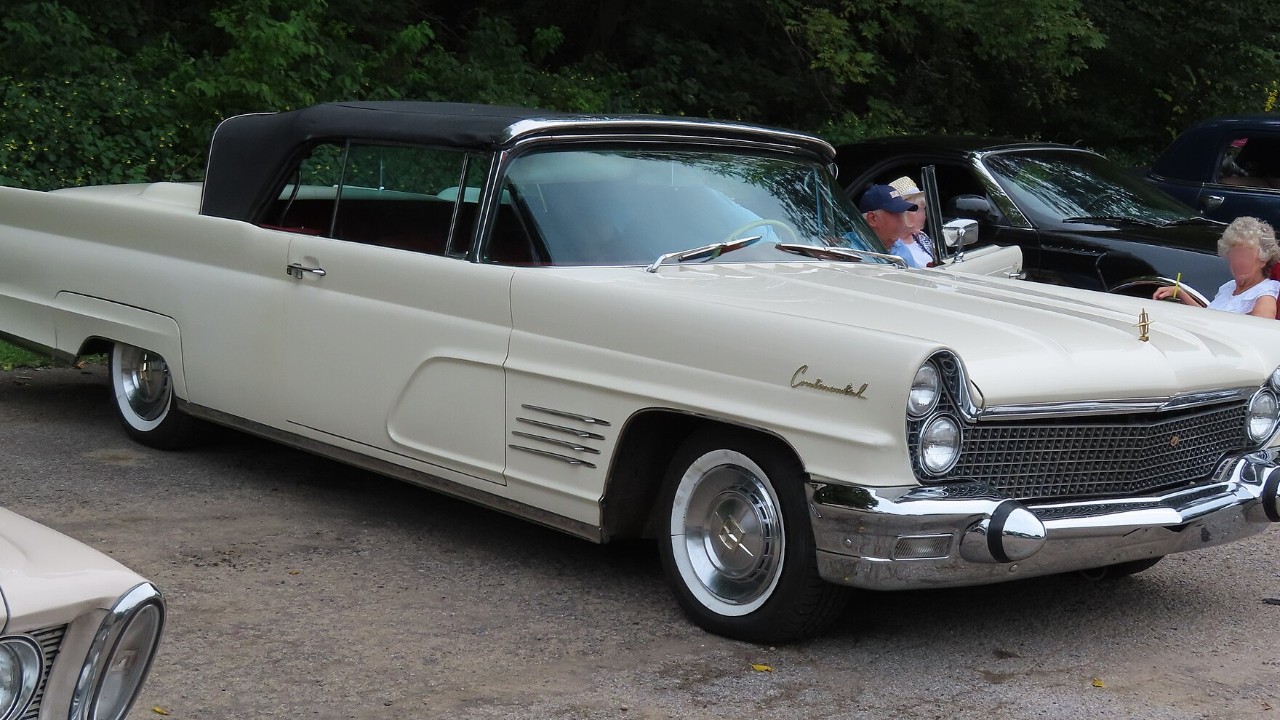
The 1960 Mark V was the last of the three Mark years that began in 1958. Lincoln built 11,086 Mark Vs that year, slightly fewer than in 1959. Of those, 2,044 were convertibles, while the Landau hardtop led with 6,604. So the open car ranked as the second-best seller.
The rest of the 1960 range makes the convertible look common. For example, Lincoln built only 136 Town Cars and 34 Limousines that year. Across all three Mark years from 1958 to 1960, open cars added up to 7,287. That total sounds healthy until you spread it across three model years and six decades of use.
Owning one is not always simple, as our look at why 1960 Continental ownership isn’t always smooth explains. A car this large and this heavy needs a patient owner and a big garage. Still, in our view, the 1960 Mark V convertible is the one to finish a Mark collection, because it closed the run. Our take: when one does reach the market, it deserves a careful inspection of the top, the body and the paperwork.
7. 1978 Lincoln Continental Mark V Diamond Jubilee Edition
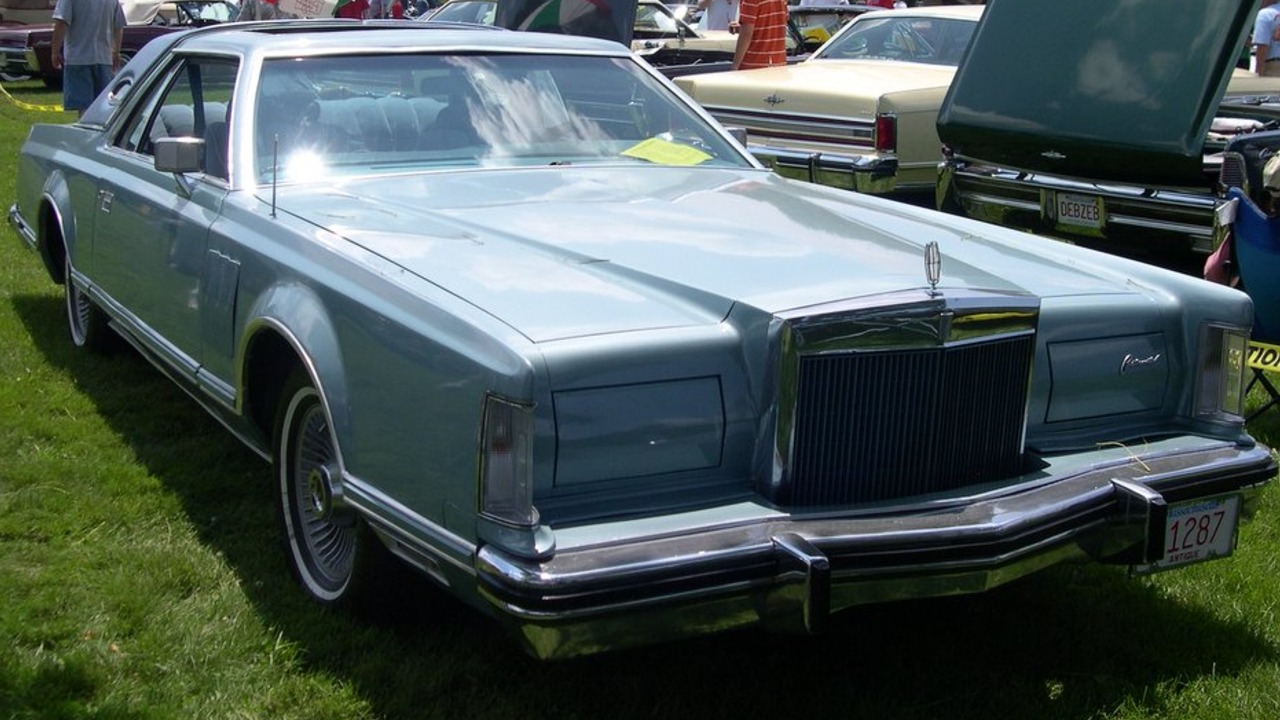
Ford turned 75 in 1978, and the Diamond Jubilee Edition marked the occasion. It came in two exclusive colors, Diamond Blue and Jubilee Gold. The package added $8,000 to the Mark V’s price, so the total ran past $21,000.
Its details were the point. The opera windows had simulated diamond chips set inside the glass, and the hood ornament carried crystal-style inserts. Every owner also received keys that matched the interior trim. As a result, it was far more than a paint-and-badge package. Under the hood, the 400 V8 was rated at 179 horsepower.
Our earlier piece on when Lincoln produced the Diamond Jubilee Edition covers its values. Here, the point is survival. In our view, a car this ornate needs every one of its unique trim parts to be worth owning, and complete examples are the ones to chase. Our take: buy the most original car you can find, because those diamond-chip windows and crystal inserts are what make it a Jubilee. Also, check the paint code, since the two colors were exclusive to the edition. Lincoln built 5,159 Diamond Jubilee Edition Mark Vs in total.
More from Fast Lane Only