Pony cars have been icons for so long that it is easy to think the segment begins and ends with Mustangs, Camaros and Challengers. Yet the formula of a relatively affordable, stylish coupe with a long hood and short deck inspired a wave of contenders that briefly burned bright, then faded from the collective memory. I want to revisit a few of those forgotten nameplates, not as trivia, but as a way to trace how the pony car idea evolved, splintered and, in some cases, quietly disappeared.
Some of these cars were genuine sales players in their day, others were niche experiments that never quite found their footing. All of them, though, tried to bottle the same mix of style, performance and accessibility that defined the original pony car boom, and their stories help explain why only a handful of badges still carry that torch.
AMC Javelin: the independent’s forgotten challenger
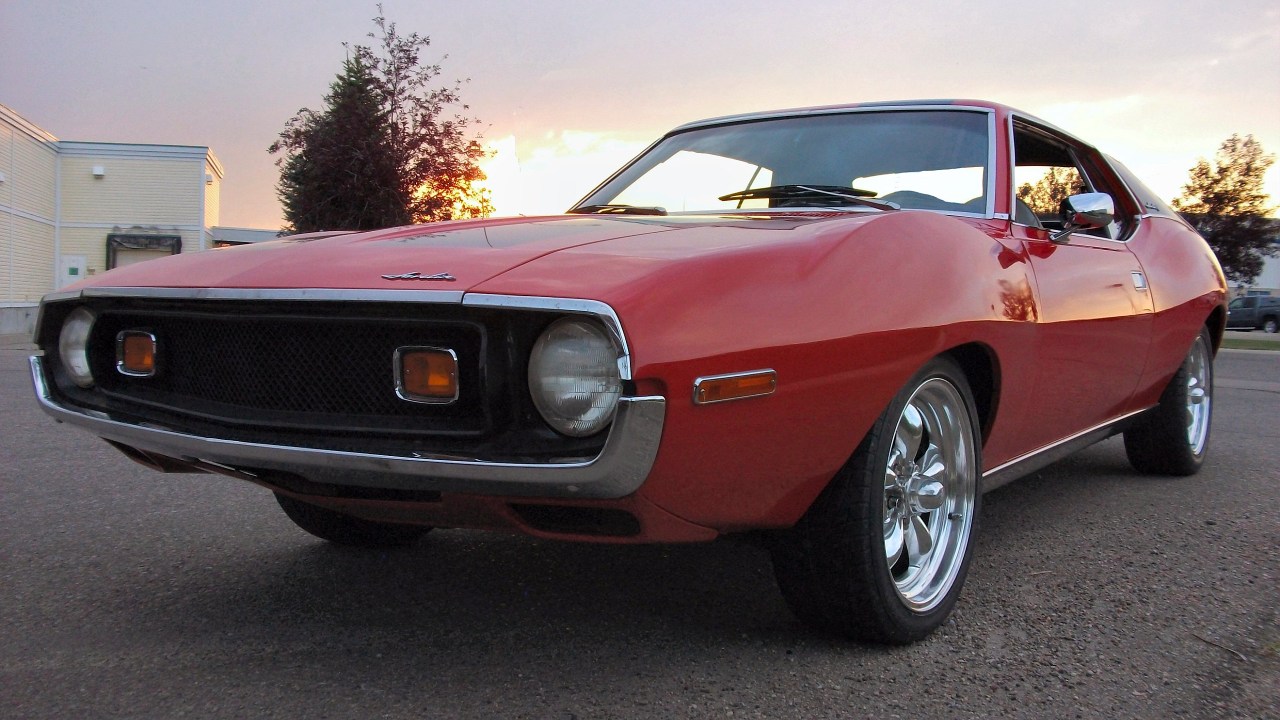
When people talk about late‑1960s pony cars, the conversation usually stops at the Detroit Big Three, yet American Motors Corporation pushed hard to join that club with the AMC Javelin. I see the Javelin as the clearest example of how a smaller automaker tried to match the Mustang and Camaro template, using bold styling and a wide range of engines to carve out space in a crowded field. The car arrived with the classic long‑hood, short‑deck proportions and offered everything from modest six‑cylinder power to V8 options that put it squarely in pony car territory, a strategy that mirrored the segment leaders and underscored how influential that formula had become.
AMC doubled down by taking the Javelin racing, using Trans‑Am competition to give the car performance credibility and to promote hotter street versions. That motorsport push helped spawn variants like the Javelin SST and high‑output packages that targeted buyers who wanted something different from the usual Ford or Chevrolet choices. Over time, though, AMC’s limited resources and shifting market tastes meant the Javelin never achieved the lasting cultural footprint of its rivals, even though its mix of racing pedigree, distinctive styling and broad engine lineup fit the pony car brief as cleanly as anything from the larger Detroit brands.
Mercury Cougar: when luxury met the pony car formula
The Mercury Cougar started life as a more upscale spin on the Mustang idea, yet it rarely gets mentioned alongside the segment’s core nameplates today. I view the early Cougar as a key proof that the pony car template could stretch into a slightly larger, more refined package without losing its essential character. The first generations shared much of their underlying hardware with the Mustang but layered on a longer wheelbase, more elaborate interiors and distinctive styling cues, including hidden headlights and a more formal roofline, to position the car as a “gentleman’s” alternative to the rawer Ford.
That positioning let Mercury sell the Cougar with a mix of comfort and performance options, from small‑block V8s aimed at stylish commuters to hotter versions that could credibly run with contemporary muscle. Over time, the badge wandered into personal‑luxury and later front‑wheel‑drive territory, which blurred its pony car roots and helped push it out of enthusiasts’ mental short list. Yet those late‑1960s and early‑1970s Cougars show how the basic pony car recipe could be tuned toward comfort and image without abandoning the long‑hood, short‑deck proportions and rear‑drive dynamics that defined the segment.
Plymouth Barracuda: overshadowed by its own legend
The Plymouth Barracuda is a paradox, because the name is legendary among muscle‑car fans while the car’s pony‑car origins are often overlooked. I see the earliest Barracudas, which predated the Mustang by a short margin, as an important reminder that the idea of a sporty, compact coupe with a distinctive profile was not the exclusive brainchild of any single brand. Those first cars were based on the compact Valiant platform and wore a fastback body that gave Plymouth a head start in the emerging youth market, even if the styling and marketing did not initially capture the public imagination as strongly as Ford’s entry.
As the Barracuda evolved, especially by the time it moved to a dedicated platform and gained more aggressive styling and big‑block V8 options, it shifted closer to pure muscle‑car territory. That later reputation, fueled by high‑performance variants and racing associations, tends to overshadow the car’s earlier role as a direct pony‑car rival to the Mustang and Camaro. In the broader history of the segment, the Barracuda’s trajectory shows how quickly a sporty compact could be pushed toward ever larger engines and more extreme performance, sometimes at the expense of the affordability and everyday usability that defined the original pony car concept.
Ford Capri (European and “captive import”) : the global pony car experiment
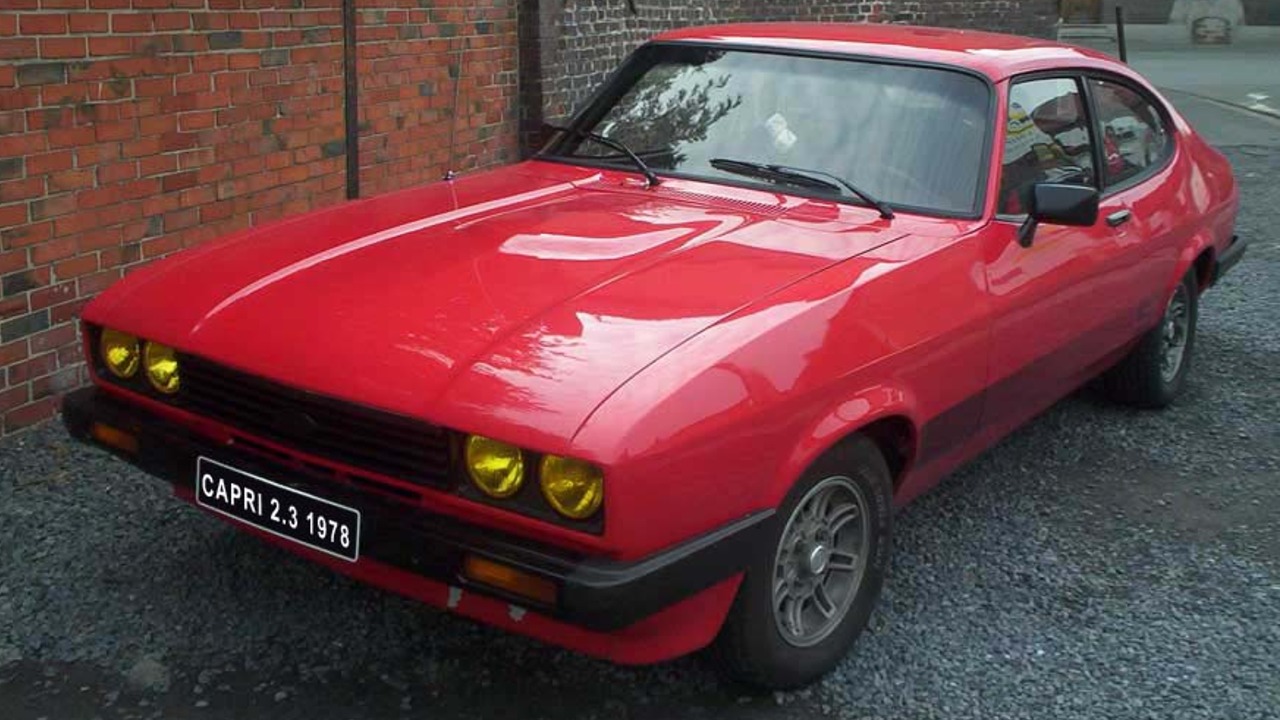
Ford’s Capri project demonstrated that the pony car idea could be exported and reinterpreted for different markets, even if the name has largely faded from American memory. I think of the Capri as a transatlantic experiment in shrinking the Mustang ethos into a lighter, more European‑friendly package, with tidy dimensions, rear‑wheel drive and a range of four‑ and six‑cylinder engines. In Europe, the car was marketed as a stylish coupe that delivered the look and feel of a sporty grand tourer without the cost or thirst of a full‑size American V8, which made it a natural fit for buyers who wanted flair on a tighter budget.
In the United States, Ford briefly sold the Capri through Mercury dealers as a “captive import,” effectively positioning it as a smaller, more efficient alternative during a period when fuel economy and changing regulations were reshaping the market. That strategy brought the pony car aesthetic to drivers who might have been wary of traditional American coupes, but the car’s imported status and evolving emissions rules limited its long‑term presence. The Capri’s story underlines how flexible the pony car template could be, adapting to different engine sizes, market expectations and regulatory environments while still relying on the same basic promise of accessible style and rear‑drive dynamics.
Chevrolet Monza and Ford Mustang II: downsized survivors of a changing era
By the mid‑1970s, tightening emissions rules and fuel‑economy concerns forced pony cars to shrink and compromise, and that shift produced some of the segment’s most overlooked entries. I see the Chevrolet Monza as a clear example of how a manufacturer tried to keep the sporty‑coupe image alive on a smaller, more efficient platform, using compact underpinnings and four‑ or six‑cylinder engines that reflected new economic realities. The car’s styling still nodded to the long‑hood, short‑deck ideal, but its mission leaned more toward practical transportation with a sporty veneer than toward the unfiltered performance that had defined earlier pony cars.
Ford’s Mustang II followed a similar logic, trading the size and power of the original for a more compact footprint and improved fuel economy, a move that remains controversial among enthusiasts. I view that generation as a survival play that kept the Mustang name on the market during a period when large, thirsty coupes were falling out of favor, even if the car’s performance credentials were muted compared with its predecessors. Together, the Monza and Mustang II illustrate how the pony car concept had to bend under regulatory and economic pressure, and how some of the segment’s most historically important models are also the ones most likely to be forgotten or dismissed today.