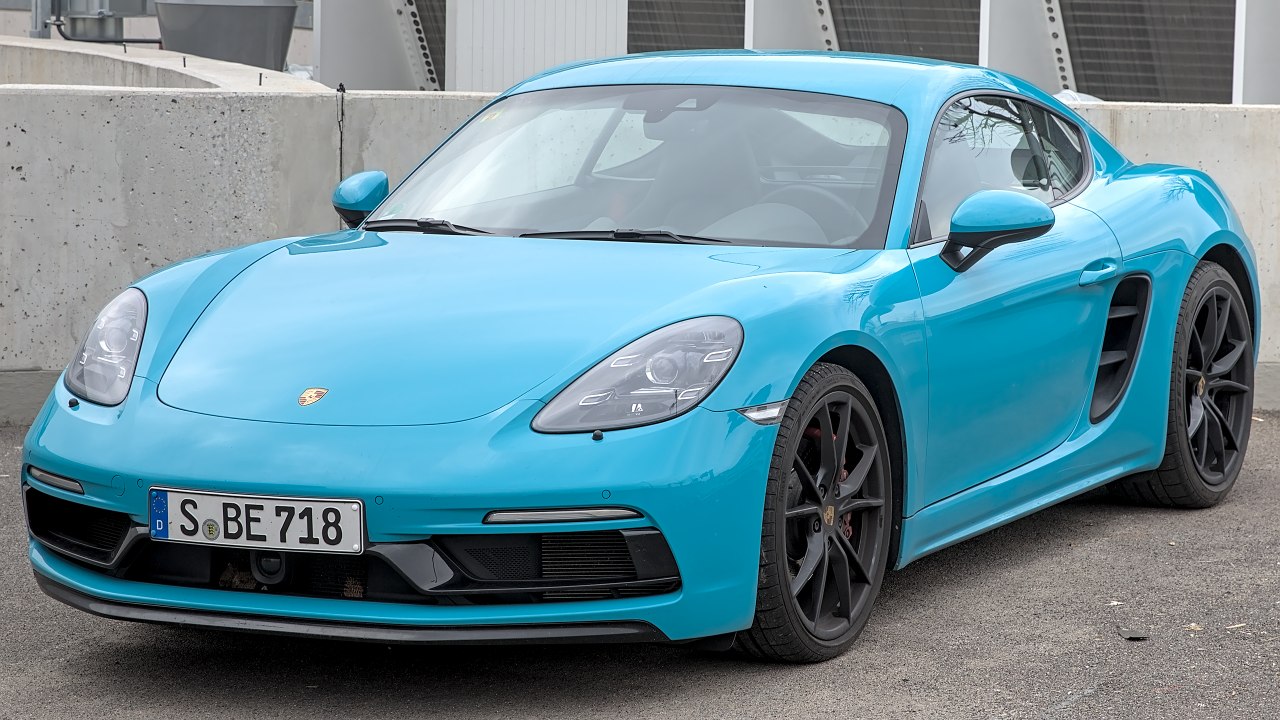
Porsche’s long promised electric successors to the 718 Boxster and Cayman are now in jeopardy, with multiple reports indicating the program is under active review and could be cancelled outright. What was once billed as a clean break from combustion for the brand’s entry sports cars has become a test case for how far, and how fast, even a performance leader is willing to push into battery power.
The apparent rethink comes after years of delays, rising development costs, and a cooling market for premium EVs, raising the prospect that Porsche may pivot back toward gasoline or hybrid power for its smallest two seaters. For enthusiasts and investors alike, the fate of the 718 project has become a proxy for the company’s broader electric strategy.
From EV showcase to cost cutting target
The electric 718 program was originally conceived as a statement of intent, with the next Boxster and Cayman planned as EV only replacements for the outgoing combustion models. That strategy is now under pressure, as reporting indicates the Porsche CEO is considering shelving the Boxster and Cayman EVs to cut costs and simplify the product plan. Internal discussions described in several accounts suggest the company is weighing whether the electric versions of the 718 sports cars should move forward at all or be dropped before they reach showrooms.
Behind that rethink sit hard financial and technical realities. The development of a dedicated electric sports car platform has been described as plagued by delays and escalating costs, with the company also facing uneven demand for its existing electric vehicles. Executives are said to be examining whether the investment required to bring the 718 EVs to market can be justified when compared with higher volume models such as crossovers and sedans, particularly as the brand’s stock listings, including DRPRY, POAHY and POAHF, are closely watched for profitability and growth.
Delays, dynamics and a shifting EV market
The 718 EVs have already endured a troubled gestation. Earlier reporting detailed how Porsche pushed back the launch of its electric sports cars until around 2027, citing mounting problems in development. Engineers were described as struggling to replicate the driving dynamics of the gas powered 718 models in a heavier battery electric package, a critical issue for cars that trade on precision handling and driver engagement rather than outright practicality.
Those technical challenges collided with a rapidly changing EV landscape. Premium buyers have become more selective, and demand for high priced electric models has been described as uneven, particularly outside China. In that context, the electric 718 project, once seen as a halo for Porsche’s engineering prowess, now looks more like a high risk bet in a segment that will never match the volumes of an SUV. The combination of delayed timelines, unresolved dynamics and softer market appetite has made the program an obvious candidate when management looks for places to trim spending.
Combustion 718 ends as Porsche wavers on its replacement
Complicating the picture is the fact that Porsche has already wound down the existing gasoline 718 line. The company has ended output of the combustion engine 718 models, and separate reporting notes that global order books for the gas powered 718 Cayman and Boxster have been closed, leaving only unsold dealer stock available. That decision was taken with the expectation that electric successors would follow, creating a relatively clean handover from one generation to the next.
Instead, Porsche now finds itself in an awkward limbo. Enthusiasts who had assumed that the end of combustion production signaled the imminent arrival of a new electric 718 are watching the company reconsider whether those EVs will launch at all. Some coverage has framed the situation as a “sad day” for fans of the Cayman and Boxster, who see the end of new gasoline orders without a clear replacement as a break in a lineage that has defined accessible Porsche performance for decades. The risk is that, by hesitating on the EVs after closing the book on combustion, the brand leaves a gap in its range that rivals could exploit.
Leadership change and internal flip flopping
Leadership dynamics are adding another layer of uncertainty. Reports focused on the company’s new chief executive describe how the electric 718 Cayman and Boxster, already delayed, are now being reassessed at the top level. The new CEO is portrayed as willing to take drastic measures, including potentially cancelling the planned Cayman and Boxster EVs before they even launch, as part of a broader effort to protect margins and refocus investment on models with clearer returns.
That stance follows a period of apparent flip flopping on the future of the 718 line. Earlier, Oliver Blume had publicly acknowledged that Porsche was having to rethink aspects of its electrification roadmap, and subsequent reporting suggested the company was exploring the idea of putting a gas engine into the 718 EV body. Other analysis has described how Porsche is still working on fully electric Boxster and Cayman replacements, while also considering bringing back gas powered versions to run alongside them. The result is a picture of a company oscillating between a bold EV only vision and a more cautious, mixed powertrain approach.
What the 718 rethink signals for Porsche’s EV strategy
The potential axing of the 718 Boxster and Cayman EVs carries implications that reach beyond two low volume sports cars. For years, Porsche has been held up as a template for how a performance brand can embrace electrification without sacrificing identity, thanks in part to the success of its first electric sedan. If the company now decides that a dedicated electric platform for its entry sports cars is too costly or too risky, it will signal a more conservative turn in its broader EV strategy, prioritizing segments where battery power is easier to package and sell.
At the same time, the internal debate around the 718 highlights a wider industry trend. Other manufacturers that once talked about rapid, wholesale shifts to electric lineups have begun to slow or modify those plans, often citing similar concerns about cost, infrastructure and customer demand. Porsche’s reconsideration of its 718 EVs, including the possibility of pairing electric versions with revived combustion models, fits that pattern of hedging bets rather than committing fully to one technology. For buyers, it suggests that the next chapter of the Cayman and Boxster story, if it comes, may be more complicated and more varied in powertrain than the clean EV break once promised.
More from Fast Lane Only