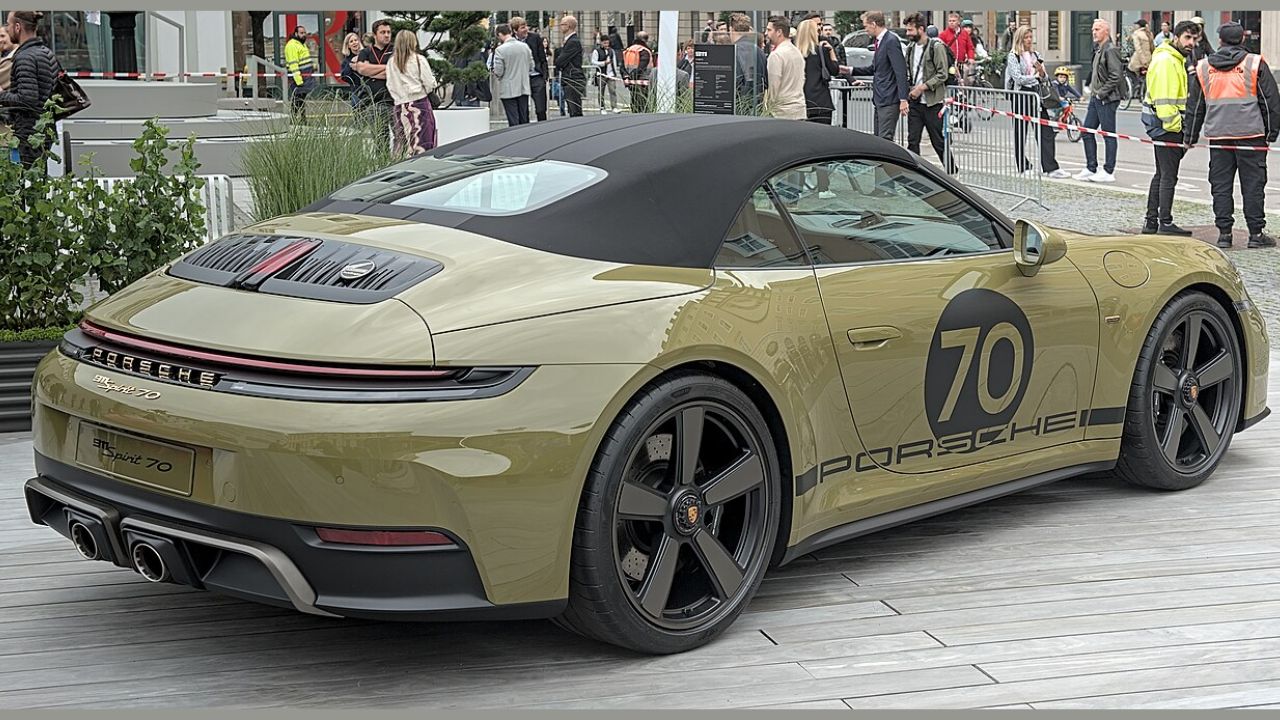
Porsche is turning back to its most famous petrol sports cars in a bid to repair a battered profit profile after a turbulent year of writedowns and strategic reversals. The company is leaning on the 911 and other high-margin performance models, even as much of the industry doubles down on battery-powered vehicles.
The strategy is a high-stakes wager that affluent drivers will still pay a premium for combustion-powered icons, and that those margins can offset weak demand in China, higher tariffs and the cost of an abrupt retreat from earlier electric ambitions.
From record margins to near wipeout
The scale of the reversal is stark. The Group operating return on sales fell to 1.1 per cent, down from 14.1 per cent a year earlier, according to company figures.
The premium Stuttgart-based automaker booked extraordinary expenses totaling approximately €3.9 billion, which dragged automotive profit down by more than ninety per cent and effectively erased the glow of earlier record years, according to a recent breakdown.
The collapse followed an aggressive push into electric vehicles and software-heavy crossovers that did not deliver the expected volumes or pricing power, a miscalculation that forced a rapid reset of strategy.
Michael Leiters’ sports car pivot
Into this backdrop stepped Porsche CEO Michael Leiters, who has made clear that the turnaround will start with a rigorous product overhaul and a renewed focus on the brand’s most profitable nameplates.
In his debut earnings presentation, the new CEO outlined a plan centered on the 911 and other high-margin sports cars to revive earnings after the 2025 downturn.
Leiters will review the entire product portfolio to boost margins by cutting lower-return variants and prioritizing high-priced sports cars.
He told investors the challenges present an opportunity to sharpen Porsche’s product focus and reduce costs.
The 911 sits at the heart of this plan, both as a profit engine and as a symbol of continuity for loyal customers who have grown wary of rapid change.
Combustion icons in an electric age
Leiters is not merely keeping the 911 in the lineup; he is doubling down on its identity as a petrol sports car in an era when rivals trumpet full electrification.
The company says it will not electrify the 911, arguing that synthetic fuels can allow combustion engines to operate with lower climate impact.
In public communications, Porsche AG has promised emotive new sports cars for its global customers and fans, positioning these models as the emotional core of the brand and a key element of its financial recovery, according to the company’s own annual briefing.
The renewed focus on combustion performance follows internal reassessment of earlier product decisions.
Porsche’s now-former CEO Oliver Blume has already acknowledged that the company was wrong about the Macan when it decided to discontinue popular combustion versions in favor of an electric successor, a candid admission that surfaced in a widely shared post.
The reversal on the Macan has become a cautionary tale inside the company, reinforcing Leiters’ view that Porsche must protect its most profitable combustion models even as it continues to develop electric products.
Cost cuts, China slump and the 5.5% target
The sports car pivot is only one side of the equation. Leiters is also preparing an extensive cost program that reaches from management ranks to factory floors.
He has pledged to streamline the management structure, reduce hierarchies and cut back on bureaucracy, while also reviewing the role of high-volume models such as the Cayenne in the future mix, according to remarks captured in a recent interview.
Leiters is expected to discuss job cuts with labor representatives as Porsche, which employs about 40,000 people, adjusts costs for slower growth.
The company sees its operating margin reaching at least 5.5% this year, an improvement over last year’s 1.1%, a target that depends heavily on both the success of the 911 strategy and the execution of those cost reductions.
Globally, Porsche delivered 10% fewer cars in 2025, with declines across all regions except the United States, where volumes stagnated, according to figures cited in a recent market report.
Sales in China have been particularly weak, and the company is now working on a product line that better fits local tastes, a shift that sits alongside the sports car focus rather than replacing it, according to the same strategic update.
Leiters has also signaled a broader change of direction on electric vehicles after earlier ambitions faltered, a move that was foreshadowed when Porsche said it was walking back its EV plans following slow sales and rising costs, according to a previous strategy review.
In public messaging, the company has described the current overhaul as a shift toward a leaner, faster and more desirable Porsche, language that matches the ambition of the sports car led turnaround but also underlines the pressure to deliver concrete financial gains.
Investors will watch whether the 911 and other petrol sports cars can deliver enough margin to support the strategy or push Porsche back toward higher-volume electrification plans.
More from Fast Lane Only