Detroit sold millions of hardtops and sedans in the 1950s and 1960s, but the convertible was always the halo model. It cost more, weighed more and sold in small numbers. That’s why a few drop-tops from those years left the factory in batches so small that most enthusiasts have never stood next to one.
Some were luxury flagships. Others were muscle cars with the roof cut off, built in tiny numbers because most buyers who wanted speed also wanted a stiffer, lighter hardtop. A few were barely production cars at all.
These twelve are our picks, and the verdict on each is our opinion. We went looking for open cars you rarely see at a show, then used auction records, club histories and period references for the facts. Where a production number appears, it comes from a source we read. Where none was available, we left it out.
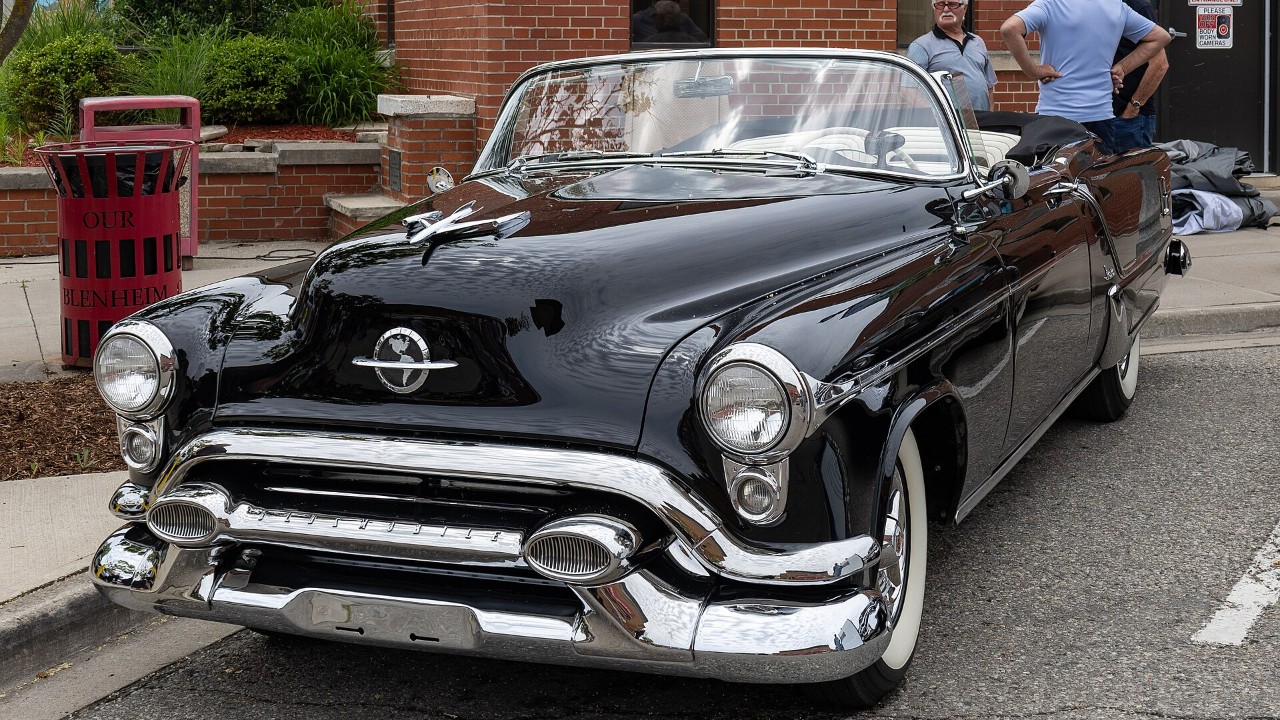
1. 1953 Oldsmobile Fiesta convertible
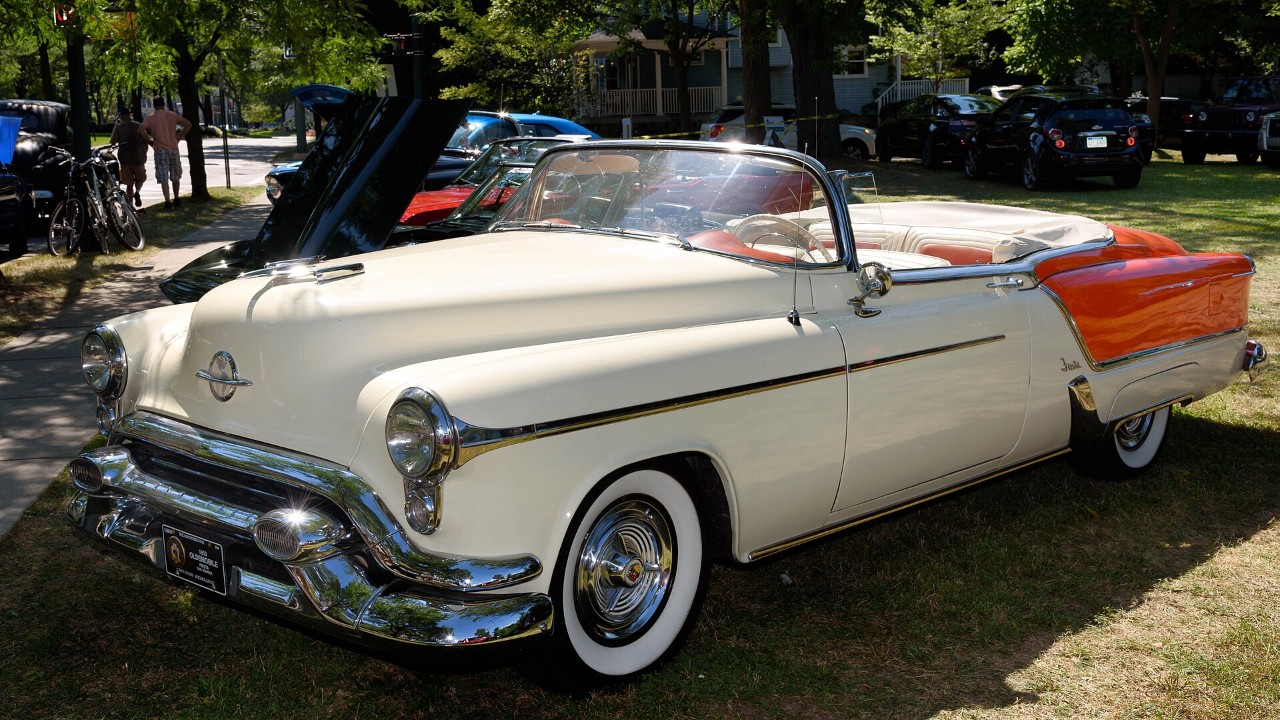
The Fiesta was one of three General Motors dream cars that customers could actually buy in 1953. Oldsmobile based it on the Ninety-Eight, but gave it a wraparound windshield and loaded it with leather, power steering, power brakes, power windows and a power seat. It was a show car with a price tag, and it was meant to pull people into showrooms.
According to RM Sotheby’s, Oldsmobile built only 458. Power came from a 303.7-cubic-inch Rocket V8 rated at 170 horsepower, sent through a four-speed Hydra-Matic. The car also rode on a 124-inch wheelbase and carried a rear-mounted Continental kit spare, so it looked even longer than it was. A Cadet Blue example from the Richard and Linda Kughn collection crossed the block at Amelia Island in 2014 and sold for $181,500.
In our view, the Fiesta is the purest example of this list’s idea. It was never about speed. Instead, it showed what a 1953 buyer could get if money was no object, and so few were built that a sighting at a concours is an event.
2. 1958 DeSoto Adventurer convertible
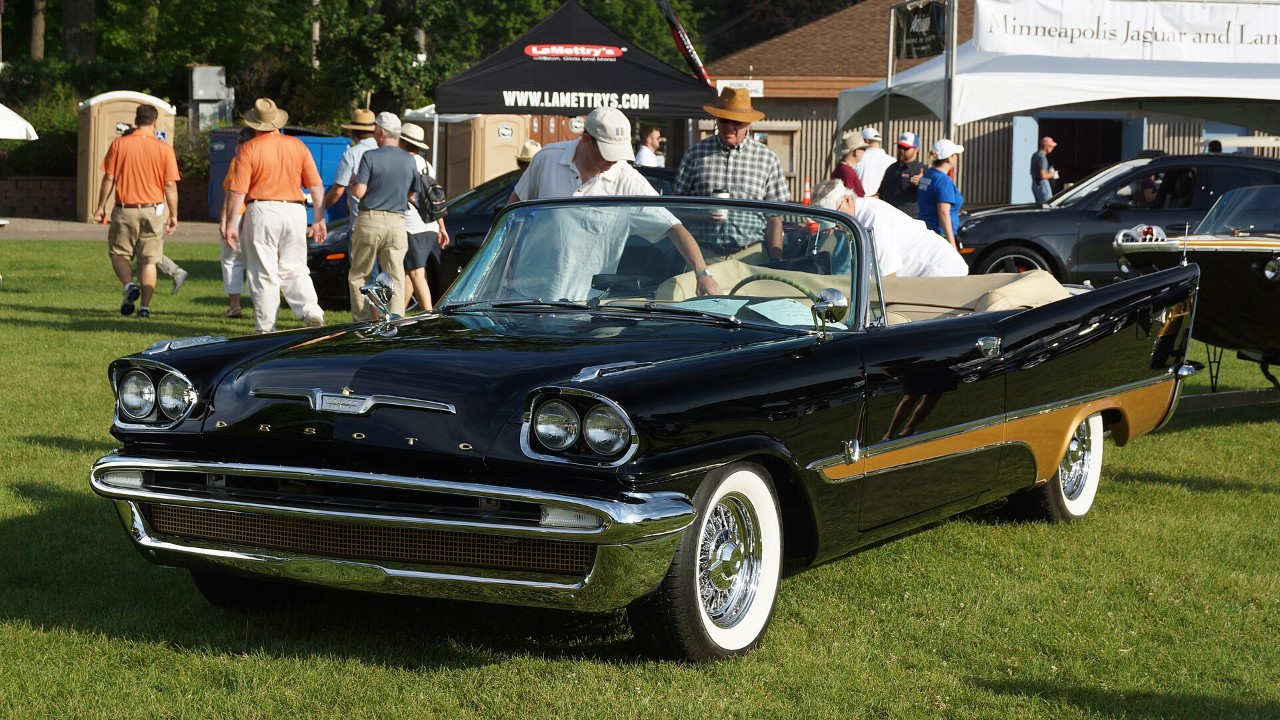
DeSoto dropped its Hemi for 1958 and moved the Adventurer to a 361-cubic-inch wedge V8. Most cars breathed through dual four-barrel carburetors. However, buyers could also tick the box for Bendix electronic fuel injection, a costly option with a reputation for being finicky.
The numbers are what make this one special. Old Cars Weekly reports that DeSoto built 350 Adventurer hardtops that year and only 82 convertibles. Fuel-injected cars wore their own nameplates above the front-fender medallions, so a real one is easy to spot, if you ever find one. Hardtops came only in black, white or gold. One longtime owner quoted by the magazine knows of just 10 surviving hardtops, two of them in Sweden, which hints at how few open cars remain.
We’d call the 1958 Adventurer drop-top one of the hardest finned Mopars to see in person. The brand itself only had a few years left, which adds to the appeal. If you want one, though, expect to chase it for years and to pay restoration bills to match.
3. 1959 Imperial Crown convertible

Chrysler sold Imperial as its own make in these years, aiming straight at Cadillac and Lincoln. The 1959 Crown convertible sat at the top of that range. Inside, it came packed with luxury gear such as power windows, a six-way power seat and electric door locks.
RM Sotheby’s lists the convertible as one of the rarest 1959 Imperial body styles, with just 555 built. The engine was a 413-cubic-inch V8 rated at 350 horsepower, and the car even had Auto Pilot speed control. At the Milhous Collection sale, one sold for $195,250. That car used a three-speed TorqueFlite and a Carter AFB four-barrel, and it came with air conditioning plus power steering and brakes.
We have a soft spot for this car because it shows how far Chrysler went to beat GM at its own game. For more on that rivalry, see our look at why the 1959 Imperial Crown stood apart from Cadillac. A convertible version is rarer than the sedan, and most people have only seen it in old brochures.
4. 1961 Chrysler 300G convertible
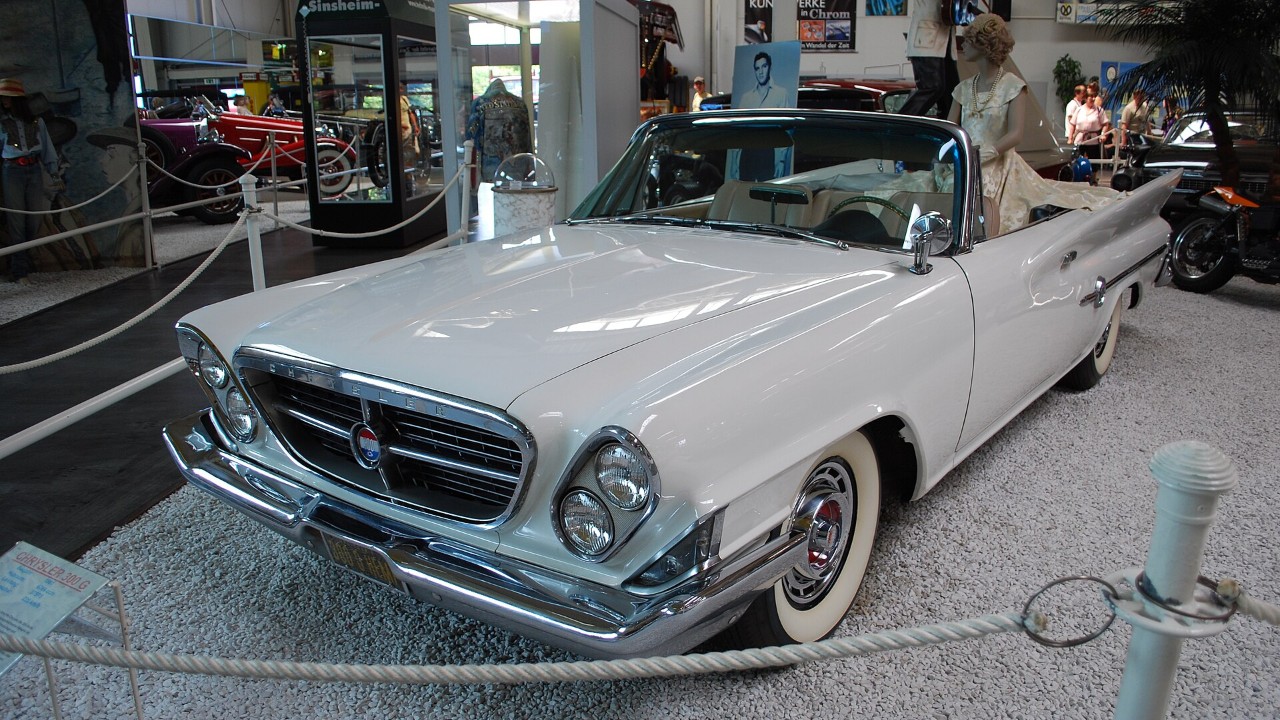
Chrysler started its letter-series cars in 1955 and gave each year a new suffix. By 1961 the line had reached the 300G, skipping the letter I along the way. These were big, luxurious cars rather than stripped racers, but many people see them as the forerunners of the muscle car.
Silodrome notes that the 300G got a redesigned front end and reworked interior for 1961. It also says just 337 convertibles were made. Under the hood sat a 6.8-liter V8 rated at 375 horsepower, and the French manual gearbox option gave way to an American unit. The convertible Silodrome profiled used the three-speed TorqueFlite and crossed the block at Auctions America’s Auburn Fall sale in 2013.
Our take is simple: few cars mix brute force and boulevard style this well. The long fins look wild, while the engine backs up the look. For the bigger story, our list of Chrysler 300 letter cars covers the rest of the family. With so few open cars built, a 300G convertible stays near the top of our wish list.
5. 1962 Mercury Monterey S-55 convertible
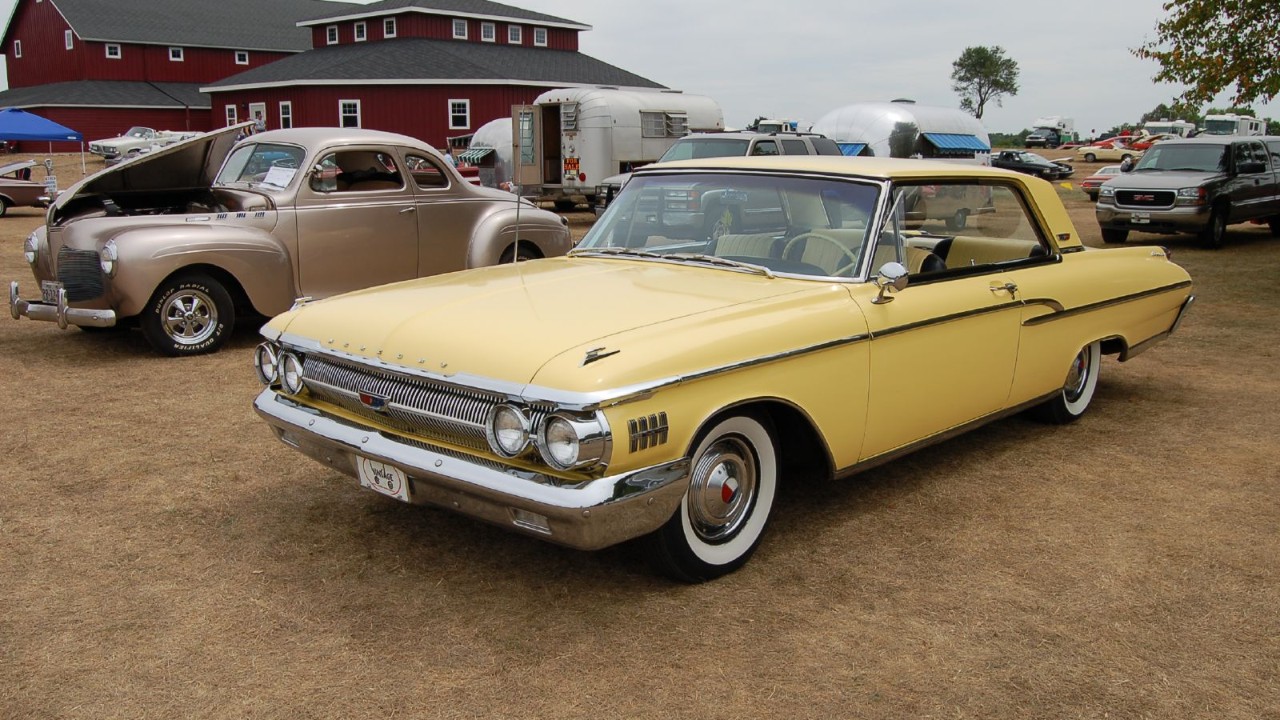
Mercury added the S-55 package to its two-door Monterey hardtops and convertibles to chase the bucket-seat trend. It was a big, comfortable Mercury with a sporty twist. Buyers got front buckets, a chrome floor shifter for the Multi-Drive automatic, special pedals and exclusive door panels with built-in lights.
According to Curbside Classic, Mercury made only 2,772 S-55s in that bucket-seat form. That figure covers both body styles, so the convertible share was smaller still. Power came from a 390-cubic-inch Marauder V8 with a four-barrel carburetor and dual exhausts, rated at 300 horsepower. Other touches included carpeting on the backs of the front buckets and red, white and blue insignia on the glove box panel.
We think the S-55 deserves more credit than it gets. Bucket seats and a floor shifter turned a big Mercury into something close to a personal luxury car. Today the convertible is the version we’d hunt for, because it pairs that space-age interior with an open sky. If you find one, confirm the S-55 equipment is original, because the buckets and floor shifter are what make it special.
6. 1964 Studebaker Daytona convertible

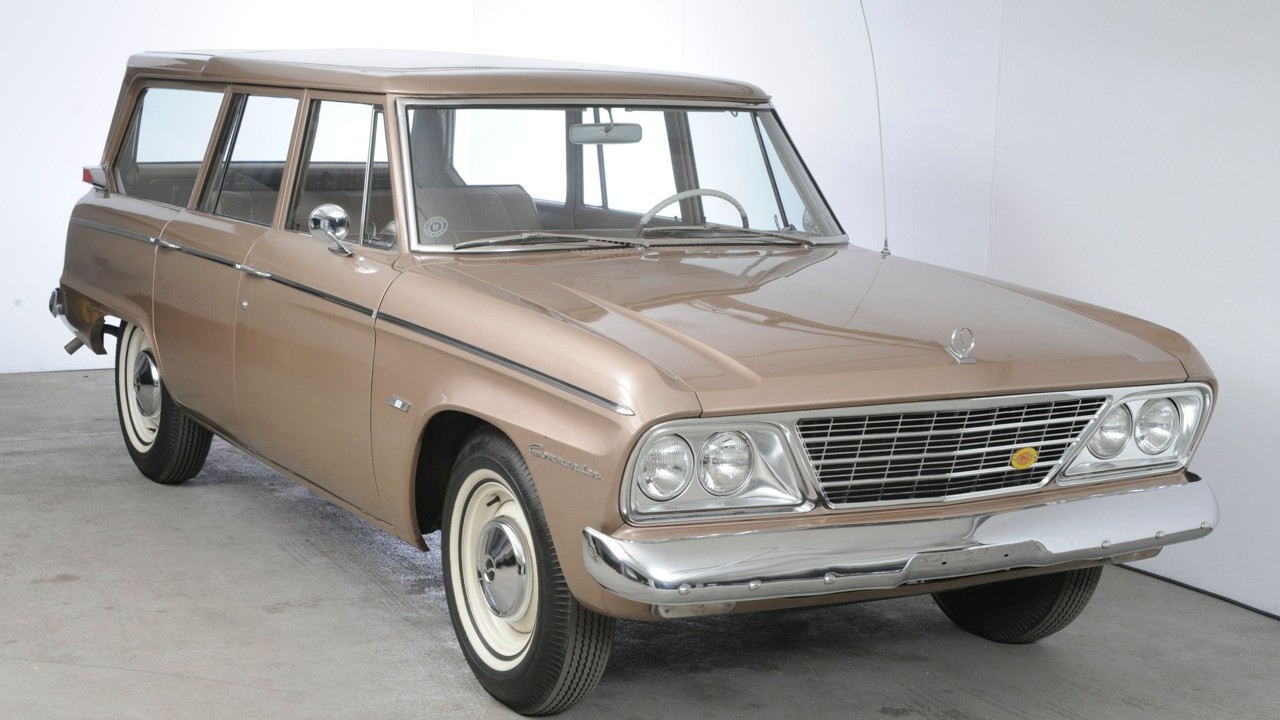
The Daytona arrived as Studebaker’s sporty top trim for 1964, built on the aging Lark body. Designer Brooks Stevens gave it a crisp refresh, and buyers could choose from a wide spread of V8s. Those ran from the 240-horsepower R1 289 to the supercharged R2, rated at 289 horsepower.
Timing was against it. Old Cars Weekly notes that Studebaker announced the closing of its South Bend plant on December 9, 1963. After that, production moved to Hamilton, Ontario, and the magazine counts just 703 Daytona convertibles for 1964. The top R3 engine, a supercharged 304.5-cubic-inch V8, carried a 335-horsepower rating. Meanwhile, the last car built in South Bend, a Bordeaux Red Daytona hardtop, now sits in the Studebaker Museum.
In our opinion, this is one of the most underrated open cars of the decade. It looks clean, it drives better than its reputation, and it marks the end of an American automaker’s run in South Bend. If you find one, look for a V8 car with its records, because the engine choice makes a big difference to value and fun.
7. 1965 Pontiac Catalina 2+2 convertible
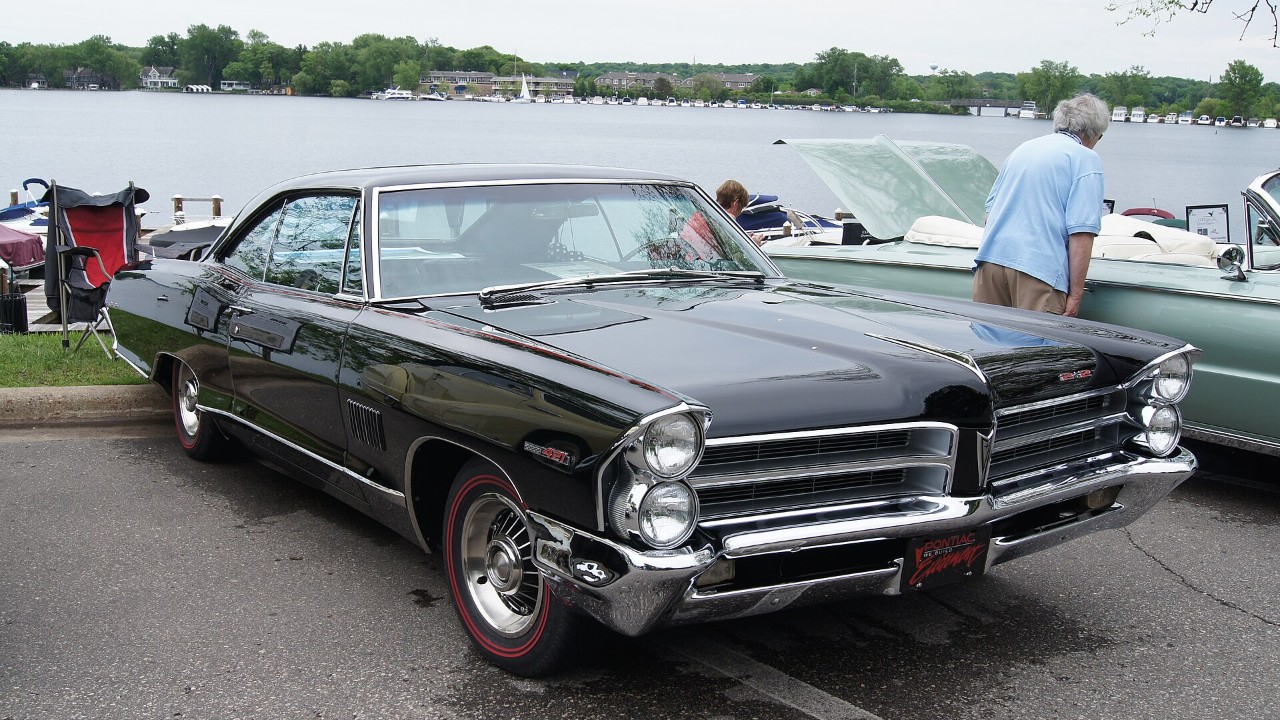
Pontiac’s 2+2 was the full-size answer to the GTO, offered on the Catalina hardtop and convertible. For 1965 the package cost $418.54. It brought a 421-cubic-inch V8 rated at 338 horsepower and 459 lb-ft of torque, plus a Hurst-shifted three-speed, heavy-duty springs and shocks, and bucket seats.
The Old Ride reference library puts 1965 production of the W51 option at 11,521 cars, but it adds that no body-style split survives. Buyers who wanted more could order the 421 HO, rated at 376 horsepower, along with a Muncie four-speed. The same reference says a 2+2 could run the quarter mile in the mid-15-second range. Of the 1965 cars, 5,316 had manual gearboxes and 6,205 had Hydra-Matics, so a manual convertible narrows the field even further.
We picked the convertible because the 2+2 already gets overlooked next to the GTO, and the open version is the one you almost never see. Think of it as a big-block cruiser that could also run with the muscle crowd. If you shop for one, insist on paperwork, because the 2+2 option is easy to fake on a plain Catalina.
8. 1966 Shelby GT350 convertible
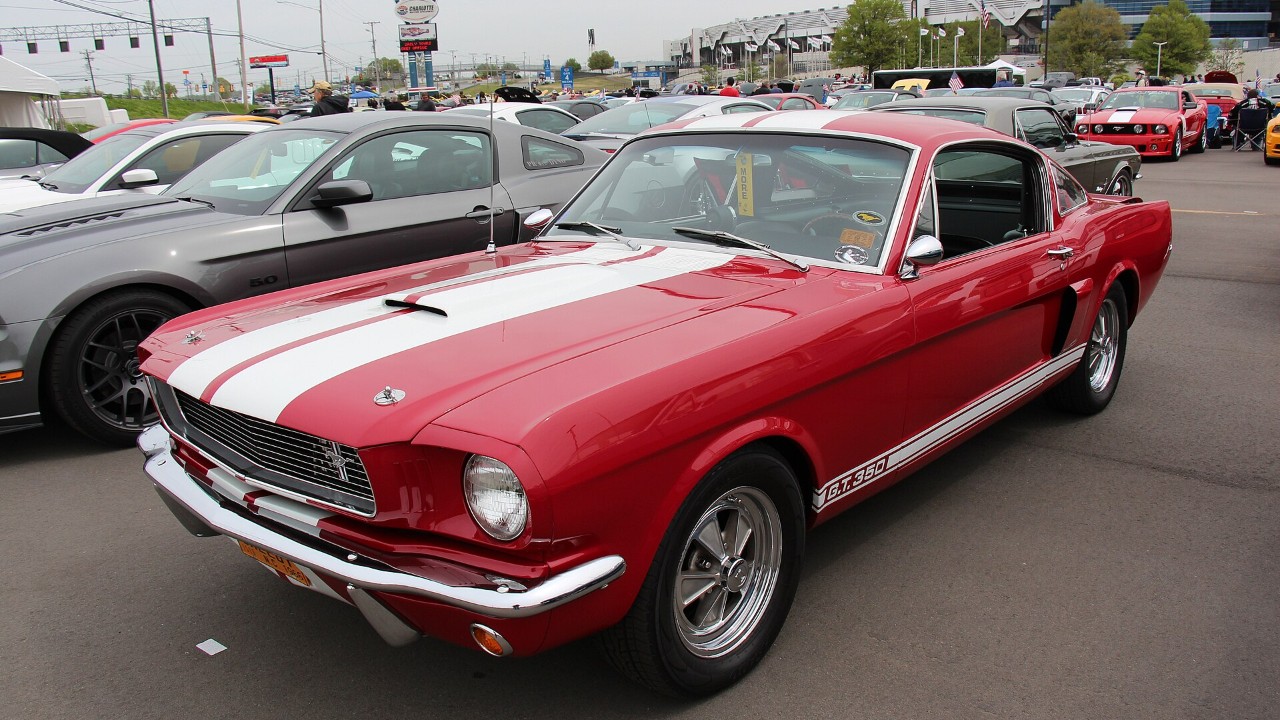
Most people know the 1966 GT350 as a fastback, and that’s what nearly every buyer got. However, Shelby also built a tiny batch of open cars that year. The production GT350 convertible did not arrive until 1968, so these early cars served as test beds.
Hagerty says only four 1966 GT350 convertibles exist. The earliest, serial 6S2375, served in Shelby’s motor pool and later paced SCCA events. Meanwhile, a Ruby Red four-speed example sold at Worldwide Auctioneers in Scottsdale in 2017 for $742,500. At the time of the article, the Hagerty Price Guide put the model between $681,000 and $986,000.
This is the rarest car on our list by a wide margin. With four built, even devoted Shelby fans may go a lifetime without seeing one. If one ever appears at a show near you, take the time to look closely. In our view, it’s the clearest example of a factory open car built for testing rather than for sale. Because the production convertible didn’t come until 1968, these four cars bridge two chapters of Shelby history.
9. 1967 Dodge Coronet R/T convertible
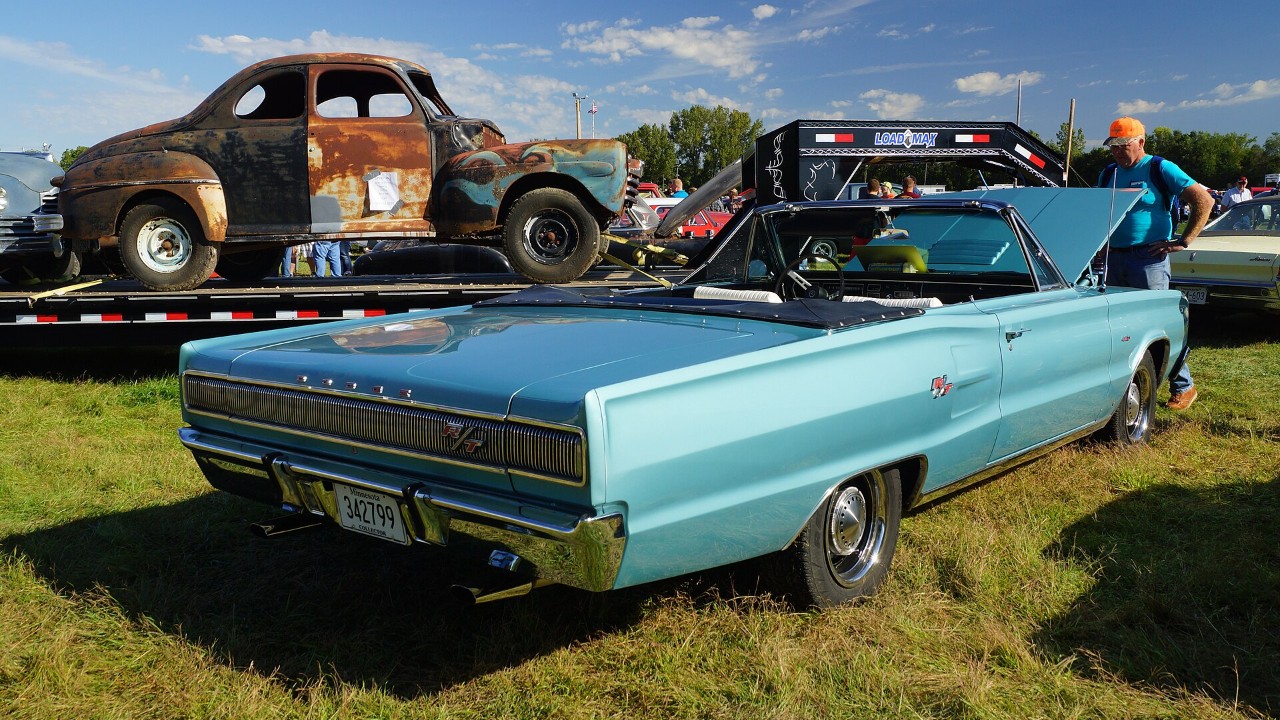
Dodge launched the Coronet R/T for 1967 as its road-and-track muscle car. The standard engine was a 440-cubic-inch Magnum V8 with a single Carter four-barrel, rated at 375 horsepower. Buyers could also order the race-bred 426 Hemi, and the R/T added heavy-duty suspension, bigger brakes and bucket seats.
The convertible was a small slice of the pie. According to RM Sotheby’s, it is believed that Dodge produced only 628, about six percent of R/T production. A Medium Turquoise car with a 440 and a TorqueFlite sold at Hershey in 2023 for $39,600. That car left Dodge’s St. Louis plant on April 17, 1967, as a direct customer order.
We like this one because it’s a big-cube Mopar that has stayed affordable compared with the Hemi cars around it. In fact, its styling was exclusive to the 1967 model year, so it looks different from the more common 1968 and 1969 Coronets. If you want one, check the fender tag and build records first.
10. 1969 Pontiac GTO Judge convertible

Pontiac introduced The Judge for 1969 as a louder, cheaper-feeling GTO aimed at young buyers. It wore wild stripes and a rear spoiler, and it came standard with Ram Air induction. Most Judges were hardtops, because buyers who cared about the quarter mile rarely chose the soft top.
That makes the convertible a true outlier. ClassicCars.com reports that Pontiac built only 108 GTO Judge convertibles for 1969. Just 29 had an automatic transmission, and the car it profiled carried a 400-cubic-inch Ram Air III rated at 366 horsepower. That triple-green car shipped on April 22, 1969, to a dealer in Vancouver, British Columbia. It stayed with its first owner until 2004 and later won a first-place ribbon at Cobble Beach in 2016.
We’d argue the Judge convertible is one of the most wanted Pontiacs of all, because it mixes a famous name with a tiny production run. As a result, clones are common. If you ever shop for one, PHS documentation is the first thing to ask for, before you look at the paint.
11. 1970 Buick GS 455 Stage 1 convertible
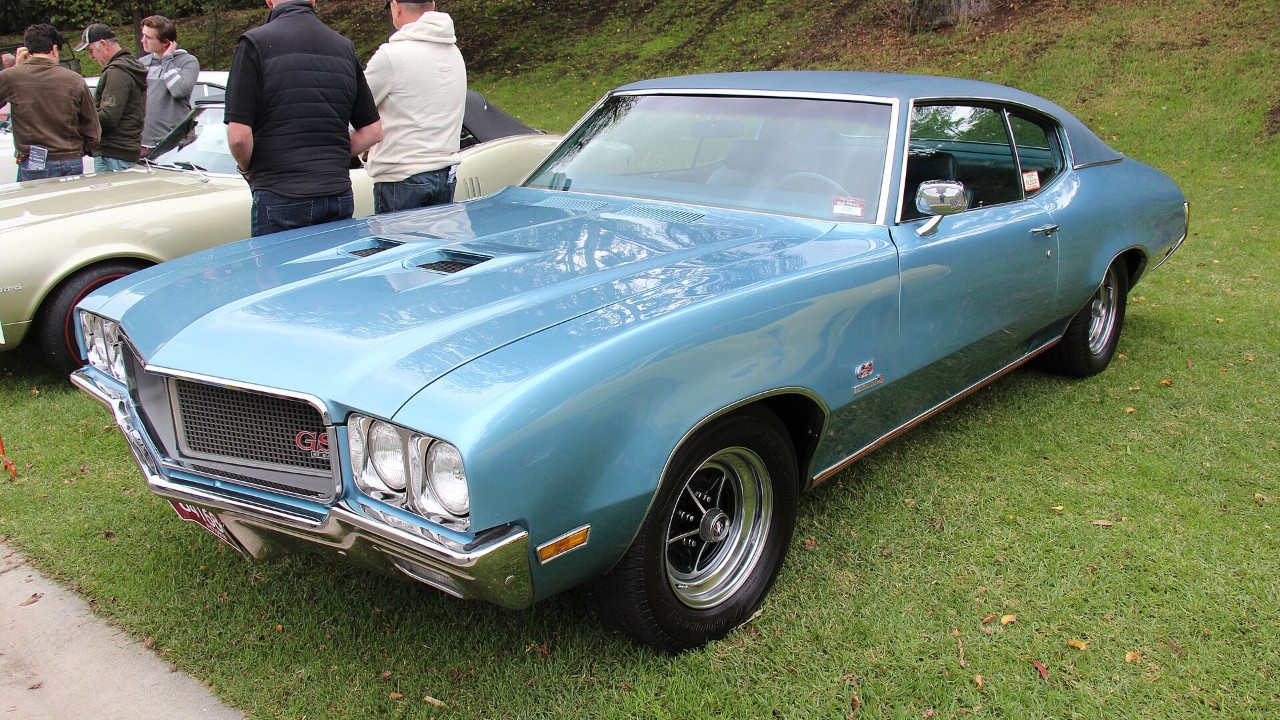
Buick earned a gentleman’s reputation, but the 1970 GS 455 Stage 1 was anything but polite. The package added 10.5:1 compression pistons, a high-lift camshaft, a special four-barrel carburetor and a low-restriction dual exhaust. The result was one of the strongest engines of the muscle car era.
According to RM Sotheby’s, the Stage 1 was rated at 360 horsepower and 510 lb-ft of torque at 2,800 rpm. Sources it cites put 1970 Stage 1 production at 2,465 cars across all body styles. That means the open cars were only a fraction of an already small total. The package also included a positive traction rear axle. The car RM offered came with a window sticker listing power disc brakes, air conditioning, bucket seats and Rallye ride control.
In our view, the Stage 1 convertible is the sleeper of this list. It looks like a well-dressed Buick, yet it pulls like a freight train. For more Buick muscle, see our list of Buick GS models that embarrassed bigger rivals. Insist on documentation before you buy, since many GS cars have been rebuilt as Stage 1 tributes.
12. 1970 Oldsmobile 442 W-30 convertible
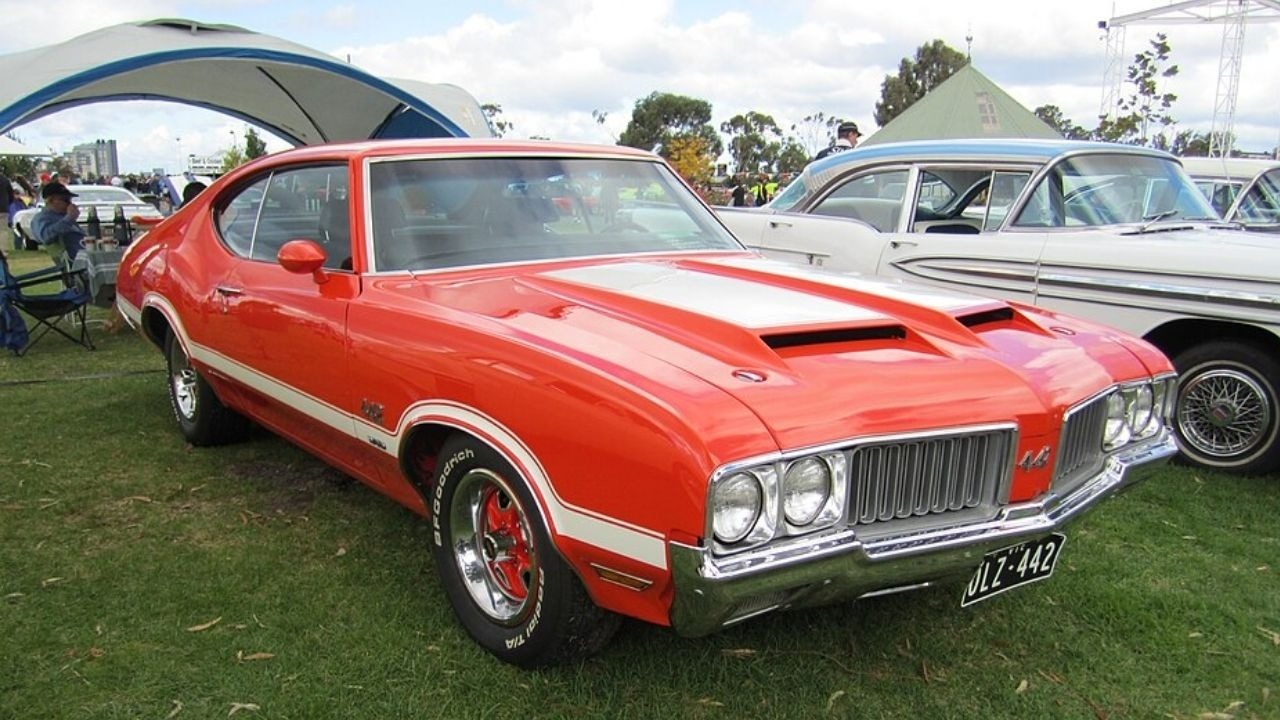
Oldsmobile’s 442 got the 455-cubic-inch V8 for 1970, and the W-30 package took it further. W-30 cars got improved air induction, a fiberglass hood with dual intakes and a list of performance parts. That hood alone saved 18 pounds over the steel version.
RM Sotheby’s says the standard 455 made 365 horsepower and 500 lb-ft of torque, while the W-30 claimed 370 horsepower. It believes Oldsmobile produced only 264 W-30 convertibles for 1970, with just 96 of them built with a four-speed manual. The W-30 package also added a four-barrel carburetor and other performance parts, and the car RM offered paired its 455 with a close-ratio four-speed.
We’d put this car at the top of any Oldsmobile wish list. It has the biggest engine, the rarest body and a hood that tells you what’s underneath. Few muscle convertibles pair that much torque with a factory four-speed, and that’s the mix we’d want on a summer night. Clearly the market agrees, since the four-speed example RM offered sold for $247,500.
More from Fast Lane Only