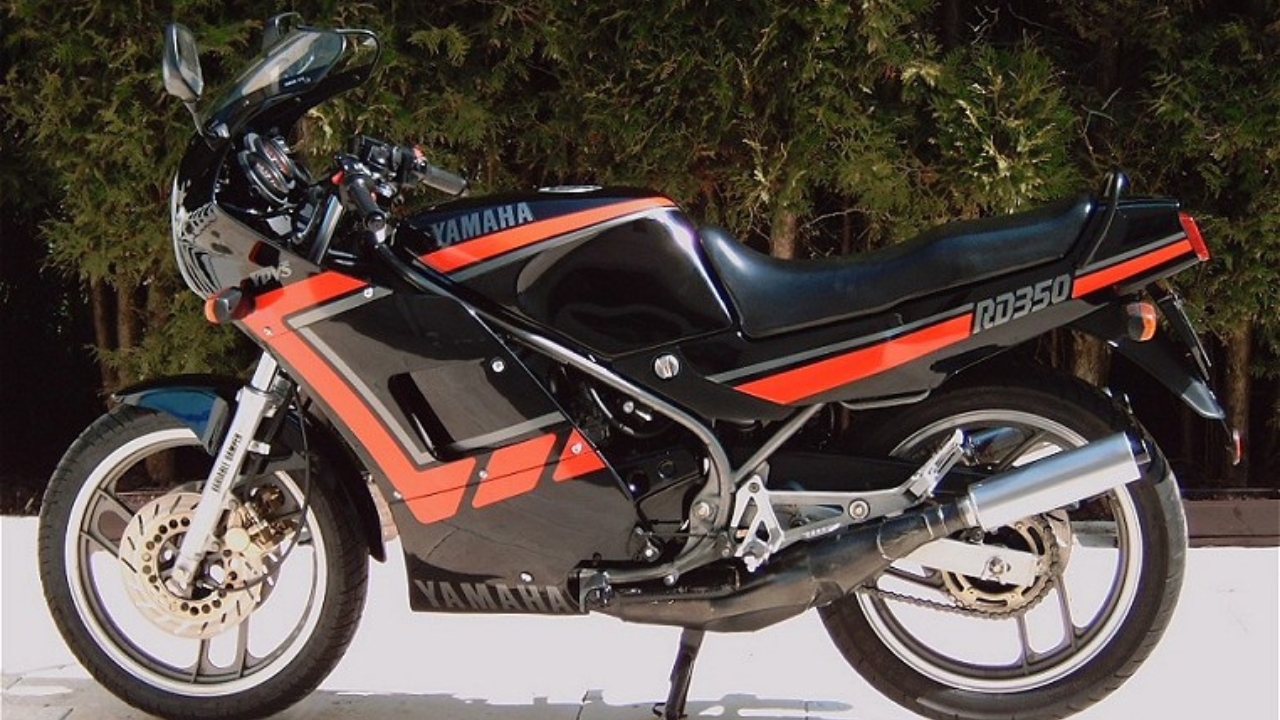
When the Yamaha RD350LC arrived in Britain in 1980, it was fast enough to start talk of restricting learner riders to 125cc bikes. That is a strong reaction to a 347cc twin. However, two-stroke motorcycles had been doing this for years, because they packed far more punch than their small engines suggested.
A two-stroke fires on every turn of the crank, so a small engine can make big power. The catch is that the power often arrives all at once, and the bikes around those engines were not always ready for it. That gap between the spec sheet and the real-world speed is what this list is about.
These eight are our picks, and the verdict is our opinion. We think each one was quicker than its size, price or reputation let on. The figures behind each choice come from period road tests, factory archives and specialist buyer’s guides.
1. 1969 Kawasaki H1 Mach III
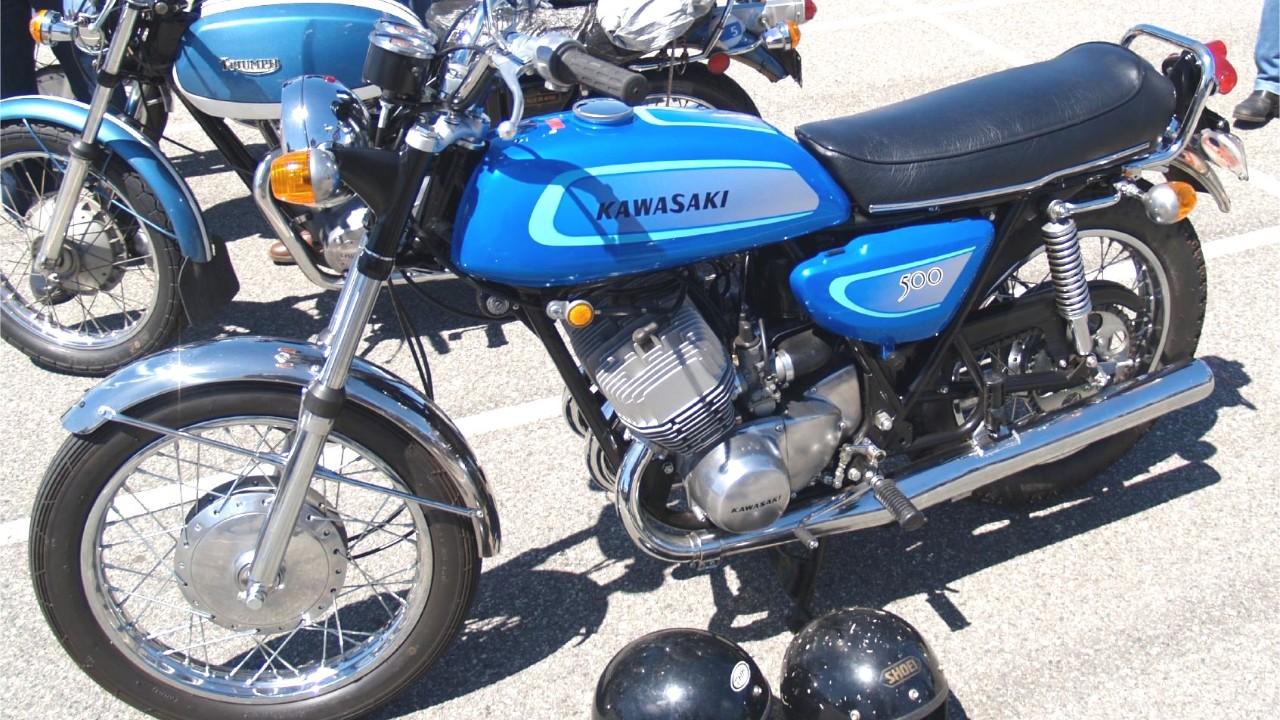
Kawasaki launched the H1 in 1969 with a 499cc two-stroke triple and a price of $999. That price got you a lot of speed. According to Cycle World, Tony Nicosia ran one through the quarter-mile in 12.96 seconds at 100.7 mph.
The engine used piston-port induction and what Cycle World calls a “hot” CDI ignition with three separate pickups. In our view, that strong spark was part of what made a 500cc triple feel so violent. Meanwhile, the H1 line lasted eight years, through the KH500 of 1976.
In our view, the Mach III is the bike that taught everyone what a cheap two-stroke could do. A sub-13-second quarter for under $1,000 was a lot of performance to sell to anyone with a license. It also set the tone for every Kawasaki triple that followed. On a frame and brakes from 1969, that kind of acceleration demanded real respect from whoever was holding the bars. If you’re shopping for one now, have the engine checked by someone who knows two-stroke triples before you pay a collector’s price.
2. 1972 Suzuki GT380
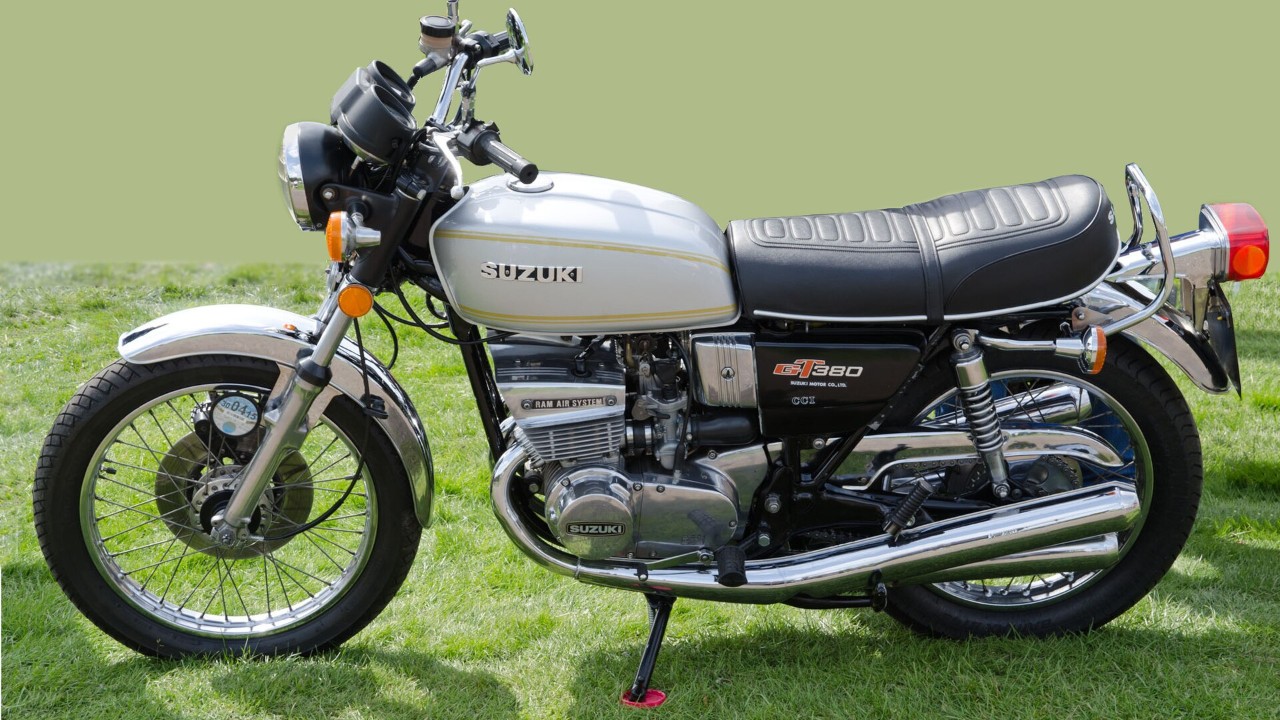
The GT380 looked like a bigger bike than it was, and Suzuki designed it that way. According to Suzuki’s own digital archive, its quad mufflers gave it the look of a 500cc-class motorcycle. Underneath sat a 371cc air-cooled three-cylinder two-stroke that made 38 PS at 7,500 rpm.
Suzuki also gave it a six-speed gearbox and its Ram Air cooling system. The archive says that system worked well enough to compare with liquid cooling. Its Japanese nickname was “Sanpachi,” and it weighed 183 kg wet. Early bikes used drum brakes at both ends, but a hydraulic front disc arrived later the same year. Suzuki’s own tests even claimed 35 km per liter at a steady 50 km/h, from a 15-liter tank.
We included the GT380 in our earlier list of 20 vintage motorcycles that were faster than anyone admitted. This time, the point is its disguise. Our take: a 371cc triple dressed as a 500 is about as sneaky as a 1970s bike got. Few riders would have guessed how willing that small triple was until they twisted the throttle.
3. 1971 Suzuki T500 Titan

Suzuki first sold this twin in 1968 as the Cobra. Then Ford challenged the name, so Suzuki renamed it the Titan in 1969. According to Bike-urious, the 492cc air-cooled two-stroke twin made 47 hp and reached an observed 105 mph.
Those were big numbers for a simple twin with drum brakes and a five-speed gearbox. Suzuki’s AutoLube system fed oil to the crankshaft and mixed it with the fuel, so owners didn’t have to premix gas. The bike weighed just over 400 pounds and rode on hydraulic forks with preload-adjustable rear shocks. Bike-urious also calls it reliable and long-lasting, with a wide powerband.
That reputation for toughness helped it sell. In the end, the line moved more than 100,000 units over ten years. In our view, the Titan was the quiet achiever of early-1970s two-strokes. It didn’t have the triples’ drama, but it delivered 100-mph speed in a package that ordinary riders could live with. If you find one, check the front end, because some, like the Bike-urious example, have been converted to a later disc-brake setup.
4. 1980 Yamaha RD350LC

The Yamaha RD350LC used a water-cooled 347cc parallel twin with a 180-degree crank. According to Classic Bike, it made 47 bhp at 8,500 rpm and could reach 115 mph. A monoshock rear suspension with an adjustable shock helped it corner much better than earlier two-strokes.
Demand for the Yamaha RD350LC outran supply in Britain. In fact, Yamaha gave pre-order customers a free Bell helmet to make up for delivery delays. Its speed and handling made the LC hugely popular, and that popularity is what started the talk about limiting learner riders to 125cc. The Yamaha Pro-Am race series also helped produce future racing stars. Later, in 1983, a second-generation LC with Yamaha’s YPVS power valve pushed the claimed output to about 60 bhp, according to BikeSocial.
In our view, this is the clearest case on the list of a bike being faster than anyone was ready for. If you want one now, BikeSocial’s advice is to decide first whether you want a rider or a project. A well-restored bike can work out cheaper than a basket case, because rebuild costs often run far over budget.
5. 1984 Yamaha RD500LC

Yamaha built the RD500LC to copy Eddie Lawson’s works YZR500 Grand Prix bike. According to Hagerty UK, it used a two-stroke V4 with twin crankshafts and cylinders set 50 degrees apart. The European version reached showrooms in 1984 with 87 bhp at 9,500 rpm.
Japan got a different bike, the RZV500R. Yamaha cut its power to a claimed 63 bhp but gave it an aluminum frame, which kept dry weight at 173 kg. Meanwhile, the United States never got it at all, because emissions rules kept the two-stroke out. Canada’s version, sold as the RZV500R, was really the 87-bhp RD with a different name and graphics.
The RD500LC didn’t sell well in Europe. Hagerty says it was expensive and too single-minded for most buyers, who often chose bigger four-strokes such as Yamaha’s own FJ1100. Our take: a road-going copy of a championship GP bike was always going to be more than most riders could use. In Japan, though, about 1,600 sold, reportedly within a week. Hagerty’s history also notes that the front brakes drew praise, while the soft front forks bottomed out under hard braking. Fuel economy dropped below 30 mpg when ridden hard.
6. 1985 Suzuki RG500 Gamma
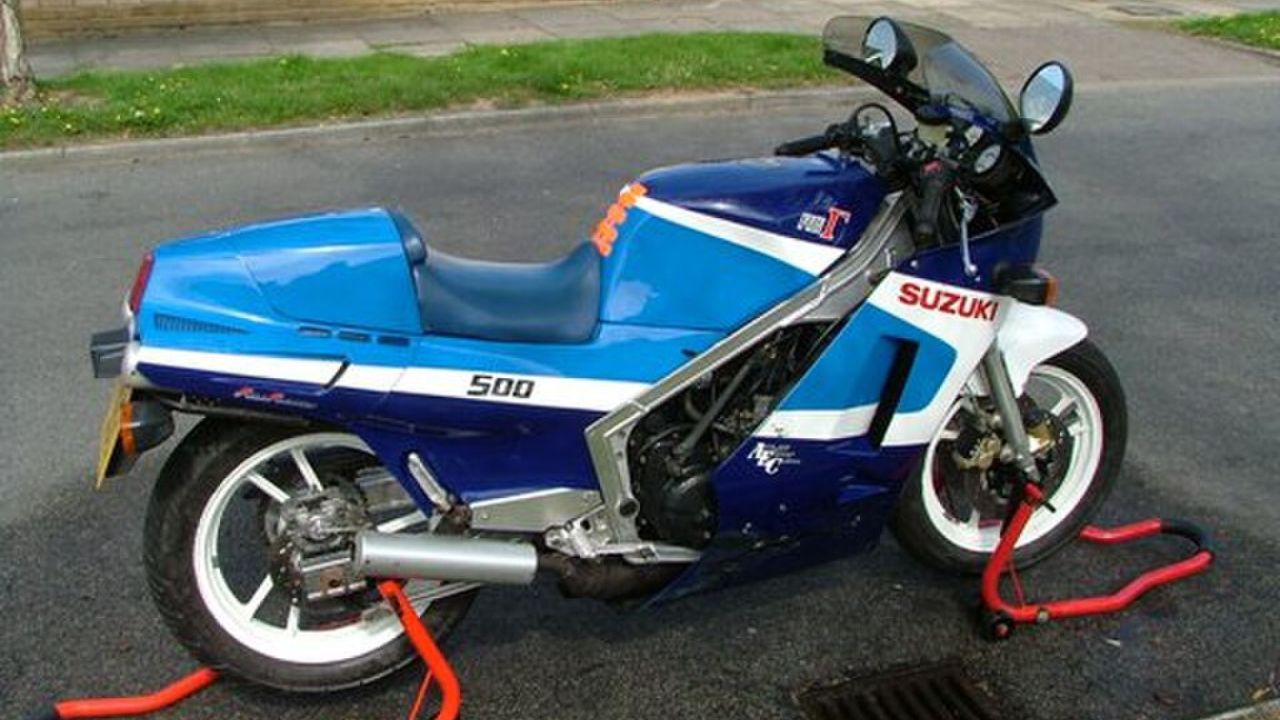
Suzuki’s answer was even closer to a race bike. The RG500 Gamma used a 500cc square-four two-stroke with rotary valves, a layout taken from the machines that won Suzuki the 500cc world championships in 1976 and 1977. According to Rider magazine, Suzuki claimed 95 hp for the Canadian model.
The bike weighed about 400 pounds wet. As a result, it could run the quarter-mile in about 11 seconds at 120 mph and top 130 mph. The power came in with a bang, too. Rider says the midrange was weak, but it pulled hard from 6,500 rpm to its 9,500-rpm peak. Its tachometer didn’t even start counting until 3,000 rpm. Rider compares it with the Honda NS400 and Yamaha RZ500, and with Suzuki’s own 1985 GSX-R750.
Like the Yamaha, it was never officially imported to the United States, and only a few came over from Canada. We’ve also included the Gamma among 18 classic bikes you’ve probably never seen in person. In our view, an 11-second street bike that most Americans never saw is the very definition of faster than anyone admitted.
7. 1985 Honda NS400R
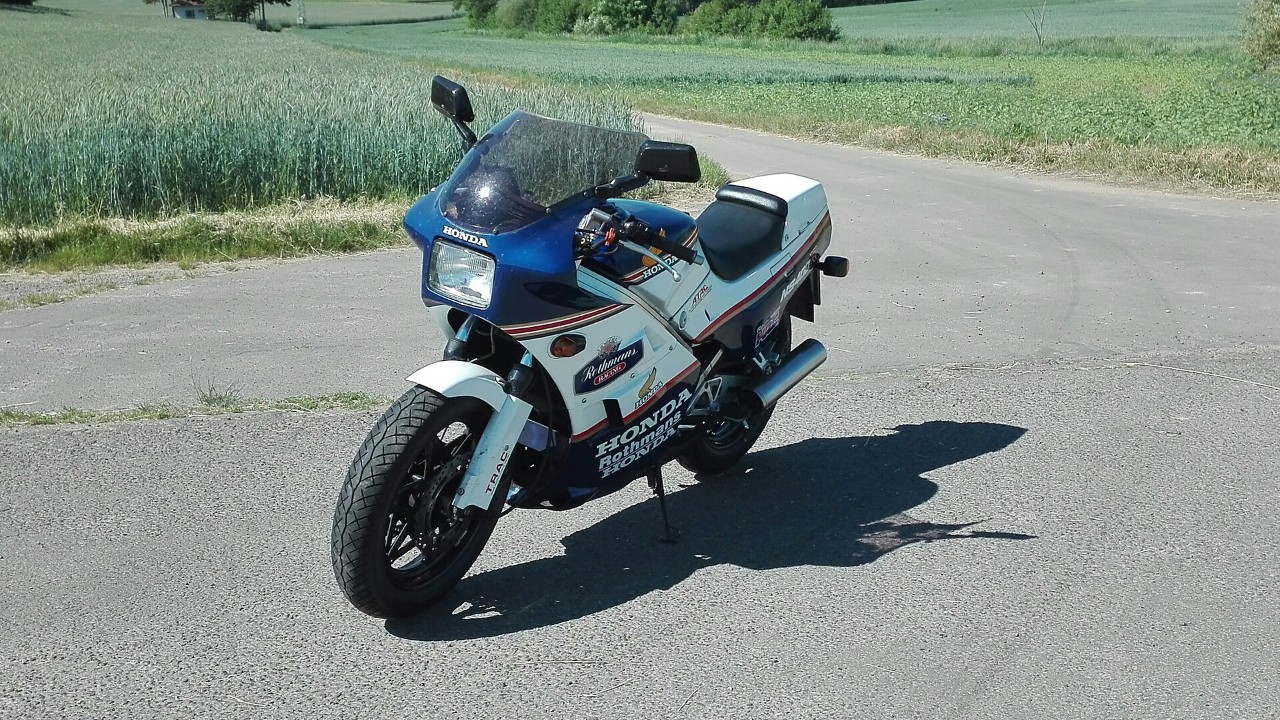
Honda’s road-going V3 took its idea from the NS500 Grand Prix racer, but it flipped the layout. The NS400R put two cylinders at the front and one at the rear. According to BikeSocial’s buying guide, the 387cc liquid-cooled two-stroke made 72 bhp.
It also used Honda’s ATAC system on the front cylinders. Those exhaust chambers opened at low revs for torque, then closed at higher revs for top-end power. BikeSocial lists a top speed of 134 mph, while its text gives a range of 126 to 135 mph, depending on conditions and rider weight. Honda sold it from 1985 until the end of 1987, and it cost £2,899 new in Britain. Honda even built 50 bikes with a 373cc engine for South African homologation.
Our take: a 387cc bike that could approach 135 mph was a lot quicker than its displacement suggested. Japanese bikes were limited to 59 bhp, so the export version was the one to have. If you’re buying today, BikeSocial puts tidy examples at £6,000 to £9,000, and mint ones up to £12,000.
8. 1987 Honda NSR250R
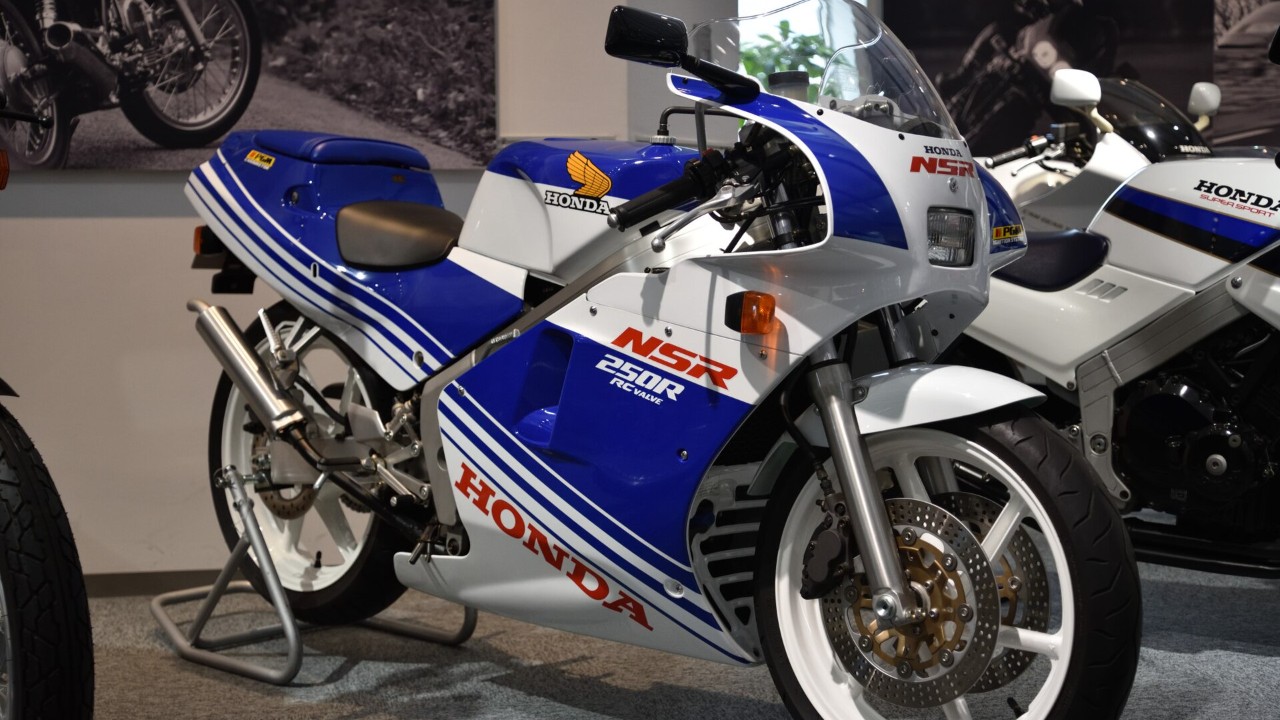
Honda built the NSR250R as a two-stroke race replica. The 1987 bike, known by its MC16 frame code, used a V-twin two-stroke rated at about 45 horsepower, according to Bike-urious. Honda gave it 28mm flat-slide carburetors, a cassette-type gearbox and an aluminum frame.
On paper, 45 horsepower sounds modest. In practice, it came in a race-replica chassis with an aluminum frame and a cassette gearbox, which is exactly the hardware you’d expect on a track bike. That combination made the little NSR far quicker on a twisty road than its numbers suggest.
Some have since been legally imported to the United States, like the Bike-urious example. Bike-urious notes that California riders would need to research registration before buying one, which is good buyer advice for any imported two-stroke. Because two-stroke road bikes have all but vanished, this kind of 250 now feels like a time capsule you can ride. In our view, the MC16 closes this list as the bike that proved a 250 could feel like a Grand Prix machine, and it did it with roughly 45 horsepower.
More from Fast Lane Only