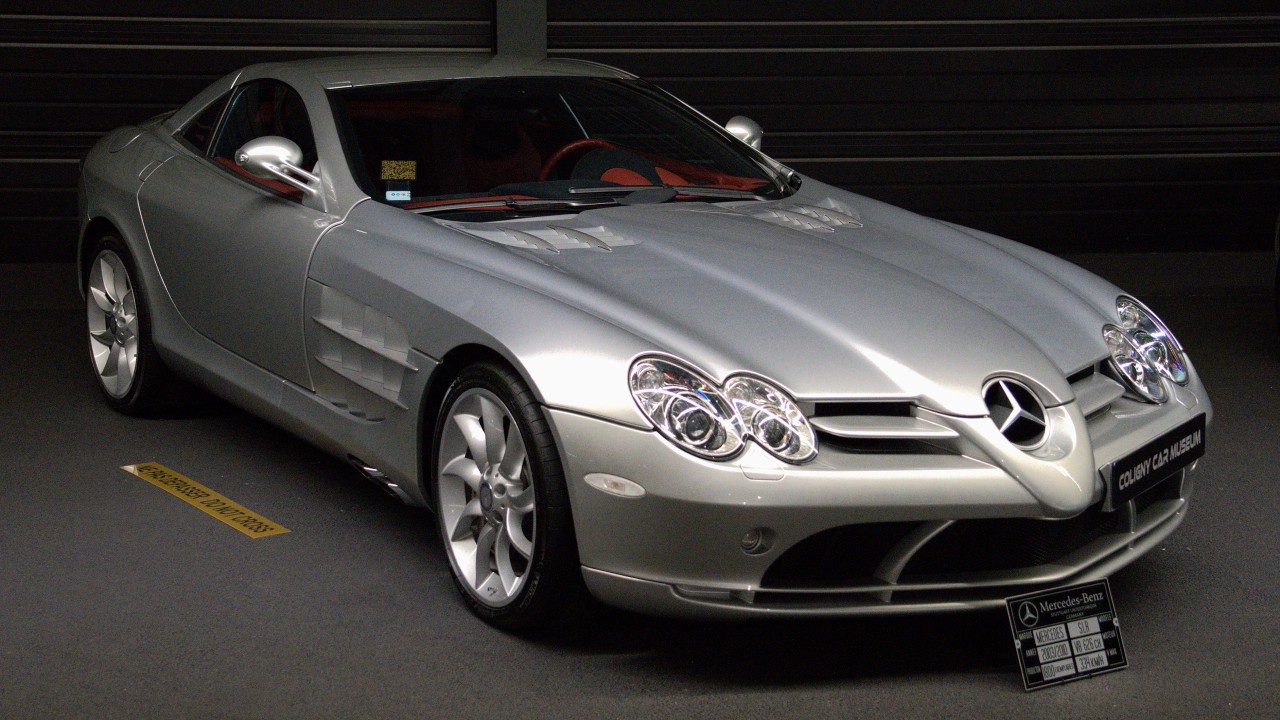
The 2005 Mercedes SLR McLaren arrived as a road‑legal echo of Formula 1, pairing a hand‑built supercharged V8 with a carbon tub and serious aerodynamics. It was not just fast in a straight line; it was engineered to be precise at triple‑digit speeds, even if its character never fully fit into a single box of grand tourer or track weapon.
Two decades on, the SLR sits in a curious place. It is rare, technically sophisticated and historically significant, yet collectors and drivers still debate whether it is a misunderstood masterpiece or an overpowered anachronism from a very different era of performance cars.
From concept fantasy to production reality
The SLR story began as a design exercise that aimed to translate the 1950s 300 SLR racing heritage into a modern carbon fiber supercar. Mercedes‑Benz partnered with McLaren Automotive, which at the time ran the works Formula 1 team, to bring that idea into production. The collaboration gave the car its distinctive proportions, with a long carbon front structure housing the engine and a compact cabin set far back for weight distribution.
Under the hood sat a 5.4‑liter supercharged V8, part of the M155 family, mounted behind the front axle to create a front mid‑engine layout. Power figures around 617 horsepower and 575 pound‑feet of torque meant the SLR could launch to 60 mph in roughly 3.8 seconds and reach a top speed near 207 mph, figures that placed it squarely among the fastest cars of its time. The engine was paired with a five‑speed automatic, a choice that reflected Mercedes‑Benz’s desire to build a high‑speed GT rather than a stripped‑out track car.
The body and chassis used carbon fiber reinforced plastic extensively, a technology that McLaren had already mastered in Formula 1. That material choice kept weight lower than a conventional steel luxury coupe, although at around 3,800 pounds, the SLR was still heavier than purist exotics. The payoff came in stiffness, crash performance and the ability to integrate complex aerodynamic aids directly into the structure.
Design that mixed nostalgia and aggression
Visually, the SLR balanced retro cues with aggressive aero. The long nose and side gills nodded to the 300 SLR, while the scissor‑style doors and sharp body creases signaled a modern supercar. The front fascia channeled air through deep ducts to cool the engine and brakes, and the rear featured an active air brake that tilted upward under hard deceleration to add stability.
Inside, the cabin offered a blend of luxury and motorsport influence. Carbon fiber panels, aluminum switchgear and deeply bolstered seats reminded occupants of the car’s performance intent, while leather trim and a relatively quiet ride at highway speeds kept it aligned with Mercedes‑Benz’s comfort expectations. The driving position sat low and far back, with a long hood stretching ahead, which created a sense of occasion but also demanded respect in tight urban environments.
Engineering for high‑speed stability
The SLR’s engineering brief focused on high‑speed stability and repeatable performance rather than delicate, low‑speed agility. The suspension used double wishbones at each corner, tuned for stability on fast autobahn runs and sweeping circuits. The carbon ceramic brakes, among the most advanced fitted to a road car at the time, worked in concert with the rear air brake to haul the car down from very high speeds with impressive consistency.
Aerodynamics played a central role. The underbody and rear diffuser were shaped to keep the car planted at speed, while the front splitter and side vents managed airflow around the nose and front wheels. Together, they produced a car that came alive at triple digits, where the steering settled and the chassis felt more composed than at city speeds. Drivers who approached it as a long‑legged GT rather than a nimble back‑road toy often found its character more coherent.
On‑road character: brutal, fast and demanding
On the road, the SLR delivered a distinctive mix of brutality and refinement. The supercharged V8 produced instant torque, which made overtakes effortless and highway merges almost comically brief. The exhaust, routed through side pipes ahead of the rear wheels, gave the car a sharp, metallic bark that contrasted with the more muted cabin isolation expected from a Mercedes‑Benz coupe.
At lower speeds, the steering weight and long wheelbase could make the car feel heavy and deliberate rather than playful. The five‑speed automatic, although strong enough to handle the torque, shifted more slowly than the single‑clutch and dual‑clutch gearboxes that would define the next generation of supercars. That transmission choice reinforced the SLR’s identity as a high‑speed cruiser that happened to have hypercar numbers, rather than a scalpel‑sharp track tool.
Market reception and early criticism
When new, the SLR carried a price tag that placed it among the most expensive production cars in the world, and expectations followed suit. Some reviewers praised its straight‑line performance, build quality and everyday usability. Others criticized its weight, its automatic gearbox and a driving experience that they felt sat awkwardly between a luxury GT and a purebred exotic.
That split reception shaped the car’s early resale fortunes. Compared with some contemporaries, especially limited‑run track‑focused models, the SLR did not immediately skyrocket in value after production ended. Enthusiasts who wanted a rawer experience gravitated to other brands, while traditional Mercedes‑Benz buyers sometimes found the SLR too loud, firm or visually aggressive for daily use.
Collector status in a mixed market
Two decades later, the SLR occupies a complex niche in the collector world. Market data show that values have not moved in a straight line, with some variants attracting strong interest and others trading more softly. Analysts describe a mixed market for the SLR, where condition, mileage and specification can swing prices significantly.
Limited editions, such as later special‑series cars and open‑top variants, tend to command a premium, helped by lower production numbers and more dramatic styling. Standard coupes from the mid‑2000s can sometimes be found at prices that undercut newer, less rare supercars, which has drawn interest from buyers who value the SLR’s blend of heritage and usability. At the same time, high maintenance costs and the complexity of its carbon structure keep some potential owners cautious.
Why the SLR still matters to enthusiasts
For many enthusiasts, the SLR’s importance goes beyond its auction results. It represents a rare moment when a major luxury manufacturer and a top‑tier racing constructor tried to build a shared flagship road car. That partnership produced a machine that feels distinct from both a traditional Mercedes‑Benz coupe and a typical British supercar, with a character that reflects both parents without fully belonging to either.
The car also captures a particular moment in performance‑car evolution. It arrived just before dual‑clutch transmissions, hybrid assistance and active suspension systems became common in high‑end models. As a result, it combines old‑school elements like a big‑displacement, mechanically supercharged V8 and a conventional automatic with advanced materials and aerodynamics. For drivers who enjoy that mix of analog feel and modern speed, the SLR offers an experience that later, more digitally managed cars cannot easily replicate.
Comparison with its successors and rivals
Looking back, the SLR can be seen as a bridge between the analog supercars of the 1990s and the more electronically assisted machines that followed. Compared with rivals of its era, it often feels more planted at very high speeds but less playful at legal limits. Against newer cars that use turbocharged engines and complex driver aids, the SLR’s responses are more immediate and less filtered, but its transmission and weight reveal its age.
Within Mercedes‑Benz’s own lineup, later performance flagships adopted different philosophies. Some focused more clearly on track performance with lighter weight and sharper chassis tuning, while others leaned into luxury and technology. The SLR remains unusual in how directly it tried to translate a racing partnership into a road car, something that gives it a distinct place in the company’s performance history.
Living with a 2005 SLR today
For current owners, the SLR is as much a commitment as a car. Its carbon structure and specialized components require knowledgeable technicians, and routine service can be more involved than on a conventional GT. Tires, brakes and suspension parts must cope with very high performance loads, which adds to running costs.
On the positive side, the car’s usability remains a strong point. The cabin offers genuine long‑distance comfort, with supportive seats and reasonable luggage space for a supercar. The automatic gearbox, while dated in absolute performance terms, makes city driving and traffic far less stressful than in some manual or single‑clutch rivals. Owners who regularly use their cars on highways and long trips often highlight that blend of comfort and speed as the SLR’s greatest strength.
How perception is shifting with time
As the supercar market moves further into hybrid and electric powertrains, the SLR’s character is being reassessed. What once seemed like compromises now look more like defining traits. The heavy steering, the immediate supercharged torque and the physical sensation of the side‑exit exhaust all contribute to a sense of mechanical involvement that many newer cars smooth out.
Collectors increasingly value cars that offer a unique experience rather than simply the fastest lap time. In that context, the SLR’s blend of luxury, speed and drama gives it a clearer identity. It is not the sharpest track tool, and it never tried to be. Instead, it excels as a high‑speed event, a car that turns any long journey into something memorable.
What future enthusiasts will look for
Looking ahead, the SLR’s long‑term reputation will likely depend on a few key factors. Originality will matter, since the car’s value is tied closely to its status as a factory‑engineered collaboration between Mercedes‑Benz and McLaren. Well‑documented service history will also be critical, given the complexity of its carbon structure and high‑performance components.
Enthusiasts who prioritize character, heritage and engineering stories are likely to keep the SLR in demand. Its place in the timeline of performance cars is secure as one of the last supercharged V8 flagships from a major luxury brand, and as a visible product of a high‑profile racing partnership. As the market continues to evolve, that combination of power and precision is likely to remain its defining appeal.
More from Fast Lane Only
- Unboxing the WWII Jeep in a Crate
- 15 rare Chevys collectors are quietly buying
- 10 underrated V8s still worth hunting down
- Police notice this before you even roll window down
*Research for this article included AI assistance, with all final content reviewed by human editors.