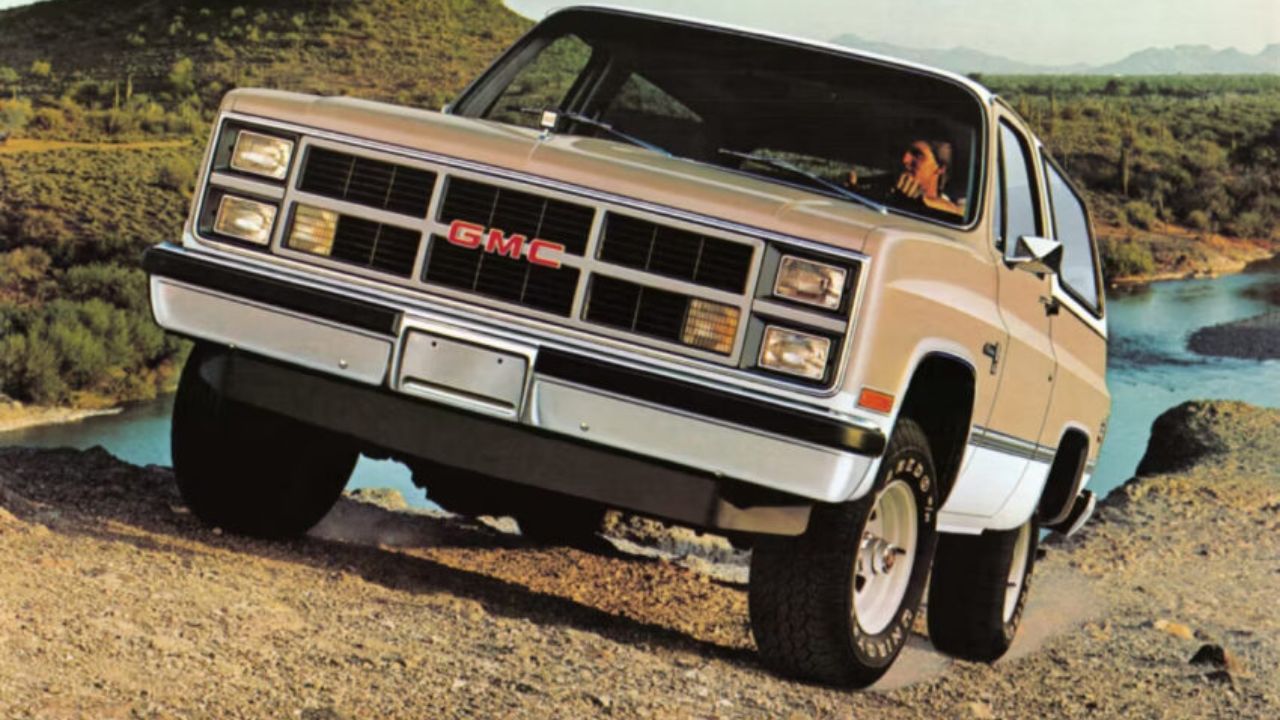
GMC is reportedly preparing to bring back the Jimmy nameplate with a boxy, retro-inspired SUV aimed squarely at buyers drawn to the Ford Bronco and Jeep Wrangler. Early reporting points to a squared-off “square-body” design, body-on-frame construction, and serious off-road intent that would give GMC a dedicated adventure model instead of relying on off-road trims of existing crossovers.
If the project moves ahead as described, the revived Jimmy would become a halo for GMC’s combustion lineup at a time when the brand is juggling aggressive electric-vehicle plans with continued demand for rugged gasoline trucks and SUVs. It would also represent one of General Motors’ most overt plays yet in the nostalgia-driven off-road market.
New reporting on a boxy GMC Jimmy aimed at Bronco and Wrangler
Recent reporting describes internal plans at GMC to resurrect the Jimmy as a mid-size SUV with strong visual links to classic square-body trucks from the 1970s and 1980s. One detailed account outlines a two-row utility with a tall, upright greenhouse, flat body sides, and a bluff front end that recalls earlier generations of GMC’s full-size SUVs and pickups, rather than the rounded shapes of the current Terrain and Acadia. That same report indicates that designers are working toward a classic-inspired grille and simple, squared wheel arches to drive home the retro theme.
The prospective Jimmy would reportedly ride on a ladder-frame architecture rather than a unibody platform. As described in that reporting, the plan is to adapt a version of General Motors’ existing truck frame and suspension hardware, which already underpins models such as the Chevrolet Colorado and GMC Canyon. Using a truck-based foundation would allow GMC to offer low-range four-wheel drive, robust towing capability, and the kind of suspension articulation that off-road buyers expect from vehicles like the Bronco and Wrangler.
Powertrain speculation within that same coverage centers on turbocharged four-cylinder and V6 gasoline engines already in GM’s portfolio, paired with an automatic transmission and available locking differentials. While there is no confirmed engine list, the intent described is to balance trail performance with fuel economy that can compete with other mid-size off-road SUVs. Some of the early reporting also raises the possibility of a future hybrid or plug-in hybrid variant, although that part of the plan is explicitly described as unconfirmed and therefore remains unverified based on available sources.
Illustrative material from another outlet shows how a production Jimmy could evolve by the late 2020s, with renderings that combine a short front overhang, high ground clearance, and a squared-off rear hatch. Those illustrations, framed as informed speculation, depict a vehicle that splits the difference in size between a Bronco and a Toyota 4Runner, with a wheelbase long enough for highway stability but compact enough for tight trails. That same analysis suggests a likely launch window in the second half of the decade, positioning the Jimmy as a 2028 or 2029 model if GMC greenlights the program, which aligns with references to a potential 2029 Jimmy in those projections.
How a retro GMC Jimmy fits the current SUV and off-road market
The strategic context for a revived Jimmy is a U.S. SUV market that has shifted toward lifestyle off-roaders with strong brand identity. Ford’s Bronco has carved out a significant niche with its mix of removable roof panels, heritage styling, and modern tech, while Jeep’s Wrangler continues to anchor Stellantis’ off-road lineup. Both models lean heavily on nostalgia and visual continuity with their ancestors. GMC, by contrast, currently competes in off-road spaces mainly through AT4 and AT4X trims of mainstream models, rather than a dedicated adventure SUV with its own identity.
Reporting on the Jimmy revival stresses that GMC leadership sees an opportunity to leverage the brand’s truck reputation and long history of body-on-frame SUVs. The classic Jimmy and its Chevrolet sibling, the Blazer, were key players in the early SUV era, and the decision to give Chevrolet a unibody, street-focused Blazer in its modern form left space for a more traditional off-roader under the GMC badge. By leaning into a square-body aesthetic, the new Jimmy would connect visually with vintage GMC and Chevrolet trucks that have become increasingly popular in the collector market.
One detailed report on the project describes the design brief as an attempt to “bring back classic design” to a modern GMC SUV, with explicit references to the squared-off proportions of earlier trucks. That reporting also frames the Jimmy as part of a broader effort to give GMC a stronger emotional hook, alongside its premium positioning and Denali trims. By offering a vehicle that looks and feels distinct from the Chevrolet Colorado and Tahoe, GMC can justify higher pricing and more personalization, especially if the Jimmy becomes a canvas for off-road packages, appearance groups, and dealer-installed accessories.
The same source notes that GMC has already tested the market’s appetite for retro cues through limited-edition trims and special appearance packages on its pickups. The positive response to those packages reportedly encouraged internal advocates for a full retro-inspired SUV. In that context, the Jimmy project is described as a logical extension of GMC’s current strategy rather than a radical departure. According to that account, the revived nameplate would sit alongside the Yukon and Acadia but target a different buyer: one who might otherwise consider a Bronco, Wrangler, or 4Runner and who values trail capability and style over third-row seating.
From a powertrain and emissions standpoint, a body-on-frame SUV adds complexity to GMC’s portfolio at a time when General Motors is investing heavily in Ultium-based electric vehicles. Even so, the reporting suggests that internal planners see continued demand for gasoline off-roaders through the end of the decade, especially in regions where charging infrastructure remains limited. The Jimmy, in this view, would be positioned as a long-lived platform that could evolve with regulatory requirements, potentially accommodating future electrified variants if the business case supports them.
One particularly detailed account of the project, focused on insider design information, describes how GMC intends to pair the retro exterior with a modern interior that meets current expectations for safety tech and connectivity. That report mentions plans for large digital displays, advanced driver-assistance systems, and over-the-air update capability, packaged in a cabin that features upright dashboard lines and robust materials. The goal, as described, is to avoid a purely nostalgic interior that feels dated, instead blending heritage cues with contemporary tech. That same reporting, which outlines the broader Jimmy revival, frames the vehicle as an important step in keeping GMC relevant with younger buyers who associate the brand primarily with full-size pickups.
Key questions and timelines for GMC’s potential Bronco rival
Even with detailed reporting on design direction and positioning, the Jimmy revival still faces several open questions. One is timing. The analysis that points to a possible 2028 or 2029 launch describes that window as dependent on internal approvals, engineering resources, and how quickly GMC can adapt its truck platform to SUV duty. If GM chooses to prioritize electric trucks and crossovers over a new gasoline off-roader, the Jimmy program could slip or be scaled back. For now, the reporting frames the project as moving through design and planning stages rather than final production sign-off.
Another uncertainty is how far GMC will push the retro theme. The design-oriented reporting suggests a strong square-body influence, but not a literal recreation of a 1970s Jimmy. That leaves room for debate inside GMC over details such as roof design, window shapes, and lighting signatures. The Bronco and Wrangler both use round headlights as a key heritage cue. GMC must decide whether to revive specific historical elements, such as particular grille patterns, or create a new signature that simply feels consistent with older trucks.
More from Fast Lane Only
- Unboxing the WWII Jeep in a Crate
- 15 rare Chevys collectors are quietly buying
- 10 underrated V8s still worth hunting down
- Police notice this before you even roll window down
*Research for this article included AI assistance, with all final content reviewed by human editors.