Most salvage car deals come with an obvious catch. A bent bumper here, a cracked windshield there, something that explains why the price dropped so low. When the gap between original price and sale price gets extreme enough, though, it usually means the damage runs deeper than anyone wants to admit upfront.
That is the situation YouTuber Rich Rebuilds walked into with a Lucid Air. The Lucid Air had originally carried a six-figure price tag, with higher-end versions selling for around $140,000 when new. Rich picked up a damaged example for just $4,100 at auction, a price low enough to make almost anyone suspicious.
Getting a car that cheap is one thing. Turning it back into something that actually runs is a completely different problem, especially when independent access to the tools, parts, and diagnostic information needed to repair a modern EV can be limited. What followed was less a straightforward fix and more a test of how far persistence can carry a project when the odds are not exactly in your favor.
A Car That Might Already Be Dead
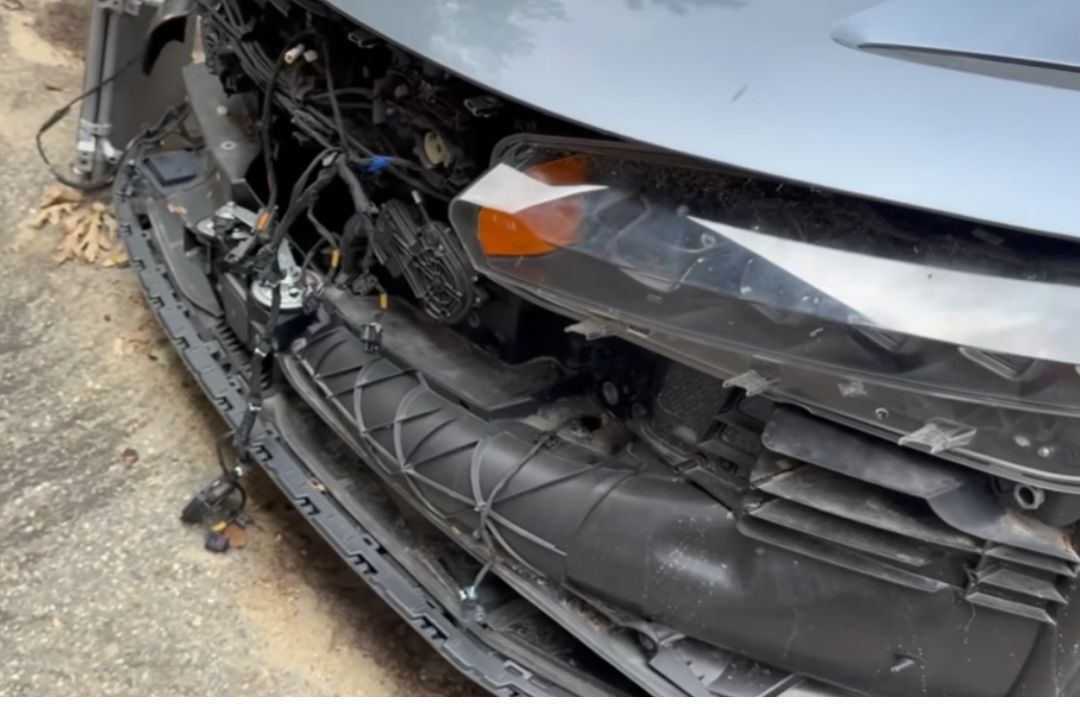
Before any repair work could begin, Rich had to answer one basic question. Was the car even worth fixing? The Lucid arrived with a heavily damaged suspension, a damaged cooling system, and a high voltage battery reading critically low.
That low battery reading mattered more than it might seem. Lithium batteries that sit critically low for too long can lose the ability to take a charge again. If that had already happened to this car, the entire repair effort would be pointless no matter how much other work got done.
Rich decided to fix the suspension and cooling system first and deal with the battery question later. The front end had taken the brunt of the crash, destroying the axle, control arms, and a coolant line that runs to the front drive motor.
Fixing the Suspension and Cooling System
With factory parts and repair information not readily available for the work he needed to do, Rich sourced used suspension parts from other damaged Lucid vehicles. He installed a new axle, upper and lower control arms, and a replacement coolant line, all pulled from a Lucid that had been hit on the opposite side.
The cooling line repair created its own complications. The replacement hose would not fully lock into place because a damaged section on the connector kept it from seating correctly. Rich trimmed the damaged portion of the hose by hand until it clicked into position.
Refilling the cooling system brought a separate challenge. Lucid’s factory procedure uses onboard software to run the coolant pumps and valves during a proper bleed process, but Rich did not have access to that diagnostic software. He filled the system manually using a vacuum tool instead, without factory guidance.
A Wrong Part Creates a New Setback
Just when the suspension repair seemed to be going smoothly, Rich discovered a used wheel hub he had purchased did not match his car. The part had come from a rear-wheel-drive Lucid Air, while his car was all-wheel drive and needed a hub built for a front motor axle to pass through it.
The mismatch meant more delay and more money spent tracking down a correct replacement part. It was a reminder that sourcing parts for a car outside the official dealer network comes with real risk, since a single wrong component can stall an entire repair.
Waking the Car Back Up
With the suspension and cooling system repaired, the last major test was whether the car could power on at all. A Lucid Air uses two low voltage batteries to wake up its computer systems before the vehicle can connect to the main high voltage battery underneath the car.
Getting the low voltage system to cooperate took several attempts, including moments where the car responded to commands in reverse of what was expected. Eventually, lights, seats, and door handles began functioning normally, a sign that the car’s computer systems had come back online.
The high voltage battery was the real test. Once connected, the car showed signs of life and appeared to begin charging. Then charging stopped on its own, and repeated attempts to restart it failed. The breaker did not trip, which told Rich the car itself was refusing to accept a charge rather than experiencing an electrical fault.
That result raised the exact question Rich had been trying to avoid since the beginning. What had looked like an unbelievable bargain now looked like it might have been $4,100 for a reason. A battery that will not charge is not a small problem on a car built around one, and it may be the very issue that kept this $140,000 Lucid out of anyone else’s hands at auction.
A Bigger Fight Over Repair Access
The battery trouble was not the only issue Rich ran into with Lucid. While working through the mechanical repairs, he had also been in contact with the company about a separate case involving another Lucid owner named Peter, whose damaged car needed extensive rebuilding and had been quoted a steep repair cost without Lucid having inspected it in person.
Lucid eventually responded with a statement saying it is re-evaluating its approach to third-party repairs, including plans for a program to give independent owners and shops better access to diagnostic tools and support. Rich called it a step in the right direction, though he noted it still left Peter without a clear path forward for the car he already owns.
What the $4,100 Price Tag Really Bought
A car this cheap was never going to be an easy fix, and the suspension and cooling repairs proved that sourcing parts and doing the work without factory support takes real effort. But the battery that will not charge is the detail that changes the whole story. What looked like a steal at $4,100 may turn out to be a $140,000 car with the one problem that actually matters most.
More from Fast Lane Only: