It’s easy to assume a hypercar either quietly depreciates in a garage or drains money without much to show for it. Ownership at that level usually means watching a car lose value while repair bills pile up in the background.
The McLaren P1 sits in a strange corner of that world. Only 375 were ever built, and it shares a rare category with the Ferrari LaFerrari and Porsche 918 Spyder, a trio collectors call the hypercar holy trinity. All three launched around the same time, all three used hybrid power to push performance further than anything before them, and all three carried eye-watering price tags that made ownership feel more like a gamble than a purchase.
That gamble is exactly what Mark McCann took a year ago when he bought his P1 for £1.2 million (which is approximately $1.63 million) through Harrods, becoming the only person to ever purchase a car through the famous London store. What followed was a year of driving, a wave of criticism over his first set of modifications, and a decision to redo almost everything on the car while tracking every dollar spent along the way.
Checking the Most Expensive Part First
Before any cosmetic work began, McCann had one real concern. The P1 uses a hybrid battery pack that, if it ever needs replacing, costs around $163,000. The car had been sitting in storage for nine months, and hybrid batteries do not always age well when left unused for long stretches.
A health check the year before had put the battery at 90 percent. After a full year and thousands of miles that included a road trip to the Isle of Man and laps at Donington and Silverstone, the battery came back at the exact same number. Careful storage and regular charging appear to have kept it in strong shape, which mattered a great deal given how much a replacement would cost.
A Second Attempt at the Look
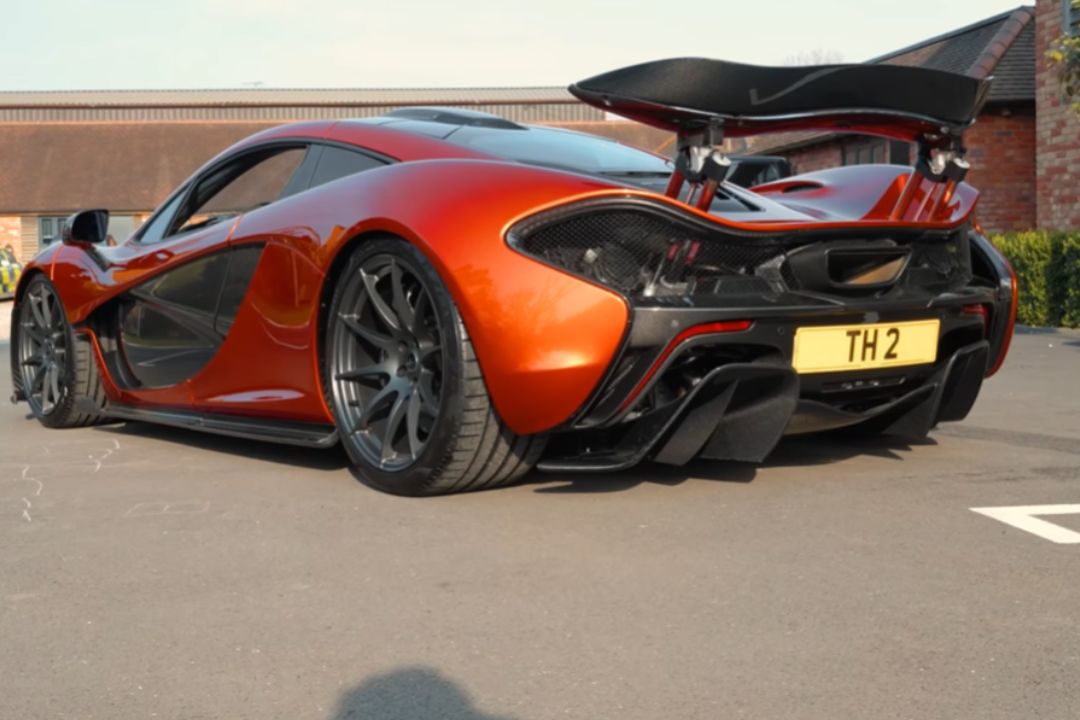
McCann’s first round of modifications, a black wrap over the car’s original Volcano Orange, drew heavy criticism from viewers. This time, he chose a matte orange finish from Avery Dennison instead, applied over the car’s factory paint protection film rather than directly on the paint itself, since removing the original film risked damaging the surface underneath.
The wheels changed too. McCann worked with a wheel specialist to design a set of lightweight forged wheels with a ten-spoke pattern and a center cap made to mimic the look of a single center-lock nut, a detail found on race cars but not on the standard P1. A reverse camera was also added, something the car never had from the factory, along with a titanium exhaust upgrade built around a new X-pipe design that combines exhaust gases from both cylinder banks before they exit.
The most expensive single change was a software upgrade to the P1’s active aerodynamics. In race mode, the P1’s rear wing rises for extra downforce, but the car also drops closer to the ground, by roughly 40 millimeters according to McCann, making it impractical for regular roads. The new software let the wing rise without lowering the suspension, giving McCann the aggressive rear wing look while keeping the car usable on everyday streets. That single upgrade cost $14,700.
What a Year of P1 Ownership Actually Costs
Once everything was added up, the numbers told a clear story. A routine service and health check came to $950, handled by an independent specialist rather than a McLaren dealer, at a fraction of the typical dealer price for hypercar servicing. Interior repairs to the seats and carpet cost $610, while the new reverse camera and infotainment work added $2,850.
The wrap and rewrap process totaled $10,900, and the new wheel set came to $8,840. Insurance for the year ran $8,160 after McCann stored the car off the road for six months during winter, with storage itself costing $2,720 and reduced road tax coming to $475. Combined with the $14,700 aerodynamics upgrade, the full year of ownership costs added up to $50,180.
That number covers servicing, cosmetic changes, and one genuinely complex software modification, all on a car that most owners would expect to cost far more just to maintain. The car also brought in some money of its own, earning roughly $21,760 over the year from being loaned out for Formula 1 events, car shows, and video shoots.
The Value Climbed Anyway
Hypercar values do not always move in predictable directions, especially for cars built around early hybrid technology. Some hybrid-era performance cars have lost value over the years as buyers worried about repair costs and complexity. The holy trinity has gone the opposite way. Over the same twelve months McCann owned his P1, a Ferrari LaFerrari rose from roughly $4.76 million to $6.12 million, and a Porsche 918 Spyder climbed from under $1.36 million to around $2.72 million.
McCann’s P1 followed the same trend. A specialist dealer valued the car at $2.38 million, up from the $1.63 million McCann paid at Harrods a year earlier. After accounting for the $50,180 spent on servicing and upgrades and the $21,760 earned loaning the car out, McCann’s year of ownership worked out to a profit of roughly $719,400.
A Rare Car Getting Rarer
With only 375 P1s ever built, and each one now carrying a documented history of ownership, modification, and value growth, cars like McCann’s are becoming harder to separate from the story of the holy trinity itself. As hybrid hypercars from this era continue climbing in value, a well-documented, well-maintained example with a full service history may end up being worth more than the modifications ever cost to make.
More from Fast Lane Only: