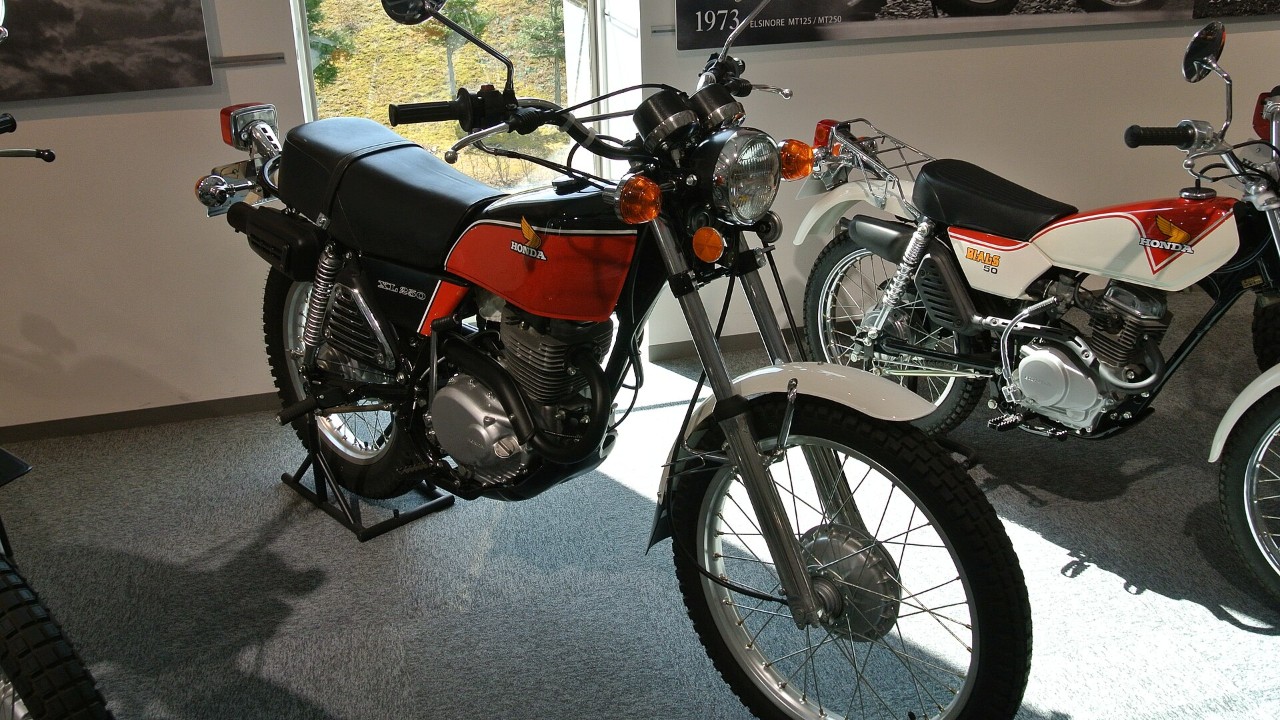
Honda launched the XL250 in 1972 as the first mass-produced motorcycle with a four-valve head. That was a big idea packed into one small cylinder. It also showed how much a single-cylinder engine could do when its builder took it seriously.
Singles have always been the simplest way to build a motorcycle. One piston, one cylinder and one carburettor or throttle body keep weight down and maintenance easy. Yet the best ones never feel basic. Some set records, some crossed deserts, and others carried police officers through Italian cities. Park any of them at a car show, and you will soon draw a crowd of people who want to hear the story.
These are our picks: 11 single-cylinder motorcycles that continue to impress at every show we can think of, from Italian horizontal singles to a modern KTM. The verdict is our opinion. Every engine, year and figure, however, comes from factory records, museum collections and period road tests.
1. 1973 Honda XL250
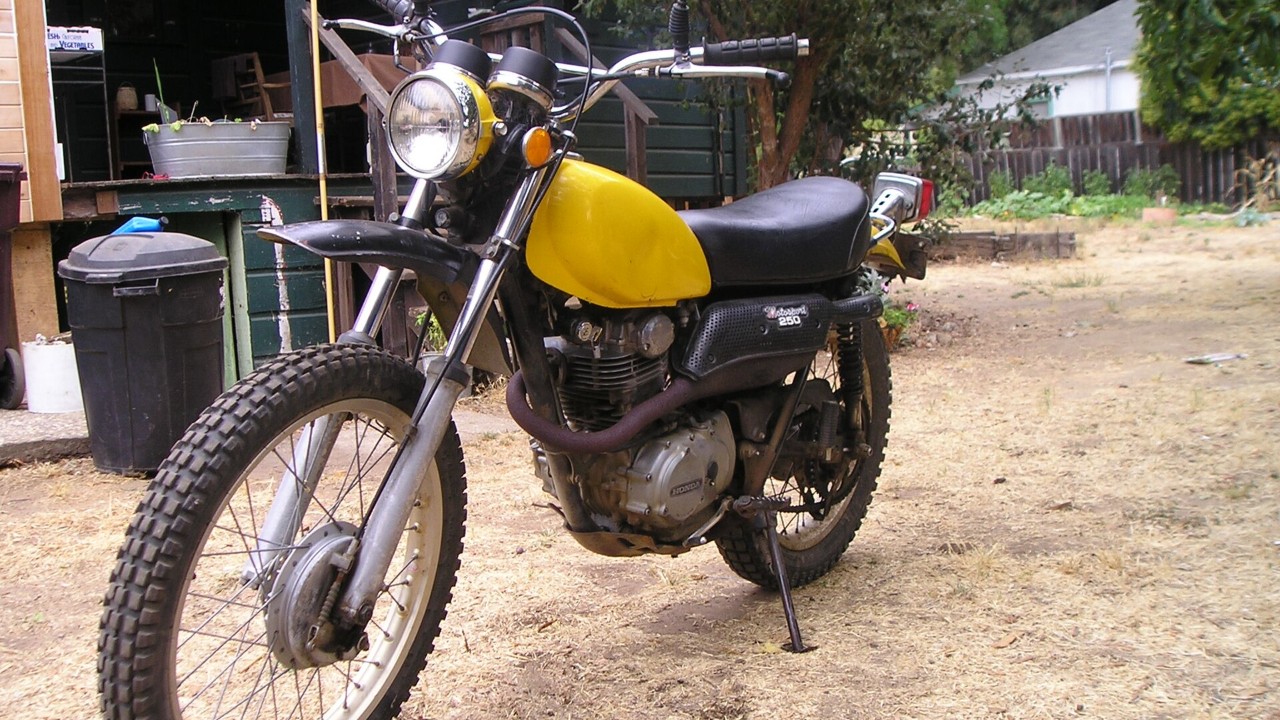
Honda’s XL250 arrived in 1972 and changed what riders expected from a dual-purpose bike. Its 250 cc four-stroke single used four valves per cylinder, a first for a mass-produced motorcycle. Output was 20 horsepower. With oil, grease and fuel aboard, the bike weighed 288 lb.
Those figures matter because of what came before the Honda XL250. Most off-road bikes of the early 1970s used two-stroke engines. The XL250 showed that a four-stroke could work in the dirt and behave politely on the road. As a result, it became the first modern four-stroke enduro bike. It also laid the groundwork for the larger four-stroke enduros that followed later in the decade.
A 1973 Honda XL250 comes from the second year of production, close to the original design. That is also part of why it draws people at a show. Riders who grew up in the 1970s recognize the shape at once. Younger visitors are often surprised to learn that a 250 started the four-valve story.
In our view, the Honda XL250 is one of the most important small Hondas ever built. If you want one, look for original tank badges and side panels. They are what make a clean example stand out on a show lawn.
2. 1982 Honda FT500 Ascot
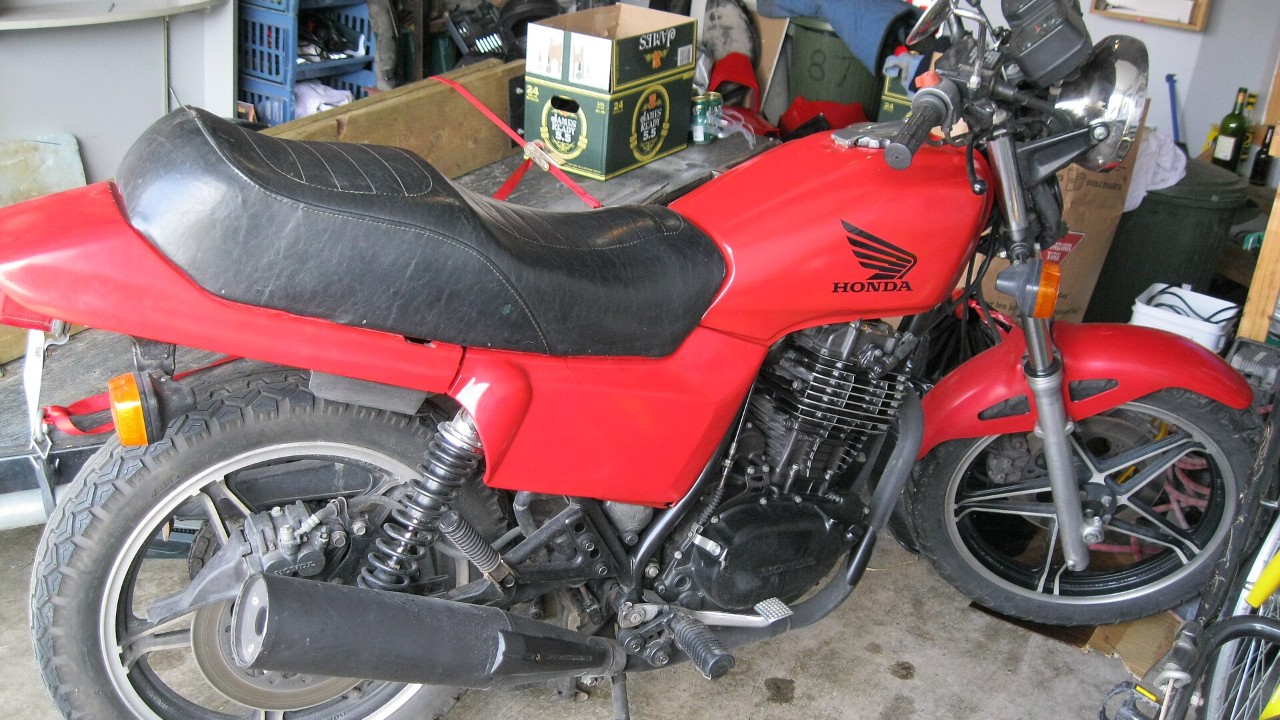
Honda sold the FT500 Ascot from 1982, a decade after the Honda XL250 appeared, and the name stayed in the range until 1984. The bike used a 498 cc single with a single overhead cam and four valves. Honda rated it at 35 PS at 6,500 rpm.
The Ascot also had one detail that surprised traditional single-cylinder fans. It came with an electric starter and no kickstart at all. That was a bold move for a big single, since kickstarting a 500 can be a workout. Honda clearly wanted the Ascot to feel like an easy everyday bike rather than a rough-edged thumper.
To our eyes, the Ascot has a lean, flat-track look. Its slim tank and simple lines keep attention on the engine. Meanwhile, the four-valve head gave the big single a modern, efficient design for its day.
We think the Ascot impresses at shows because it is so unexpected. Many visitors have never seen one, even though it came from the biggest name in motorcycles. It also suits riders who like a classic look without the drama of kicking over a big single. Check the electric starter carefully. It is the only way to fire this bike up.
3. 1953 Moto Guzzi Airone Sport 250
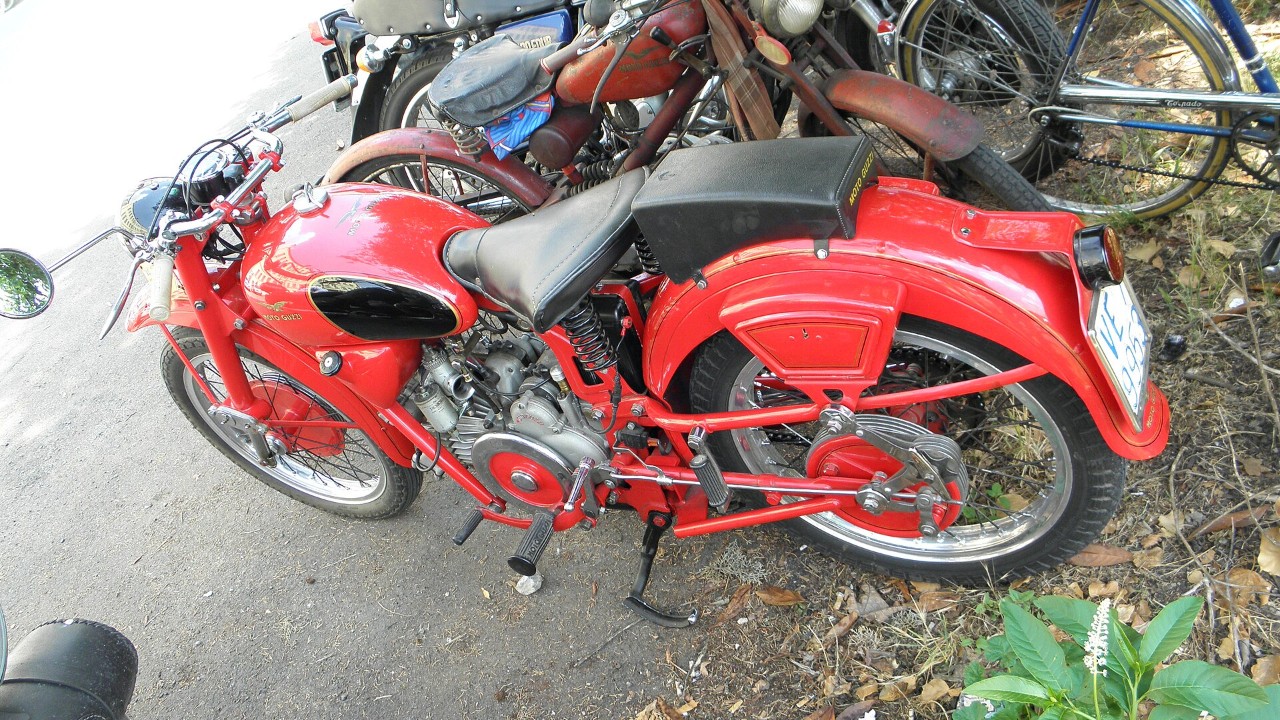
Moto Guzzi first built the Airone in 1939, paused during the war and resumed production afterward. Like many Guzzis of its era, it used a single cylinder laid flat, which was the company’s trademark layout before its V-twins took over. The Sport version arrived in 1949.
The Sport also made several real changes. A tubular frame replaced the pressed-steel one, and the bike gained 19-inch wheels and larger drum brakes. Output rose from 9.5 bhp to 13.5 bhp at 6,000 rpm, thanks to higher compression and a bigger Dell’Orto carburettor. According to Hagerty’s review of the Airone, The Motor Cycle recorded 68 mph in its test.
The Airone became one of Italy’s best-selling bikes, although the cheaper standard model outsold the Sport. By the mid-1950s, newer rivals offered similar performance for less money. Guzzi dropped the Airone in 1957.
We love the Airone Sport at a show because that horizontal cylinder makes people stop and look. It is a reminder that Moto Guzzi built clever singles long before the V-twin era. If you own one, keep the original carburettor setup. It is part of what separates a Sport from the standard bike.
4. 1994 BMW F650 Funduro
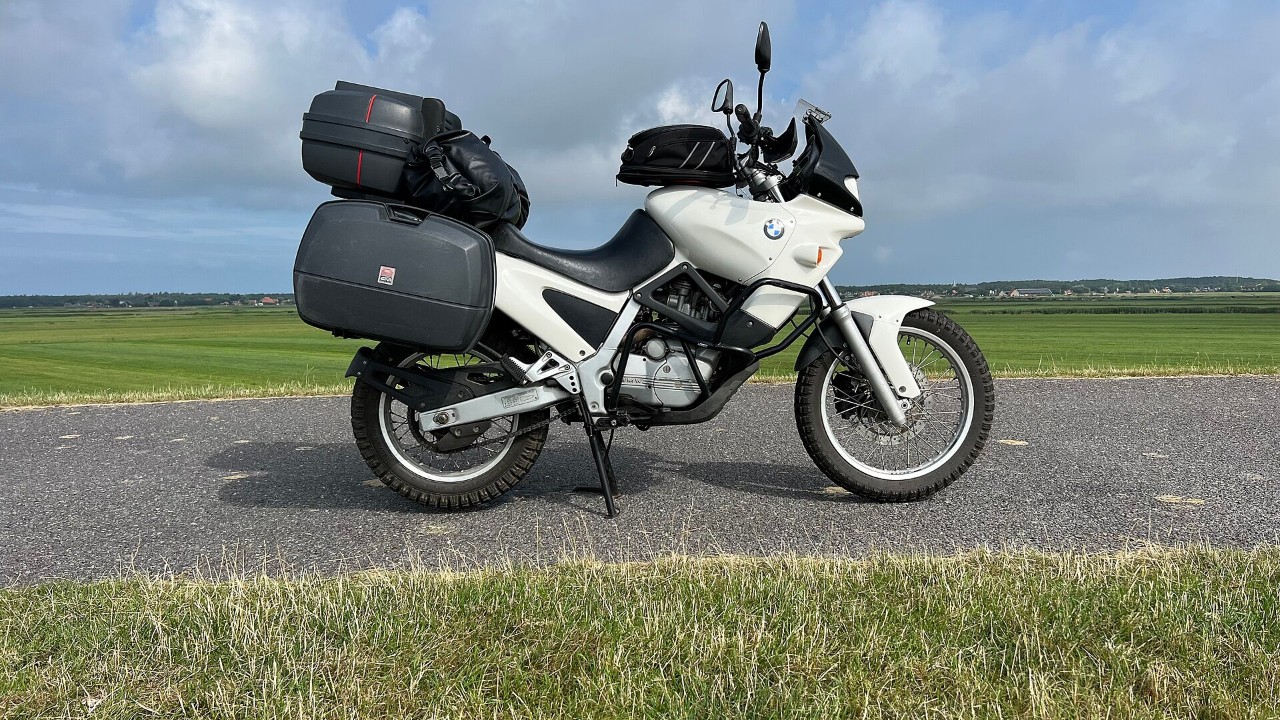
BMW sold the original F650 from 1993 to 2000, and the Funduro name marks the early version. It broke several BMW habits at once. The engine was a 652 cc four-valve single made by Rotax in Austria. Aprilia co-designed the bike and assembled BMW’s version in Italy.
The drivetrain, meanwhile, was a break from tradition too. The F650 was the first BMW motorcycle with chain drive instead of a shaft. It was also the brand’s first single since the R27, which ended production in 1966. Aprilia sold its own close relative, the Pegaso 650.
That mix of German, Austrian and Italian parts made the F650 a curious machine. It looked like an adventure bike but behaved like a friendly road single. In our view, it opened the brand to riders who wanted something lighter than a flat-twin. The F650GS, which replaced it in 2000, built on that idea.
We think the Funduro impresses at shows because it explains so much about modern BMW. It was the moment the company proved it could sell a chain-driven single. If you buy one, check the chain and sprockets first. Owners used to shaft drive sometimes forget them.
5. MZ Skorpion Traveller
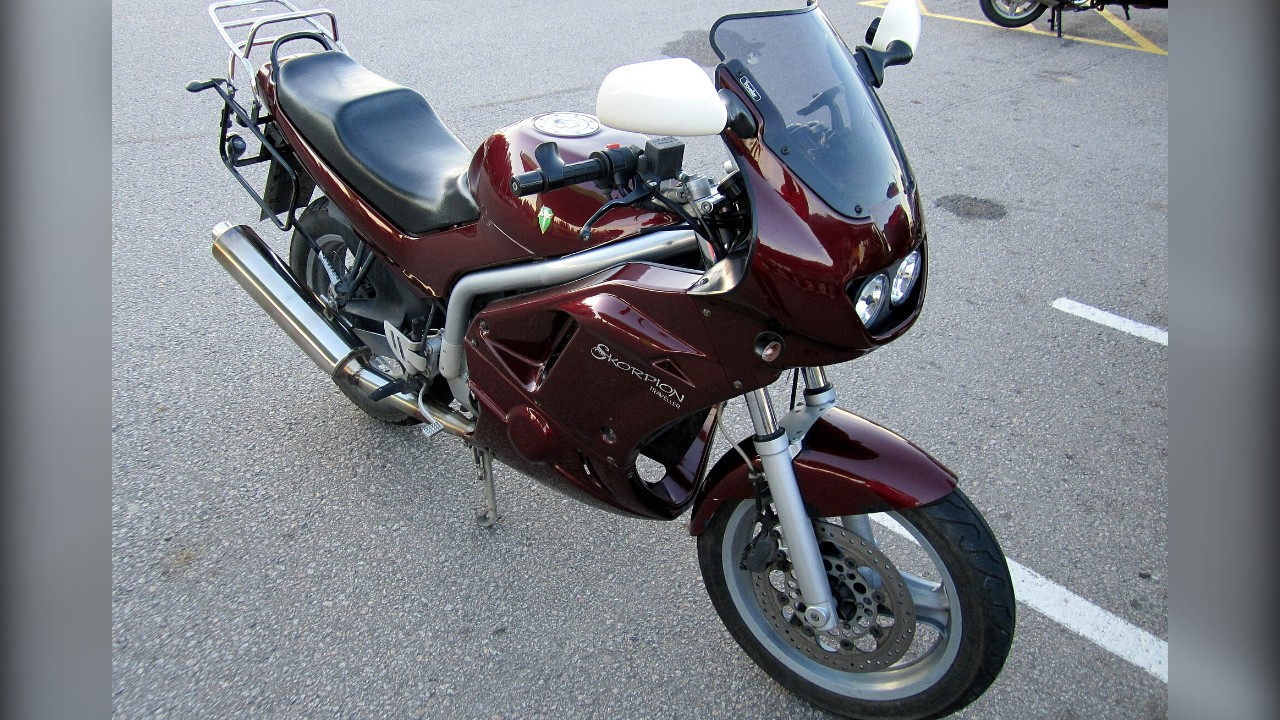
MZ was based in the former East Germany, and the Skorpion was its bid for a modern Western audience. British design firm Seymour Powell conceived the bike. Production ran from 1994 to 2004. The touring Traveller version wore a full fairing and Hepco & Becker panniers.
The engine, however, came from Yamaha. It was a five-valve, liquid-cooled single with around 660 cc, taken along with the electrics from the Yamaha SZR660. MZ rated it at 48 bhp, enough for brisk touring on a light machine.
The frame has a story of its own. Prototypes used a lightweight tubular beam frame bonded together with aircraft adhesives. However, the production bikes used a much heavier welded frame instead. That compromise says a lot about the gap between a design studio’s vision and a small factory’s budget.
We think the Skorpion Traveller wins attention at shows because almost nobody expects it. It combines East German build, British design and Japanese power in one package. Few motorcycles carry that much history in such a practical form. If you find one, check that the panniers and mounts are complete. Replacing them can be harder than fixing the engine.
6. Moto Guzzi Falcone Sport 500
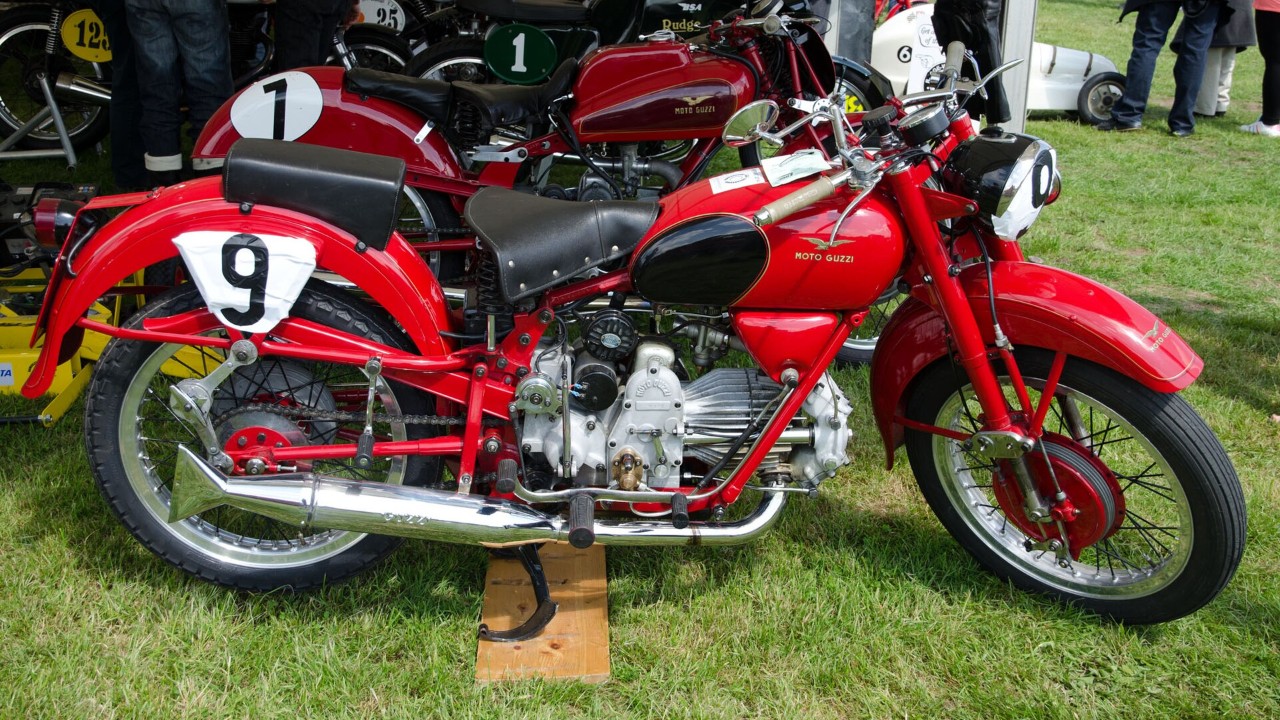
The Falcone was the big brother in Moto Guzzi’s single-cylinder family. Its engine displaced 498.4 cc, with an 88 mm bore and an 82 mm stroke. According to the Museo Piaggio collection, the Falcone Sport could reach 135 km/h, or about 84 mph.
The museum describes the Falcone as powerful and not especially easy to ride. Even so, it was the most sought-after of Guzzi’s big bikes in the early 1950s. In 1953, Moto Guzzi offered it in Sport and Turismo versions, and it was the only half-litre bike in the civilian lineup.
Italian authorities liked it as well. Moto Guzzi built special versions for the Guardia di Finanza and the Corazzieri, the presidential honor guard. Production of the Falcone continued until 1967. That is a long run for a design that first appeared in 1950.
We think the Falcone Sport impresses anyone who hears it idle. The slow, deep beat of that big horizontal cylinder is unlike anything modern. If you want one, decide early whether you want a civilian Sport or an ex-service bike. The two can differ in many small details.
7. Aermacchi Harley-Davidson Sprint H 250
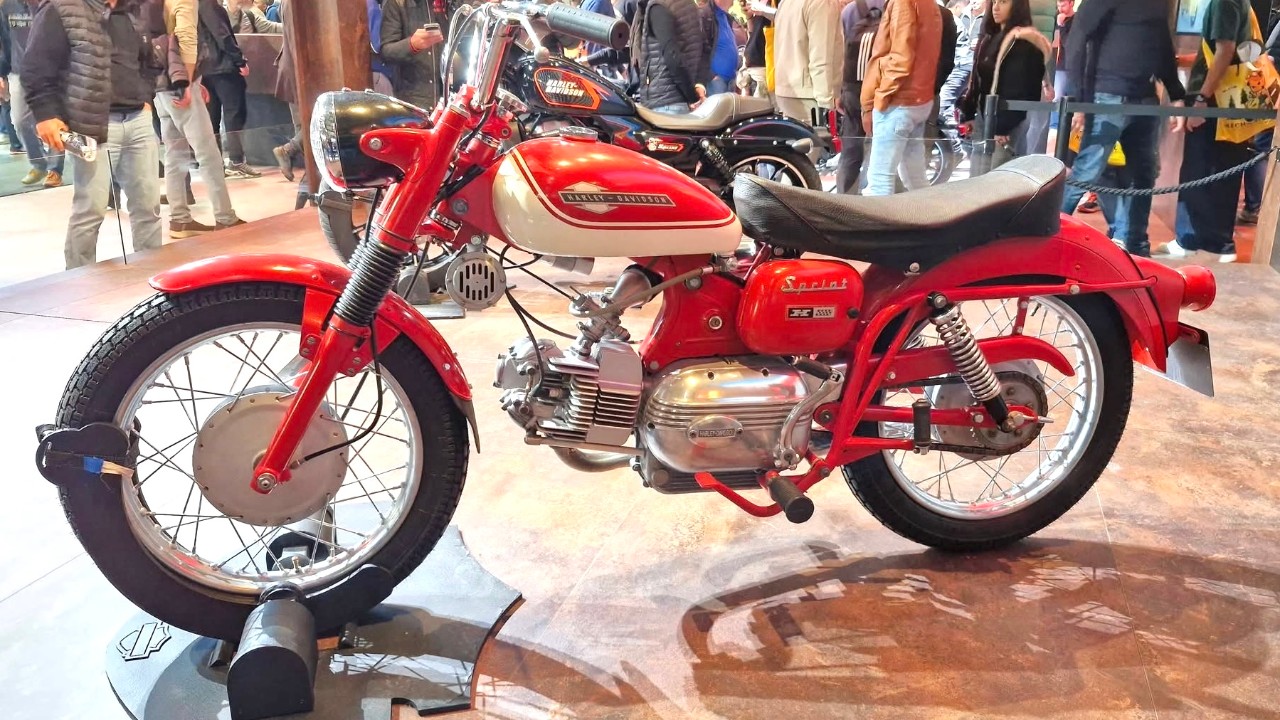
Harley-Davidson bought half of the Italian firm Aermacchi in 1960, when sales of its big twins were slipping. The first result reached America as the 1961 Harley-Davidson 250 Wisconsin. Then came the Sprint, built in Varese and sold through Harley dealers.
The Sprint H arrived in 1963 alongside the Sprint C. The H ran 9:1 compression and made 21 hp, compared with the C’s 18 hp. It also had 18-inch wheels, a larger air cleaner and a choice of high or low exhaust. According to Motorcycle Classics, the H outsold the C by at least five to one.
In addition, the design had serious racing ability behind it. In 1965, a 250 cc Aermacchi-based streamliner reached 177 mph at Bonneville. For 1967, the road engine switched to an aluminum cylinder with a shorter 61 mm stroke.
The Sprint H cost $750 in 1967. Motorcycle Classics now puts these bikes at $3,000 to $8,000. In our view, that is good value for an Italian single with a Harley tank badge. If you buy one, confirm whether it has the earlier long-stroke engine or the 1967 short-stroke version.
8. 1973 BSA B50 Victor
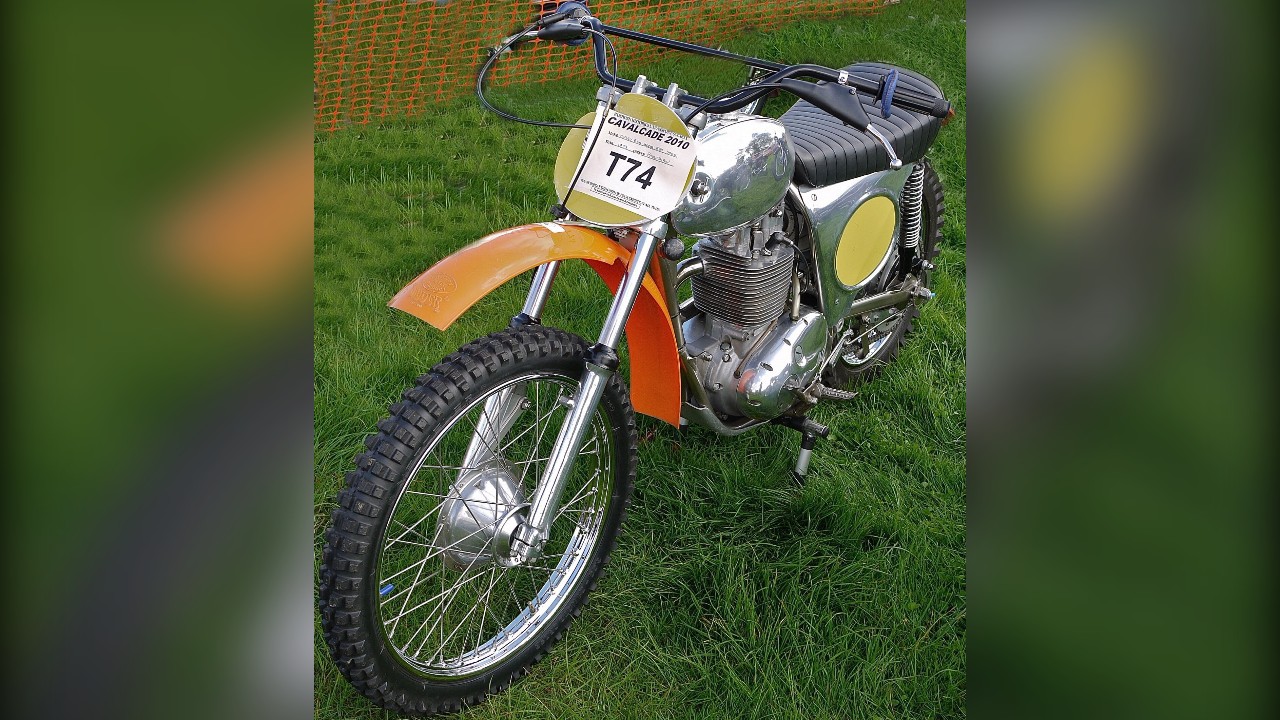
The BSA B50 arrived late in BSA’s history. Its 499 cc overhead-valve engine used an 84 mm bore and a 90 mm stroke. BSA rated it at 34 hp, and the bike weighed 310 lb dry. Production ran from 1971 to 1973, and about 5,700 were built.
The B50 carried BSA’s oil-in-frame design, so the frame tubes held the engine oil. The electrics sat in a single removable pod. Those details made the bike tidy and easy to service.
Despite BSA’s troubles, the B50 proved itself in competition. B50s won the 500 cc class at the Thruxton 500 and the Barcelona 24-hour race. After BSA collapsed, Alan Clews bought the remaining B50 parts stock. He used it to start Clews Competition Motorcycles, better known as CCM, which built successful motocross bikes based on the B50.
We think the B50 Victor stands out at a show because it marks the end of an era. A 1973 bike comes from the final year, right before BSA ran out of time. If you shop for one, check the oil-carrying frame for leaks and cracks. That is the area most likely to need work.
9. 2008 KTM 690 Duke
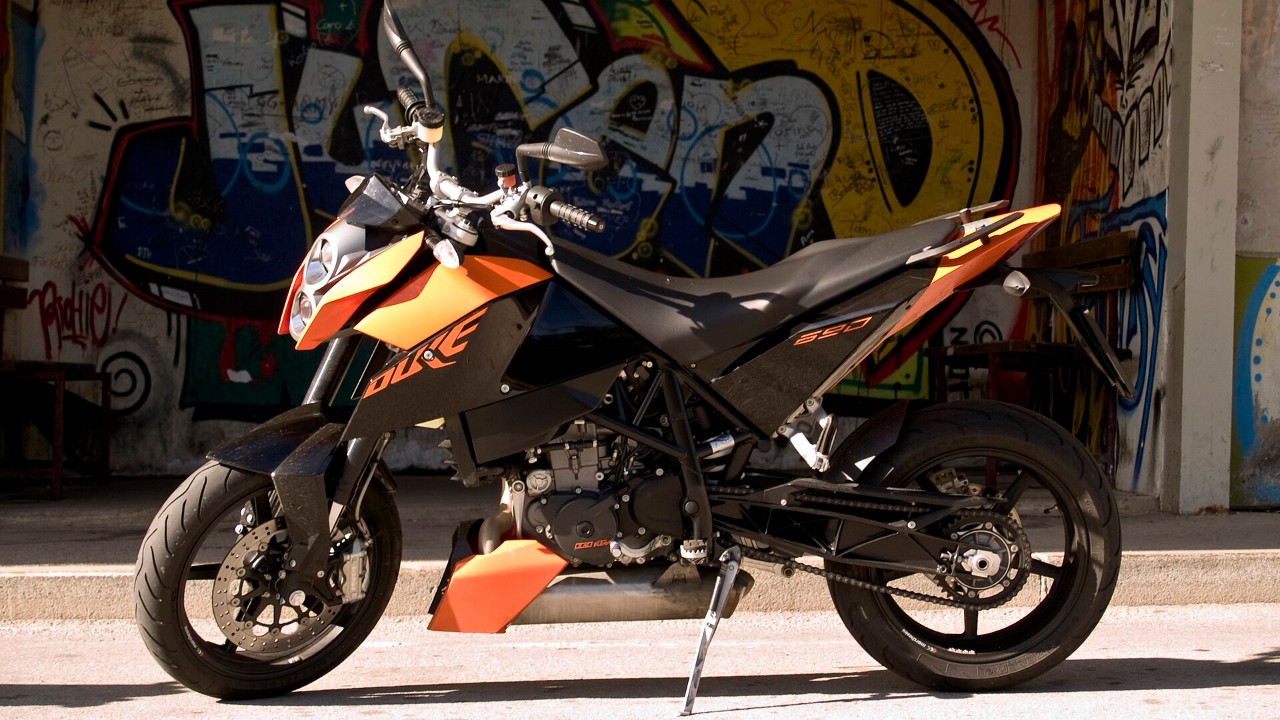
KTM built the 690 Duke around its LC4 single-cylinder engine. The line started with the 620 Duke in 1994. By the 2008 model, the LC4 had grown to 653.7 cc, with a huge 102 mm bore and an 80 mm stroke. It made around 60 hp at 7,600 rpm.
The chassis matched that engine’s intent. The 2008 bike weighed 151 kg dry, or about 334 lb. It used a 48 mm WP inverted fork and a WP rear shock, both adjustable. Forged Marchesini wheels and a radial Brembo front caliper on a 320 mm disc completed the package. A slipper clutch helped tame the big single’s engine braking.
Those parts belong on a sport bike rather than a commuter. As a result, the 690 Duke felt like a supermoto with road manners. It showed that a single could be the main event, not a budget option.
We picked it because modern singles rarely get show-field attention, and this one earns it. Its lean, aggressive shape holds its own beside older classics. If you want one, look for a bike with service records for the valve clearances. The LC4 rewards owners who keep up with them.
10. 1959 Matchless G80S
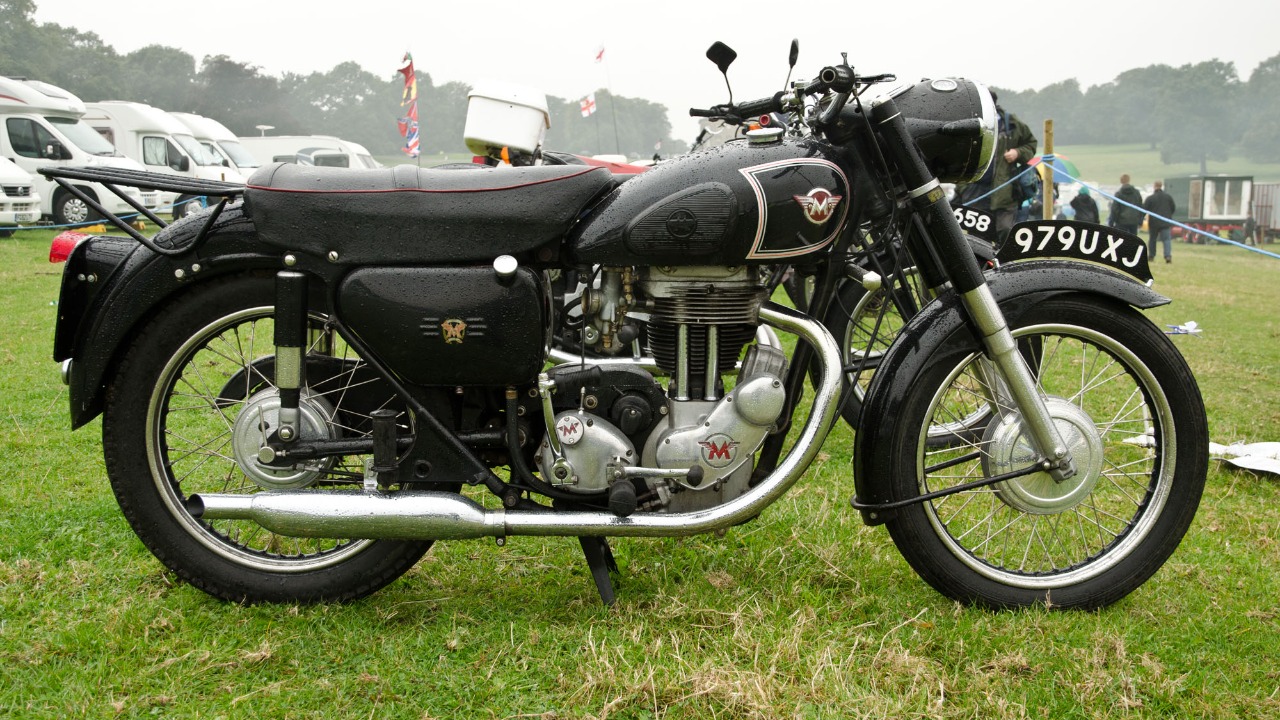
Matchless built the G80 around a 498 cc overhead-valve single rated at 28 bhp at 5,600 rpm. Meanwhile, the S in G80S marks the sprung version. Matchless added swinging-arm rear suspension in 1949, and that upgrade transformed a rigid-framed bike into a more comfortable tourer.
Early sprung bikes used so-called Candlestick shocks, which leaked. For 1951, Matchless replaced them with the famous “Jampot” shocks, named for their stubby shape. As a result, they are one of the first details collectors check on a 1950s G80S. Their chunky look also gives the bike much of its character.
The G80 also had a near-identical twin under another badge. The AJS Model 18 came from the same company, and the road versions often differed only in their badges. That shared design kept parts plentiful for decades, which helps owners today. Production of the G80 ended in 1966.
We think the 1959 G80S impresses at a show because it looks exactly like a British single should. It is upright, polished and simple to understand. If you buy one, check whether the rear shocks are correct Jampots or later replacements. Either can work, but originality affects value.
11. Yamaha XT600 Ténéré
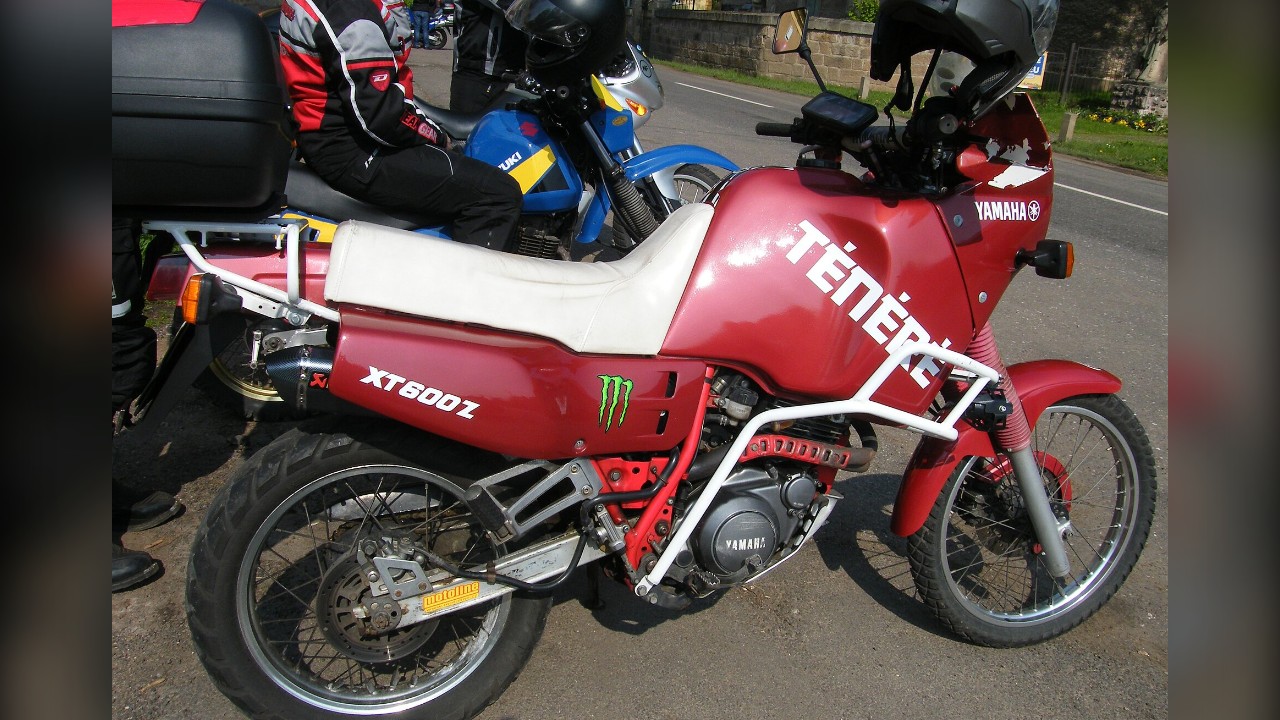
Yamaha launched the XT600Z Ténéré in 1983, and it wore the look of the Paris-Dakar desert racers. The engine was basically an over-bored version of the XT550 single. It made 43 hp and had no electric start. According to Adventure Bike Rider, the first Ténéré carried a 30-litre tank.
That tank told you the bike’s purpose, because it was made for long gaps between fuel stops. Then Yamaha refined it. The 1986 version added electric start and raised output to 46 hp, but the tank shrank to 23 litres when the air filter moved beneath it. By 1988, the third generation gained a frame-mounted fairing, twin headlights and a rear disc brake.
The Ténéré name later moved to a twin, the 1989 XTZ750 Super Ténéré. Its race versions went on to win the Paris-Dakar several times. Even so, the single came first, and in our view it set the template for the modern adventure bike.
We picked the XT600 Ténéré because it looks ready to cross a desert today. At a show, it draws riders who dream about long trips. If you buy one, decide which generation suits you. The early big-tank bike is the purist’s choice, while later models are easier to live with.
More from Fast Lane Only