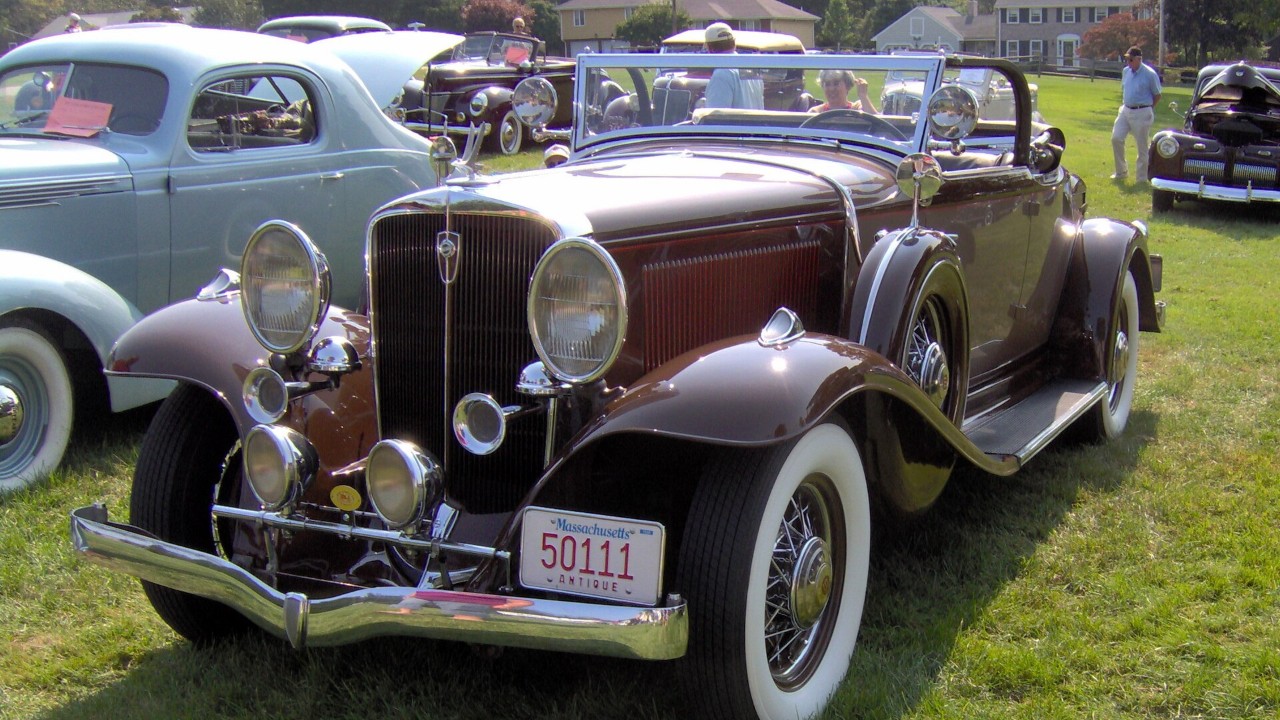
Studebaker built cars in South Bend, Indiana, for decades, and some of them were among the boldest American designs of the 20th century. The Studebaker Champion of 1939 started at just $660 and gave the company a stylish economy car. Later, a sliding-roof wagon and a pickup built from a sedan kept surprising buyers right to the end.
Not every Studebaker shifted opinions, though. Plenty of solid, sensible sedans came and went without much notice. The cars that mattered were the ones that made people look at the badge and think again, whether that meant speed, design or plain cleverness.
We chose nine of them for this list. Some were built in tiny numbers, and others sold well but are rare to find in good shape today. In our view, each one moved the needle on how the public saw Studebaker, from a 1931 roadster to the very last car the company built.
1. 1931 Studebaker President Four Seasons Roadster
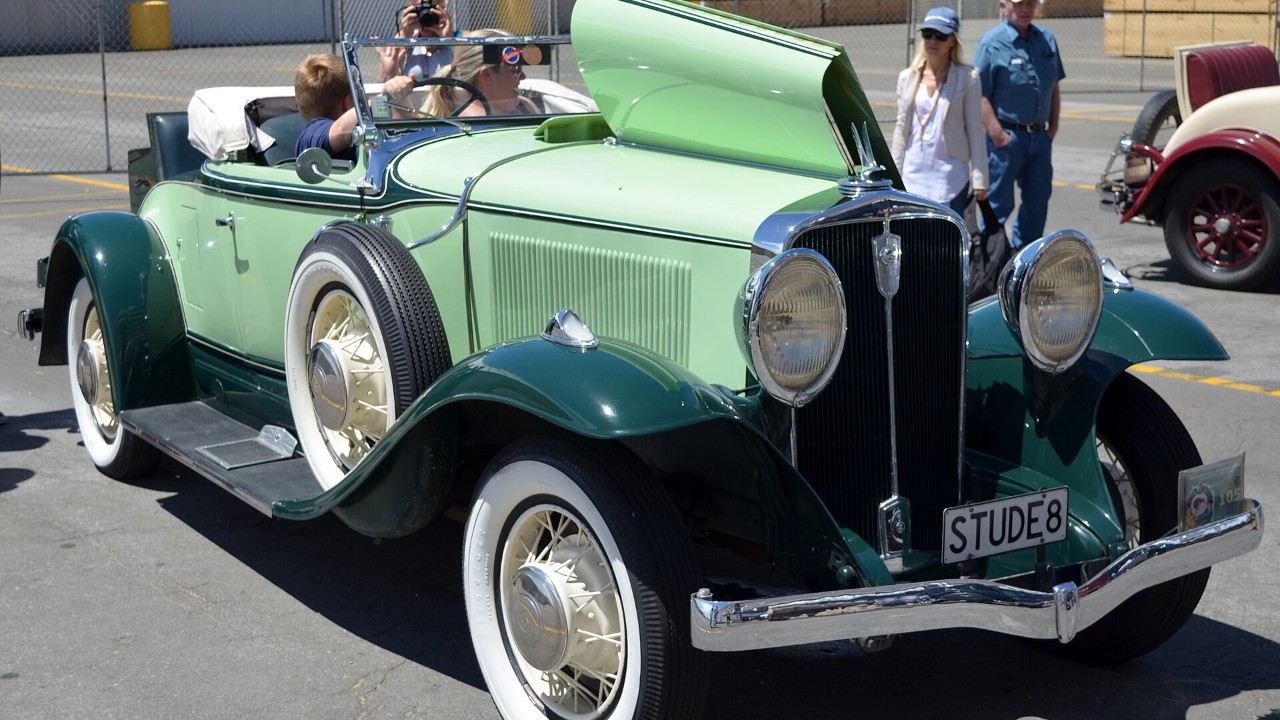
The President was Studebaker’s premier model, and by 1931 it had real muscle. The straight-eight grew to 337 cubic inches that year and made 122 horsepower. For an American car of the early Depression, that was serious output.
The President also had a racing reputation behind it. Presidents built from 1928 to 1933 set land speed records, and some of those marks stood for 35 years. As a result, a Studebaker badge suddenly meant endurance and speed, not just reliable transport for farmers and salesmen.
The Four Seasons Roadster wrapped that engine in a sporty open body. Long fenders and a tall radiator give it a stance that, to our eyes, still looks athletic today. In fact, it is easy to imagine one blasting down a two-lane road in 1931.
Our take: this is the car that proved Studebaker could play in the same league as the big luxury names. A President roadster is a rare sight at any prewar show. If you ever see one, look under the hood, because that straight-eight explains the brand’s early reputation better than any ad could.
2. 1937 Studebaker Coupe Express J-5
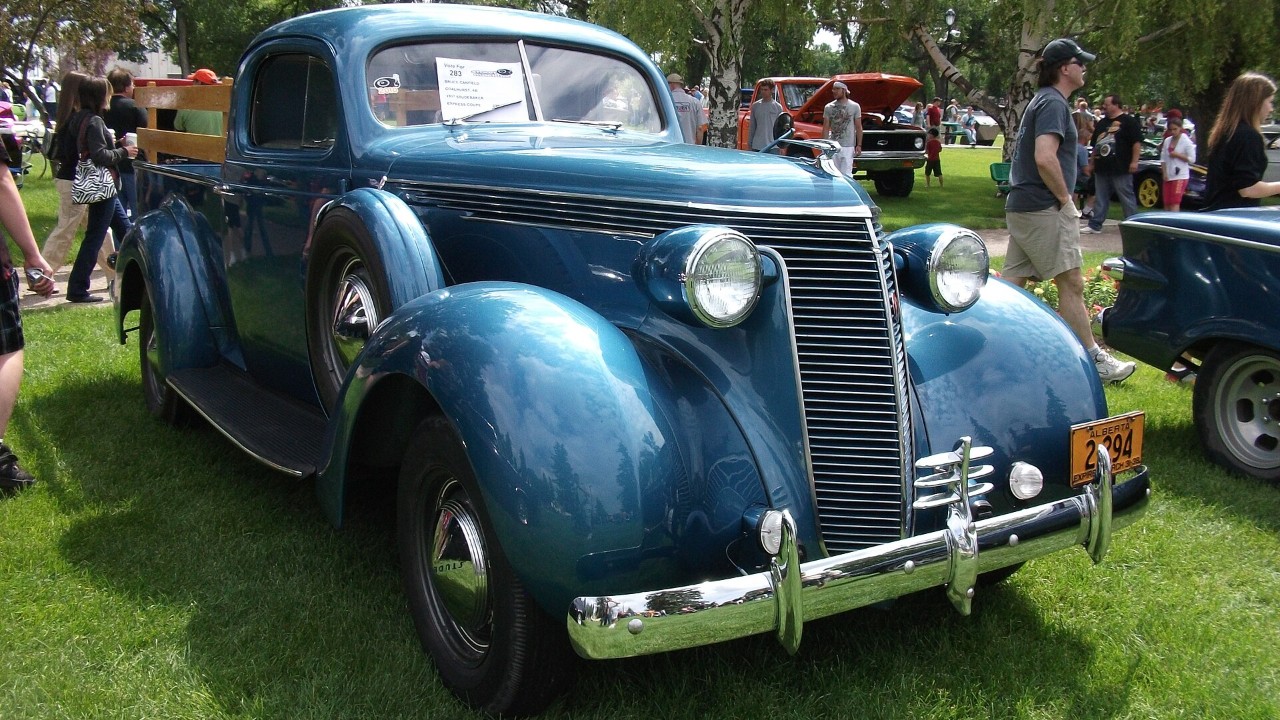
Studebaker gave the pickup a sports-car face in 1937. The Coupe Express borrowed the Dictator’s frame, running gear and front sheet metal, and it wore a cab styled like a passenger car. Raymond Loewy did the design, and the flared rear fenders came from the Dictator too.
Power came from the larger of Studebaker’s L-head six-cylinder engines, paired with a three-speed manual. Buyers could also add a Borg-Warner three-speed with overdrive. Then they chose between a factory steel pickup bed or a bare cab and chassis for a custom body.
Still, the numbers were never big. Studebaker built about 3,000 in the 1937 model year, about 1,200 in 1938 and about 1,000 in 1939. After that, it offered no successor for 1940. So the run lasted only three model years in South Bend.
In our view, the Coupe Express showed that a work truck could look elegant. It sits halfway between a coupe and a pickup, decades before anyone called that a segment. Today, a restored example gets as much attention as any Art Deco sedan. With those small production numbers, however, finding one is a real challenge.
3. 1941 Studebaker Champion Custom Coupe
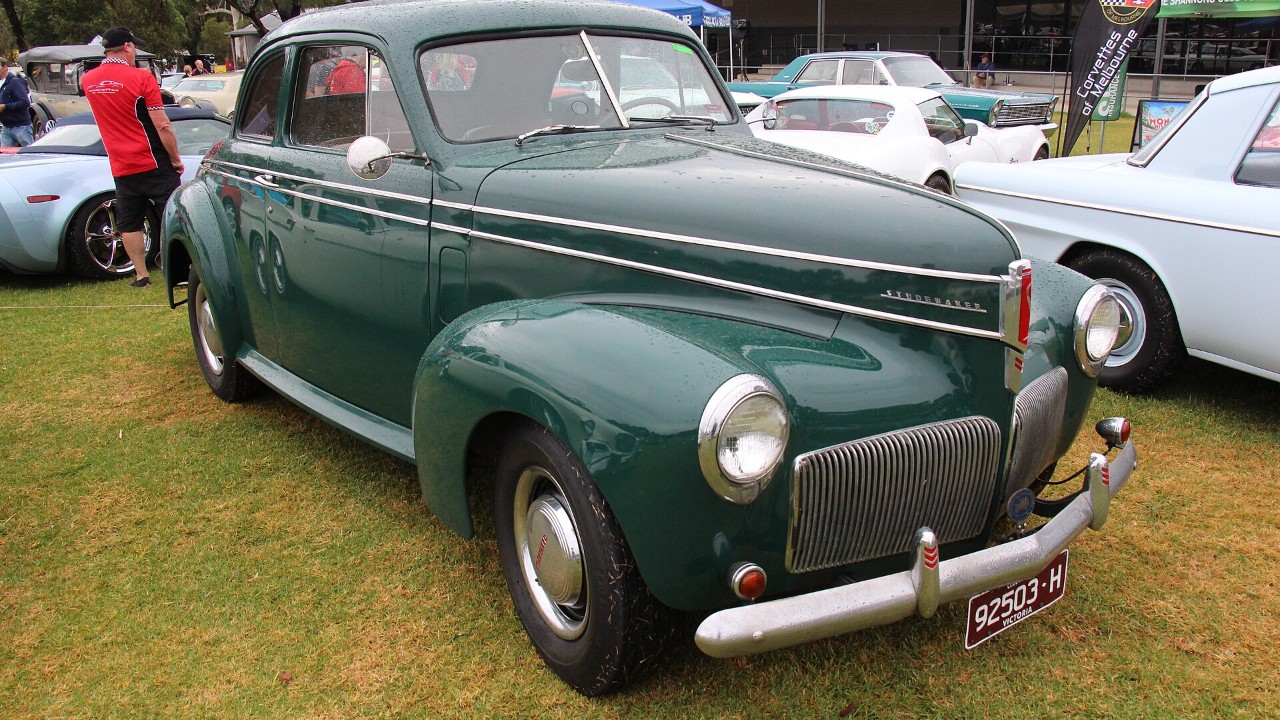
The Champion changed Studebaker’s fortunes when it arrived for 1939. The two-door business coupe started at just $660. Its 164.3-cubic-inch six made 78 horsepower, and Raymond Loewy, working under contract, handled the styling. In our view, that price and that styling made a powerful combination.
For 1941, the Champion got a sleeker look. Studebaker gave the body a more streamlined shape with a wider, lower grille. Those changes moved the economy car away from its upright 1930s roots and toward the smooth shapes of the coming decade.
The Custom Coupe is a sweet spot in the line. It keeps the compact Champion proportions, yet it looks dressier than the bare business coupe. Better still, it shows Loewy’s touch on a car meant for ordinary buyers.
Our take: the 1941 Champion showed that a cheap car did not have to look cheap. In our opinion, that idea is why the Champion became Studebaker’s bread and butter. If you want an affordable prewar car with real design pedigree, this coupe deserves a look. Just remember that the six is tuned for thrift, so enjoy it at a relaxed pace.
4. 1947 Studebaker Champion Deluxe Coupe
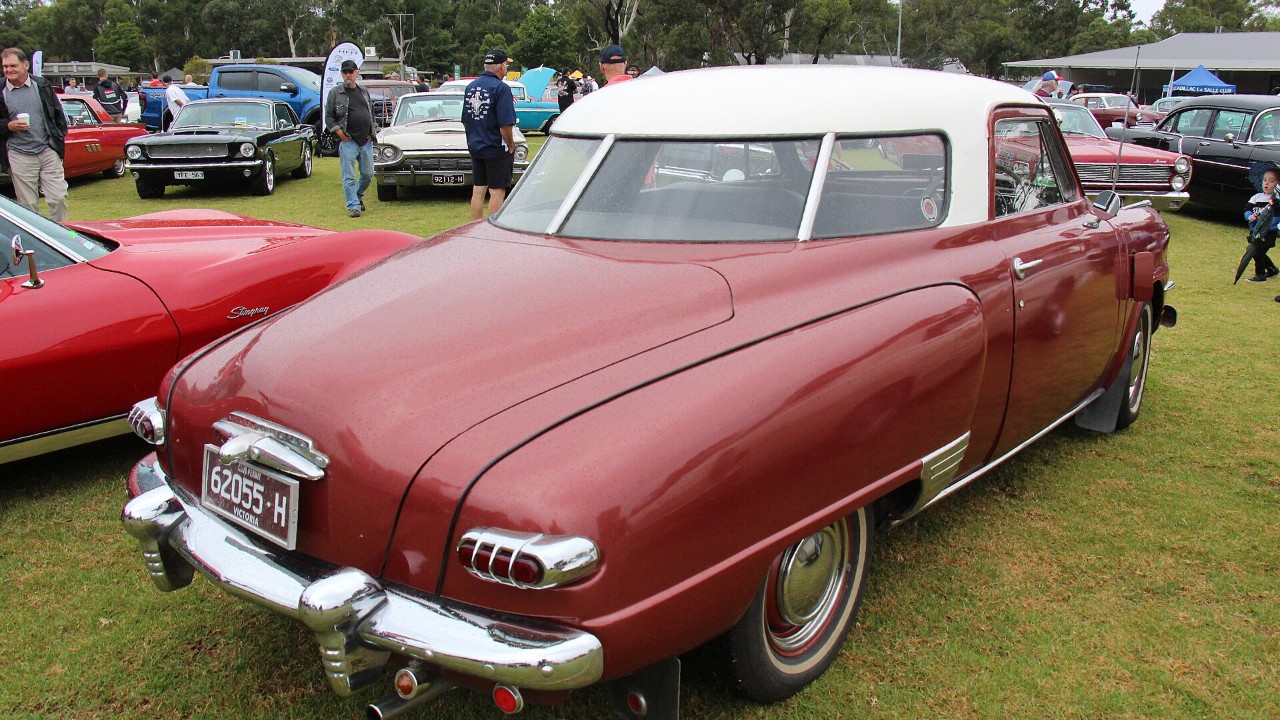
For 1947, Studebaker completely redesigned the Champion and the Commander. The result looked nothing like the rounded prewar Champion. Instead, the body was low, flat-sided and modern, and it made the old car look dated overnight.
Under the hood, the engine grew to 169.9 cubic inches and 80 horsepower, a small but welcome bump. More important, the Champion carried the company. It accounted for 65.08% of Studebaker’s total sales in 1947, so the bold new look reached a wide audience right away. No other model mattered more to the company that year.
Then the coupe body brought another surprise. Two-door coupes from 1947 to 1951 wore a wraparound “greenhouse” rear window that curved around the back of the cabin. On a sunny day, the rear seat felt almost like an observation deck. That glass alone made the Champion stand out in any parking lot.
We think the 1947 Champion Deluxe coupe is the car that convinced America Studebaker had a design edge. It looked new at a time when buyers were hungry for anything fresh. In our view, a solid one with intact rear glass is worth hunting down.
5. 1950 Studebaker Champion Convertible
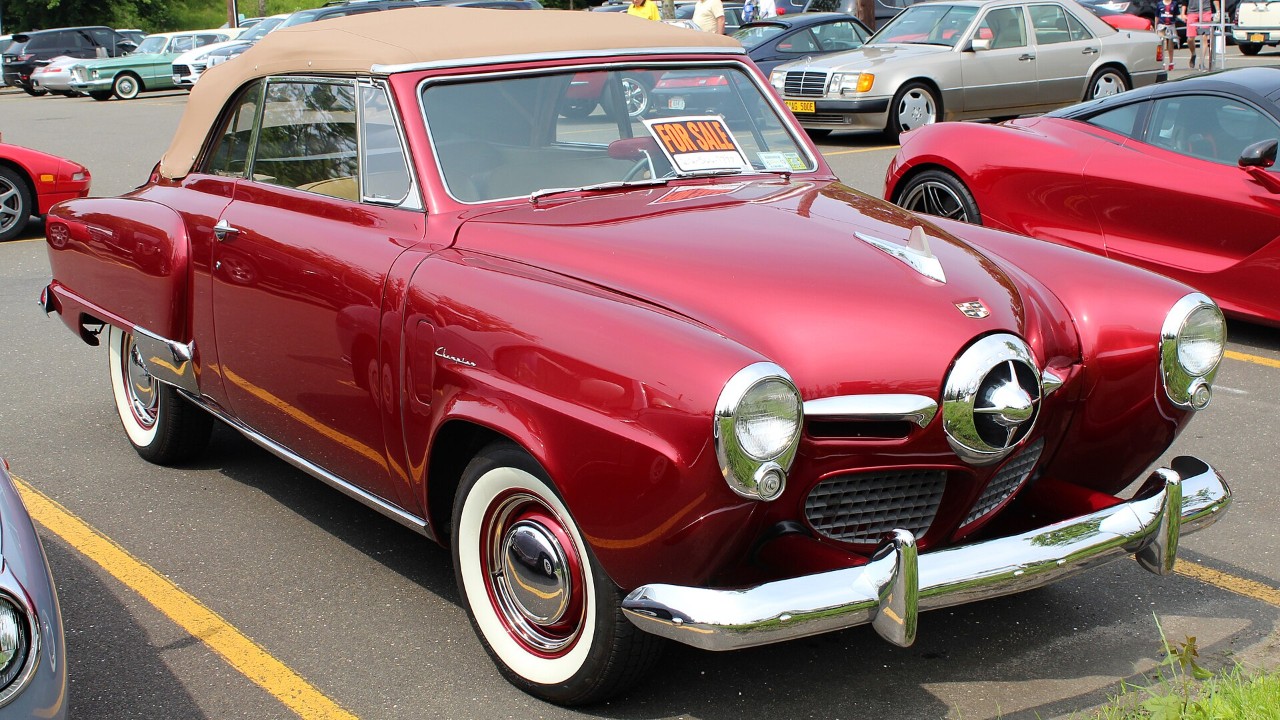
The 1950 Champion is the one with the face everyone remembers. That year, Studebaker introduced the “spinner” grille, a chrome nose that pointed forward like the hub of a propeller. Fans also call these cars “bullet-nose” Studebakers.
Also, the update was more than cosmetic. Engine output rose to 85 horsepower for 1950. Meanwhile, the Starlight coupe received its own trim line, which showed how much Studebaker now leaned on style to sell cars.
Put that nose on a convertible, and the effect doubles. With the top down, the clean flanks and the round grille center become the whole story. To us, it looks like the car is already moving while it sits still. That is a rare trick for a modest six-cylinder car. In addition, the open body makes the bullet nose look even more dramatic in photos.
Our take: the 1950 Champion convertible turned the most affordable Studebaker into a show car. It is the version that gets photographed at every meet, and it explains why the bullet nose became a symbol of postwar optimism. If you are shopping, look for solid floors and a good top frame, then enjoy the attention.
6. 1951 Studebaker Champion Starlight Coupe
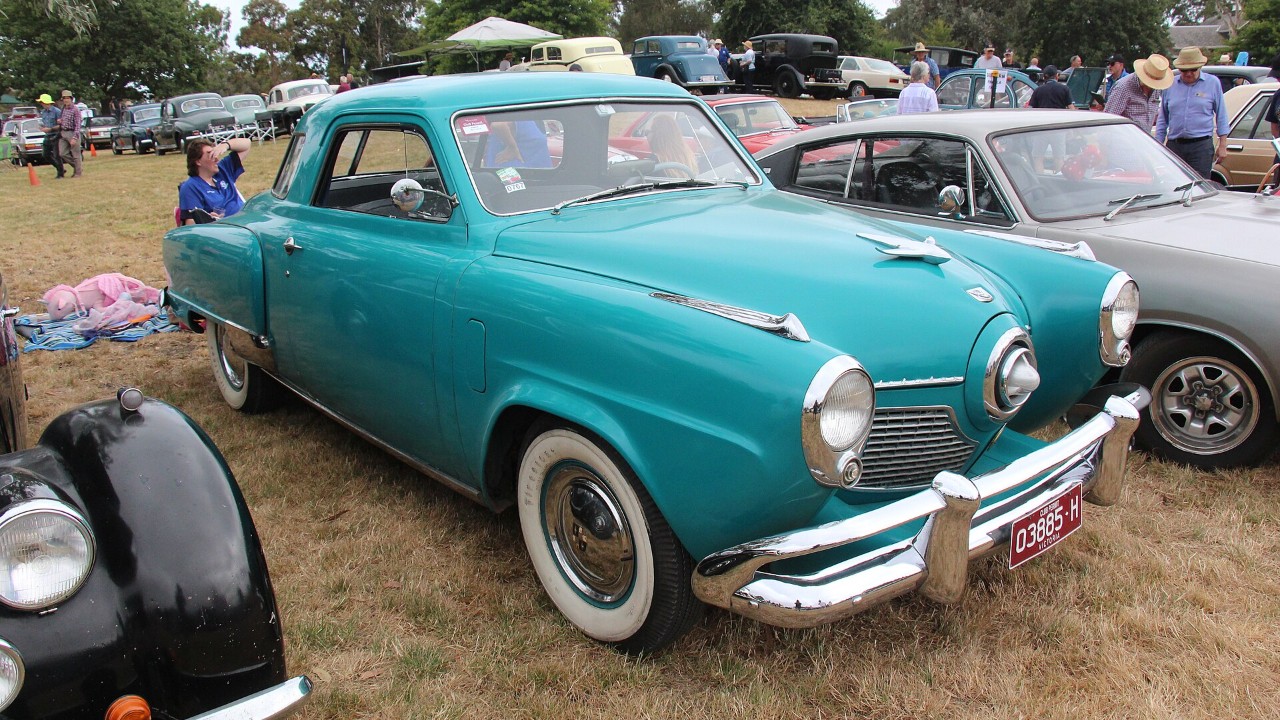
The 1951 Starlight coupe closed out one of the most distinctive body styles in American history. The wraparound rear window had first appeared on the 1947 coupes, and 1951 was its final year. After that, the greenhouse rear glass was gone for good.
That makes the 1951 car a last-chance moment. The rear window curves around the cabin in one sweep, so passengers in the back get an unusually wide view. From the outside, the roof looks almost transparent from certain angles. The look still divides opinion, which is part of its charm.
Then the Champion took a new direction. For 1953, Robert Bourke from Loewy’s design studio redesigned the car into a much lower and sleeker shape. So the 1951 Starlight became the final word on the older theme.
In our opinion, the Starlight is the purest example of Studebaker’s postwar design confidence. It is practical underneath, with the same modest six as its siblings. However, it looks unlike anything else from Detroit. If you want one car that sums up how bold Studebaker was in that era, this is our pick.
7. 1960 Studebaker Champ 5E6 Pickup
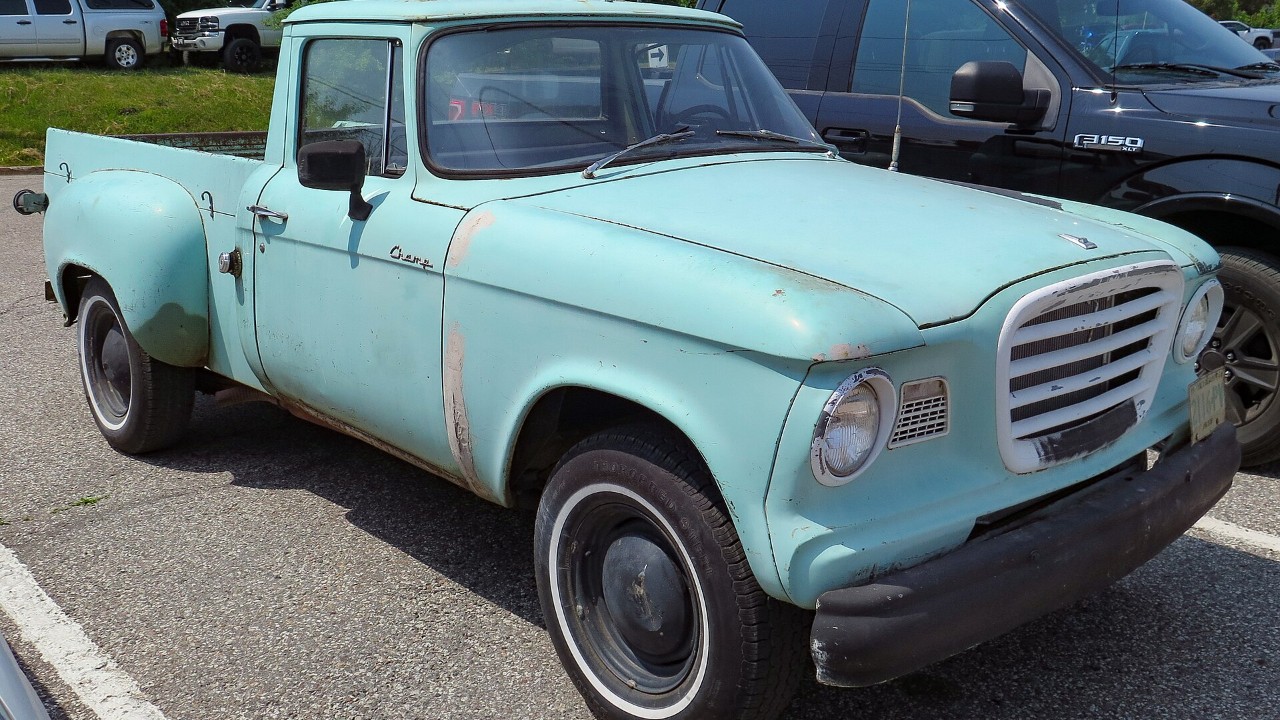
Studebaker built the Champ pickup from 1960 to 1964, and it was a masterclass in making do. Engineers took a Lark four-door sedan body, cut it behind the front doors and adapted the front half to fit the truck chassis. Only the rear wall of the cab needed a new stamping.
Meanwhile, engines covered a wide spread. In 1960, the 5E series offered a 170-cubic-inch flathead six with 90 horsepower or a 245-cubic-inch Big Six with 110. In addition, 259 and 289-cubic-inch V8s were available with two or four-barrel carburetors. For 1961, a full-width Spaceside cargo box arrived, built with tooling Studebaker bought from Dodge.
The Champ also got around. Assembly took place in South Bend, in Hamilton, Ontario, in Melbourne, Australia, and in Israel. For a small company, that was a wide footprint.
Our take: the Champ showed people that Studebaker could still be clever when money was tight. A pickup with a sedan’s face looked friendly and modern next to rivals. In our view, the early 5E trucks are the ones to find, because they wear the original narrow bed and the Lark cab in its purest form.
8. 1963 Studebaker Lark Daytona Wagonaire
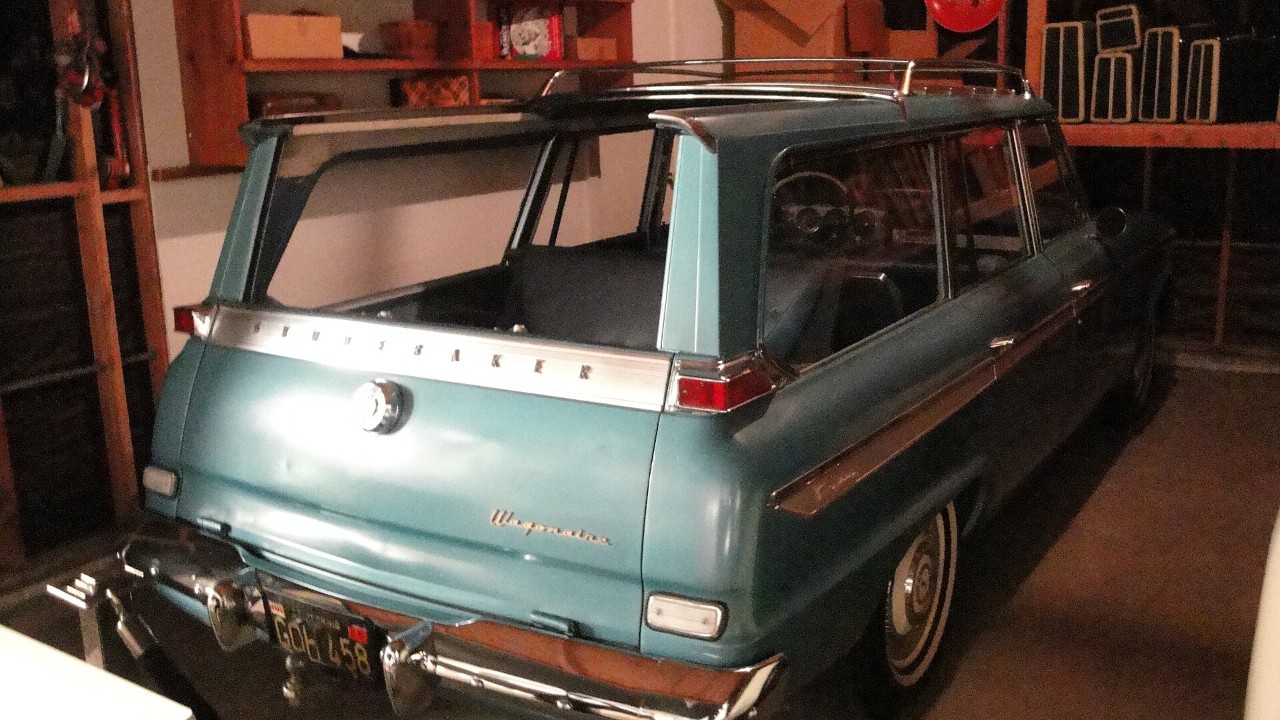
The Wagonaire’s party trick was a roof that slid open. Industrial designer Brooks Stevens, who also designed the Jeep Wagoneer, came up with the idea. With the rear roof section slid forward, you could stand a tall load upright in the back.
However, early buyers found a catch. The sliding-roof wagons leaked water near the front of the sliding section, and the factory fix only helped so much. So in January 1963, Studebaker added non-sliding wagons for $100 less, treating the fixed roof as a delete option. Studebaker built 11,915 wagons of both types for the 1963 model year.
The Daytona badge adds to the appeal. About 12,000 sliding-roof Wagonaires sold over the four-year run, and in 1964 Studebaker built a total of 1,563 Daytona Wagonaires. Today, a sliding roof that still seals well is a prize.
In our view, the Wagonaire is the most imaginative station wagon of the 1960s. It looked ahead to the open-top utility vehicles that came later. Check the roof drains and seals before you buy, and you will own a car that starts conversations everywhere. As Hagerty’s history of the Ontario Studebakers notes, the Wagonaire also stayed in the lineup after production moved to Canada.
9. 1966 Studebaker Cruiser
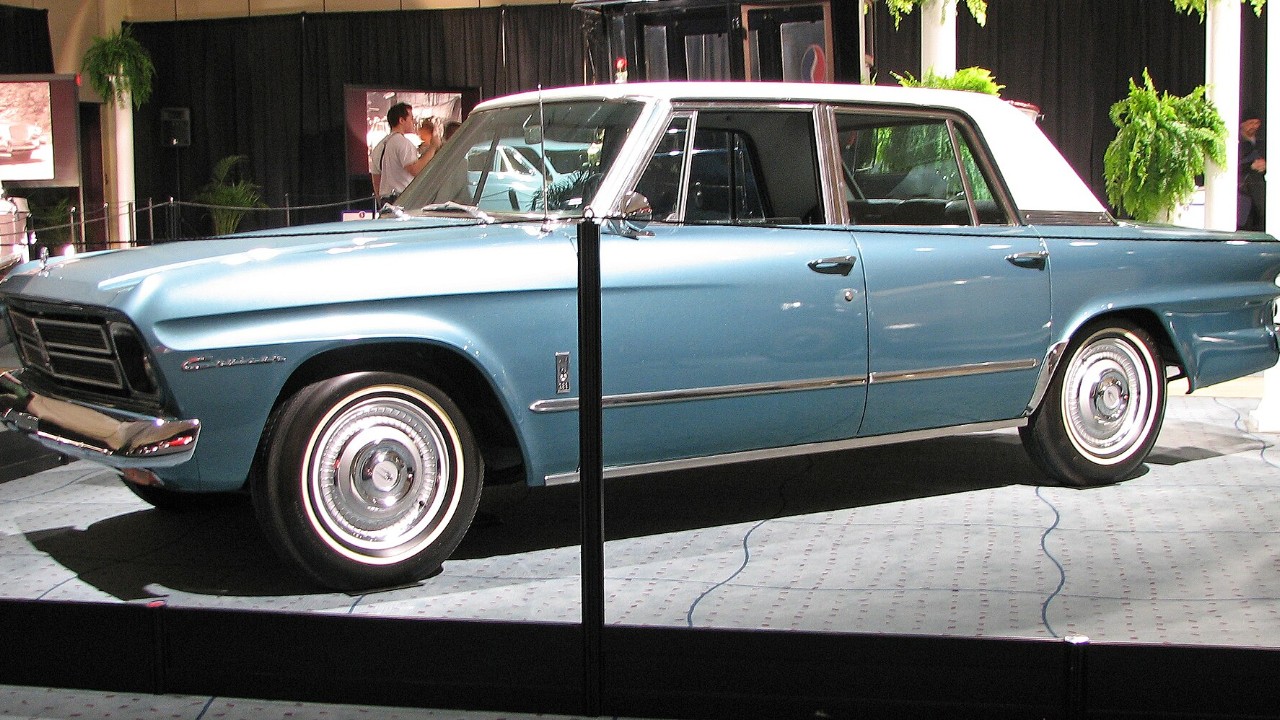
In December 1963, Studebaker closed its South Bend plant and moved all production to Hamilton, Ontario. With capacity limited to about 20,000 cars a year, the lineup shrank to Lark-based models: the Commander, Cruiser, Daytona and Wagonaire. The Cruiser was the top sedan.
The 1966 cars used engines from General Motors. According to Mac’s Motor City Garage, the Hamilton plant installed Chevrolet 194 and 230-cubic-inch sixes and the 283 V8, supplied by McKinnon Industries, GM’s Canadian engine division. Only 8,947 Studebakers were built for 1966.
After that, the end came quickly. On March 16, 1966, the last Studebaker rolled off the line in Hamilton. It was a Cruiser four-door sedan in Timberline Turquoise with an Arctic White roof, powered by the 283 V8.
Our take: the 1966 Cruiser changed how people saw Studebaker in a bittersweet way. It proved the company could build a tidy, comfortable sedan to the very end, even with borrowed engines and a single plant. For collectors, a 1966 car is the last chapter of a story that started in South Bend. That makes any surviving Cruiser from the Hamilton years worth a second look. That final Cruiser now lives at the Studebaker National Museum in South Bend, Indiana.
More from Fast Lane Only