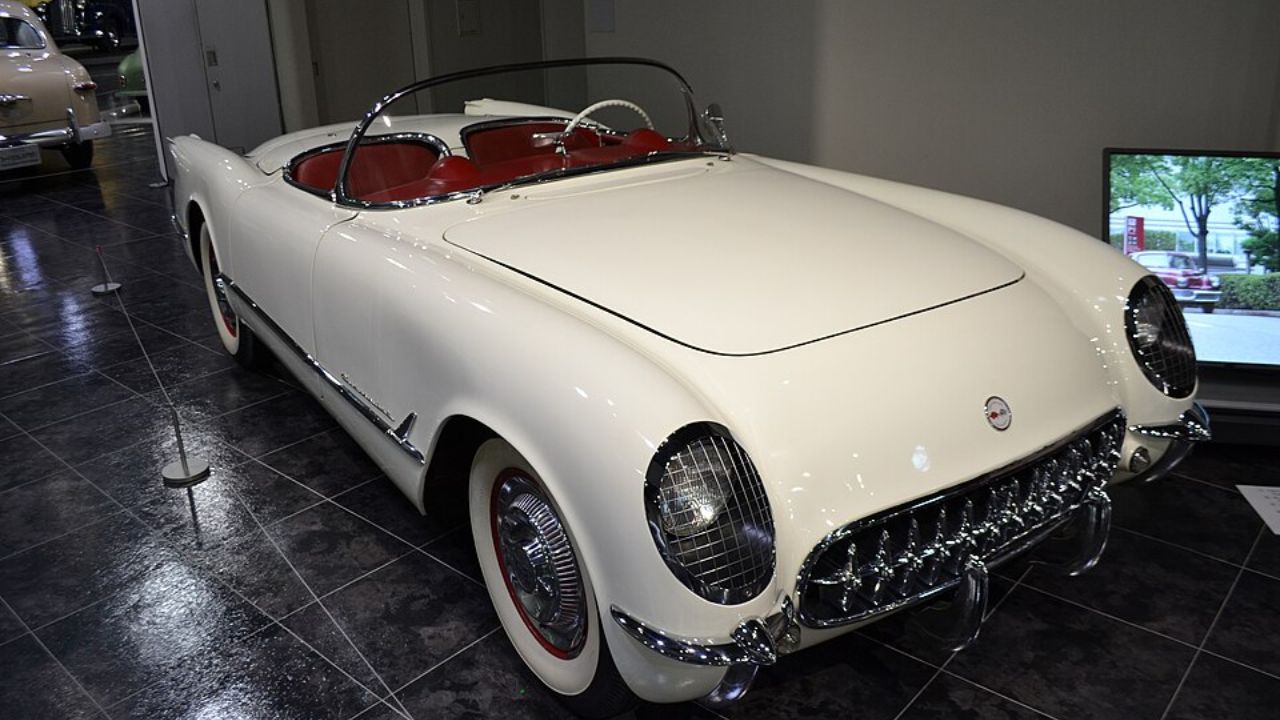
Chevrolet’s first Corvette left the line in 1953 with a Blue Flame six under the hood, not a V8. That surprises a lot of people, but it also shows how wide Chevy’s engine story runs. Over the following decades, the bow-tie built sixes, flat-sixes, aluminum fours, big-blocks and hand-assembled V8s.
Some of those engines became household names among gearheads. Others had brilliant ideas that never got the credit they earned. A few even arrived with flaws, yet they pushed the industry forward anyway.
These are our picks, twelve Chevrolet engines we would rank above the rest of the bow-tie catalog for what they did and how they did it. We took the horsepower ratings and dates from our sources. The ranking itself is our opinion, so feel free to argue with it.
1. 1953 Chevrolet Blue Flame six
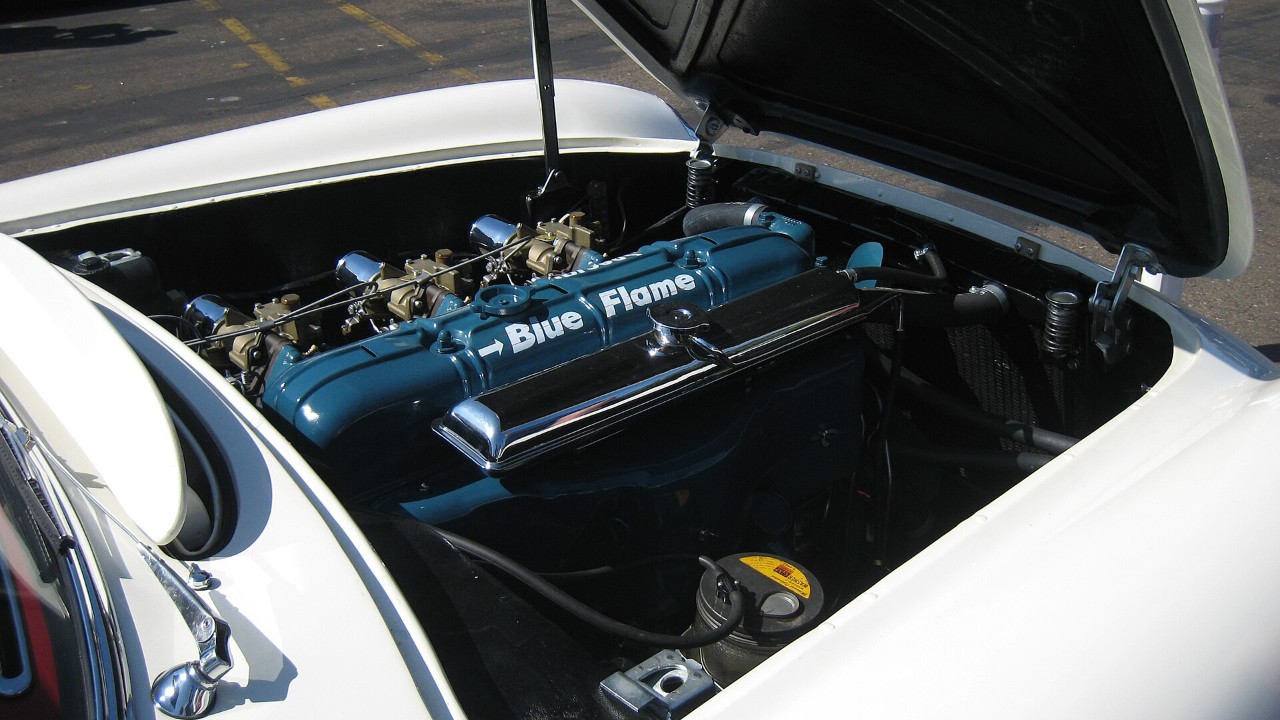
The Blue Flame six belongs to the long line of Chevy overhead-valve sixes that ran from 1929 to 1962. For the 1953 Corvette, Chevrolet engineers gave the 235-cubic-inch engine a real workout. It got three single-barrel Carter side-draft carburetors, 8.0:1 compression and solid lifters. It also borrowed a slightly higher-lift camshaft from the 261 truck engine.
The result was 150 horsepower at 4,200 rpm and 223 lb-ft of torque. By comparison, the regular 1953 Powerglide Blue Flame six in a passenger car made 115 horsepower. That is a big jump for a few well-chosen parts.
We rank the Corvette Blue Flame six this high because it proved Chevrolet could tune an everyday engine into something sporting. It carried the first Corvettes until a V8 arrived, and it did so with a simple, sturdy design. If you ever get to hear one, listen for the triple carburetors at full throttle. That sound tells you this was more than a family-car six in a fiberglass body. For our money, the Blue Flame six is the most underrated engine on this list.
2. Chevrolet 348 W-series V8
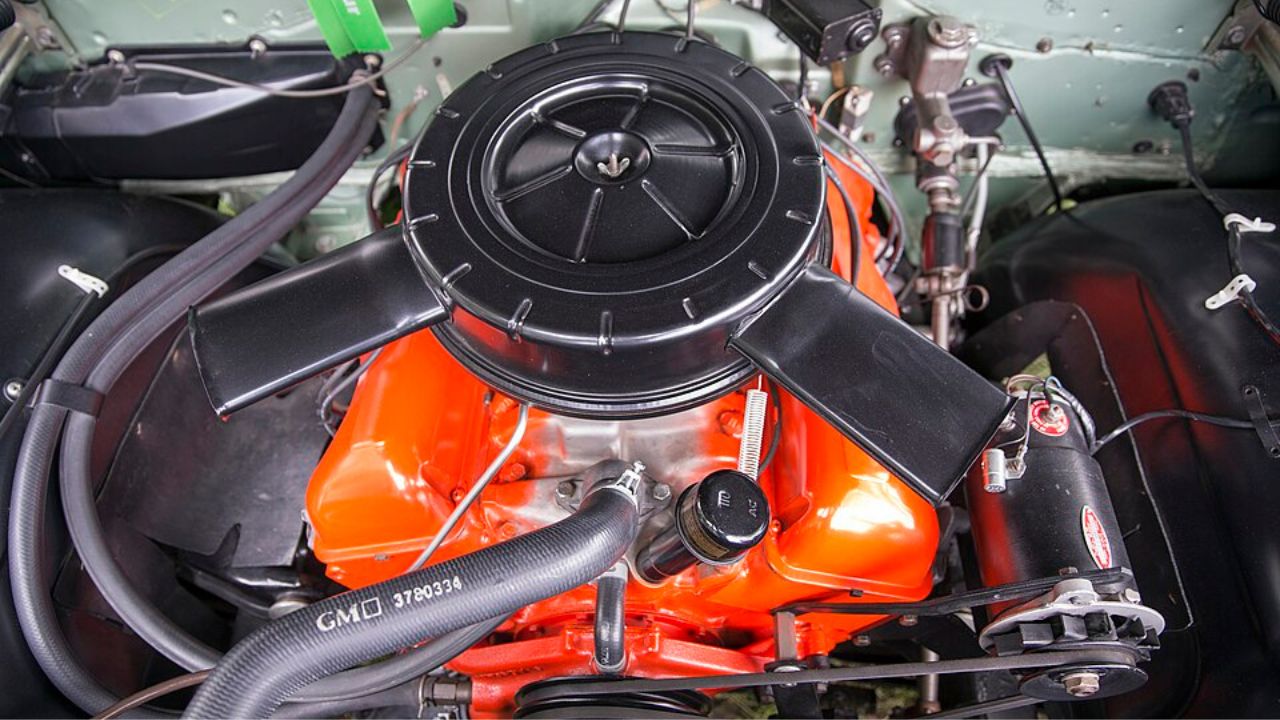
Chevrolet launched the 348 in 1958 because the small-block lacked the muscle for heavier cars and upcoming trucks. According to Street Machine’s history of the W-series, it debuted in the new Impala. The block was a heavy-duty iron piece with a 74-degree deck angle. That clever angle created the combustion chamber in the block rather than the head.
Power climbed quickly. The first four-barrel version made 250 horsepower, and a triple two-barrel setup made 280. Hagerty also lists a high-compression, solid-lifter 348 at 315 horsepower. By 1961, the tri-power 348 reached 348 horsepower. Fun fact: the real displacement was 347.47 cubic inches. Chevy rounded it up to 348 because Pontiac already had a 347.
Our take is that the 348 deserves more love than it gets. Many people see it as only the warm-up act for the 409. However, it was Chevy’s first big-block, and it set up the whole family that followed. The steep 16-degree valve angle also gave it distinctive valve covers that make it easy to spot. Production ran until 1965, when the Mark IV 396 and 427 took over.
3. 1959 Chevrolet 283 Ramjet fuel-injected V8
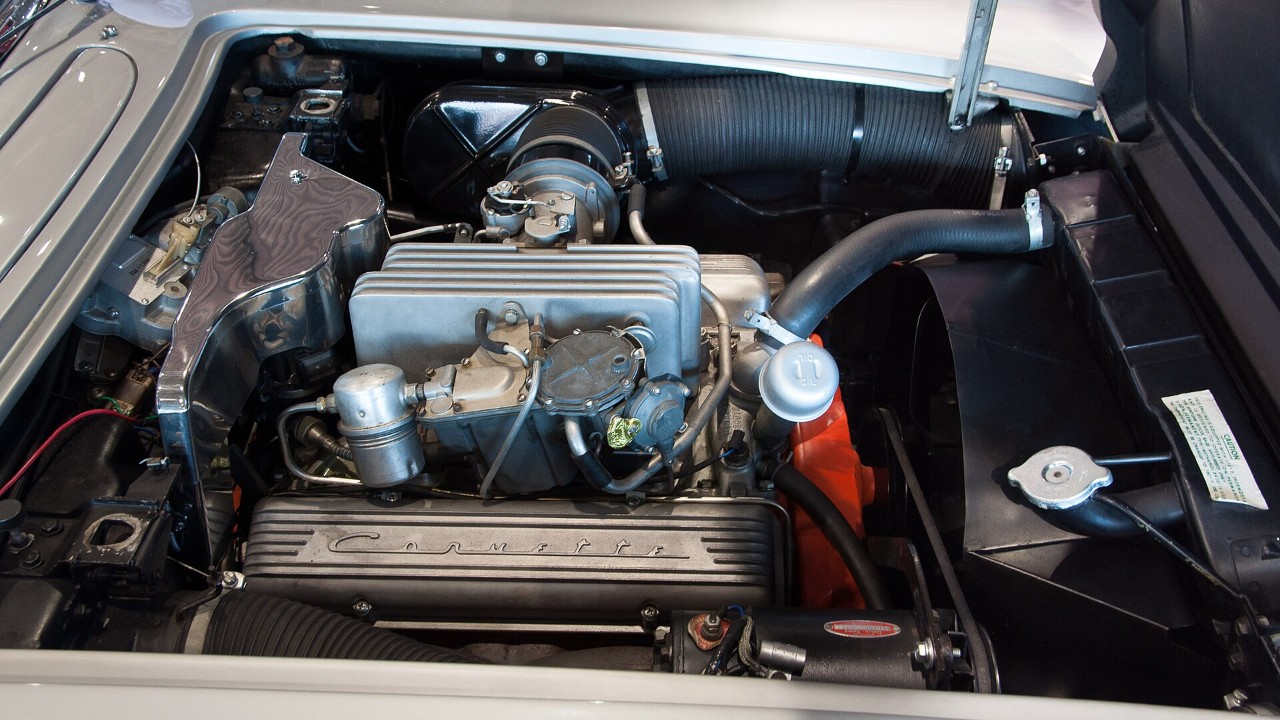
The small-block V8 arrived in 1955 at 265 cubic inches, and Chevrolet bored it out to 283 for 1957. That same year, Chevy added Rochester Ramjet mechanical fuel injection. In its hottest 1957 form, the injected 283 made 283 horsepower at 6,200 rpm, or one horsepower per cubic inch.
By 1959, Chevy listed two fuel-injected versions. One made 250 horsepower at 5,000 rpm, while the hotter version made 290 horsepower at 6,200 rpm. Both relied on a mechanical system with no computer at all, which still amazes us. That makes the Ramjet a fascinating piece of 1950s engineering to study up close.
We rank the Ramjet 283 near the top because it brought fuel injection to American buyers decades before it became normal. It asked more of owners than a carburetor did. Yet the idea was right, and Chevrolet proved it could work on a production car. If you buy an original injected car today, have a specialist check the unit before you drive far. A correctly tuned Ramjet system makes the small-block feel sharp and eager at the top of the rev range.
4. 1962 Chevrolet Corvair turbocharged flat-six
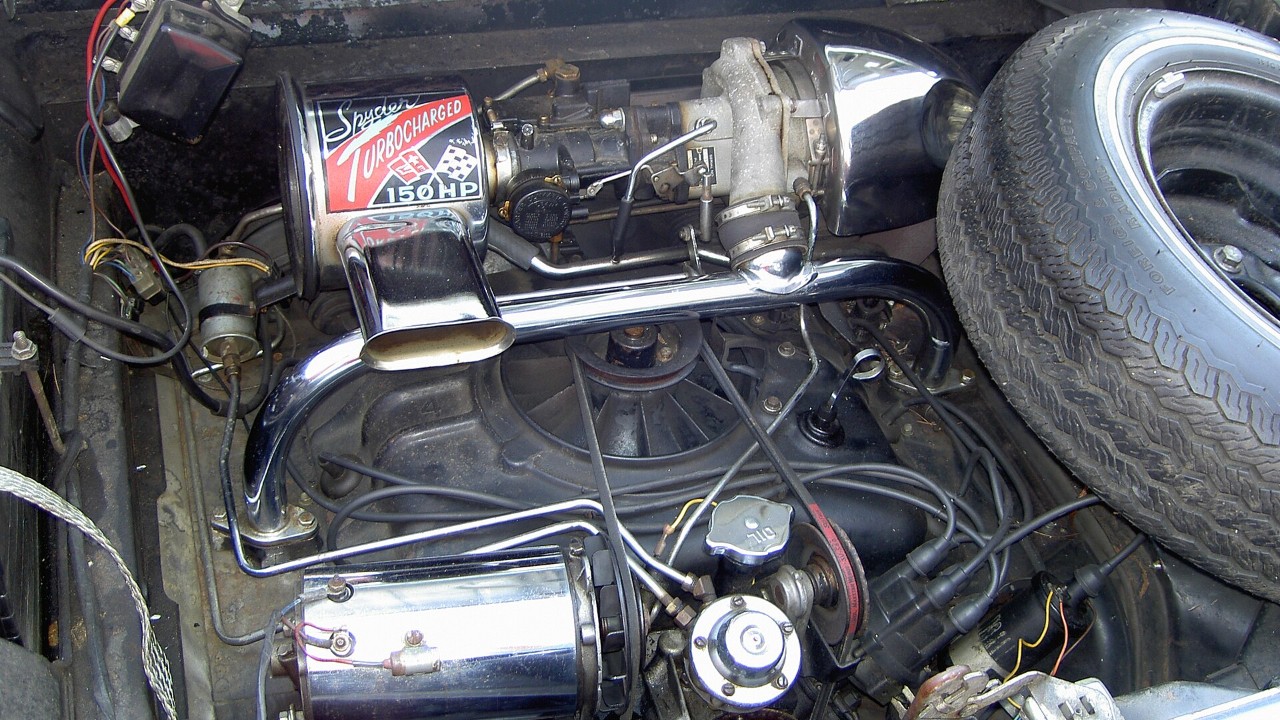
The Corvair’s air-cooled flat-six already made it an oddball among American cars. Then, for the 1962 Monza Spyder, Chevrolet bolted on a turbocharger. The supplier was the Thompson Valve Division of Thompson-Ramo-Wooldridge, later known as TRW.
The 144.7-cubic-inch engine made 150 horsepower at 4,400 rpm and 210 lb-ft of torque. In fact, it arrived one month after the Oldsmobile Jetfire’s turbo engine, so it became the second turbocharged car in volume production. By 1965, the Corsa turbo version made 180 horsepower at 4,000 rpm.
We love this engine because it was so far ahead of the market. Turbocharging later became normal on everything from economy cars to supercars, but in 1962 it was exotic. The Corvair turbo also delivered strong torque in the middle of the rev range, which suited the light, rear-engined car. The turbo engine also kept the Corvair’s air cooling, so there was no radiator or water pump to worry about. If you find one, make sure the turbo and its oil seals are healthy. A blown seal can turn a fun drive into a smoky mess.
5. Chevrolet 396 L78 V8
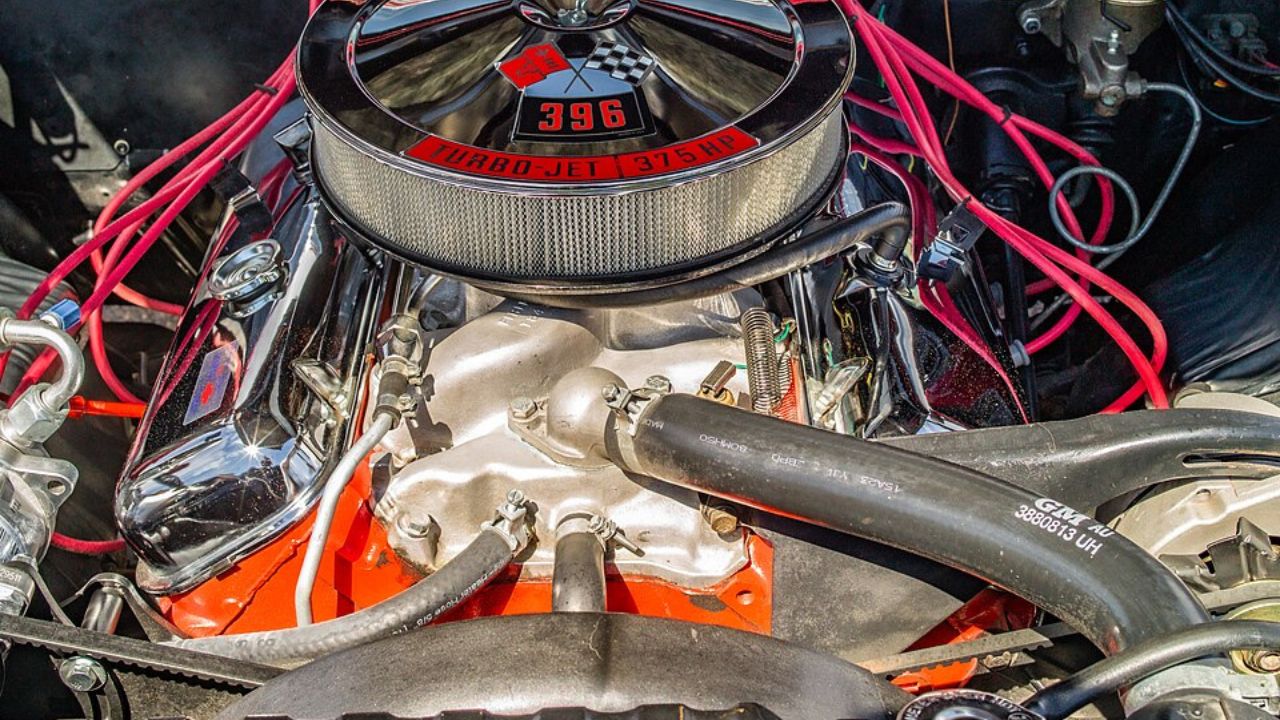
The Mark IV big-block arrived in 1965 and replaced the W-series. It inherited the canted-valve “porcupine” heads from Chevrolet’s racing Mark II engine. As Hagerty’s history of the Chevy big-block explains, the angled valves helped the engine breathe far better than the older design.
The L78 was the hot version of the 396. It used solid lifters and 11:1 compression. In mid-size cars, Chevrolet rated it at 375 horsepower at 5,600 rpm. In the Corvette, the same idea produced 425 horsepower. That spread shows how much the factory ratings depended on the car and the marketing behind it. Either way, the L78 was the real deal.
We rank the L78 among the best because it offered serious race-bred hardware in a showroom car. It loved to rev, and it turned a mid-size Chevelle into a street brawler. On the other hand, the solid lifters need regular adjustment, so this is not a set-and-forget engine. If you buy an L78 car, ask for documentation, because many clones exist. A real one with matching numbers is a prize worth the extra paperwork.
6. 1969 Chevrolet 427 L72 V8
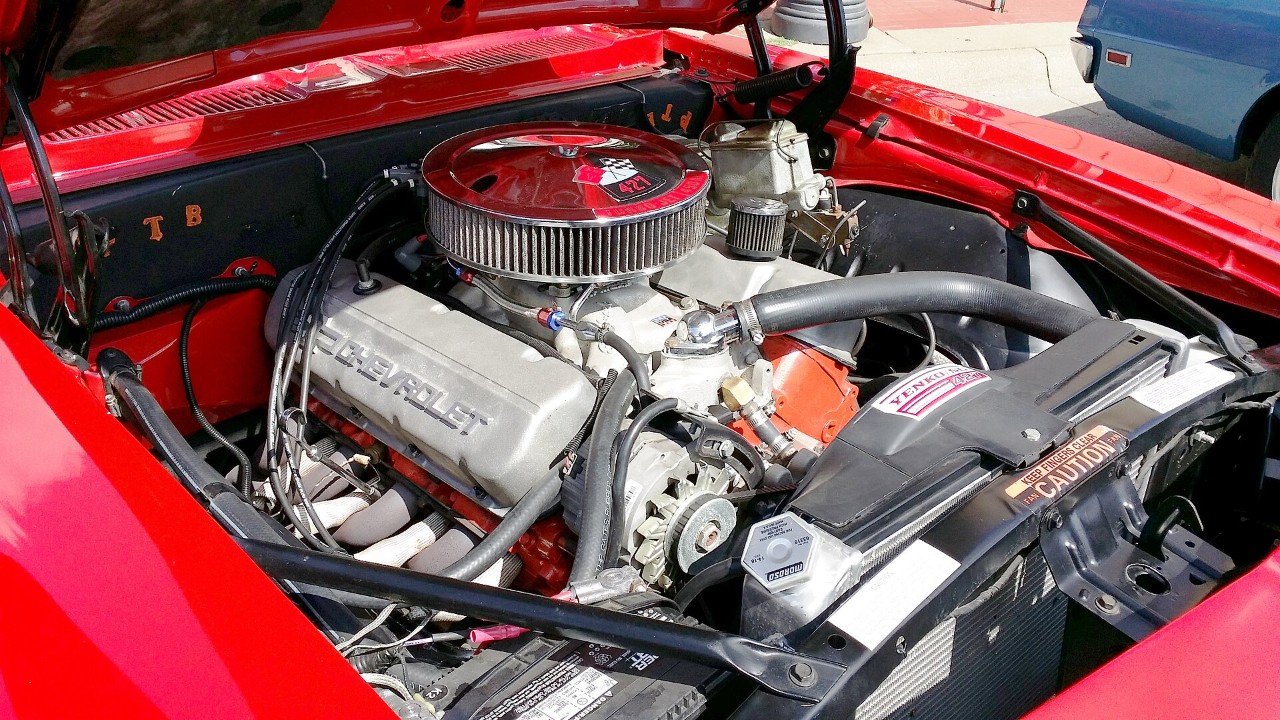
The 427 big-block debuted in 1966 for Corvettes and full-size Chevys. The L72 version made 425 horsepower and stayed in the lineup from 1966 to 1969. In 1969, it also found its way into the L72 COPO Camaro, the car most fans picture when they hear the code.
The L72 is not just a big number on paper. When Super Chevy dyno-tested an L72 COPO Camaro in 2011, the car made 287 horsepower at the rear wheels. That gap from the gross rating reflects the different ways the industry measured power then and now.
Our take is that the L72 is the sweet spot of the 427 family. It brings real big-block muscle without the race-only temperament of the L88. In addition, it fit in a Camaro, which made for a light car with a huge engine and very little to slow it down. That combination is why we would put the L72 near the top of any big-block ranking. If you are shopping, verify the COPO paperwork before anything else, since that is where most of the value lives.
7. 1970 Chevrolet Chevelle SS 454 V8
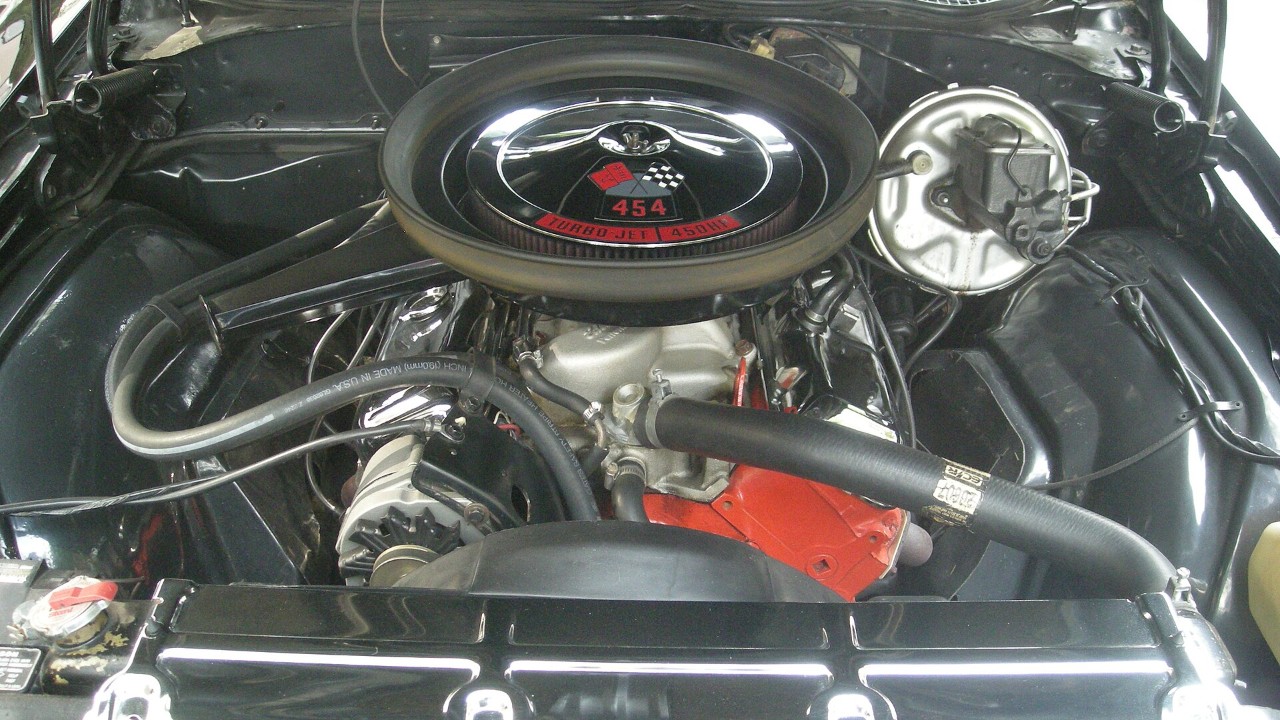
For 1970, Chevrolet stretched the big-block‘s stroke to four inches and got 454 cubic inches. The milder LS5 made 390 horsepower and 500 lb-ft of torque. Meanwhile, the LS6 made 450 horsepower at 5,600 rpm and 500 lb-ft at 3,600 rpm, using a single four-barrel Holley carburetor.
Those numbers made the Chevelle SS 454 the peak of the original muscle-car era for many fans. That torque figure alone tells you what the engine was built to do. Then the industry switched to net ratings. For context, by 1972 Chevrolet listed the 454 in the Corvette at 270 net horsepower, a sign of how quickly the era changed.
We rank this engine highly because it was the high point of Chevy’s horsepower race. The LS6 in particular delivered huge torque on pump gas, and it did so with a single carburetor rather than exotic hardware. Even the LS5 gave you a big, lazy torque curve that suited everyday driving. If you buy a 1970 SS 454, have the engine codes checked. Real LS6 engines, LS5 engines and clones can look alike, so details matter.
8. 1971 Chevrolet Vega 140 aluminum four
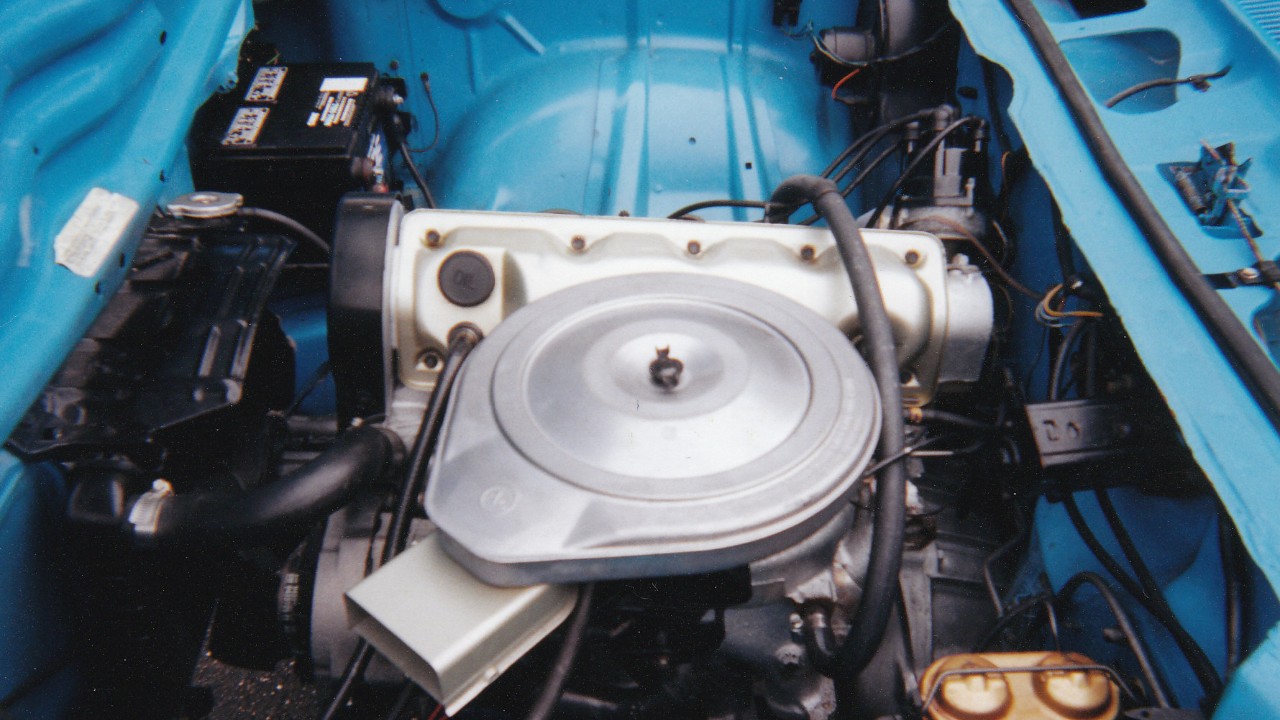
The Vega’s 2.3-liter four was a bold experiment. Its die-cast aluminum block contained 17 percent silicon and had no iron cylinder liners. Instead, Chevrolet etched the bores to expose hard silicon particles that served as the wear surface. On top sat a cast-iron head with a single overhead camshaft.
For 1971, the base engine made 90 horsepower with a one-barrel carburetor. The optional two-barrel L11 made 110 horsepower. Unfortunately, the open-deck block was sensitive to overheating, which could warp the cylinders and ruin the head gasket. For 1976, Chevrolet introduced the improved Dura-Built 140 with better cooling and a five-year or 60,000-mile warranty.
We rank the Vega engine here for its ambition, not its durability. It brought linerless aluminum cylinder technology into a mass-market economy car, which took real nerve from a company known for cast-iron engines. If you own one, keep a close eye on coolant and oil levels, because that is the key to survival. For buyers, a later Dura-Built engine is the safer choice. That 1976 update also replaced the fiddly valve adjusters with hydraulic lifters.
9. 1990 Chevrolet LT5 V8

The LT5 started as a joint project between Chevrolet and Lotus, which designed the engine with GM’s input. Mercury Marine’s MerCruiser division assembled each one, largely by hand, in Stillwater, Oklahoma. From there, the engines went to the Corvette plant in Bowling Green, Kentucky.
The LT5 displaced 5.7 liters, used four overhead camshafts and 32 valves, and ran 11.0:1 compression. From 1990 to 1992, it made 375 horsepower. Then Lotus revised the heads, exhaust and valvetrain, and output rose to 405 horsepower for 1993 to 1995. Chevrolet built 6,939 ZR-1s over those six model years.
Our take is that the LT5 was a statement engine. To us, it felt like Chevrolet’s answer to the European exotics of its day, built in America with British engineering help. The LT5 also held 12 quarts of oil, far more than a typical small-block, a reminder of how seriously the engineers took durability. If you buy a ZR-1 today, look for documented service by someone who knows these engines. They are robust, but parts and expertise come from a small group of specialists.
10. 1997 Chevrolet LS1 V8
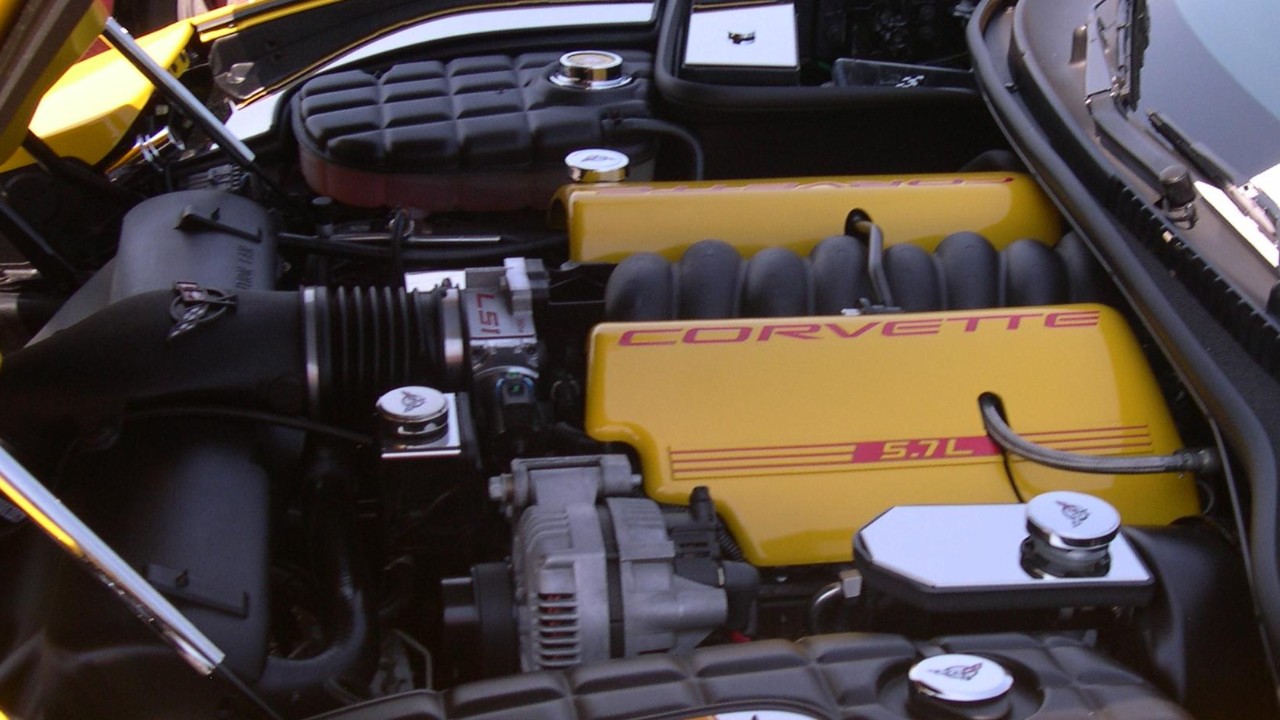
The LS1 arrived in the 1997 C5 Corvette and launched a whole new small-block family. It kept the pushrod layout, but almost everything else changed. The block was aluminum, and the engine displaced 5,665 cubic centimeters, or about 346 cubic inches.
In its first year, the LS1 made 345 horsepower at 5,600 rpm. It then spread from 1998 to 2002 into the Camaro and Firebird. That move put Corvette-level power into cars that many younger buyers could afford, and it made those Camaros and Firebirds seriously quick. Later, the LS family kept growing with bigger and stronger versions.
We rank the LS1 high because it changed what a pushrod V8 could be. It was compact, light and strong, and it made modern power without overhead cams. Those traits made it a favorite for engine swaps in everything from classic trucks to imports. If you want one, a used Camaro or Firebird donor is often the cheapest route. Just check for oil consumption and listen for noisy valvetrain parts. A healthy LS1 should idle smoothly and pull cleanly all the way to redline.
11. 2006 Chevrolet LS7 V8
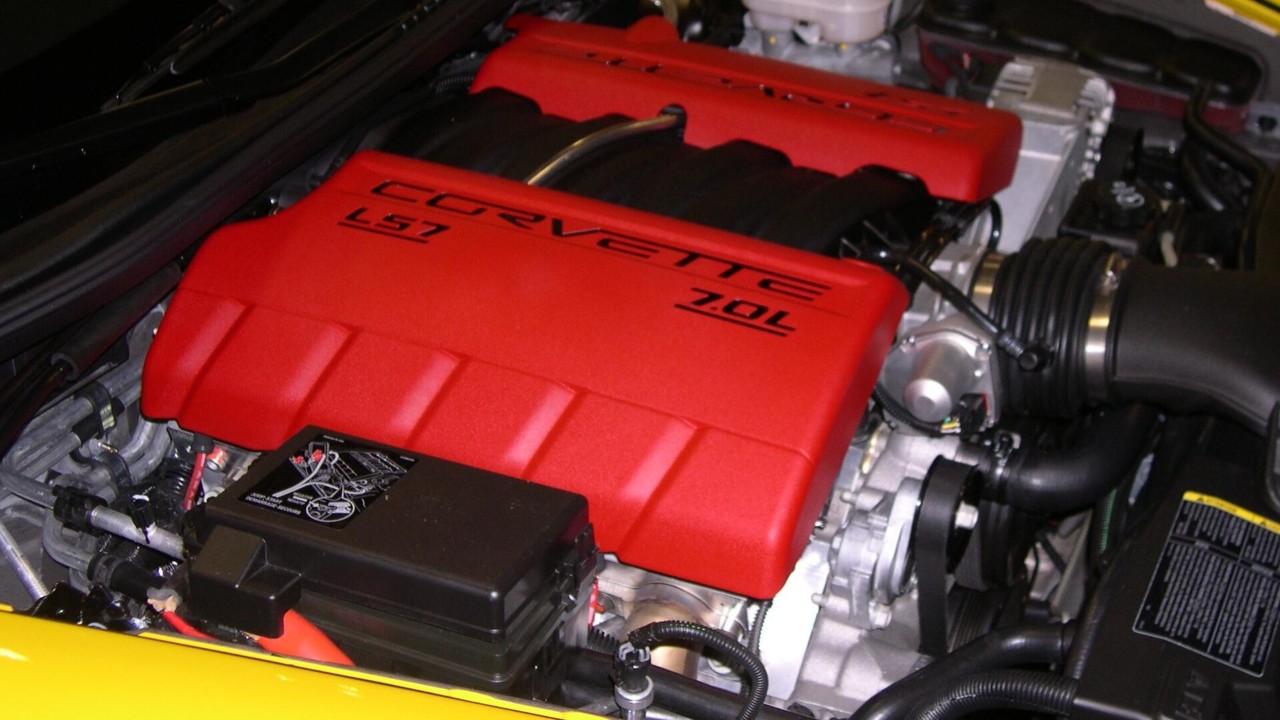
The LS7 powered the 2006 Corvette Z06, and it went big. It displaced 7,011 cubic centimeters, or 427 cubic inches, a clear nod to Chevy’s famous big-block number from the 1960s. Chevrolet rated it at 505 horsepower and 470 lb-ft of torque.
Inside, the LS7 used lightweight titanium connecting rods and titanium intake valves to cut weight. It also had a dry-sump oiling system, similar to racing engines, to keep oil flowing during hard cornering. Every one was hand-built at the GM Performance Build Center in Wixom, Michigan, rather than on a regular engine line.
Our take is that the LS7 is the best naturally aspirated pushrod V8 Chevrolet has ever offered in a road car. It delivered race-car hardware and big power with a factory warranty behind it. Because the parts inside are special, research matters before you buy. A Z06 with documented service history is the one we would want. With that sorted, the LS7 rewards you with a sound and pull few engines can match. For us, it is the purest expression of the 427 badge in modern form.
12. 2006 Chevrolet Vortec 4200 inline-six
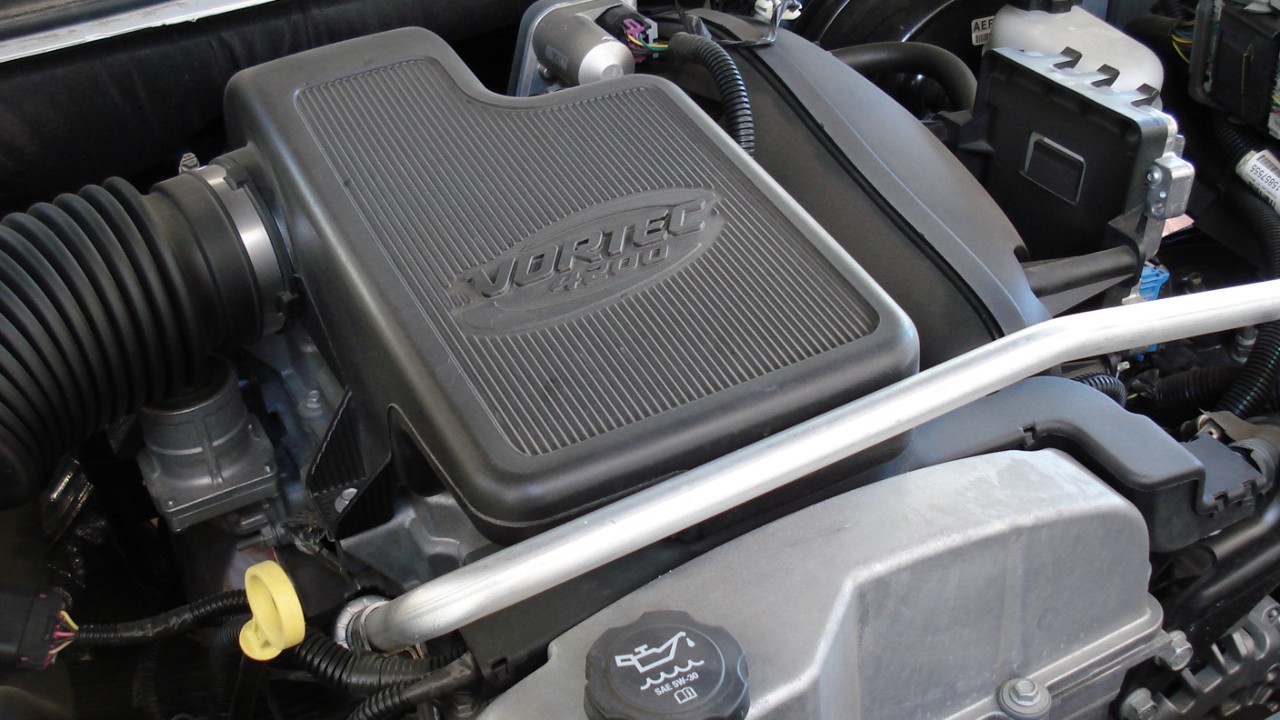
The Vortec 4200 was a modern inline-six with double overhead cams and four valves per cylinder. It also used variable timing on the exhaust camshaft. It displaced 4.2 liters, or about 254 cubic inches, and powered the Chevrolet TrailBlazer, GMC Envoy and Oldsmobile Bravada from its 2002 launch. Later, the Buick Rainier, Saab 9-7X and Isuzu Ascender used it as well.
At launch, the engine made 270 horsepower at 6,000 rpm. By 2006, it was up to 291 horsepower and 277 lb-ft of torque. In addition, it earned a spot on Ward’s 10 Best Engines list every year from 2002 through 2005. That is a strong record for an SUV engine. We think that run says plenty about how good it felt from behind the wheel.
We rank the Vortec 4200 here, at the end of our list, because it brought a smooth, powerful straight-six back to mainstream American SUVs. It also gave buyers V8-like power from six cylinders, which made these SUVs pleasant to drive. However, GM ended production in 2009, after the Moraine, Ohio plant closed and the GMT360 platform ended.
More from Fast Lane Only