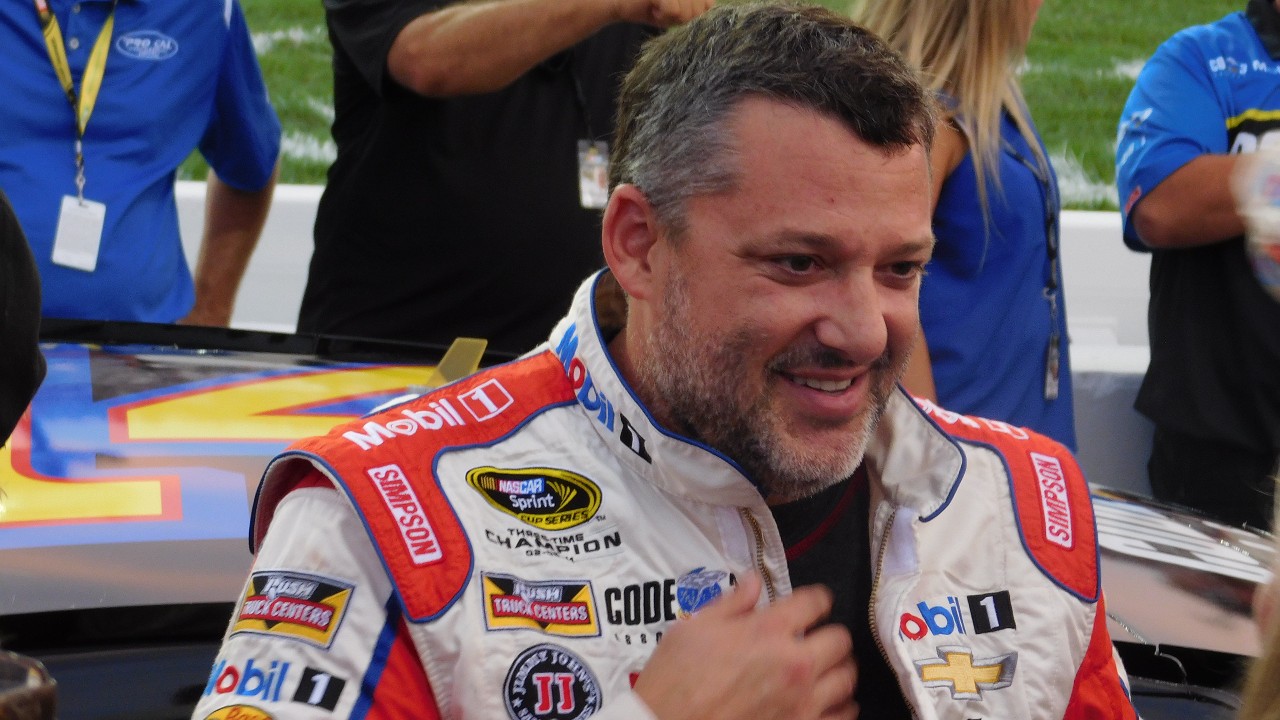
Tony Stewart is climbing back into a NASCAR field that has not seen his name on a competitive entry list in nearly a decade, and the symbolism is hard to miss. One of the sport’s defining figures is returning to race a truck at Daytona, trading the owner’s headset for a steering wheel at one of the most volatile venues in American motorsport. His comeback is not a ceremonial parade lap, it is a full‑blooded attempt to mix it with a new generation in a series he has never contested before.
For a driver whose legacy was built on versatility and ferocity, this move feels less like nostalgia and more like unfinished business. Stewart’s decision to rejoin NASCAR competition in a Ram Truck at Daytona connects his Hall of Fame past to a rapidly evolving present, and it offers a rare chance to see how “Smoke” measures himself against a landscape that has changed significantly since he last raced stock cars full time.
Why Stewart chose Daytona and the Truck Series
I see Stewart’s choice of Daytona and the Craftsman Truck Series as a calculated blend of comfort and challenge. Few tracks are as intertwined with his career as Daytona, where he has collected 19 victories across the Cup Series, the O’Reilly Auto Parts Series and IROC, a record that underscores how naturally he reads the high banks and the draft. Returning there in a truck allows him to lean on that deep familiarity with the speedway while stepping into a discipline that is new to his résumé, since he has not previously raced in the Truck Series despite decades in NASCAR’s upper tiers.
The Truck Series itself offers a compelling stage for this comeback. Stewart will compete in the Craftsman Truck Series race at Daytona, driving a Ram Truck as part of a new Free Agent Program that pairs him with Kaulig Racing for the Daytona Truck Race. That combination, a Hall of Famer in a Dodge Ram platform under the Kaulig banner, gives the event a sense of experimentation as well as prestige. It is a one‑off that still carries competitive weight, and it positions Stewart not as a ceremonial starter but as a genuine contender in a field that mixes rising prospects with hardened veterans.
What the return says about “Smoke” and his legacy
From my vantage point, Stewart’s decision to strap back in speaks volumes about how he views his own legacy. He stepped away from NASCAR competition after the 2016 season with three NASCAR Cup Series championships and a reputation as one of the most complete drivers of his era, yet he has never treated that résumé as a reason to retreat from the cockpit entirely. The same competitor who quickly proved he was a championship‑caliber driver in NASCAR’s premier series is now willing to test himself in a different national division, at a track where the draft can humble anyone, regardless of past glory.
There is also a personal dimension that resonates. Stewart has described how he has “raced just about everything” at Daytona, and the record backs that up, from his Cup triumphs to his dominance in the O’Reilly Auto Parts Series and IROC. By returning now, in a truck that carries the Ram badge, he is effectively adding another chapter to a Daytona portfolio that already spans stock cars and specialty series. It reinforces the idea that his Hall of Fame status is not a museum piece but a living career, one that still seeks new experiences even as it revisits familiar asphalt.
How the deal came together with Ram and Kaulig Racing
The structure of this program reveals as much about modern NASCAR as it does about Stewart himself. He is joining Ram’s Free Agent Program, a concept that allows a manufacturer to plug a high‑profile driver into select events without committing to a full‑season lineup. In this case, the partnership with Kaulig Racing for the Daytona Truck Race creates a turnkey opportunity: a competitive team, a factory‑backed Ram Truck and a driver whose name alone guarantees attention. It is a modular approach to star power that fits the sport’s current emphasis on flexible alliances.
From what has been outlined, Stewart’s entry will see him drive a Dodge Ram at Daytona under the Kaulig umbrella, aligning a Hall of Famer with a team that has built its identity on aggressive, opportunistic racing. The arrangement also dovetails with Ram’s broader push to showcase its trucks in high‑visibility motorsport settings, using a figure like Stewart as both competitor and ambassador. For Kaulig, adding a three‑time NASCAR Cup Series champion to its Truck Series effort, even for a single race, offers both technical feedback and a marketing jolt that is difficult to replicate through any other means.
What this means for today’s NASCAR drivers and fans
I view Stewart’s return as a subtle but meaningful commentary on the current NASCAR ecosystem. For younger drivers in the Truck Series, sharing a draft line with Tony Stewart at Daytona is more than a story to tell, it is a live benchmark. Many of them grew up watching him win Cup races and titles, and now they will have to decide whether to follow his bumper, challenge his blocks or try to out‑think him in the closing laps. That dynamic can sharpen race craft across the field, especially at a track where experience in the pack is often the difference between survival and a wrecked truck.
For fans, the impact is equally tangible. Stewart’s presence reconnects a segment of the audience that may have drifted after he left full‑time NASCAR competition with a series that often struggles for mainstream attention. Seeing “Smoke” in a Ram Truck at Daytona, competing in the Craftsman Truck Series rather than the Cup Series, invites viewers to sample a different layer of the NASCAR ladder. It also underscores that the sport’s legends are not confined to ceremonial pace car duties, they can still choose to drop into the fray and accept the same risks as the prospects trying to build their own names.
How Stewart’s competitive fire fits the modern NASCAR landscape
Even after years away from the grid, I do not expect Stewart to treat this as a casual exhibition. His history suggests that whenever he climbs into a race vehicle, whether it is a stock car, a sprint car or now a Ram Truck, he approaches it with the same intensity that carried him to multiple NASCAR Cup Series titles. The fact that he is returning at Daytona, a place where the margin between control and chaos is razor thin, indicates a willingness to embrace the unpredictability of modern superspeedway racing rather than seek out a safer, more predictable venue.
At the same time, the sport he is reentering has evolved. The Truck Series grid now includes drivers who have grown up in an era of simulation tools, data‑heavy debriefs and tightly regulated technical windows. Stewart’s feel‑based approach, honed across disciplines and eras, will be tested against that environment. Yet that contrast is part of the appeal. His comeback in a Dodge Ram with Kaulig Racing, under the umbrella of Ram’s Free Agent Program, becomes a live experiment in whether instinct and experience can still disrupt a field shaped by modern methods. For a fan base that has long associated “Smoke” with raw competitiveness, that question is precisely what makes his return to NASCAR competition at Daytona so compelling.
More from Fast Lane Only