Luxury compact SUVs have long been a German stronghold, with familiar badges from Munich, Stuttgart, and Ingolstadt defining expectations for performance and prestige. The Genesis GV70 has quietly but decisively disrupted that order, pairing sharp design and serious engineering with a value proposition that makes its European rivals look cautious. As I weigh the latest data and real-world comparisons, it is clear that this Korean newcomer is not just competitive, it is actively reshaping what buyers should demand in this class.
By combining strong reliability scores, lavish standard equipment, and a cabin that feels more boutique than mass market, the GV70 has moved from underdog to benchmark. It now sits at or near the top of independent rankings of Luxury Compact SUVs, and it has begun collecting awards that traditionally defaulted to German nameplates. The question is no longer whether Genesis belongs in the conversation, but how quickly the rest of the segment can catch up.
Design and cabin quality that feel a class above
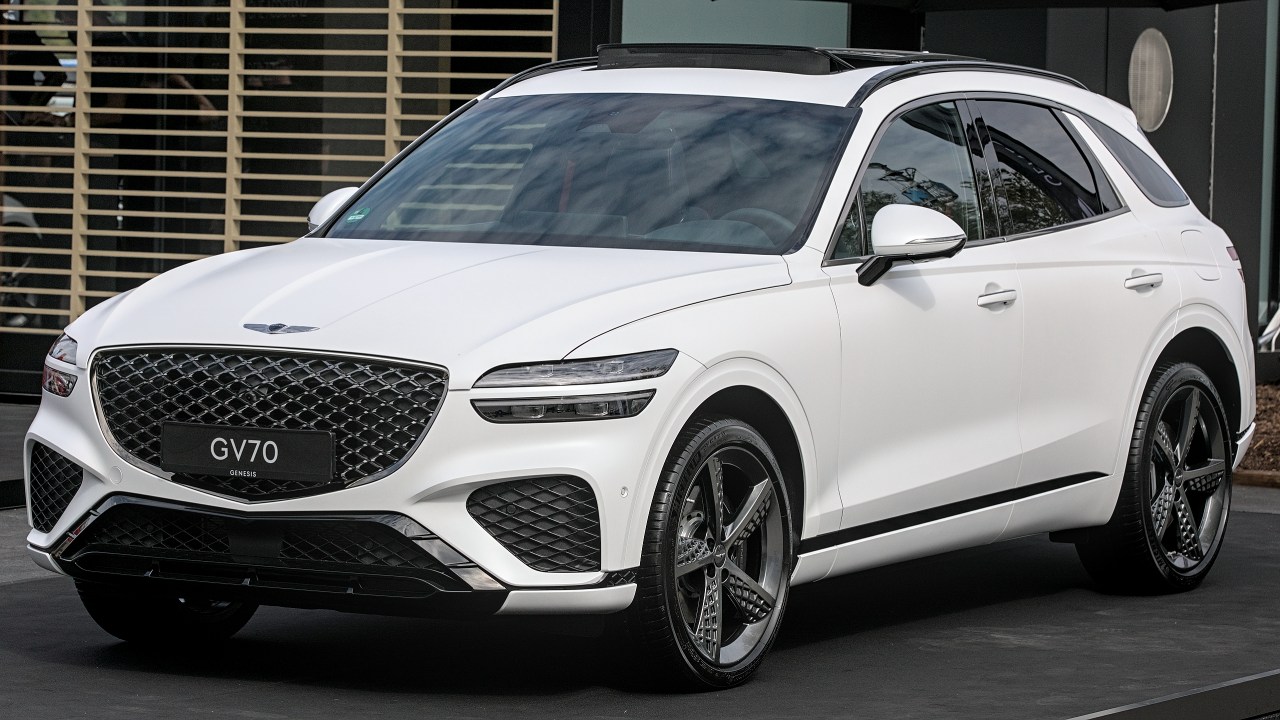
The GV70’s first impression is visual, and it is a deliberate break from the conservative lines that still define many German rivals. The latest update brings a new front fascia and refined Micro Lens Array LED headlights that sharpen the face of the SUV and give it a more technical, high-end look. I find that this design language, with its bold grille and athletic stance, communicates confidence without leaning on heritage badges, which is precisely what a challenger brand needs in a crowded premium market.
Inside, the GV70 leans even harder into that sense of occasion. The cabin layout is sweeping and sculptural, with a focus on tactile materials and a cohesive design rather than a patchwork of screens and trim pieces. Independent evaluations of the 2026 Genesis GV70 highlight its standout Interior quality, noting that it sits at or near the top of the Luxury Compact segment for overall execution. When I compare this to the more utilitarian feel of some German competitors, the Genesis approach feels closer to a boutique lounge than a scaled-down executive car, which is a meaningful distinction for buyers who spend hours behind the wheel.
Performance, refinement, and the everyday drive
On the road, the GV70 backs up its styling with hardware that is anything but tentative. The 2.5T AWD configuration is built around a 2.5 liter turbocharged inline 4, and that powertrain is framed in official materials as delivering Exceptional Standard Performance. In practice, that means brisk acceleration, confident passing power, and the all-weather security of AWD without forcing buyers into an expensive options ladder. When I look at how German rivals often reserve their most satisfying engines for higher trims, the GV70’s baseline specification reads as a deliberate challenge to that playbook.
Refinement is just as important as raw numbers in this class, and here the GV70 again feels carefully tuned. Reviews of the 2026 model emphasize its balanced Performance, noting that it blends strong power with composed handling and a quiet ride that suits long-distance travel. The chassis feels more playful than some comfort-biased competitors, yet it avoids the brittle ride that can accompany sport packages on German SUVs. For drivers who want one vehicle to handle commuting, family duty, and weekend trips, that breadth of capability is a significant advantage.
Technology, safety, and the value equation
Where the GV70 most clearly unsettles its German rivals is in the way it bundles technology and safety features. A detailed comparison between the 2026 Genesis GV70 and the Mercedes GLC Class notes that the Korean SUV includes forward collision avoidance assist, lane keeping assist, a blind-spot view monitor, rear cross-traffic alert, and adaptive cruise control as standard equipment. These are features that, on many German models, still sit behind option packages or higher trims, which can push transaction prices well beyond the advertised base figure.
Inside, the GV70 continues that generous approach. The infotainment system is integrated into a wide, high-resolution display, and the overall Interior execution has been praised for feeling more expensive than the price suggests. When I factor in the level of standard equipment, the GV70’s pricing undercuts similarly equipped German SUVs by a meaningful margin, which reframes the value conversation. Instead of asking why a buyer would take a chance on a newer brand, the more relevant question becomes why they should pay more for a badge when the Korean alternative offers more technology and comfort out of the box.
Reliability, rankings, and growing credibility
Luxury buyers may be willing to pay for prestige, but they are not indifferent to reliability, and this is where the GV70’s roots in the Hyundai and Kia ecosystem matter. J.D. Power rates the GV70 at a great 81 out of 100 for Reliability, a figure that aligns with the broader reputation of its parent group for building durable, low-drama vehicles. In a segment where some German models have faced criticism for complex electronics and costly out-of-warranty repairs, that 81 out of 100 score is more than a statistic, it is a reassurance that the ownership experience should be as polished as the showroom impression.
That underlying dependability feeds directly into the GV70’s standing in independent rankings. The 2026 Genesis GV70 currently holds the #1 position out of 19 in Luxury Compact SUVs in a major comparative assessment, with strong marks across Performance, Interior, and Reliability. When I see a relatively young nameplate not only competing with but surpassing long-established German models in such a crowded field, it signals that Genesis has moved beyond the novelty phase. The GV70 is now a reference point that others must measure against, not a curiosity on the fringes of the segment.
Awards, comparisons, and the shifting balance of power
Recognition from industry observers has followed that performance. The GV70 was GENESIS GV70 NAMED BEST LUXURY & COMPACT SUV by a regional association of auto writers, a title that explicitly positions it at the top of both the luxury and compact categories. That kind of award matters because it reflects not just spec sheet strength but how the vehicle meets the needs of demanding consumers in real-world conditions. When a panel that is accustomed to defaulting to German brands instead singles out a Korean SUV as BEST LUXURY & COMPACT, it suggests a genuine shift in perception.
Head-to-head comparisons reinforce the same story. Analyses Comparing the Genesis GV70 to the Audi Q5, Mercedes GLC, and BMW X3 consistently highlight the Korean SUV’s stronger standard equipment, competitive powertrains, and more distinctive design. Commentary that urges buyers to “move over BMW” in favor of a Korean SUV better than an X3 underscores how far the narrative has moved in a short time, particularly when it points out that The GLC, the X3, and the Q5 have long set the standard in this space. When I add in video reviews asking whether Genesis can match the street credibility of Mercedes, BMW, Volvo, and Lincoln, it becomes clear that the GV70 has forced a serious conversation about what luxury should look like in the mid 2020s.
That momentum is not a one-off. A recent ranking of the “real best SUVs” of 2025–2026 singles out the 2026 Genesis GV70 as proof that Genesis has figured out how to mix luxury, performance, and value in a way that resonates with buyers. For a brand that only recently entered the SUV arena, this accumulation of awards, top-tier rankings, and favorable comparisons to German stalwarts signals a structural change in the market. I see the GV70 not just as a successful model, but as a catalyst that is forcing established players to rethink how much equipment, refinement, and reliability they must deliver for the price.
More from Fast Lane Only