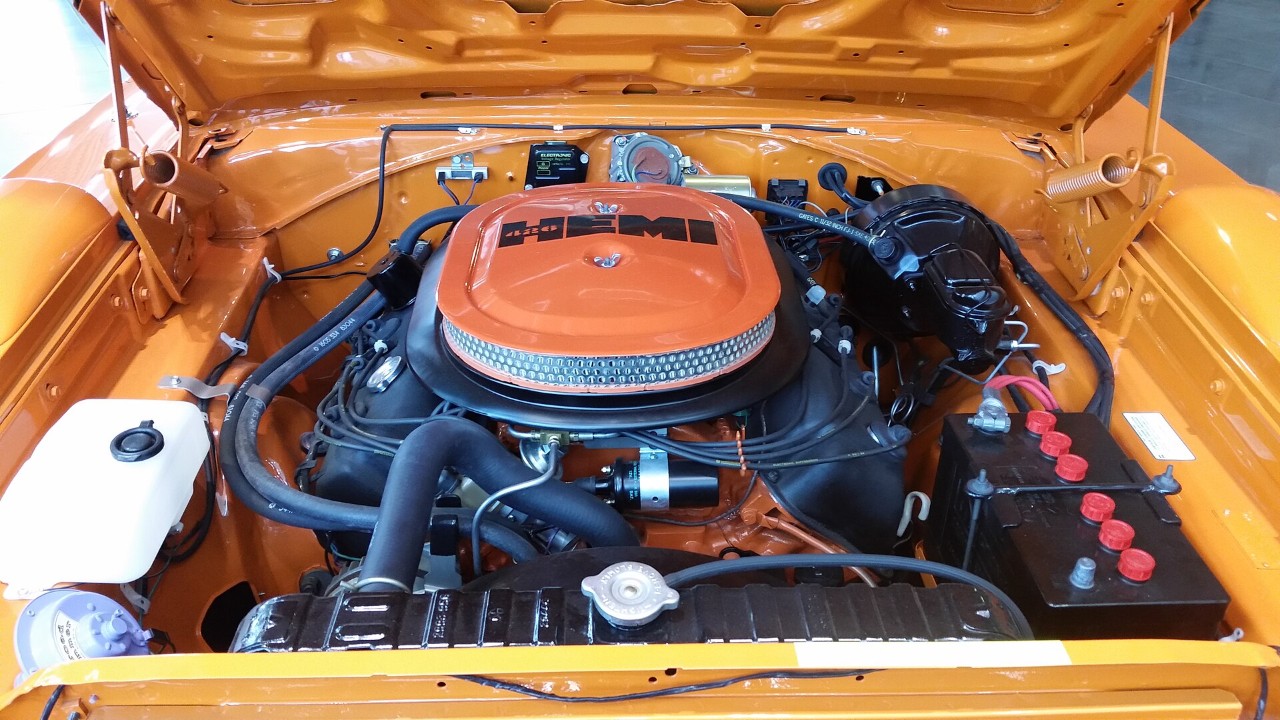
Chrysler’s 426 Street Hemi began life as a stock-car weapon, and that racing origin links every engine on this list. Each one grew out of a race program. Most then went on sale in road cars partly so the racing version would be legal. In other words, the street engine came second.
That arrangement put racetrack hardware in the hands of ordinary buyers. Some of these engines went into muscle cars, while others powered exotic supercars and one even ended up in a family hatchback. In our view, all of them carried more performance than a daily drive could ever use.
These are our picks for the racing-derived engines that came closest to being too much for public roads. The verdict is our opinion. However, the race wins, outputs and build numbers behind each pick come from the records.
1. 1966 Chrysler 426 Street Hemi V8
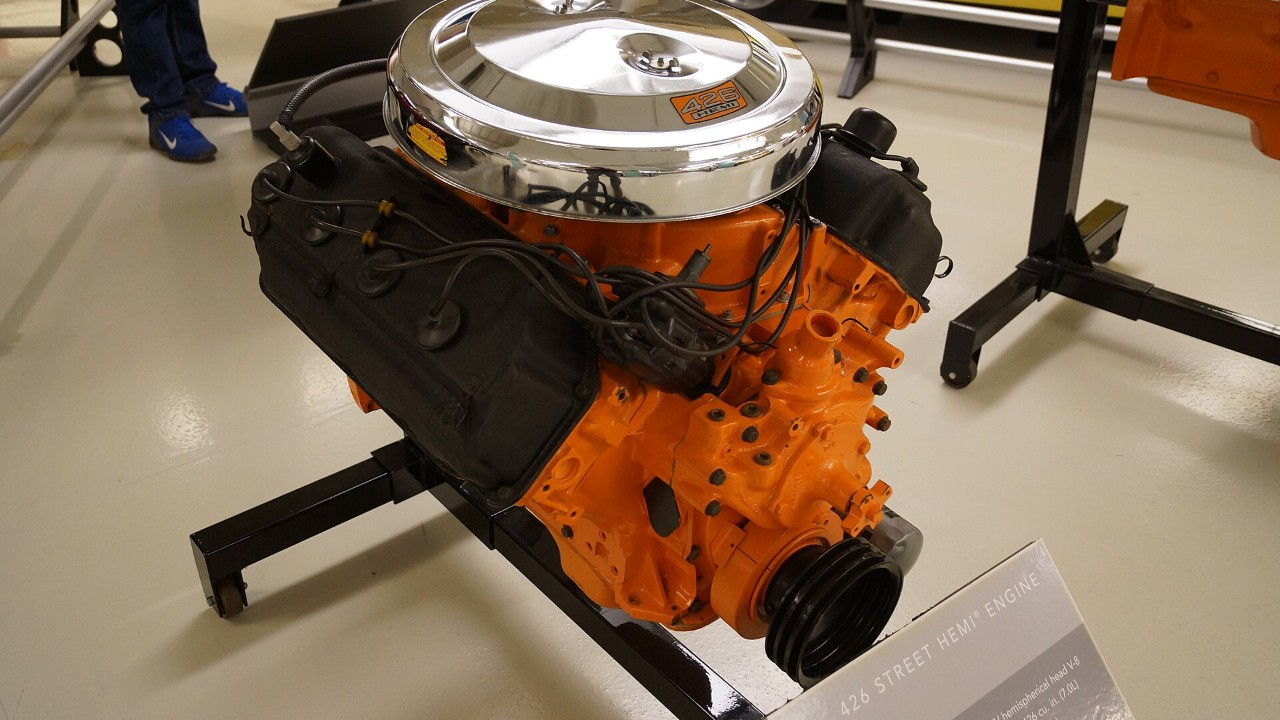
The Hemi earned its reputation before anyone could buy one. In fact, Hagerty notes that Hemi-powered cars swept first through fourth in the 1964 Daytona 500. NASCAR then set a homologation requirement, and the engine sat out 1965. So for 1966, Chrysler put a street version on Dodge and Plymouth order forms.
The street engine displaced 426 cubic inches and carried a gross rating of 425 horsepower at 5,000 rpm, along with 490 lb-ft of torque. It breathed through two four-barrel carburetors on an inline intake. Hagerty also counts just 468 Street Hemi Chargers sold in 1966, which tells you how few buyers took the plunge. The Street Hemi stayed on the order sheet through 1971, when Chrysler also listed a 350-horsepower net rating.
Our take: this is the purest example of a race engine wearing a license plate. Hagerty notes the “elephant” nickname, and it fits. If you want the backstory on the rest of the family, our ranking of 12 Hemi engines covers the earlier FirePower and the modern versions too. For the street, though, the 426 was always more than the job required.
2. Ford Boss 429 V8
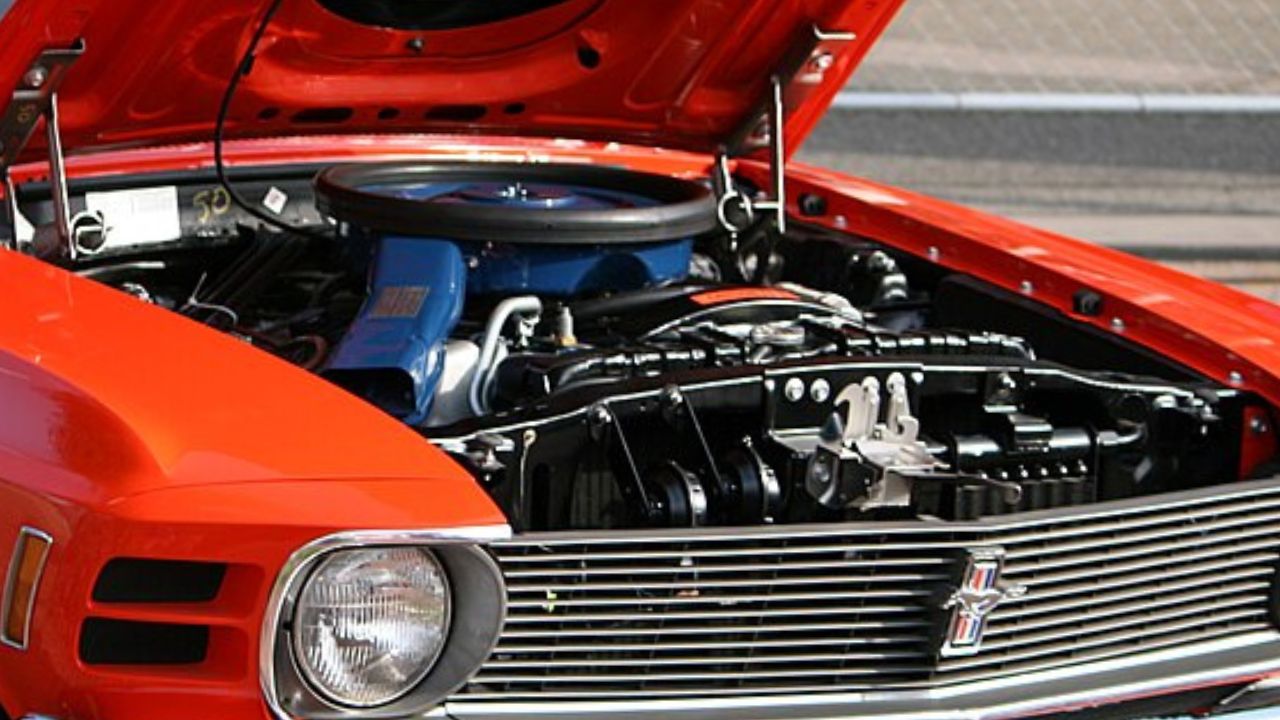
Ford built the Boss 429 for one reason: to make its semi-hemi big-block legal for NASCAR. According to Hagerty’s profile of the 1969 car, the engine wore aluminum heads with crescent-shaped combustion chambers. RM Sotheby’s notes that Ford developed the engine to fight Chrysler’s Hemi in NASCAR, the same rivalry that produced the Street Hemi. Ford also hired Kar-Kraft to modify the Mustang’s shock towers and move the battery to the trunk so the engine would fit.
The official rating was 375 horsepower and 450 lb-ft of torque. By contrast, RM Sotheby’s calls that rating conservative and says the engine made more than 500 horsepower. Ford built 859 of these Mustangs for 1969 and 501 more for 1970. Every one was a fastback with a four-speed manual and 15×7-inch Magnum 500 wheels. RM Sotheby’s later sold a 1969 car in Royal Maroon for $231,000 at Fort Lauderdale in 2017.
We think this engine shows the tension best. Hagerty says its huge ports and valves suited the track better than the street. As a result, the Boss 429 feels like a race motor that tolerated traffic rather than enjoyed it. It also earned a place in our list of factory V8s that affected the rules.
3. BMW M88 straight-six
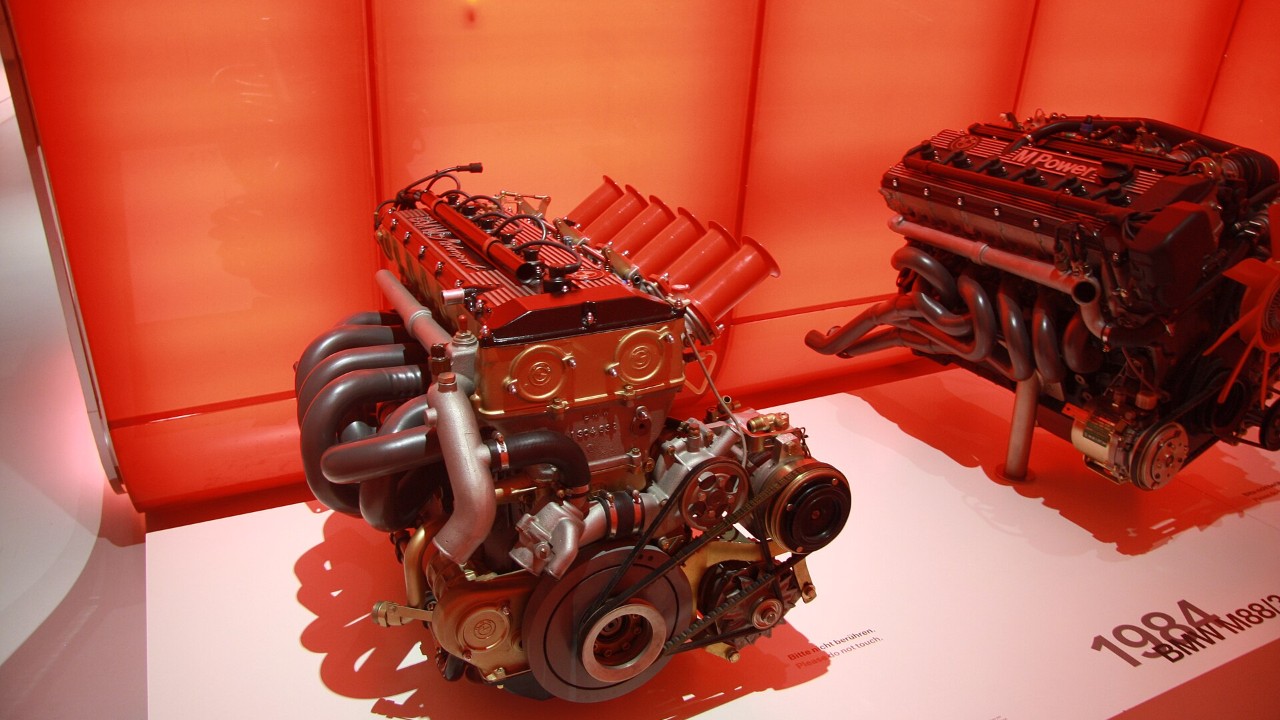
BMW’s M88 descends from the twin-cam M49 that powered the 3.0 CSi racing coupes. When BMW built the mid-engine M1 to go racing, the rules demanded a road version. That meant the M88 had to work on public streets as well as on circuits.
According to BMWBlog, the engine displaced 3,453 cc and used individual throttle bodies. In the M1 road car it made 277 horsepower, and BMW built around 450 of those cars between 1978 and 1981. Meanwhile, a turbocharged Group 5 race version reportedly made north of 800 horsepower. BMW also ran the M1 in its own Procar series in 1979 and 1980, using a bored-out M88/1.
Later, a reworked M88/3 moved into the M635CSi and the first M5. BMW Group Classic lists that engine with four valves per cylinder and 286 horsepower at 6,500 rpm, good for 152 mph in the E28 M5. Our take: a race engine in a family sedan was a wild idea in 1984. Even so, it worked. BMW even slipped the M88/3 into the South African 745i, a car it never marketed as an M model. That reach, from race grid to executive sedan, is why this six earns its place.
4. Porsche Carrera GT V10
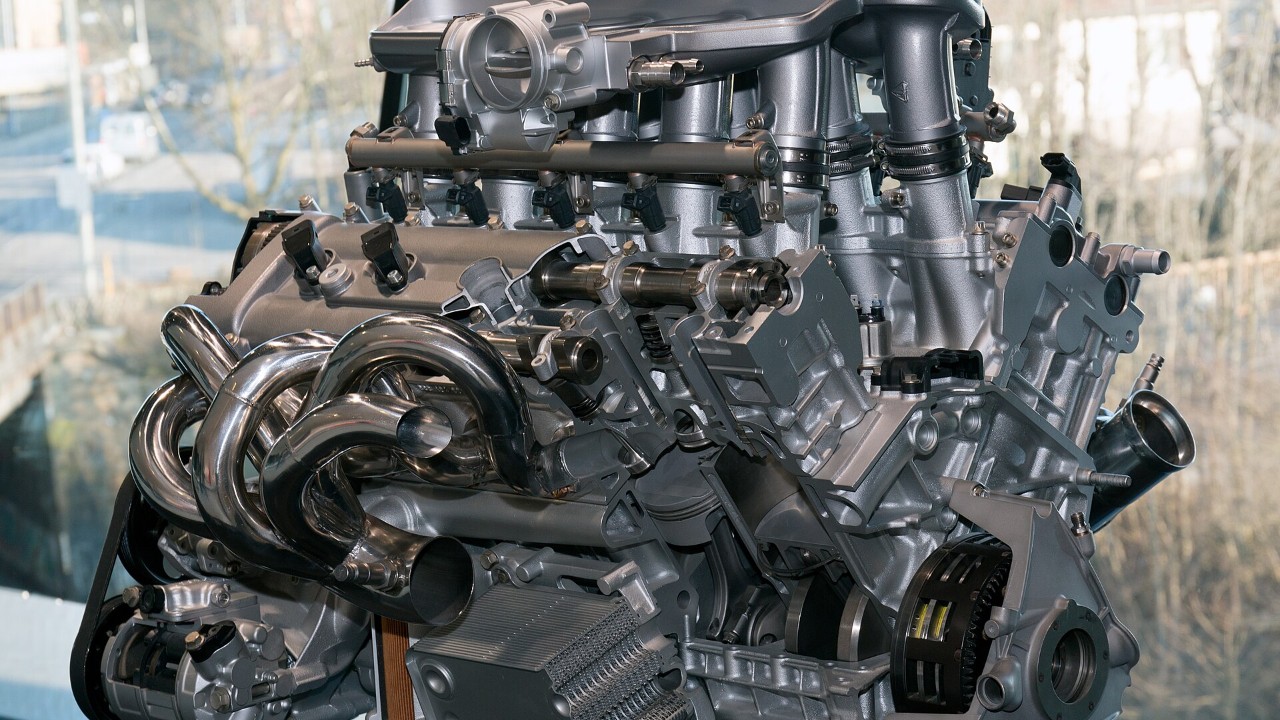
Porsche never intended the Carrera GT’s engine for a road car at all. Porsche’s own history says the V10 came from the LMP 2000, a prototype built for endurance racing that never raced. Instead of shelving the engine, Porsche built a supercar around it. The company first showed that car as a concept in 2000, with a 5.5-liter version of the same V10.
The production V10 displaced 5.7 liters and made 612 PS, or about 603 horsepower, at 8,000 rpm. It sat in a 68-degree layout and revved to 8,400 rpm. Porsche paired it only with a six-speed manual and a ceramic clutch. Production ran from autumn 2003 to May 2006, and the company built 1,270 cars.
We’d put this one near the top for sheer intensity. In our view, a race-bred V10 that revs past 8,000 rpm, tied to a stick shift, makes the Carrera GT a handful at low speed. Because the engine began as an endurance-racing unit, it rewards a track far more than a commute. That’s exactly why it fits this list.
5. Ferrari F50 F130 V12
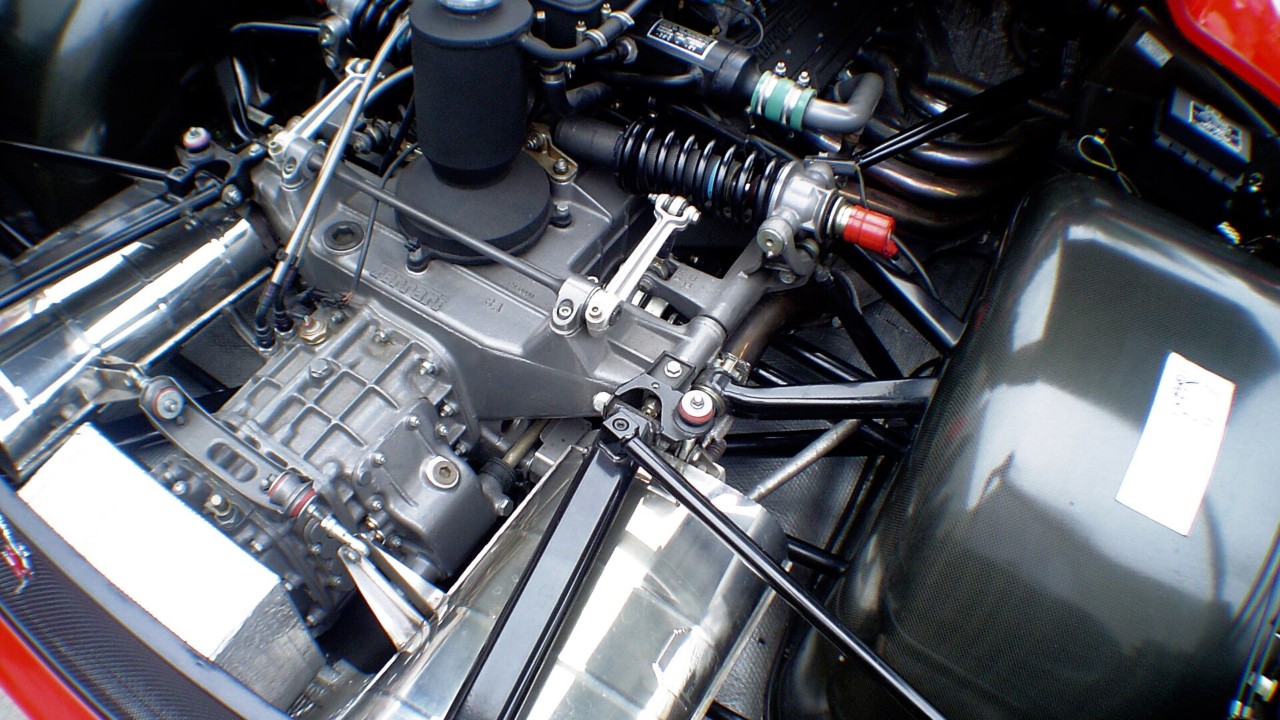
Ferrari built the F50’s engine from Formula One roots. The Tipo F130B V12 grew out of the 3.5-liter V12 from the 1990 Ferrari 641 race car. For the road, Ferrari enlarged it to 4.7 liters and kept a 65-degree layout.
Output reached 513 horsepower (520 PS) at 8,500 rpm, which was also the redline. The fuel cutoff arrived at 8,640 rpm. The engine and gearbox bolted to mounting points on a carbon fiber tub, a layout borrowed from racing practice. Ferrari made only 349 F50s between 1995 and 1997. That is fewer than a third of the Carrera GT’s total. Ferrari also kept the V12 naturally aspirated, with no turbos to fatten the midrange. In our view, that made it the most direct line from a Ferrari grand prix car to a customer’s garage in the 1990s.
Our take: the F50 asked a lot of its owners. Its V12 made peak power right at the redline, so it needed revs to give its best. On a public road, you’d rarely see the top of the tachometer. Still, few engines bring an F1 bloodline this close to a street car, and that link is the whole point.
6. Ford Cosworth YB
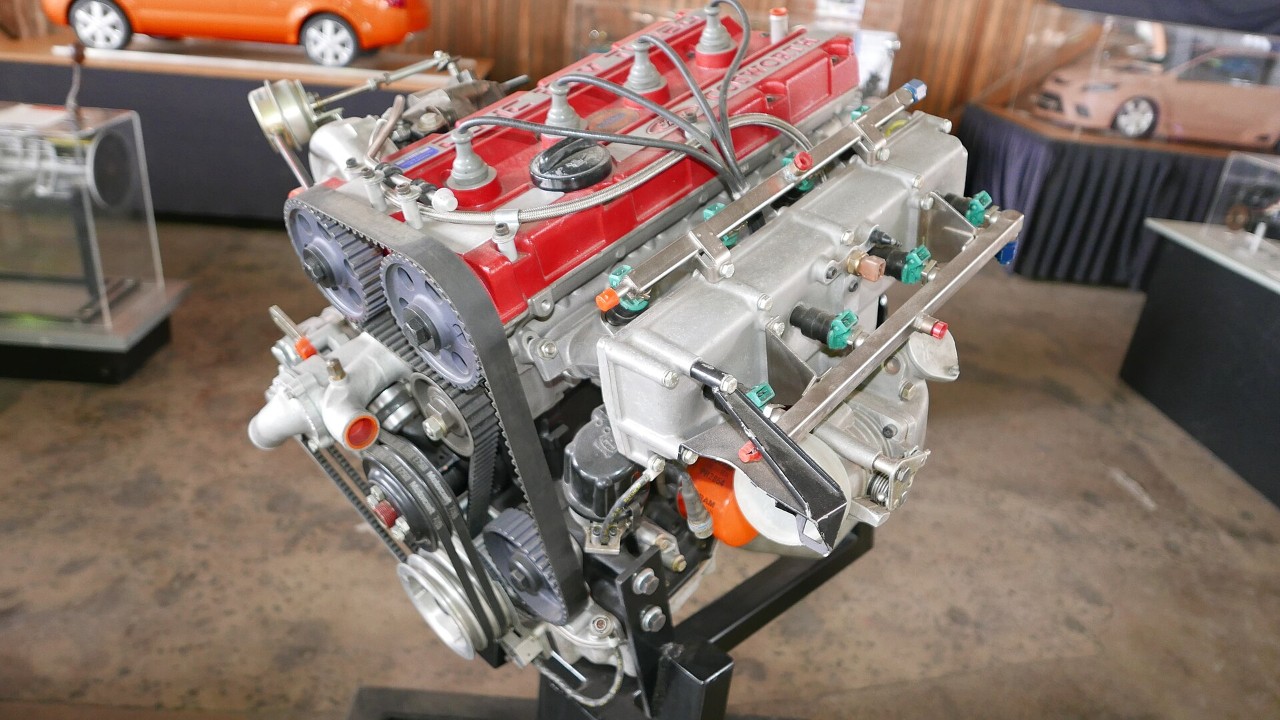
The Cosworth YB started with a humble Ford Pinto block. Cosworth Engineering of Northampton then added its own head. According to evo, that aluminum head carried two belt-driven camshafts and 16 valves, while a Garrett T3 turbo and an intercooler did the rest.
The goal was Group A touring cars, which required 5,000 road cars for homologation. The National Motor Museum lists 204 bhp at 6,000 rpm for the 1986 Sierra RS Cosworth and says Ford built 6,021 of them. Its own display car carries a BBR Racing-prepared engine claimed to make 280 bhp. Then came the RS500, a 500-car evolution with a bigger turbo and 224 bhp on the road. Tickford converted complete Cosworths into RS500s, and evo lists 392 in black, 52 in blue and 56 in white.
Race versions told the real story. Evo says early race engines made about 375 bhp, and RS500 race cars ran an easy 485 bhp before climbing toward 525. As a result, the car won at Bathurst in 1988 and 1989, plus the 1990 British Touring Car Championship. In our view, a family hatchback had no business carrying that much potential.
7. Nissan RB26DETT
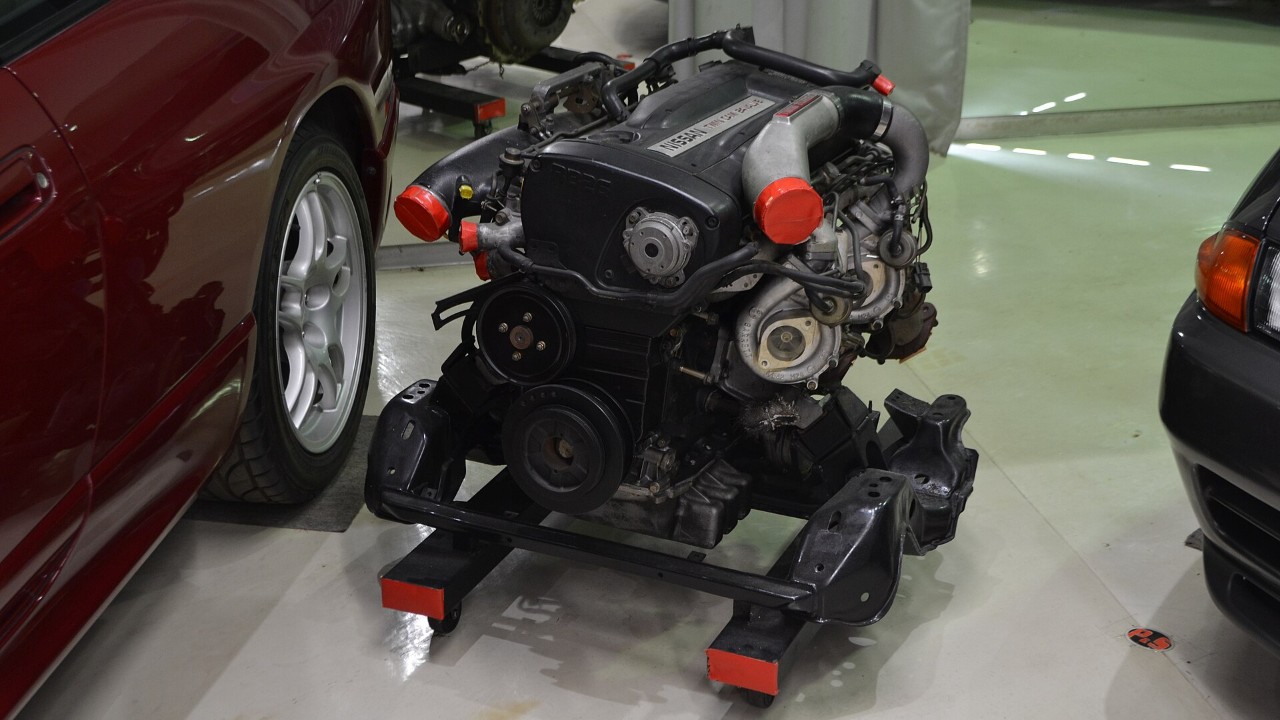
Nissan’s RB26DETT is a 2.6-liter straight-six with twin turbochargers, and it made its name in Group A touring cars. According to Nissan’s heritage collection, the R32 Skyline GT-R won all 29 Group A touring car races it entered in Japan. It took pole at every one of them, too.
On paper, the road engine looked modest. Hagerty lists the R32 rating at 276 horsepower at 6,800 rpm, the ceiling set by a gentlemen’s agreement among Japanese automakers. Torque came in at 266 lb-ft at 4,400 rpm. Many enthusiasts, however, have long believed the real figure was higher. The engine used a cast-iron block, an aluminum head and two ceramic turbos.
Our take: this is the engine that let a road car carry race-winning hardware under a polite rating. It powered the Skyline GT-R from 1989 to 2002. Later, NISMO Heritage put the RB26 block and cylinder head back on its production schedule, according to Hagerty. The same engine family also carried the ZEXEL-sponsored R32 of Hattori, Olofsson and Brabham to an overall win at the 1991 Spa 24 Hours.
More from Fast Lane Only