A new study suggests that dense traffic conditions may interfere with the performance of 5G connectivity used by autonomous and connected vehicles, raising concerns about how self-driving systems will function in real-world urban congestion.
The findings highlight a key challenge for next-generation mobility: even advanced communication networks can struggle when too many vehicles compete for bandwidth in the same area at the same time.
What happened
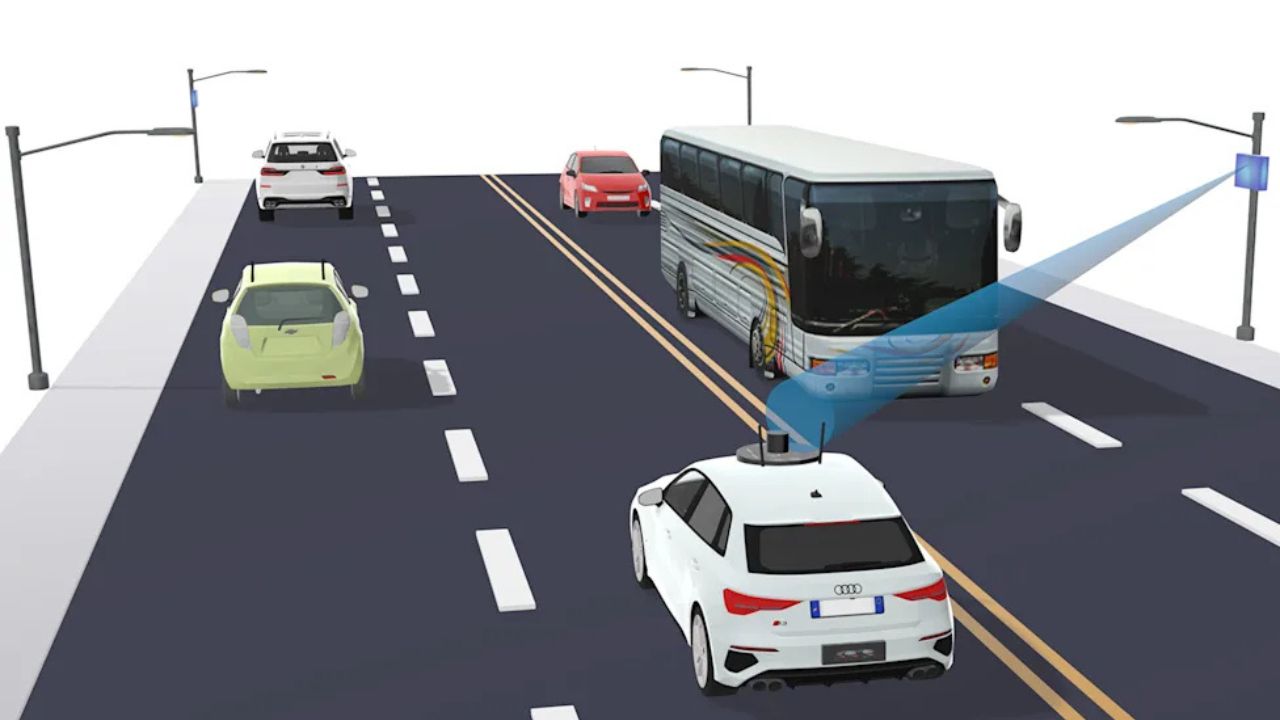
Researchers analyzing connected vehicle networks found that heavy traffic density can create communication bottlenecks for systems relying on 5G for vehicle-to-everything (V2X) data exchange. These systems allow cars to communicate with infrastructure, other vehicles, and cloud services in real time to support autonomous driving decisions.
In ideal conditions, 5G enables extremely low-latency communication, allowing vehicles to react quickly to hazards, coordinate lane changes, and receive updated mapping or traffic information. However, in high-congestion environments—such as major intersections or highway bottlenecks—the number of connected devices can overload local network cells.
5G network performance depends heavily on signal distribution and available bandwidth. When thousands of vehicles, smartphones, and infrastructure sensors connect simultaneously in a dense area, network congestion can increase latency and reduce data reliability.
The study notes that this issue is particularly relevant for autonomous driving systems, which rely on consistent, near-instant communication to make safe split-second decisions. Even small delays or packet losses can reduce system effectiveness in complex traffic environments.
Why it matters
Autonomous vehicles depend on a combination of onboard sensors—like cameras, radar, and lidar—and external data sources delivered through networks like 5G. When connectivity is disrupted, vehicles must rely more heavily on onboard perception alone, reducing the advantages of cooperative driving systems.
Urban traffic conditions are especially challenging because they combine multiple stress factors: high vehicle density, frequent stops, signal interference from buildings, and simultaneous data demand from non-vehicle users such as pedestrians and mobile devices.
The study highlights a potential gap between controlled testing environments and real-world deployment. While autonomous systems may perform well on open highways or in low-density areas, performance in congested cities could be less predictable if network reliability fluctuates.
It also raises questions about how much autonomy should depend on external connectivity versus internal processing. Many industry experts already argue that safety-critical decisions must remain fully functional without relying on cloud or network input.
What to watch next
Researchers and automakers are likely to focus on improving network resilience through technologies such as edge computing, dedicated short-range communications (DSRC), and hybrid systems that balance onboard intelligence with external data.
Telecom providers are also working on network slicing and dedicated vehicle communication channels to prioritize autonomous driving traffic over consumer data usage in crowded areas.
In the long term, solving this issue will be essential for large-scale deployment of fully autonomous vehicles in dense urban environments, where traffic is heaviest and network congestion is most severe.
More from Fast Lane Only