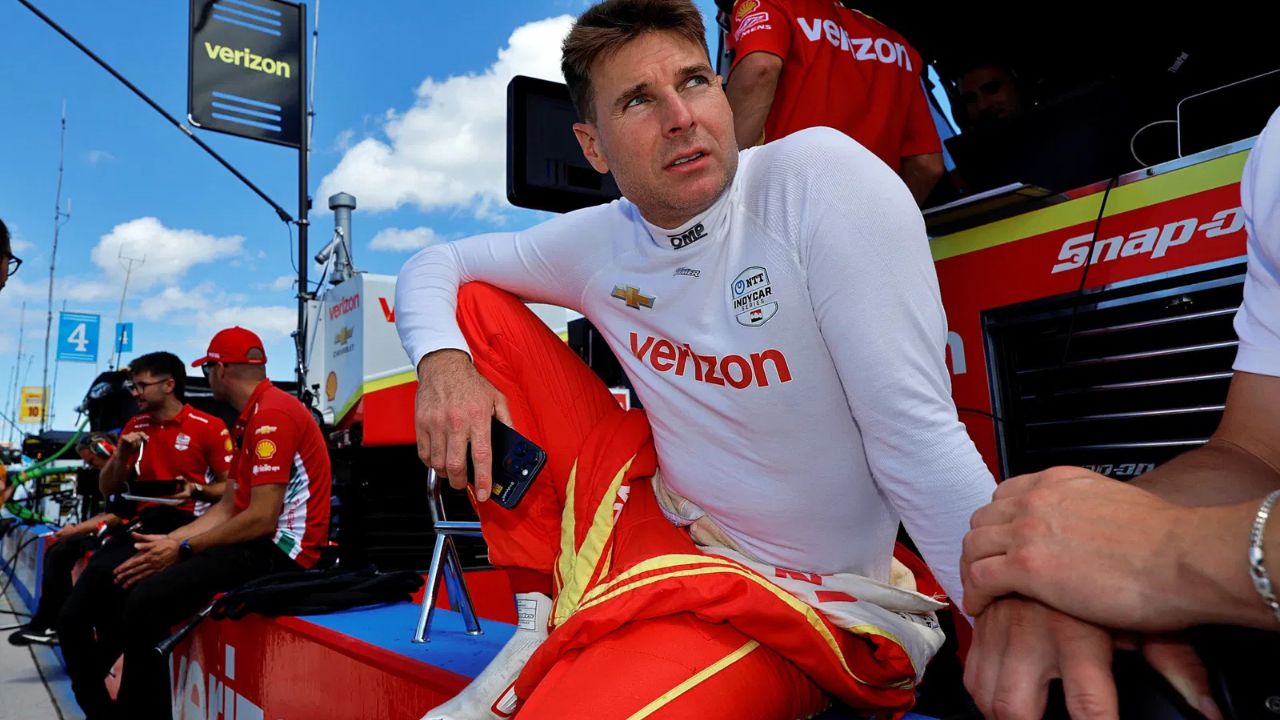
After 17 seasons together, Team Penske and Will Power have split, ending one of the defining partnerships of modern American open-wheel racing. You are watching not just a driver change, but a reset of identity for both a legendary organization and a 44-year-old champion who helped shape its recent era. The move clears a new path for Power at Andretti Global and forces you to rethink how Team Penske will look and race in the 2026 NTT INDYCAR SERIES.
The separation follows a long run of shared success that included series titles and Indianapolis 500 glory, yet it arrives at a moment when the competitive landscape is tightening and rosters are turning over. As you weigh what this means, the key is to understand how the relationship evolved, why it ended now, and how both sides are positioning themselves for what comes next.
The end of a 17-year pillar at Team Penske
From the moment Will Power stepped into a full-time seat with Team Penske, he became one of the organization’s core pillars, and the official confirmation that he would leave before the 2026 season marked the close of a 17-year tenure that few drivers in any series can match. Team leadership framed the decision as a strategic shift, explaining in its own announcement that Power would not return for the next NTT INDYCAR SERIES campaign and that the organization was preparing for a different future in its open-wheel program, a message you could see in the formal wording of Team Penske itself. The broader series context, with its evolving rules package and increasingly deep grid, only sharpened the sense that this was a calculated move rather than a sudden rupture.
For you as a follower of the championship, the split is best understood against the backdrop of Power’s status as one of the most accomplished drivers in the field and a long-standing face of the NTT INDYCAR SERIES. The series’ own coverage of his departure underscored that his run with the team had stretched across nearly two decades and highlighted how unusual it is for a driver of his stature to change homes this late in a career, something that was made explicit when INDYCAR detailed the end of the partnership. When you place that against the series’ official hub, which continues to present Team Penske as one of the central forces in the paddock, it is clear that both sides are trying to manage a transition without diminishing their stature inside INDYCAR.
Power’s legacy: titles, poles and a defining style
To grasp the scale of this break, you need to look at what Will Power actually built inside the organization. He is described in league records as a 44-year-old driver from Toowoomba, Australia, and his statistical footprint is enormous, including a series-record 71 career pole positions that set him apart as the benchmark qualifier of his era, a figure that is spelled out in the league’s own driver bio for Will Power. That raw speed translated into championships and an Indianapolis 500 win, achievements that made him one of the drivers you automatically associated with the Penske brand. When the series revisited his departure, it again highlighted that 71-pole benchmark and the way his qualifying dominance shaped race weekends, reinforcing how central he was to the team’s competitive identity in series history.
Beyond the numbers, Power’s style gave Team Penske a specific edge that you could feel every time the cars rolled out for time trials. His aggressive yet controlled approach to street and road courses, combined with a relentless focus on extracting one-lap pace, often forced rivals to stretch their own limits just to keep up. That is why, when analysts and fans debated the most enduring images of his time with the team, they pointed to qualifying laps on the edge and late-season title pushes, a conversation that was captured when league coverage asked what the lasting memory of Team Penske and would be. Even video segments summarizing the split framed it as a major shakeup for “Pensky,” underlining that the end of this partnership is as much about changing the feel of the team as it is about changing a name on the entry list, a tone you could hear in the broadcast piece that described how Will Power would no longer race under the familiar colors.
Inside the decision: why Penske moved on now
From your vantage point, the timing of the separation is as revealing as the decision itself. Team Penske publicly framed the move as a mutual step, with Power thanking “Roger and the Penske” organization for the opportunity and calling it the honor of his life to drive for the group, language that appeared in the official league write-up of his exit from the team in series coverage. The team’s own statement echoed that tone, emphasizing gratitude for his contributions while also making clear that it was looking ahead to a new driver lineup for the 2026 campaign, something you could see in the carefully worded release on Team Penske. That balance of appreciation and forward focus suggests a decision that had been in the works rather than a reaction to a single result.
At the same time, the broader driver market and internal dynamics at Team Penske gave the organization both the incentive and the cover to make a bold change. The team’s own season overview highlights how its open-wheel roster already includes heavy hitters like Josef Newgarden and Scott McLaughlin, alongside sports car names such as Julien Andlauer, Kevin Estre and Laurin Heinrich, a mix that shows how deep the talent pool is inside Team Penske. With that kind of depth, you can see why leadership might feel empowered to refresh the No. 12 seat without fearing a collapse in performance. External analysis of the driver market has also pointed to a wave of younger talent and shifting seats, including speculation and reporting around how teams like Andretti and others might shuffle drivers such as Power and Colton Herta, a dynamic that was examined in detail when one outlet broke down how Power and Herta were at the center of a busy market. One social post even went as far as to state that David Malukas would replace Power in the No. 12 Verizon Chevrolet in 2026 and beyond, but that specific claim is unverified based on available sources despite being asserted in a Facebook post.
Andretti Global’s gain and Power’s new motivation
For you, the most immediate consequence of the split is seeing Will Power reappear in different colors. Andretti Global has moved quickly to position him as a cornerstone of its own 2026 project, unveiling his first livery with the team and presenting the partnership as a fresh chapter for both sides, a shift that became tangible when the team rolled out his new car design in an INDYCAR feature. Power himself has been candid about how the move has re-energized him, describing how he is “forced” to wait to start this next stage of his career with Andretti Global and how that delay has only sharpened his determination to make his former team regret writing him off, a mindset he outlined in an extended interview. That kind of public edge is unusual for Power, and it gives you a clear storyline to track as the season unfolds.
What the split means for the 2026 grid
More from Fast Lane Only