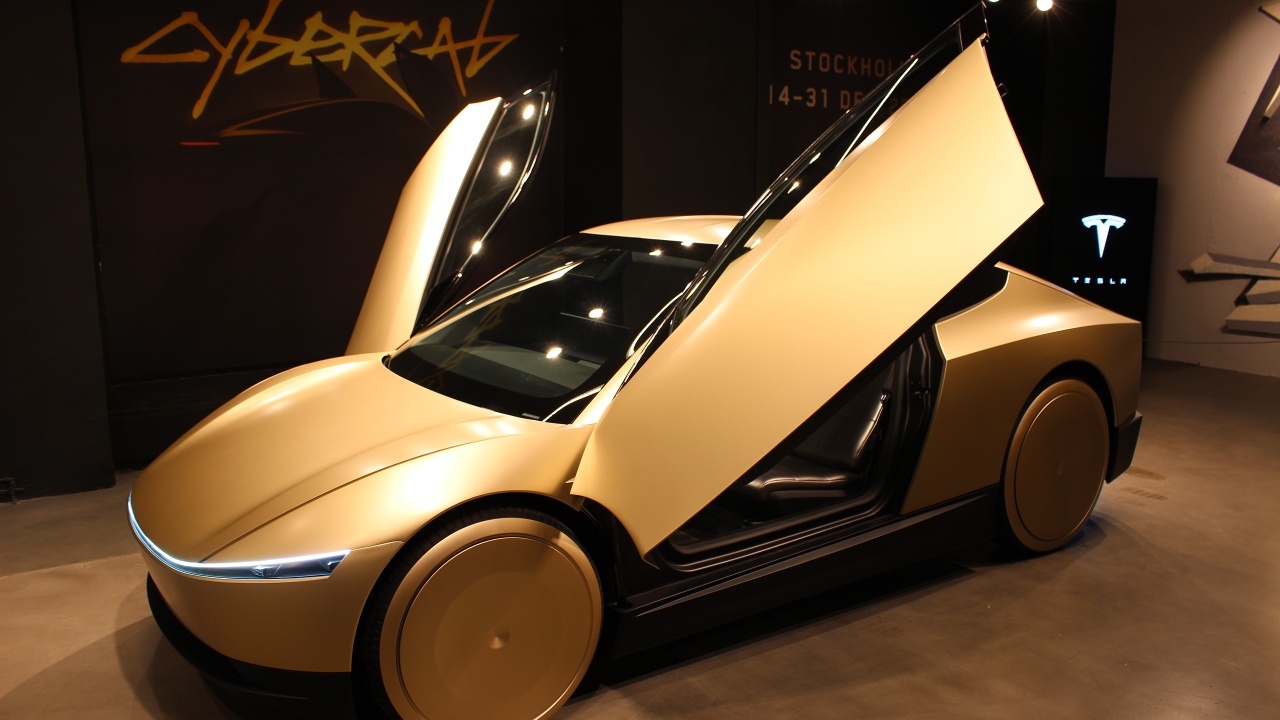
Tesla’s long-promised robotaxi future is finally materializing on public roads, but not quite in the form Elon Musk once described. Fresh sightings of Cybercab prototypes show vehicles testing with steering wheels, pedals, and what appear to be additional sensor hardware, even after Musk repeatedly argued that extra systems such as lidar were unnecessary for full autonomy. The gap between that rhetoric and the hardware now visible on test cars is emerging as one of the most important storylines in Tesla’s next chapter.
Cybercabs hit public roads with old-fashioned controls still in place
The first wave of Cybercab sightings confirms that Tesla’s driverless ambitions are being developed in very traditional fashion, with human controls still front and center. Observers in Austin reported Cybercab vehicles running public road tests with a steering wheel and pedals, a configuration that looks much closer to a conventional Tesla than to the fully driverless pod Musk has teased for years. One critic, Dan O’Dowd of The Dawn Project, highlighted images of a Cybercab with a full driver cockpit and used them to argue that Tesla is still far from the unsupervised operation Musk has promised, underscoring how visible hardware choices are shaping the public narrative around the program as these cars circulate in traffic.
These road tests are not isolated one-offs but part of a broader pre-production campaign. Reporting on Tesla’s development program notes that the company has begun public road trials of the Cybercab ahead of its planned production start, with test vehicles spotted operating as autonomous models in real-world conditions. The sightings align with coverage that describes Tesla beginning public road tests for the Cybercab before its 2026 production ramp, reinforcing that what people are seeing in Austin is the early phase of a structured rollout rather than a quiet experiment. The fact that these prototypes still rely on traditional driver interfaces suggests Tesla is layering autonomy on top of a familiar cabin layout, at least for now, even as it markets the Cybercab as a purpose-built robotaxi.
Musk’s long campaign against lidar meets a changing hardware reality
For years, Elon Musk has framed extra sensor hardware, especially lidar, as not just unnecessary but actively misguided. He has described lidar as a “fool’s errand” and criticized the idea of bolting expensive appendages onto cars when humans drive using vision alone. Earlier commentary from Musk on Autopilot made clear that he did not intend to use lidar in upcoming updates, arguing that the technology was redundant and that a camera-centric approach would ultimately prove superior. More recently, as Tesla Inc. (NASDAQ: TSLA) has pushed deeper into autonomy, Musk has doubled down on this stance, saying Tesla does not need lidar because “people don’t shoot lasers out of their eyes,” a line that crystallized his belief that cameras and neural networks are enough.
Yet reporting on Tesla’s internal strategy suggests a more nuanced picture behind the scenes. Analysis of the company’s evolving sensor stack describes a kind of lidar U-turn, with lidar shifting from something Musk publicly derided to a potential “secret weapon” in Tesla’s development toolkit. The coverage notes that while Musk attacked lidar as an unnecessary crutch, Tesla has explored using lidar in limited roles, such as high-precision mapping or validation, even if it does not appear as a permanent fixture on customer cars. When I look at Cybercab prototypes now being scrutinized for unfamiliar sensor housings and extra hardware, I see a company that is still trying to reconcile Musk’s public insistence on vision-only autonomy with the practical demands of building a safe, unsupervised robotaxi service.
From bold promises to a 2026 production clock
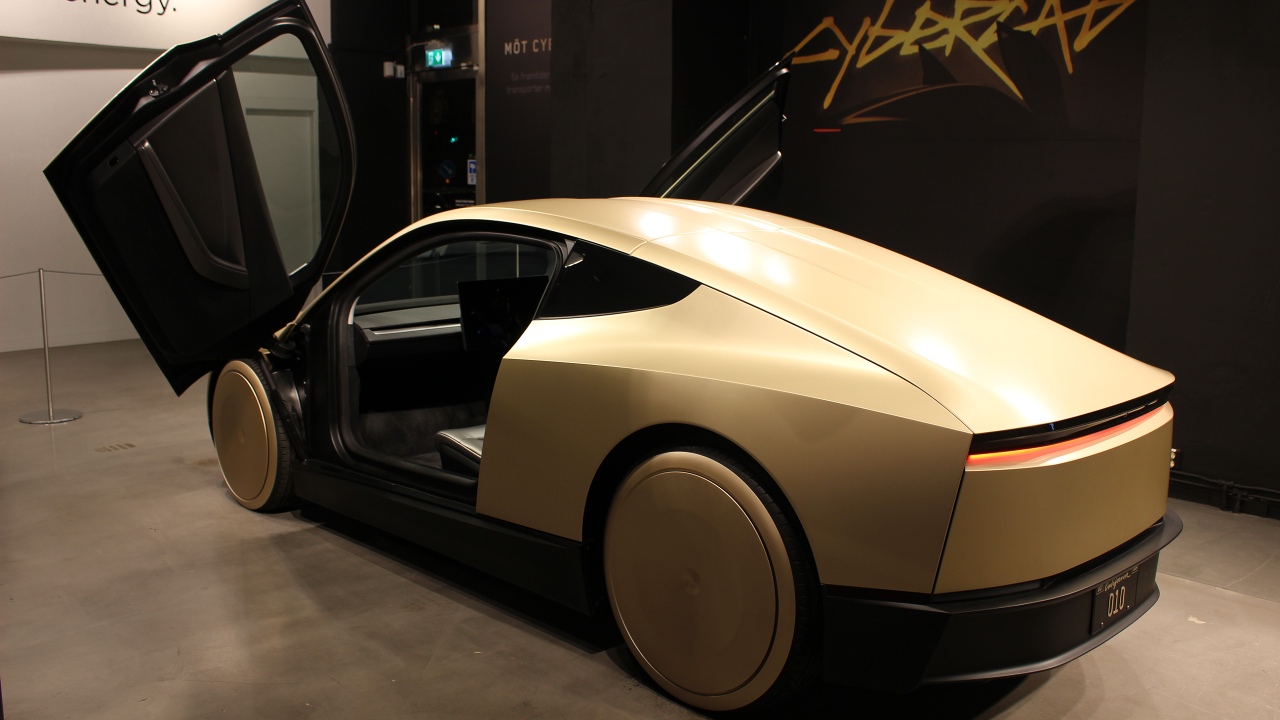
The Cybercab program is no longer a distant concept on a slide deck, it is on a fixed timeline that Tesla itself has put on the record. Tesla CEO Elon Musk has confirmed that Cybercab production is scheduled to begin in April 2026, with the vehicle designed specifically for unsupervised self-driving. That commitment, tied to the second quarter of 2026, raises the stakes for every hardware choice visible on the current test fleet. If the Cybercab is meant to operate without a human driver, the presence of a steering wheel and pedals on prototypes suggests either that Tesla is planning a transitional phase with safety drivers or that it is hedging its bets in case regulators demand manual controls.
The company’s own messaging around the Cybercab underscores how central this vehicle is to Tesla’s growth story. A recent recap of Tesla’s progress framed the Cybercab as moving closer to reality, with production ramping toward 2026 and the project highlighted as a key milestone in the company’s technology roadmap. That narrative dovetails with separate reporting that Tesla has begun public road tests for the Cybercab before production, reinforcing that the 2026 date is not just aspirational but backed by visible development activity. When I connect these dots, I see a compressed timeline in which Tesla must not only finalize the Cybercab’s hardware and software but also align those decisions with Musk’s past statements about what is and is not needed for autonomy.
Public scrutiny, critics, and the optics of extra hardware
The Cybercab’s test phase is unfolding under a spotlight that Tesla itself helped create, and critics are seizing on every visible deviation from Musk’s earlier claims. Dan O’Dowd, who leads The Dawn Project and has long campaigned against Tesla’s driver-assistance systems, used the Austin sightings to argue that the Cybercab is unsafe and that Tesla is overstating its readiness for driverless service. By circulating images of a Cybercab with a steering wheel and pedals, O’Dowd framed the vehicle as a conventional car dressed up in robotaxi branding, rather than a clean-sheet autonomous design. His criticism taps into a broader skepticism about whether Tesla can deliver on unsupervised self-driving without the kind of redundant sensors and controls that many rivals consider essential.
At the same time, Tesla watchers who are less hostile than O’Dowd are still parsing the Cybercab’s hardware with intense interest. Enthusiasts tracking new models have confirmed sightings of a highly anticipated Tesla vehicle on public roads and described it as a good-looking addition to the lineup, while also noting that the company aims to produce 1,000,000 cars in 2025. Those observers are comparing the Cybercab’s visible sensors and bodywork to existing Teslas, looking for clues about how much of the robotaxi vision is truly new. When I weigh these reactions, I see a tension between Tesla’s desire to present the Cybercab as a leap forward and the reality that, to outside eyes, it still looks like a car that expects a human behind the wheel, at least during this testing phase.
What the Cybercab hardware says about Tesla’s autonomy strategy
The hardware now seen on Cybercab prototypes offers a rare, concrete window into Tesla’s autonomy strategy, which is often discussed in abstract software terms. The continued presence of steering wheels and pedals suggests that Tesla is not yet ready to commit to a fully driverless interior, even as it designs the Cybercab for unsupervised self-driving in the long run. Combined with reports that Tesla has explored lidar as a behind-the-scenes tool despite Musk’s public disdain for it, the test vehicles point to a pragmatic approach: use whatever hardware is necessary during development and validation, then strip back to a cleaner configuration once the system has proved itself. From my perspective, that is less a betrayal of the vision-only philosophy and more an acknowledgment that getting to that endpoint may require extra scaffolding along the way.
The broader context of Tesla’s product roadmap reinforces how pivotal the Cybercab is to the company’s identity and valuation. Coverage of Tesla’s recent recap video and planning materials highlights the Cybercab as moving closer to reality, with production ramping toward 2026 and the vehicle positioned as a cornerstone of Tesla’s next growth phase. Parallel reporting on public road tests confirms that Cybercab prototypes are already mixing with regular traffic as autonomous models, even if they still carry human controls and potentially additional sensors. When I put all of this together, the image that emerges is not of a company quietly abandoning its past claims, but of one racing a 2026 clock, willing to bolt on whatever hardware it needs in testing, while still insisting that the final act of its robotaxi story will be written by cameras, code, and a cabin that eventually no longer needs a driver at all.
More from Fast Lane Only: