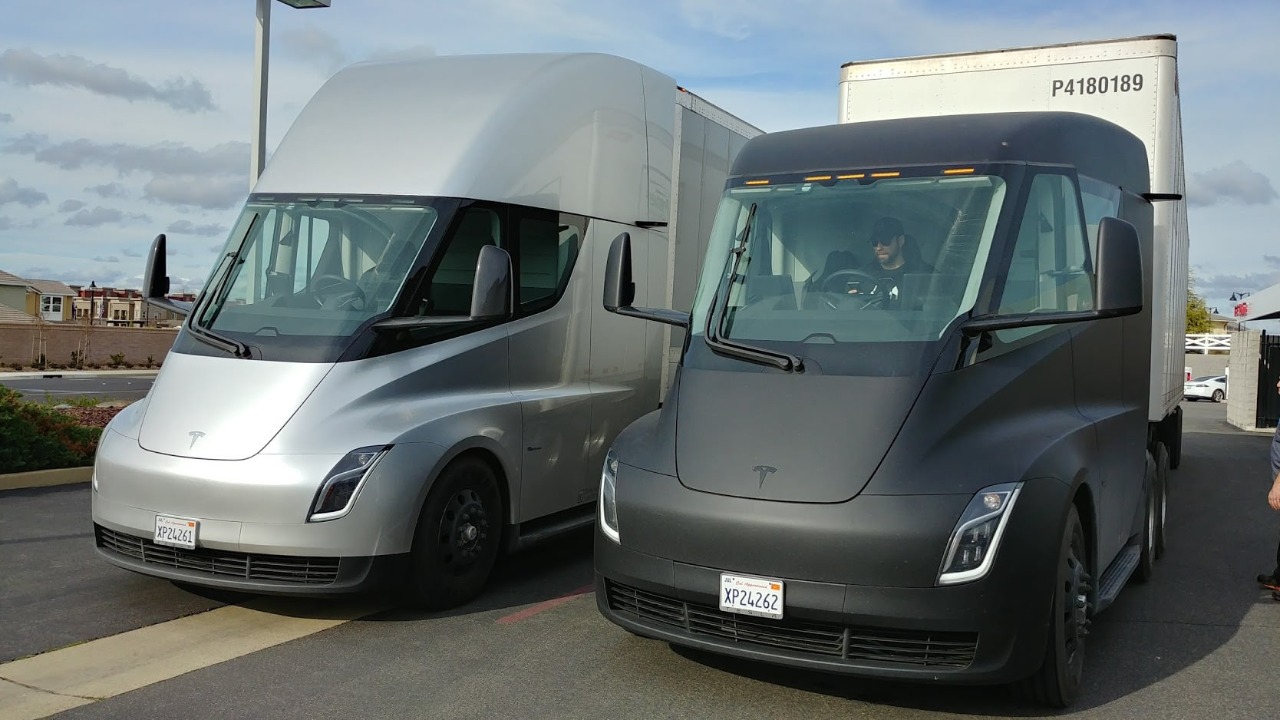
Tesla is quietly turning its long‑promised electric freight strategy into physical infrastructure, mapping out 64 new Megacharger sites to feed a growing fleet of Semi trucks. The updated network plan sketches the first real charging spine for battery‑powered Class 8 rigs, tying together major freight corridors and early customer depots. For carriers weighing when to commit to zero‑emission tractors, the map offers the clearest signal yet that dedicated heavy‑duty charging will not remain a pilot project for much longer.
From concept truck to mapped freight network
The Tesla Semi has evolved from a speculative product into a defined platform with its own charging ecosystem, with the new Megacharger map serving as clear evidence of that transition. The company has already seeded early units with fleet customers, and public material on the Tesla Semi frames it as a dedicated Class 8 solution rather than a derivative of the passenger lineup. That positioning matters because long‑haul freight demands predictable uptime, and without a purpose‑built charging network, the truck would be constrained to a handful of private depots and experimental lanes.
The latest infrastructure update shows Tesla mapping 64 new Megacharger locations that are explicitly tied to Semi operations, turning scattered pilot sites into an emerging network that spans multiple regions. Reporting on the updated map notes that the 64 sites are spread across 15 states, forming a footprint that resembles a national grid rather than a regional trial, and that the company is treating these Megacharger locations as a distinct layer separate from its existing light-duty charging network. By defining where Semis will be able to plug in at high power, Tesla is effectively sketching early freight corridors for shippers that want to move away from diesel without sacrificing range or schedule integrity.
Where the 64 Megachargers will sit and how they will operate
The pattern of the new Megacharger locations reveals Tesla’s priorities for freight traffic, with Texas and California emerging as the early anchors. One analysis of the updated map states that Texas will host 19 of the planned sites while California will have 17, a distribution that mirrors the heavy truck traffic and freight density in those states and aligns with the company’s existing vehicle and battery operations. A separate breakdown of the 64 locations highlights that they are distributed across 15 states, suggesting that Tesla is not only targeting coastal freight but also key inland routes that connect major logistics hubs and industrial centers.
Several of the mapped Megachargers are slated for truck stop properties rather than standalone Tesla real estate, indicating a strategy of embedding Semi charging where drivers already park and rest. Earlier reporting describes Construction of Tesla chargers at select Pilot locations in California, Georgia and Nevada, with chargers positioned to be used during mandated driver rest stops. A short video clip referenced Tesla working with Pilot, describing it as a network of approximately 900 sites and suggesting that 66 could eventually support Semi charging, significantly expanding the reach of Megachargers if the partnership scales beyond the initial locations.
Charging performance, digital integration and early field data
High‑power charging is central to the Semi’s value proposition, and early field experience has started to show how Megachargers perform in real operations. At Zeem’s Inglewood facility near Los Angeles International Airport, initial Semis using dedicated chargers have reportedly been able to add significant range in about 30 minutes, with one account characterizing the charging rate as roughly three times faster than rival heavy truck solutions. That turnaround time is essential for freight operators who require tractors to cycle through loading docks and yard operations without extended idle periods, aligning with Tesla’s description of the Megacharger system as capable of restoring hundreds of miles of range during a standard driver break.
Tesla has also begun to weave the Megacharger network into the digital tools that drivers and dispatchers already rely on. A recent update integrated Semi Megacharger locations into the in‑vehicle navigation system, with reporting describing the change as a digital infrastructure move designed specifically for the Tesla Semi and its all‑electric Class 8 profile. That integration means route planning can now account for high‑power truck chargers directly, rather than forcing dispatchers to manually cross‑reference public maps or internal spreadsheets, and it signals that the physical network being mapped and activated is matched by software that understands the energy needs and duty cycles of loaded Semis.
Timelines, construction momentum and industry implications
The new Megacharger map is not just a static graphic; it is tied to a construction schedule that starts to answer when carriers can expect to use these locations. One report on the Semi charging rollout describes the first dedicated Megacharger sites for heavy‑duty trucks in North America as expected to open in Summer, with the same coverage noting that Tesla is building a new DC fast charging network on the continent specifically for freight. A separate update on the expansion references 60 new Megacharger locations and states that construction of the charging infrastructure is expected to begin in the first half of 2026, with the first sites slated to open later in the year, aligning with the broader plan for 64 mapped locations scheduled to come online in phases.
The scale and geography of the expansion are attracting close attention from fleets and from communities along key corridors. A detailed review of the updated map notes that Tesla has added 64 new Megacharger locations to support the Semi, with all sites planned for 2026 and concentrated along freight routes serving Class 8 trucks and trailers. Commentary from Jason Gies, identified as part of Tesla’s Semi business development team, has emphasized how the 64 new sites across 15 states are intended to create practical routes rather than isolated dots, and that Texas and California will anchor that grid. Interactive tools built around the Tesla Megacharging network now show both open and planned locations, while broader coverage of 64 more Semi sites frames the buildout as a key step toward decarbonizing freight.
More from Fast Lane Only