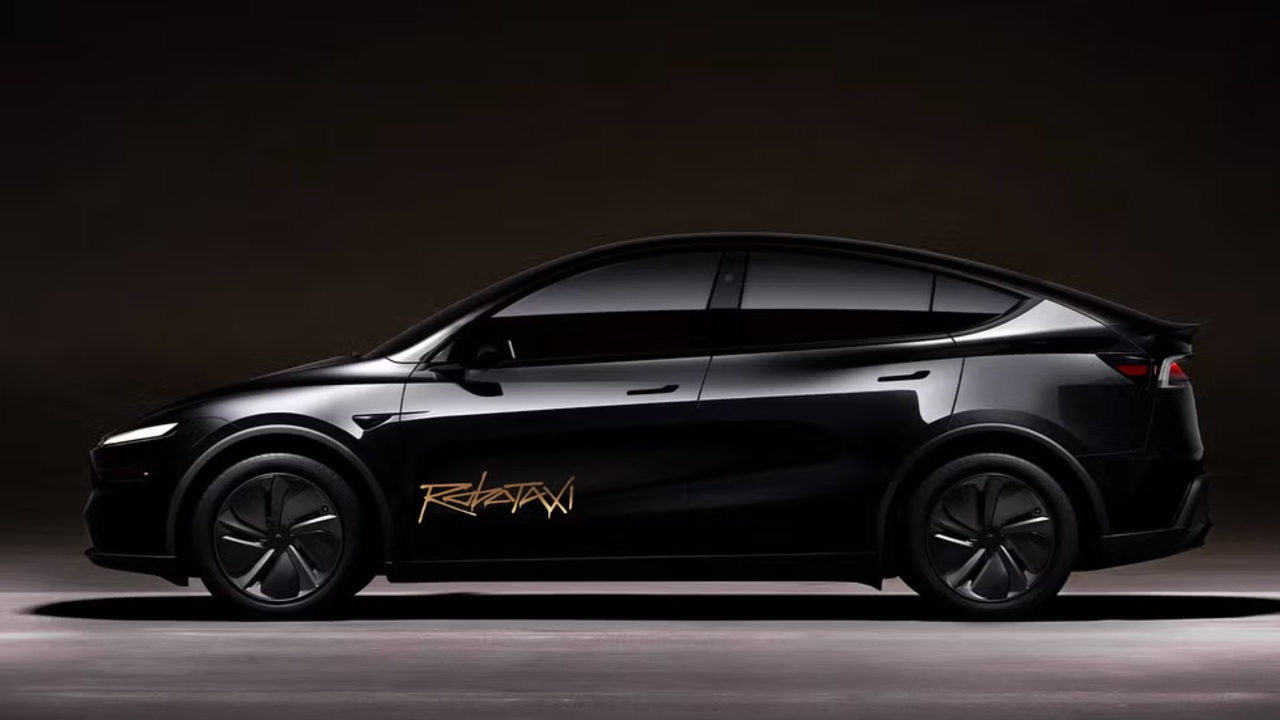
Tesla’s driverless Robotaxi service in Austin is already reshaping the city’s ride market, not with futuristic styling or glossy marketing, but with bluntly lower prices. From flat fares of $4.20 to downtown trips costing a fraction of an equivalent Uber, the service is testing how far price alone can pull riders toward fully autonomous cars.
As the network expands across a larger geofenced area and drops human safety drivers, the early numbers suggest a direct challenge to traditional ride-hail economics. The question now is not whether Tesla can undercut incumbents, but how long it can sustain that gap and at what cost to safety, regulation, and competitors’ business models.
From $4.20 flat fares to dynamic pricing, still under the competition
When Tesla first switched on Robotaxi rides in Austin, the company set a deliberately simple and attention grabbing price: every trip cost $4.20, regardless of distance. Elon Musk signaled the launch in Austin with a message that customers would pay a $4.20 flat fee, and early users documented full days of riding in which “every single ride” cleared at exactly $4.20, no matter how far they traveled. That structure turned the service into a kind of all you can ride experiment, one that made conventional ride hail fares look bloated by comparison for anything beyond a very short hop.
The flat fee did not last. Reporting on the service notes that when Tesla launched Robotaxi in Austin on June 22, rides were priced at $4.20, but by later in the summer the company had shifted to per mile billing and then to a form of dynamic pricing. Internal guidance suggested that a trip from one end of the Austin geofence to the other would cost roughly $13.70, a figure that still undercuts what many riders are accustomed to paying for a cross town Uber or Lyft. Even after the move to demand based pricing, analysis of the new structure describes Robotaxi as “still far cheaper than competitors,” with only the highest demand periods seeing fares nearly double from the lowest baseline.
Real world comparisons: $2.62 versus $12.94 across downtown
The most vivid illustration of Tesla’s price advantage comes not from spreadsheets but from riders posting their receipts. In one widely shared comparison from Austin, Texas, a passenger reported taking a Tesla Robotaxi across downtown for $2.62, while the same route priced out at $12.94 on Uber. The side by side snapshot, framed explicitly as “$2.62 vs $12.94 | Tesla RoboTaxi vs Uber in Austin, Texas,” captured in a single line how aggressively the autonomous service is undercutting human driven ride hail on short urban trips.
That gap is consistent with the broader pricing arc. Even after Tesla abandoned the universal $4.20 fare, the company’s own executives indicated that a long ride across the entire geofence would cost about $13.70, which is roughly what many riders already pay for much shorter Uber journeys in central Austin. For downtown hops, the Robotaxi bill can be closer to a micro fare, while the Uber equivalent still reflects a base fee, per mile and per minute charges, and any surge multipliers that apply. Against that backdrop, it is not surprising that early commentary from Uber drivers themselves described the Robotaxi price points as something that “should really terrify” human drivers who rely on higher per trip earnings.
How Tesla is scaling Robotaxi in Austin
The aggressive pricing strategy is intertwined with a rapid expansion of the underlying network. Elon Musk confirmed that Tesla would begin rolling out robotaxis in Austin starting in June 2025, beginning with 10 vehicles and scaling from there. Since then, Tesla has doubled the Robotaxi service area in the city, with the new geofence adding significant territory and making the Austin footprint larger than that of some rival autonomous services. Recent analysis of the expansion describes how the updated map reshapes where the cars can operate, turning Robotaxi from a downtown novelty into a more practical option for a wide swath of residents.
At the same time, Tesla has moved from supervised to unsupervised operation. Reporting on the company’s latest milestone notes that unsupervised Robotaxis are now running on Austin streets, with no safety drivers behind the wheel. The announcement helped Tesla’s stock rebound, with one account citing a 3.5% jump in midday trading after investors digested the news that fully driverless service was live. Commentators framed Tesla as the primary beneficiary of this shift, arguing that successful deployment of unsupervised vehicles validates the company’s long term bet on autonomy and could eventually make traditional ride hail fleets look obsolete in dense urban areas.
Inside the ride: app flows and user experience
For riders, the experience is designed to feel familiar enough to borrow habits from Uber and Lyft, but different enough to highlight the absence of a driver. Tesla’s support documentation instructs users to open the Robotaxi app, enter and confirm their destination, and then wait for a notification that the vehicle is on its way. Once the car arrives, passengers unlock and start the ride through the app interface, then sit in the front or rear seats while the vehicle handles the driving. Early video diaries from Austin show riders loading their hotel address into the app, booking a trip, and watching the fare populate as $4.20, with the system repeating that price “every single ride” during the flat fee phase.
As pricing evolved, the app began to reflect per mile and dynamic charges, but the core flow remained the same. Riders request a Robotaxi, watch the car navigate to the pickup point, and then observe the autonomous system manage turns, lane changes, and traffic lights without human intervention. Some public test rides have highlighted unpredictable behavior, with one social media account describing Tesla’s pilot Robotaxi program in Austin as sparking “serious concern” after multiple trips showed erratic decisions. Those experiences sit alongside more routine footage of the service operating in an Uber like fashion, suggesting that the user experience can swing from impressively seamless to unnervingly experimental depending on the route and conditions.
Safety scrutiny, regulatory pressure, and the risk behind cheap fares
The low prices that make Robotaxi so attractive also raise questions about whether Tesla is moving too quickly relative to safety performance. A report citing Elektrek found that Tesla Robotaxis are crashing more than 12 times as frequently as cars driven by humans, based on incidents reported to the National Highway Traffic Safety Administration since July. Separate coverage notes that NHTSA has pressed Tesla for more information about Robotaxi incidents caught on camera in Austin and shared widely on social media, with regulators seeking detailed data on how the system behaved in each case. Those inquiries underscore that the service is not just a pricing story, but a live test of how regulators will respond when an autonomous network scales at consumer ride hail volumes.
For now, the economics are clear even if the long term safety and regulatory outcomes are not. A downtown Austin trip that costs $2.62 in a Tesla Robotaxi and $12.94 in an Uber illustrates how far the price gap has already opened, and early flat fares of $4.20 turned the service into a near irresistible bargain for curious riders. Whether those discounts represent a temporary loss leader or a sustainable new floor for urban mobility will depend on how quickly Tesla can improve Robotaxi’s crash record, satisfy NHTSA’s questions, and prove that fully unsupervised cars can operate at scale without imposing hidden costs on the cities they serve.
More from Fast Lane Only