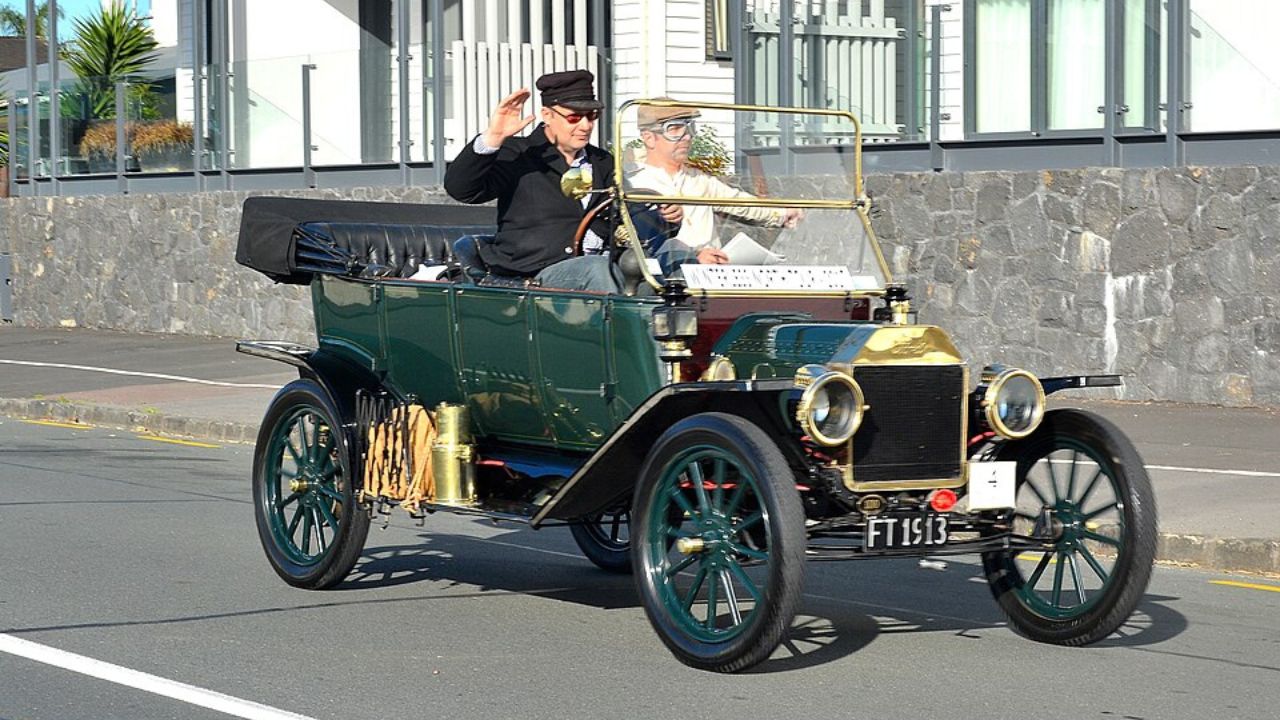
In 1913, a quiet experiment on the factory floor in Highland Park turned the Ford Model T from a successful product into a phenomenon that terrified competitors. By rethinking how a car moved through the plant, Ford transformed the Model T from a handcrafted machine into a mass-produced staple that reshaped both the auto industry and modern work.
That shift still echoes in every highly automated assembly line and in every debate over how far companies should go in chasing efficiency. The story of the Model T’s production revolution is not just about one car, but about the template it created for manufacturing, labor, and even how people think about personal mobility today.
How Ford’s 1913 assembly line rewired car building
Before 1913, building a car resembled fine cabinetmaking. Skilled workers clustered around a stationary chassis, fetching tools and parts, then fitting each component by hand. Output was limited, quality varied, and the price of an automobile kept it out of reach for most households. Henry Ford wanted the opposite: a car that ordinary workers could buy, built in such volume that scarcity disappeared.
The breakthrough came when Ford’s engineers reorganized the Highland Park plant so that the work came to the people instead of the other way around. The Model T chassis was pulled past a line of workers, each assigned a narrow, repeatable task. Rather than one team assembling a full car, dozens of workers each installed a single component in sequence. The result was a radical cut in assembly time per vehicle and a sharp rise in daily output.
The change did not stand alone. Standardization of parts and processes made the moving line possible. Components for the Model T were designed to be interchangeable, which meant a worker on the line could bolt on a part with minimal adjustment. Tooling was arranged so that each station had exactly what was needed, in the same place, every time. Training focused on repetition and rhythm rather than broad craft knowledge.
The payoff showed up in price. As production volume climbed and efficiency improved, Ford could reduce the cost of a Model T and still make money. A car that had been a luxury object in the first decade of the century became a realistic purchase for a growing middle class. That price drop, backed by a reliable flow of identical vehicles, is what truly shook Ford’s rivals, many of whom still relied on slower, more artisanal methods.
Competitors suddenly faced a market where buyers expected not just a car, but a car that was affordable, dependable, and available without a long wait. Companies that clung to older production methods struggled to match Ford on cost and volume. Some pivoted into higher priced niches, others copied Ford’s line, and a few disappeared altogether as the industry consolidated around mass production.
Labor, pay, and the human cost of efficiency
The 1913 line did not just transform machinery. It changed the daily lives of workers who now stood in fixed positions, repeating the same motion hundreds of times per shift. Work became faster and more regimented, with less room for individual judgment. Turnover spiked as some workers walked away from the monotonous pace and rising pressure.
Ford’s response was to pair the new production system with a new social contract. The company raised daily wages and introduced policies that tied pay and job security to attendance and conduct. Higher pay helped stabilize the workforce and also created a powerful marketing story: the idea that the people who built the car could afford to buy one. That narrative of the worker as both producer and consumer became part of the Model T’s legend and strengthened Ford’s competitive advantage.
At the same time, the line concentrated power in management and engineering. Decisions about how work was organized shifted away from the shop floor and into planning offices. Time studies and output targets dictated how long each task should take. In many ways, the 1913 breakthrough accelerated a broader move toward scientific management that would spread far beyond the auto industry.
The tension between efficiency and autonomy, which began to surface around the Model T line, still shapes manufacturing. Modern plants use sensors, software, and robotics, yet the core question remains similar: how to balance throughput and cost with jobs that people can sustain over years without burning out.
Why the Model T’s production shift still matters to Detroit and beyond
The legacy of that early moving line is visible in Detroit’s identity as a manufacturing city and in the way the region continues to market its connection to the Model T. Exhibits and tours that highlight the car’s history draw visitors who want to see where the idea of modern mass production took shape. Coverage of a restored Model T in Detroit has emphasized how the car symbolizes both the ingenuity and the upheaval that came with industrial scale production, linking the vehicle to the city’s long fight to reinvent itself as a center of innovation and culture.
That symbolism matters for today’s automakers, which still trade on their heritage while pushing into new technologies. When Ford unveils a new vehicle, such as a pickup positioned as a relatively affordable option for buyers who want a practical truck, the company often leans on its reputation for bringing working people into the car market. A recent example is a sub‑$30,000 pickup that was presented as a no‑nonsense tool for drivers who cannot or will not pay luxury prices, a strategy that echoes the original Model T’s promise of access. Reporting on that truck framed it as the kind of affordable pickup that connects directly to Ford’s long history of value‑focused vehicles.
The Model T’s production revolution also shapes how Detroit tells its story to investors and policymakers. Narratives about the city as the birthplace of mass production sit alongside efforts to attract battery plants, software startups, and mobility research hubs. A feature on the Model T’s continued presence in Detroit’s cultural life described how the car functions as a touchstone in museums and public events, reinforcing the idea that the city understands how to turn complex technology into everyday products. That same reporting on the Model T in connected the car’s enduring appeal to ongoing debates about what kind of manufacturing future the region should pursue.
Globally, the 1913 shift still serves as a reference point whenever a new industrial process claims to be transformative. Whether it is gigafactories for batteries or highly automated plants for electric vehicles, executives and analysts reach for the Model T story as shorthand for the moment when a product crosses from novelty into infrastructure.
From moving line to software line: what comes next
The logic behind the 1913 Model T breakthrough continues to evolve. Instead of a physical chassis pulled past workers, many modern systems move digital workpieces through software pipelines. Code is written, tested, and deployed in stages that mirror the old assembly line, with each team responsible for a specific step. The principle is the same: break complex work into repeatable tasks, then coordinate them so the output flows continuously.
Automakers are now applying that logic to both hardware and software. Electric vehicles rely on large, standardized battery modules and common platforms that can support multiple models. Over‑the‑air updates let companies adjust features after a car leaves the factory, extending the idea of the assembly line into the life of the product itself. Instead of stopping at the end of the plant, the process stretches into years of software revisions and data‑driven tweaks.
The competitive shock that once came from Ford’s moving line now comes from companies that can integrate hardware production with digital services. Firms that master both sides can move faster on product updates, manage costs more tightly, and respond to customer feedback in near real time. Others risk being left behind, much as early twentieth century automakers were outpaced by Ford’s volume and pricing.
More from Fast Lane Only
- Unboxing the WWII Jeep in a Crate
- 15 rare Chevys collectors are quietly buying
- 10 underrated V8s still worth hunting down
- Police notice this before you even roll window down
*Research for this article included AI assistance, with all final content reviewed by human editors