The 1950s turned American cars into rolling monuments, stretching sheet metal, horsepower, and chrome to extravagant new extremes. Size and power became status symbols, and designers treated every boulevard like a stage where fins, grilles, and thunderous V8s competed for attention. The decade’s most memorable machines did not just move people, they projected presence in a way that still defines classic-car culture today.
From postwar optimism to oversized ambition
I see the roots of 1950s excess in the country’s postwar confidence, when prosperity and suburban growth encouraged buyers to think bigger in every sense. Automakers responded with longer wheelbases, wider bodies, and cabins that felt like living rooms on wheels, turning family cars into symbols of upward mobility. Contemporary lists of iconic 1950s cars underline how mainstream this trend became, highlighting full size models that prioritized comfort, chrome, and visual drama as much as basic transportation.
Performance escalated in parallel, as V8 engines spread from luxury brands into more accessible nameplates and horsepower figures climbed year after year. Manufacturers learned that a powerful engine could sell just as effectively as a flashy paint job, and they began to market acceleration and top speed as key virtues of modern motoring. Curated rundowns of the fastest American cars of the 1950s show how quickly the bar moved, with models that could genuinely “smoke” their contemporaries and turn straight highways into informal proving grounds.
Cadillac fins and the art of visual dominance
If one shape captures the decade’s appetite for spectacle, it is the tail fin, and no car pushed that motif further than the 1959 Cadillac Eldorado. Cadillac had introduced modest fin-like bumps on rear fenders earlier, but detailed histories of the Cadillac Eldorado note that fins reached their zenith on the 1959 Cadillacs, turning the rear of the car into a pair of soaring vertical blades. The effect was not subtle, and that was the point: in an era fascinated with jets and rockets, these fins made a parked Eldorado look ready for liftoff.
Video deep dives into 1959 Cadillacs emphasize how the fins worked with the rest of the design, from the broad “egg crate” grille to the acres of chrome that framed the car’s massive body. The Eldorado’s proportions, with its long hood and extended rear deck, amplified the sense of size so that the car dominated any driveway or curb it occupied. I read those fins as more than styling flourishes, they were declarations that Cadillac, and by extension its owner, sat at the top of the automotive hierarchy in both power and presence.
Chevy Bel Air and the glamour of everyday excess
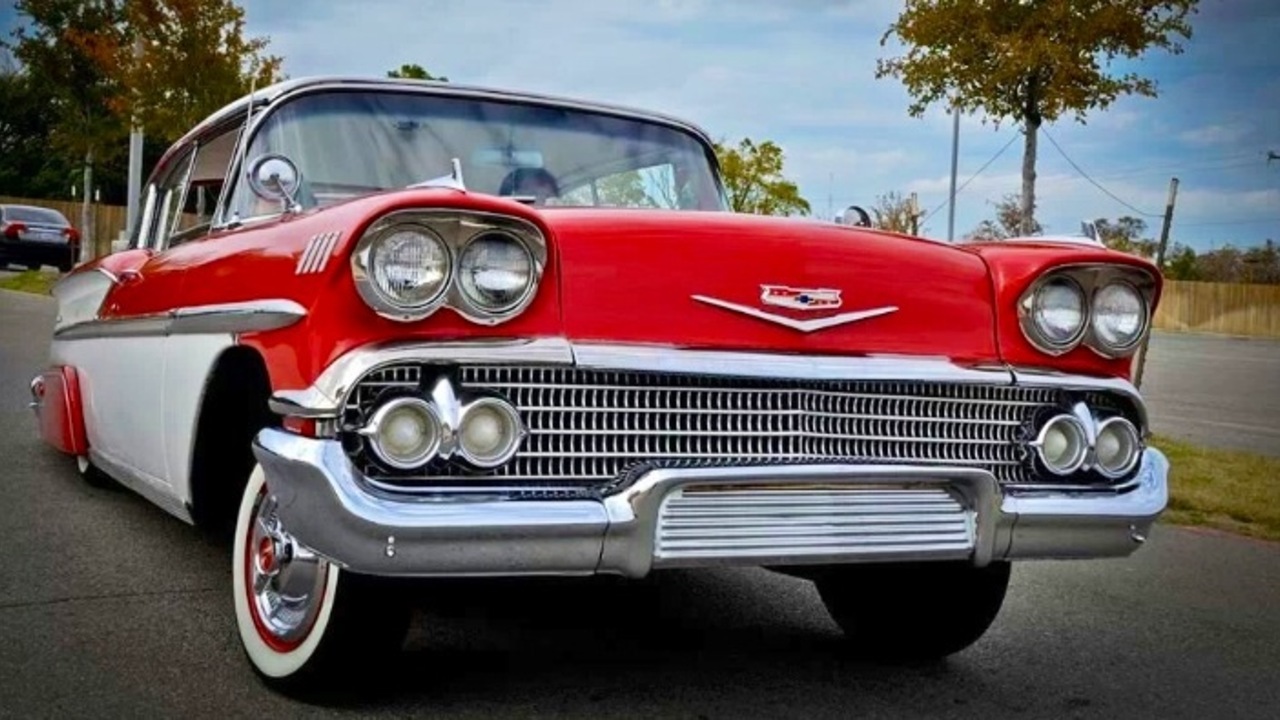
Not every 1950s icon was a rare flagship, and the Chevy Bel Air proved that mass market cars could project glamour on a grand scale. Commentaries that describe the Chevy Bel Air as “The Epitome of 50s American Automotive Glamour As the” decade unfolded point to its blend of bright two tone paint, generous chrome, and confident stance. The Bel Air’s sweeping side trim and wraparound glass gave even a family sedan a sense of motion and sophistication, while its available V8 power ensured that the style was backed by real performance.
Later breakdowns of Chevrolet models from the era, including the 1950–1954 Bel Air, the 1955–1957 Bel Air “Tri” “Five,” and the 1958 Bel Air Impala, show how the nameplate evolved while keeping its core promise of accessible luxury. Each iteration grew a bit more substantial, with longer bodies and more elaborate trim, reflecting a market that equated more sheet metal and more cylinders with a better life. In that sense, the Bel Air turned the decade’s appetite for size and flash into something that middle class buyers could park in their own driveways.
Chrysler 300 “letter cars” and the pursuit of raw power
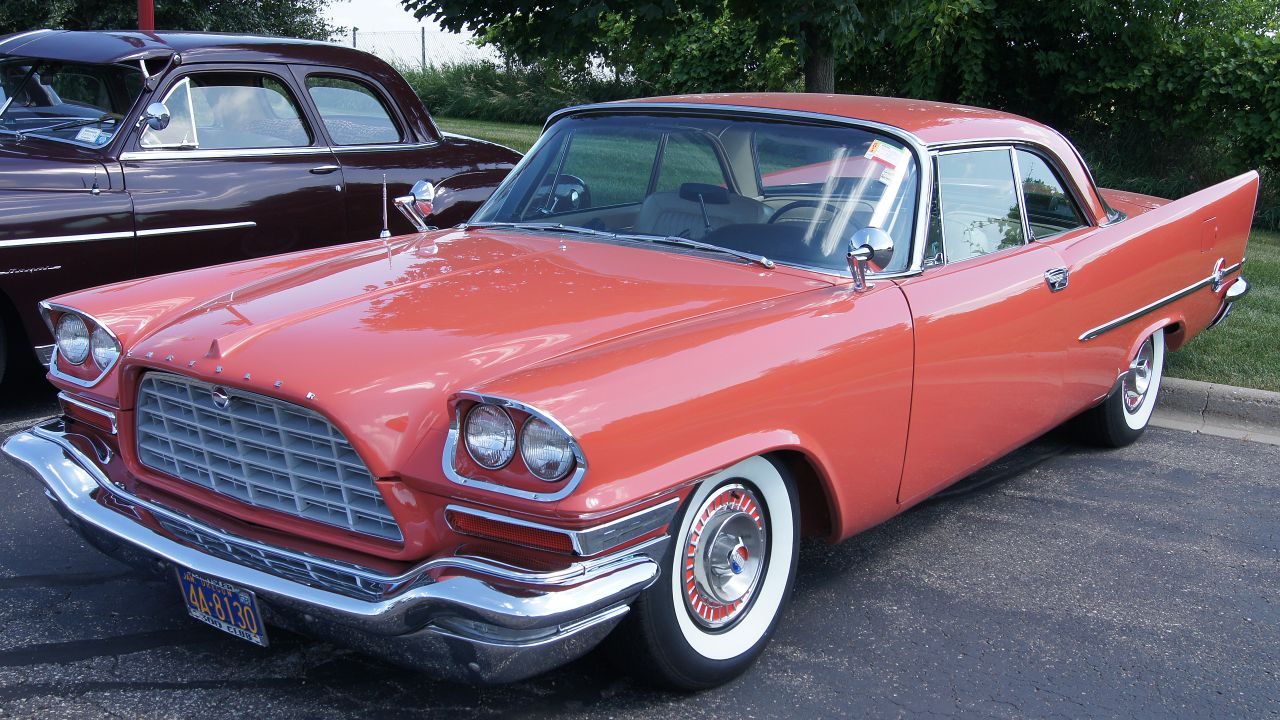
While some brands chased visual drama, Chrysler used the 1950s to build a reputation for brutal, unapologetic performance in large, luxurious packages. The Chrysler 300 “letter cars” stood at the center of that strategy, pairing big displacement engines with full size bodies and upscale interiors. A detailed look at these beautiful brutes describes them sitting “Amid the” museum’s sea of brilliantly hued paintwork and chrome, a reminder that Chrysler deliberately targeted buyers who wanted high performance, luxurious, large cars in one imposing package.
The apex of this philosophy arrived with the 1958 Chrysler 300D, which specialized coverage identifies as Was The World “Most Powerful Car In The” 1950s. Reports on the 300D’s engineering highlight how Chrysler pushed its engine technology to the limit, experimenting with fuel injection before some cars were converted back to carburetors, all in pursuit of headline grabbing output. I see the 300 “letter cars” as the clearest expression of the decade’s belief that a car’s worth could be measured in cubic inches and quarter mile times, provided it still wrapped that power in leather and chrome.
Speed, spectacle, and the culture of excess
By the late 1950s, the arms race in size and power had spread across the industry, and even niche models leaned into the idea that a car should look and feel larger than life. Surveys of the fastest American cars of the 1950s showcase machines whose egg crate grilles, stylish tail fins, and optional removable hardtops gave them a dual personality, part race car and part rolling nightclub. Another ranking of the most powerful American cars of the decade notes that by 1957, if a buyer wanted something that looked like it could double as a spaceship and a nightclub, the Lincoln Premi fit the brief, underlining how far designers were willing to go to stand out.
These cars did more than satisfy individual vanity, they helped cement a cultural association between American identity and automotive excess that still shapes nostalgia today. Video retrospectives on rare classic cars treat the 1959 Cadillacs as among the most iconic in Automotive History, precisely because they pushed styling and scale to their limits. When I look across the Bel Air’s glittering trim, the Cadillac Eldorado’s towering fins, and the Chrysler 300D’s ferocious engine, I see a decade that treated the automobile as a canvas for national ambition, turning size, power, and presence into a kind of rolling manifesto.