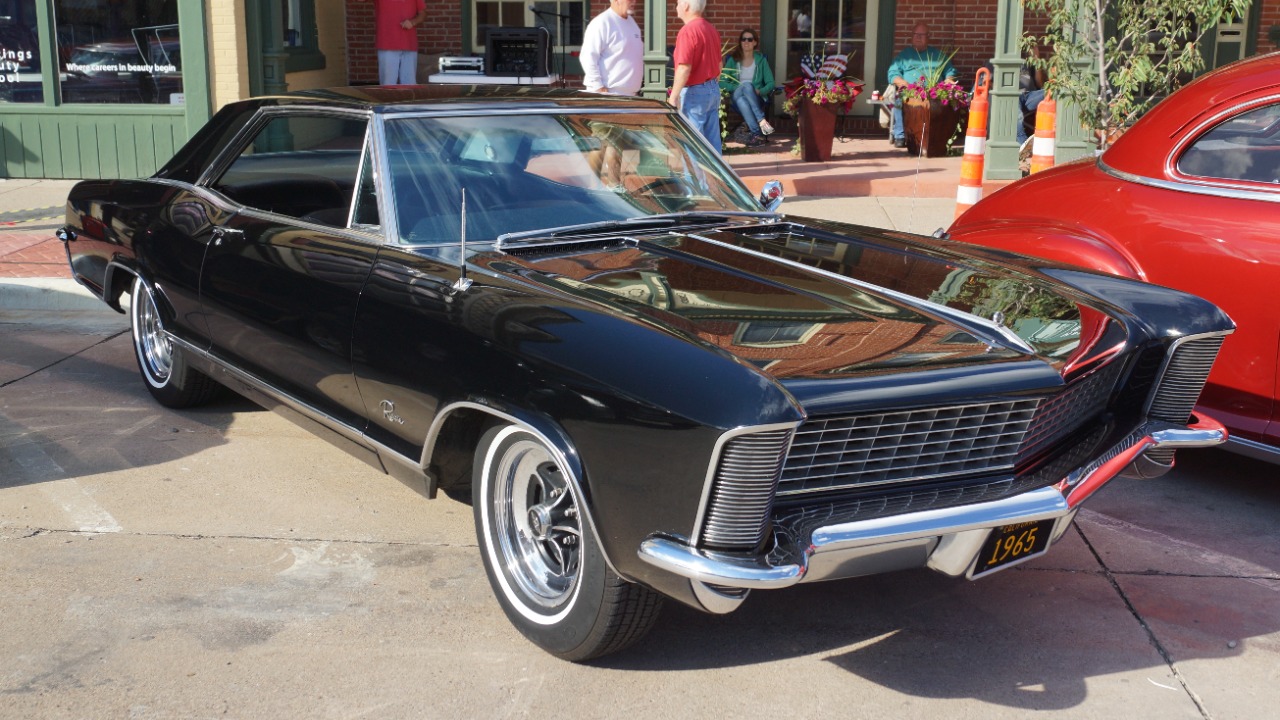
The 1965 Buick Riviera sits at a rare intersection of American luxury and genuine performance capability. Its sleek Coke-bottle profile and hidden headlights project pure style, yet underneath the chrome and wood veneer is a chassis and drivetrain that can still surprise modern drivers.
Nearly six decades on, the second-generation Riviera has evolved from stylish personal coupe to sought-after grand touring classic. Collectors now prize the 1965 model year in particular, not just for its clean design and low production numbers, but for the way it balances comfort, power and subtle customization potential.
What happened
When Buick launched the Riviera in the early 1960s, the brand set out to build a personal luxury car that could compete with the Ford Thunderbird and even European coupes. The 1965 model represented a major refinement of that idea. The body kept the long-hood, short-deck proportions of earlier years, but designers smoothed out the sides, tightened the lines and integrated clamshell-style hidden headlights that gave the car a distinctive, almost concept-car face.
Under the hood, the Riviera relied on Buick’s big-block V8s. The standard engine was a 401 cubic inch unit, while the optional 425 cubic inch version pushed output into serious territory for a luxury coupe of the period. Paired with a three-speed automatic and rear-wheel drive, the car delivered the sort of effortless highway speed that defined mid-1960s American motoring. Even in stock form, the Riviera could cover long distances quickly while keeping occupants cocooned in thick carpeting and sculpted bucket seats.
That blend of comfort and pace has made the 1965 model a favorite starting point for light modification. A recent feature on a lightly modified Riviera highlights how owners today tend to respect the original shape while improving drivability. The car in question keeps its factory silhouette and key trim pieces, but benefits from upgraded suspension components, modern radial tires and subtle engine tuning. The goal is not to turn the Riviera into a track car, but to sharpen its responses and reliability so it can be driven regularly instead of living purely as a showpiece.
Inside, the 1965 Riviera combined a driver-focused cockpit with upscale materials. The sweeping dashboard wrapped around the driver, with a horizontal speedometer and deep-set auxiliary gauges that reinforced the car’s performance intentions. At the same time, wood veneer, bright metal accents and thickly padded seats reminded occupants that this was a Buick, not a stripped-down muscle car. Many surviving examples retain original switchgear and trim, a testament to the build quality of the period.
Stylistically, the 1965 model year stands apart because it represents the last of the first Riviera design generation before more dramatic changes arrived. The absence of a B-pillar, the frameless side glass and the flowing roofline gave the car a hardtop elegance that later versions would not fully replicate. Collectors often single out the hidden headlamps and clean rear quarter panels as the details that make the 1965 car the purest expression of the original design brief.
Over the decades, the Riviera’s status has steadily evolved. What began as an aspirational new car for executives and professionals has become a fixture at classic car gatherings, where it often stands apart from more obvious muscle machinery. The same long hood that once signaled status in suburban driveways now commands attention on show fields and auction blocks. Lightly modified cars, especially those that preserve original bodywork while adding discreet upgrades, tend to attract both purists and drivers who value usability.
Why it matters
The 1965 Buick Riviera matters because it challenges the assumption that American luxury cars of the era were floaty, underbraked and uninterested in handling. While it was never a sports car, the Riviera’s chassis and powertrain gave it real performance credentials. The big V8 delivered strong acceleration, and the car’s relatively low roofline and wide track contributed to stability at speed. Owners who have refreshed suspension bushings, upgraded shocks and fitted modern tires often report that the car feels more composed than its size suggests.
That dual character helps explain why the Riviera occupies a unique niche among collectors. Muscle cars such as the Pontiac GTO or Chevrolet Chevelle SS are celebrated for raw power and straight-line speed, but they lack the Riviera’s emphasis on interior refinement and long-distance comfort. European grand tourers from the same period offer sophistication and handling, yet they rarely match the Buick’s easy torque or spacious cabin. The 1965 Riviera effectively merges these worlds, giving drivers a car that can cruise quietly yet still respond decisively when the throttle is pressed.
Design also plays a central role in its lasting influence. The Riviera’s clean flanks, restrained chrome and integrated headlights anticipated a more modern, less ornamented approach to American car styling. Where many contemporaries relied on fins, brightwork and busy surfaces, the Buick presented a more tailored look. That restraint has aged well. Enthusiasts today often comment that the car looks surprisingly contemporary from certain angles, especially when it sits slightly lower on tasteful wheels and tires.
The way owners modify these cars reinforces their enduring appeal. Rather than radical body kits or engine swaps, many choose upgrades that respect the original concept. Disc brake conversions, improved cooling systems and electronic ignition help the Riviera cope with modern traffic and higher operating temperatures. Subtle suspension changes reduce body roll and improve steering feel without sacrificing ride quality. These modifications highlight how robust the underlying platform is and how little it needs to feel at home on present-day roads.
Market trends show that this mix of luxury and performance has real value. While some classic American coupes have seen volatile price swings, well-presented 1965 Rivieras have gained a steady following. Cars with original drivetrains, correct trim and tasteful updates tend to draw interest from buyers who want something more refined than a pure muscle car but less formal than a full-size sedan. The Riviera’s relatively limited production compared with mass-market models also adds to its desirability.
Culturally, the car reflects a particular moment in American optimism. The mid-1960s were defined by expanding highways and a growing middle class that wanted to travel in comfort. The Riviera was built for that world. Long, straight interstates suited its relaxed power delivery, while its upscale image fit buyers who wanted to signal success without choosing a chauffeur-driven sedan. That context helps explain why the car still resonates with enthusiasts who appreciate not just its looks, but the lifestyle it represents.
The 1965 Riviera also serves as an accessible entry point into classic ownership for drivers who value usability. With parts support for Buick big-block engines, straightforward body-on-frame construction and a strong enthusiast community, the car can be maintained and improved without the complexity or cost associated with some European classics. That practicality encourages owners to drive their cars regularly, which in turn keeps the Riviera visible on roads and at local events rather than confined to garages.
From a design history perspective, the car influenced later personal luxury coupes. Elements of its proportions and detailing can be seen in subsequent Buicks and even in other General Motors brands that adopted similar long-hood, short-deck layouts. The idea of a driver-oriented, two-door luxury car with serious power became a template that would appear again in models such as the Oldsmobile Toronado and Cadillac Eldorado, even as those cars experimented with front-wheel drive and different packaging solutions.
The Riviera’s current profile among enthusiasts also reflects a broader shift in how collectors value cars. Instead of focusing solely on top-tier exotics or the most famous muscle models, more buyers are seeking vehicles that tell a story about design and culture. The 1965 Buick fits that trend neatly. It is recognizably American, yet it carries a restraint and balance more often associated with European grand tourers. That blend gives it appeal across different segments of the hobby.
What to watch next
Looking ahead, the 1965 Buick Riviera’s future trajectory in the collector market will likely depend on how well owners continue to balance preservation and modernization. Cars that retain original body lines, interior layouts and key mechanical components, while incorporating sensible updates for safety and reliability, are positioned to remain attractive to a wide audience. Overly radical customizations may capture attention in the short term, but they risk erasing the qualities that make the Riviera distinctive.
One area to watch is the growing interest in restomods that prioritize subtlety. As seen in the lightly upgraded examples already on the road, enthusiasts are finding ways to integrate modern technology without disrupting the car’s character. Hidden audio systems, improved lighting within original housings and carefully tuned suspension setups can make the Riviera more enjoyable on modern roads while keeping its 1960s identity intact. The success of these builds will influence how new owners approach their own projects.
Another factor is generational change within the collector community. As younger enthusiasts enter the hobby, their tastes often differ from those who grew up when the Riviera was new. Some are drawn to the car’s clean lines and analog driving experience, especially in an era dominated by digital interfaces and driver aids. Others may prioritize smaller, more overtly sporty models. How strongly this next wave of collectors embraces large personal luxury coupes will shape values and availability in the coming years.
Attention is also shifting to originality in specific details. Items such as factory-correct trim, intact interior wood veneer and complete gauge clusters are becoming more significant as restoration costs climb. Owners who preserve or carefully refurbish these elements are likely to see stronger interest when they bring their cars to market. Conversely, cars that have lost key pieces or suffered from low-quality repairs may find it harder to stand out, even if they run well.
Mechanical choices will continue to be a talking point. Some owners may consider engine swaps or forced induction to chase higher power figures, but many enthusiasts remain drawn to the character of Buick’s original big-block V8s. The sound, torque delivery and visual presence of those engines are integral to the Riviera’s identity. Developments in parts availability, such as improved cylinder heads, camshafts and fuel systems, will influence whether more owners choose to refine the original engines rather than replace them.
The way the Riviera is used will also shape its reputation. Cars that appear regularly at regional cruises, long-distance tours and mixed-brand events help keep the model visible beyond dedicated Buick gatherings. When observers see a 1965 Riviera keeping pace comfortably on highway runs or navigating city traffic with ease, it reinforces the idea that this is a classic that can still function as a real car, not just a static display. That perception often encourages new buyers who might otherwise hesitate to take on an older vehicle.
Finally, the broader conversation about automotive history is likely to give the 1965 Riviera more attention. As analysts and enthusiasts revisit the 1960s with fresh eyes, they increasingly highlight cars that bridged gaps between categories. The Riviera did exactly that, combining luxury, style and genuine performance in a way that defied simple labels. Continued coverage of well-kept and thoughtfully updated examples will help cement its status as more than a niche favorite.
More From Fast Lane Only: