The 1966 Chrysler Street Hemi V8 arrived as more than a high-output option code. It translated a fearsome racing engine into something a customer could drive off a showroom floor, idle in traffic, and still dominate at the dragstrip. In doing so, it reset expectations for what a factory-built street car could deliver and helped define the peak of Detroit’s muscle era.
That transformation from pure competition hardware to street-legal package was no accident. It emerged from engineering compromises, dealer ingenuity, and a new kind of performance customer who expected race-level power with real-world manners.
What happened
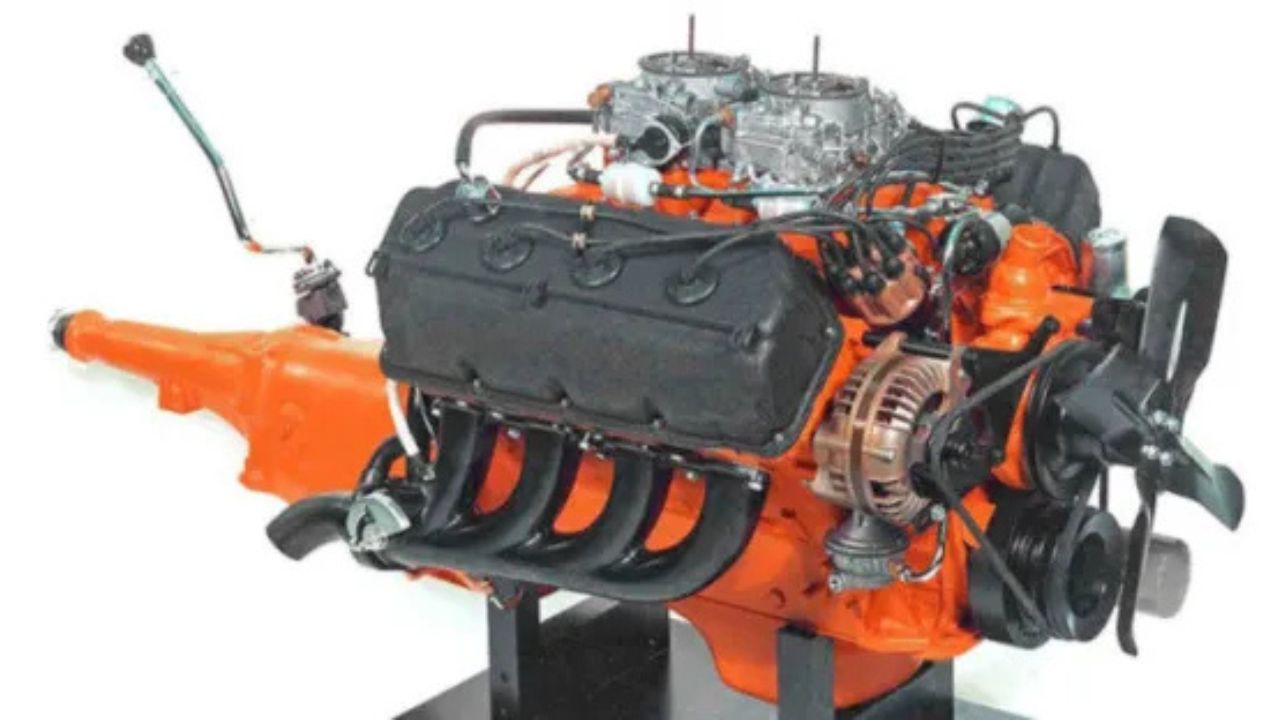
Chrysler’s 426 cubic inch Hemi began life as a purpose-built racing engine, created to win in NASCAR and other top-tier competition. The hemispherical combustion chambers, massive valves, and cross-bolted main caps were designed for sustained high rpm work and brutal durability. By the mid 1960s, the engine had already earned a reputation as a dominant big-block, with the racing version delivering far more power than typical street V8s of the period, as chronicled in period coverage of the 426 Hemi V8.
Racing success created demand from customers who wanted the same hardware in their street cars. Chrysler responded by adapting the 426 Hemi for regular production use. For the 1966 model year, the company introduced a detuned but still ferocious Street Hemi rated at 425 horsepower and around 490 pound-feet of torque. The engine kept the hemispherical heads and large-port architecture but gained lower compression, streetable camshaft profiles, and accessories that made it realistic for everyday driving.
The Street Hemi first appeared in mid-1960s B-body models such as the Dodge Coronet and Plymouth Belvedere. Buyers could order these cars with heavy-duty driveline components, upgraded cooling, and chassis reinforcements to cope with the torque. Contemporary reports highlight how a 1966 Dodge Coronet fitted with the 426 Hemi turned a relatively plain midsize sedan into a serious performance machine, a contrast to earlier wedge-head big-blocks like the 426 Street Wedge described in period stories about 1966 Coronet performance.
Chrysler did not treat the Street Hemi as a mass-market engine. It required specific ordering codes, and the cars received unique engine bay hardware, dual four-barrel carburetors, and heavy-duty suspensions. Production figures remained low, which only added to the mystique. Enthusiast compilations of factory-equipped cars list a short but influential roster of models that carried the 426 Street Hemi, including B-body Dodges and Plymouths and later E-body machines like the Plymouth Barracuda and Dodge Challenger, as detailed in guides to factory 426 Street applications.
Within Chrysler, the program had strong advocates. Engineers such as Tom Hoover pushed for the Hemi’s development and refinement, and his work later earned him the nickname “father of the Hemi.” Hoover’s personal cars reflected that commitment. One of his own 1966 Dodge Coronets, equipped with high-performance hardware, has surfaced in enthusiast circles and even at auction, where its connection to the architect of the Hemi program and its period-correct specification have drawn attention, as seen in coverage of Tom Hoover’s Coronet.
On the street, the new engine quickly built a reputation. Owners discovered that the Street Hemi could idle with relative civility, pull away from stoplights without constant clutch juggling, and still deliver quarter-mile times that rivaled dedicated race cars. The dual four-barrel setup and big-port heads demanded careful tuning, but when properly set up the package combined tractable low-speed behavior with explosive midrange and top-end power.
Dealers played a key role in translating the Street Hemi from spec sheet to asphalt. Performance-focused outlets, especially high-volume Dodge and Plymouth dealers, learned how to order the right combination of gearing, suspension, and axle ratios. Stories from the period describe Chicago’s Grand Spaulding Dodge and its performance chief, known as Mr. Norm, building reputations on turning relatively ordinary B-body Dodges into Hemi-powered street terrors, echoing the same mindset that had previously surrounded big-block wedge cars at shops like Grand Spaulding.
As the late 1960s progressed, the Street Hemi spread into more visually dramatic cars. The 1968 Plymouth Road Runner, 1969 Dodge Charger, and later the aerodynamic 1969 Dodge Charger Daytona could all be ordered with the 426 Hemi. Enthusiast histories of the Charger Daytona highlight how a small number of these winged cars left the factory with the Hemi, creating some of the most coveted combinations in American performance history, as seen in features on the Charger Daytona Hemi.
The engine’s reach extended into the early 1970s, finding a home in E-body muscle cars like the Plymouth Barracuda and Dodge Challenger. One especially vivid example is a 1971 Plymouth Hemi ’Cuda that remained largely untouched, preserving just 2,014 miles on its odometer. Coverage of this car describes how it was ordered new with nearly every available option, then driven sparingly and stored, turning it into a kind of time capsule that illustrates how a Street Hemi car looked and felt when it left the showroom, as captured in reports on the 1971 Hemi ’Cuda.
Why it matters
The 1966 Street Hemi mattered because it redefined what “street performance” meant. Before its arrival, factory muscle cars were powerful but generally based on warmed-over versions of regular production engines. The Street Hemi took a competition-grade design and made it available to retail buyers, with only enough softening to make it manageable in traffic.
That decision shifted expectations for both horsepower and durability. The Street Hemi’s 425 horsepower rating, achieved with conservative factory tuning, put it in a different league from many contemporary big-blocks. More important, the engine was built with racing-level bottom-end strength and valvetrain hardware. Owners could add more aggressive cams, higher compression, or better exhaust systems and still rely on the engine’s core architecture. Retrospectives on the big-block Hemi emphasize how far ahead of typical street engines its design really was.
The Street Hemi also changed how manufacturers thought about homologation. To keep racing programs viable, Chrysler needed to sell a street version of the Hemi in sufficient numbers. Instead of burying that requirement in a low-profile package, the company leaned into it and marketed the Hemi as a halo engine. That strategy helped cement the idea that racing and showroom performance should be tightly connected, a philosophy that still shapes modern high-performance models.
On the street, the Hemi-equipped cars set new benchmarks for acceleration. Period tests recorded quarter-mile times that pushed into the low 13-second range in showroom form when driven by skilled testers on prepared surfaces. For a car that retained full interiors, steel bodies, and everyday drivability, those numbers reset the bar for what a factory vehicle could achieve. The gap between a Hemi car and a typical family sedan of the era was enormous, and that contrast helped fuel the broader muscle car arms race.
The engine’s cultural impact may be even larger than its performance record. “Hemi” became a shorthand for brute power, and the 1966 Street Hemi played a central role in that association. The fact that Chrysler engineers like Tom Hoover could take a racing engine and turn it into a street option gave the brand a technical credibility that enthusiasts still reference. Hoover’s own 1966 Coronet, preserved and later offered for sale, stands as a physical link to that engineering story, as described in accounts of Hoover’s personal car.
Dealer culture grew around the Hemi in a way that amplified its legend. Performance-focused dealers learned how to spec cars for maximum impact, pairing the Street Hemi with aggressive axle ratios, minimal luxury options, and dragstrip-friendly tires. Enthusiast stories about mid-1960s Coronets and other B-body Dodges tuned by shops like Grand Spaulding illustrate how the engine became the centerpiece of a broader ecosystem of tuning, racing, and street competition, echoing earlier big-block efforts such as the 426 Street Wedge.
The limited production of Street Hemi cars also shaped the collector market. Because relatively few were built, and many were raced hard, surviving examples are rare. The 1971 Hemi ’Cuda with just over 2,000 miles, ordered new with nearly every option and then essentially preserved, shows how scarcity and originality can transform a single car into a reference point for historians and restorers. Reports on that low-mile Hemi ’Cuda underline how much value enthusiasts place on factory-correct details from the era.
From a technical perspective, the Street Hemi influenced later performance engines by demonstrating that exotic cylinder head designs and high-flow intake systems could be made reliable for street duty. Modern high-performance V8s with complex valvetrain layouts and high specific output owe part of their existence to the path the Hemi carved in the 1960s. The engine’s hemispherical chambers and large valves were extreme for the time, yet Chrysler proved that such features could survive daily use when backed by robust components.
The engine also shaped brand identity. For Dodge and Plymouth, the Hemi became a defining feature, one that differentiated their muscle cars from rivals. Enthusiast overviews of every factory Hemi car show how consistently the engine was paired with models meant to project speed and toughness, from stripped-down Road Runners to upscale GTXs and Charger R/Ts. That pattern reinforced the idea that a Hemi badge signaled something special under the hood.
What to watch next
The legacy of the 1966 Street Hemi continues to evolve through preservation, auctions, and modern reinterpretations of the Hemi name. Cars with clear provenance, low mileage, or direct ties to key figures in Chrysler’s performance program attract intense attention. The sale of Tom Hoover’s 1966 Dodge Coronet, for example, connects collectors directly to the engineer whose work shaped the Street Hemi. Coverage of that Hoover-owned Coronet suggests that historically significant Hemi cars will remain centerpieces of major collections.
Survivor-grade examples such as the 1971 Hemi ’Cuda with 2,014 miles function as rolling archives. Every original component, from factory chalk marks to untouched interior fabrics, helps historians understand how these cars were built and optioned. As more of these time-capsule cars surface, they refine the reference points restorers use when returning more heavily used Hemi cars to factory-correct condition. The detailed documentation surrounding that 1971 ’Cuda shows how much value the market places on originality.
Enthusiast media continues to revisit the 426 Hemi’s history, comparing it with other big-blocks and tracing its influence on later engines. Retrospectives on the Hemi V8 legend frame it as a benchmark for factory performance. That ongoing analysis shapes how new generations of enthusiasts understand the engine’s place in the broader story of American performance cars.
There is also growing interest in the broader ecosystem that surrounded the Street Hemi. Coverage of specific dealership builds, like the 1966 Coronet Street Wedge at Grand Spaulding, encourages deeper research into how dealers ordered and tuned Hemi cars. As more archival material emerges, including original order forms, dyno sheets, and racing records, the picture of how these cars were used in period will become sharper.
More From Fast Lane Only: