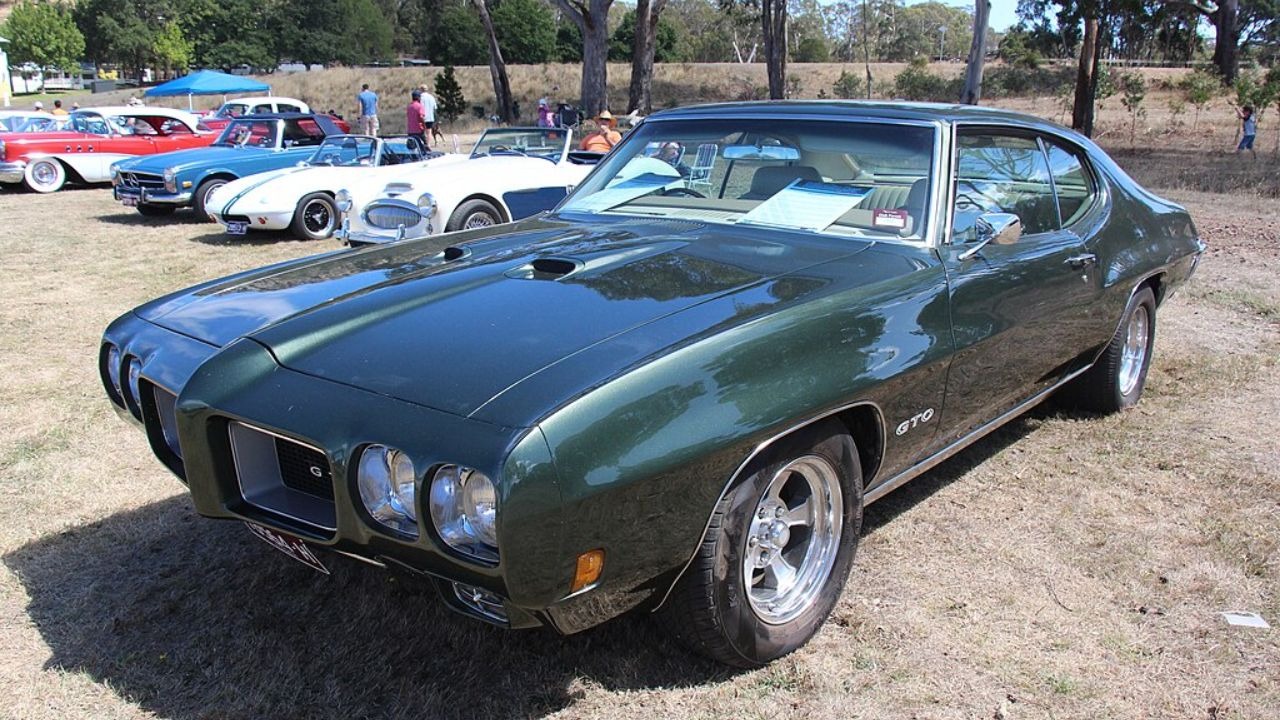
The 1969 Pontiac Ram Air IV marked the moment when Detroit’s muscle car wars stopped flirting with race technology and started putting it straight into customer driveways. Pontiac took its already potent GTO and Firebird hardware and reworked the V8 with serious breathing, high compression, and track-bred durability, then wrapped it in bright paint and bolder marketing. More than half a century later, that combination of engineering and attitude still shapes how enthusiasts measure factory-built performance.
What happened
By 1969, Pontiac had already helped kick off the muscle era with the original GTO, but rivals from Chevrolet, Ford, and Chrysler were crowding the field with big cubic inches and escalating horsepower claims. Pontiac’s answer was a new top-tier engine package, the Ram Air IV, offered in the GTO, the GTO Judge, and the Firebird. It built on the earlier Ram Air III but reworked nearly every part that affected how the engine breathed at high rpm.
The Ram Air IV kept the familiar 400 cubic inch displacement, yet it was far from a simple carryover. Engineers specified round-port cylinder heads with larger intake and exhaust passages, a high-lift camshaft with longer duration, forged pistons, and a revised aluminum intake manifold designed to keep the mixture dense at speed. This combination worked best at higher revs, where the freer-flowing ports and aggressive cam profile let the 400 pull harder than the catalog numbers suggested.
On paper, Pontiac rated the Ram Air IV at 370 horsepower in the GTO and 345 horsepower in the Firebird, figures that placed it at the sharp end of the showroom performance battle. Contemporary tuners and racers quickly discovered that the factory rating was conservative, since the engine responded eagerly to jetting and ignition tweaks and had the internal strength to live at sustained rpm. The round-port heads in particular became a calling card, separating the Ram Air IV from more common D-port engines and making original castings highly prized today.
The most visible carrier for this engine was the 1969 GTO Judge, a package that combined the Ram Air hardware with flamboyant body graphics, rear spoiler, and bright colors like Carousel Red. Surviving examples with their original drivetrains, such as a documented Ram Air IV Judge highlighted in a detailed profile of a restored 1969 GTO Judge, show how Pontiac treated the engine as the centerpiece of a broader performance identity. The Judge option was more than stripes and spoilers; it was the marketing wrapper for Pontiac’s most advanced street V8.
Production numbers for Ram Air IV cars remained low, partly because the option was expensive and partly because it was aimed at a narrow slice of buyers who understood what they were getting. Many customers were content with the Ram Air III or standard 400 engines, which already delivered strong acceleration. Those who stepped up to the IV tended to be serious about drag racing or road course work, and they often ordered additional heavy-duty components like close-ratio four-speed gearboxes and Safe-T-Track differentials to match the engine’s potential.
Over time, some Ram Air IV cars lost their original engines to racing mishaps or later swaps, which makes surviving, numbers-matching examples even more significant. A San Diego-based GTO Judge described as still ruling the streets illustrates how some owners have kept these cars in regular use while preserving their core identity. That particular car now hides a surprise under the hood in the form of a later engine, yet it still showcases the chassis and styling that framed the original Ram Air IV in period.
The Ram Air IV story also intersects with Pontiac’s less visible engineering experiments. While the IV reached showrooms, Pontiac was simultaneously developing the even more radical Ram Air V, an engine with tunnel-port heads and race-focused internals that appeared in limited numbers and engineering mules. A detailed technical feature on the Ram Air V shows how Pontiac used that program to push airflow science far beyond what corporate management would approve for mass production. In that context, the Ram Air IV can be seen as the street-legal tip of a much larger performance iceberg.
The same philosophy carried into Pontiac’s F-body line. Firebird buyers could specify the Ram Air IV in the Trans Am, creating one of the most focused pony cars of the era. Internal development cars went even further. One historically significant Trans Am that Pontiac kept out of public view for decades, documented in a feature on a secret factory Trans Am, illustrates how engineers used hidden prototypes to test high-output combinations that would influence later production engines and chassis setups.
As the muscle era matured, Pontiac continued to refine its performance hierarchy. Later Firebird models would adopt even more powerful combinations, culminating in some of the most potent factory Pontiacs ever built. A breakdown of the most powerful Firebird variants notes how peak factory output climbed well beyond earlier GTO figures, with special editions commanding substantial premiums. Modern valuations for the strongest Firebird models reflect not only raw horsepower but also the engineering lineage that started with engines like the Ram Air IV.
Why it matters
The 1969 Ram Air IV matters because it marked a rare moment when a major manufacturer let its engineers prioritize real performance over marketing fluff. Many muscle cars of the period wore stripes and badges that promised more than the hardware could deliver. Pontiac’s top-tier 400 did the opposite. The engine’s conservative rating, heavy-duty internals, and race-bred airflow made it a genuine threat at the drag strip and on the street, even in stock form.
From an engineering standpoint, the Ram Air IV represented a shift from simply increasing displacement to optimizing how an engine filled its cylinders. The round-port heads, revised combustion chambers, and high-lift camshaft showed that Pontiac understood volumetric efficiency and was willing to invest in casting and machining complexity to achieve it. That approach foreshadowed later performance engines that relied on advanced head design and cam timing rather than just bigger cubes.
The package also highlighted how carefully matched components can transform a familiar platform. The base 400 block had been around for years, yet with the right heads, intake, exhaust manifolds, and valvetrain, it became something entirely different. Enthusiasts who have driven both Ram Air III and IV cars often describe the IV as feeling sharper and more urgent once the tachometer sweeps past the midrange, even if the lower-end torque feels similar. That character made the engine particularly rewarding for drivers who used the gearbox and kept the revs up.
In the showroom, the Ram Air IV helped Pontiac maintain credibility among serious enthusiasts at a time when insurance surcharges and corporate politics were starting to erode factory performance. The GTO Judge, with its wild graphics and optional Ram Air IV engine, became a halo car that pulled buyers into dealerships, even if most left with more modest drivetrains. The Judge’s combination of flamboyant styling and real mechanical substance has since turned it into one of the most collectible muscle cars of its era, a status reinforced by buyer guides and historical pieces that break down key Judge details and production quirks.
The long-term cultural impact of the Ram Air IV also shows up in how enthusiasts talk about “factory hot rods.” Many later performance cars, from turbocharged imports to modern supercharged V8s, follow the same formula: take a standard engine, strengthen the internals, improve airflow, and pair it with chassis and styling cues that signal intent. Pontiac’s 1969 approach helped normalize that pattern inside a major automaker, which in turn encouraged rivals to respond with their own homologation specials and limited-run engines.
Collector interest provides another measure of significance. Original Ram Air IV cars now sit near the top of Pontiac value charts, not just because they are rare, but because they represent a technical high point before emissions rules and fuel crises reshaped the industry. Auction results and private sales often show sharp premiums for cars with documented Ram Air IV drivetrains, correct heads and intake, and original driveline tags. Restorers go to great lengths to source correct round-port components, since later replacements or generic parts can sharply affect authenticity and price.
The engine’s influence also extends into the aftermarket. Cylinder head designs for Pontiac V8s frequently trace their lineage back to the Ram Air IV and V programs, with modern aluminum castings borrowing port shapes, valve angles, and combustion chamber concepts from those late 1960s experiments. Builders who assemble high-output street Pontiacs today still talk in terms of “round-port style” combinations, a direct reference to the architecture that defined the Ram Air IV.
From a historical perspective, the Ram Air IV sits at a crossroads between accessible street performance and pure competition machinery. The parallel development of the Ram Air V, with its race-only character and tiny production footprint, shows what Pontiac engineers would have built if freed from corporate constraints. By comparison, the Ram Air IV represents the compromise that still managed to slip serious performance through the corporate filter and into thousands of customer garages.
The story of the hidden Trans Am prototype that Pontiac kept away from the public for years adds a layer of intrigue to that history. That car, described as a historically significant Trans Am engineering, carried experimental parts and performance targets that informed production decisions. Its existence confirms that the Ram Air IV was not an isolated effort, but part of a sustained internal push to keep Pontiac at the front of the performance conversation even as external pressures mounted.
Finally, the Ram Air IV matters because it captured a particular American attitude toward performance. It was loud, visually assertive when installed in a Judge or Trans Am, and unapologetically focused on acceleration. Yet beneath the swagger sat a carefully developed engine that rewarded drivers who understood cam timing, gearing, and traction. That mix of bravado and engineering discipline continues to resonate with enthusiasts who see the late 1960s as the high-water mark for factory muscle.
What to watch next
Interest in Ram Air IV cars shows no sign of fading, but the way enthusiasts engage with them is changing. As values climb, more owners face the choice between preserving originality and pursuing modern drivability. Some GTO and Firebird examples, like the San Diego Judge that now runs a different powerplant while keeping its original character, illustrate a growing trend toward reversible modifications that protect rare components while allowing regular use. Expect more cars to adopt this split personality, with original engines preserved on stands while upgraded drivetrains handle street duty.
The documentation side of the hobby is also becoming more important. With high-dollar restorations and rising auction prices, buyers are paying closer attention to build sheets, engine codes, and casting numbers that verify a true Ram Air IV pedigree. Clubs and specialist registries that track these cars help filter genuine examples from clones or re-creations. As more information comes online, the historical record around production totals, color combinations, and option mixes will likely become even sharper.
More From Fast Lane Only: