Factory horsepower ratings have never told the whole story, and nowhere was that more obvious than with a small-block Ford that quietly punched well above its weight. On paper, it looked like a modest V8 meant to keep insurance agents calm. In the real world, careful testing and later blueprint builds revealed an engine combination that delivered far more performance than Ford’s own numbers suggested.
This is the story of how a Windsor-based Ford V8, born as an ordinary production piece, became proof that Detroit’s advertised power figures could be as much about politics and product planning as pistons and camshafts.
What happened
The heart of the story is the 351 Windsor, Ford’s workhorse small-block that appeared in a wide range of cars and trucks. In its factory high-performance trims, the 351W carried conservative power ratings that slotted it neatly below headline engines like the 428 Cobra Jet and 429 big-blocks. Yet the architecture of the Windsor, with its generous bore spacing, relatively tall deck, and strong bottom end, offered far more potential than those catalog numbers indicated.
Enthusiasts and engine builders soon noticed that certain production 351W combinations responded unusually well to basic tuning. Cylinder head porting, a slightly hotter camshaft, and a better intake manifold quickly pushed output into territory that rivaled or exceeded Ford’s own big-block performance claims. That experience on dynos and dragstrips set the stage for a question that has lingered for decades: what if Ford had built the 351 Windsor the way hot rodders were building it in their garages?
To explore that, one build in particular tried to recreate the small-block Ford that should have come straight from the factory. Starting with a production 351W block, the project focused on parts and specs that Ford could realistically have used in period. The goal was not an all-out race motor, but a streetable package that delivered the kind of power enthusiasts were actually seeing once they modified their cars.
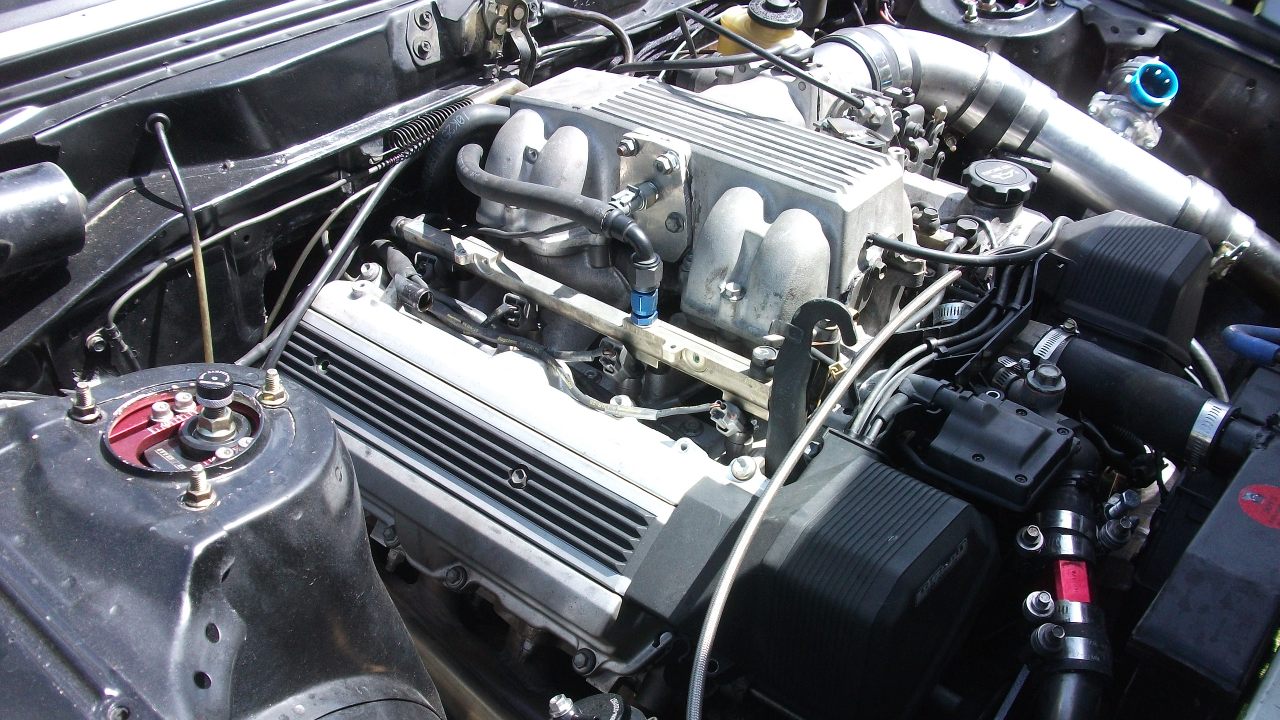
The engine used a stock-style crankshaft and rods, combined with forged pistons that preserved pump-gas compression while tightening tolerances. The key upgrades came in the top end. Cylinder heads with improved ports and larger valves, paired with a carefully chosen hydraulic cam, unlocked the airflow the factory parts had been leaving on the table. An aluminum dual-plane intake and a properly sized carburetor completed the combination, while headers replaced the restrictive cast manifolds that had kept many factory engines strangled at higher rpm.
Every step of the build was measured against realistic production constraints. The cam profile retained vacuum for power brakes and a stable idle, the compression ratio stayed within a range that would have worked with period pump fuel, and the valvetrain used components that could have passed Ford’s durability testing. The result was an engine that looked and behaved like a factory piece, yet produced numbers that would have rewritten Ford’s performance brochures.
On the dyno, this Windsor-based small-block delivered stout torque from low rpm and carried strong horsepower well past the point where most stock 351W combinations fell off. The curve showed a broad plateau of usable power rather than a narrow peak, highlighting how much latent performance sat inside Ford’s small-block architecture. In practical terms, that meant a mid-size Ford or Mercury equipped with this configuration would have run with, or even outrun, many of the company’s own big-block muscle cars of the era.
The project, documented as a two-part build, framed the finished engine as the 351W Ford should have released from the factory. The second installment walked through the completed combination and dyno results, making a clear case that the Windsor could have been positioned as a flagship performance engine rather than a supporting player. That argument rested on the measured output of the finished package, which significantly exceeded the power levels traditionally associated with factory 351W ratings. The build, presented as the 351W Ford should, crystallized what many enthusiasts had suspected for years.
Context matters here. During the late 1960s and early 1970s, Detroit manufacturers often underrated engines to satisfy insurance companies, comply with internal product hierarchies, or keep certain models from overshadowing halo cars. Ford was no exception. The Windsor’s official output figures fit neatly within that pattern, even as real-world performance hinted at something stronger. The blueprint-style 351W build simply put dyno numbers behind what drag racers and street tuners had been seeing all along.
Why it matters
At first glance, an overachieving small-block might sound like trivia for bench racers. In reality, it illustrates how performance car history is shaped as much by corporate strategy and regulation as by engineering. The gap between the 351W’s advertised power and its true potential shows how manufacturers balanced marketing, insurance risk, and internal politics when deciding what to publish on a window sticker.
Like its Detroit rivals, Ford had strong incentives to keep certain engines on paper below others. Big-block flagships carried prestige and higher profit margins, and they anchored the image of models like the Mustang, Torino, and full-size performance sedans. Allowing a smaller, lighter, and often cheaper engine to match those numbers would have undermined that hierarchy. By rating the Windsor conservatively, Ford could sell a broad range of V8 cars without cannibalizing its own halo products.
Insurance pressure added another layer. As performance cars gained notoriety, insurers began to scrutinize high-horsepower models and charge steep premiums. A car equipped with a modestly rated small-block was easier to insure than one advertised with big-block power, even if the real-world performance gap was smaller than the brochures suggested. Understating the 351W’s output helped keep certain models within reach of younger buyers who might have been priced out of big-block coverage.
The 351W blueprint build also matters because it highlights how much capability was baked into Ford’s small-block architecture. The Windsor’s generous deck height allowed for longer strokes and larger displacements, which later made 393 and 408 cubic-inch stroker combinations popular among enthusiasts. The factory never fully exploited that potential in period, but the engine’s design provided a platform for decades of aftermarket development. The build that recreated a stronger factory-style 351W simply tapped into that same structural headroom.
From a historical perspective, this kind of project challenges the way enthusiasts interpret factory performance numbers. Horsepower ratings, especially in the muscle car era, were often as much about positioning as about physics. A dyno-verified 351W that outperforms its official rating forces a reexamination of how different engines from that era stack up. It suggests that some small-block Fords deserve to be mentioned in the same breath as better-known big-blocks when discussing period performance.
There is also a cultural angle. Ford fans have long debated the merits of the Windsor versus the Cleveland small-block families. The 351 Cleveland, with its canted-valve heads and high-rpm breathing, tends to dominate performance lore. The Windsor, especially in truck and passenger car trims, is often remembered as a reliable workhorse rather than a hero engine. A carefully executed 351W that delivers big power with street manners helps rebalance that narrative. It shows that the Windsor, when treated as a performance platform, can deliver results that match or exceed expectations set by its more glamorous stablemates.
For modern builders, the story provides a template for how to approach vintage engines. Instead of chasing exotic parts or extreme race profiles, the 351W project focused on optimizing what Ford could reasonably have done. That approach has practical benefits. A street car that behaves like a factory model, yet produces significantly more power, is easier to live with and often more reliable than a radical build that sacrifices drivability. The project effectively reverse-engineered a lost factory performance option, which is exactly what many owners want when they update a classic Ford today.
Economics come into play as well. Original big-block performance cars have become expensive collectibles, often out of reach for enthusiasts who simply want to drive. A small-block Ford that can match period big-block performance, using a production-based engine like the 351W, offers a more accessible path into classic muscle. That democratization of performance mirrors what hot rodders were doing in period, and it continues to shape the restomod and pro-touring scenes.
The build also underscores how much performance can be unlocked by attention to airflow and calibration rather than brute displacement. The factory 351W, constrained by emissions equipment, restrictive exhaust, and conservative ignition curves, rarely showed its full potential. Once those bottlenecks are addressed with thoughtful parts selection and tuning, the engine’s torque-rich character emerges. That lesson applies across eras: many modern engines, like their predecessors, carry conservative factory calibrations that leave room for safe, reliable gains.
Finally, the story matters because it captures a moment when enthusiasts and independent builders filled gaps left by the manufacturers. Ford provided the raw material in the form of a strong small-block. The aftermarket and the tuning community did the rest, often revealing performance levels that Detroit could have delivered but chose not to. The 351W project simply formalized that process in a way that could be measured, documented, and repeated.
What to watch next
The legacy of an underrated factory Ford V8 continues to shape how enthusiasts build, buy, and value classic performance cars. Several trends flow directly from the lessons of the 351W story, and they offer a guide to where factory-plus builds might go next.
First, expect continued interest in period-correct but optimized engine combinations. Builders are increasingly drawn to projects that look and feel like they could have come from the factory, even as they deliver modern performance. That means stock-style castings, original accessory drives, and factory air cleaner housings hiding carefully chosen internals. The 351W blueprint concept fits this direction perfectly. Future small-block Ford projects are likely to refine that formula with improved aftermarket heads that still accept factory-style hardware, and with cam profiles tailored for today’s pump fuels.
Second, the idea of “factory-plus” performance is spreading into other engine families. Just as the Windsor has been reimagined as the engine Ford could have built, similar efforts are underway with Chevrolet small-blocks, Mopar LA engines, and even later Ford modular V8s. Builders are asking what those engines might have looked like if corporate constraints had been looser. The result is a wave of engines that respect original architecture while quietly doubling or tripling the output implied by their original ratings.
Third, modern engine management is starting to blur the line between classic and contemporary performance. While the 351W project relied on carburetion and mechanical tuning to stay period-appropriate, newer builds often integrate discreet electronic fuel injection and ignition control. That shift allows more precise calibration, which in turn makes it easier to extract safe power from older designs. Enthusiasts who appreciate the 351W story are likely to adopt similar philosophies, using technology to realize what the factory might have done if it had access to today’s tools.
More from Fast Lane Only