The Ford Mustang was one of the biggest automotive success stories of the 1960s.
After its introduction in 1964, the Mustang quickly became a cultural phenomenon. Buyers loved its sporty styling, affordable pricing, and extensive list of options. Ford had created a car that appealed to an enormous audience, and competitors spent years trying to replicate its success. By the middle of the decade, the Mustang had become one of the most recognizable vehicles in America.
For many manufacturers, that would have been enough.
But Ford Motor Company recognized an opportunity.
Not every buyer wanted the youthful, budget-conscious image associated with the Mustang. Some customers liked the basic pony car formula but desired something more refined, more sophisticated, and a little more upscale. These buyers still wanted sporty styling and strong performance, but they also expected additional comfort, luxury, and exclusivity.
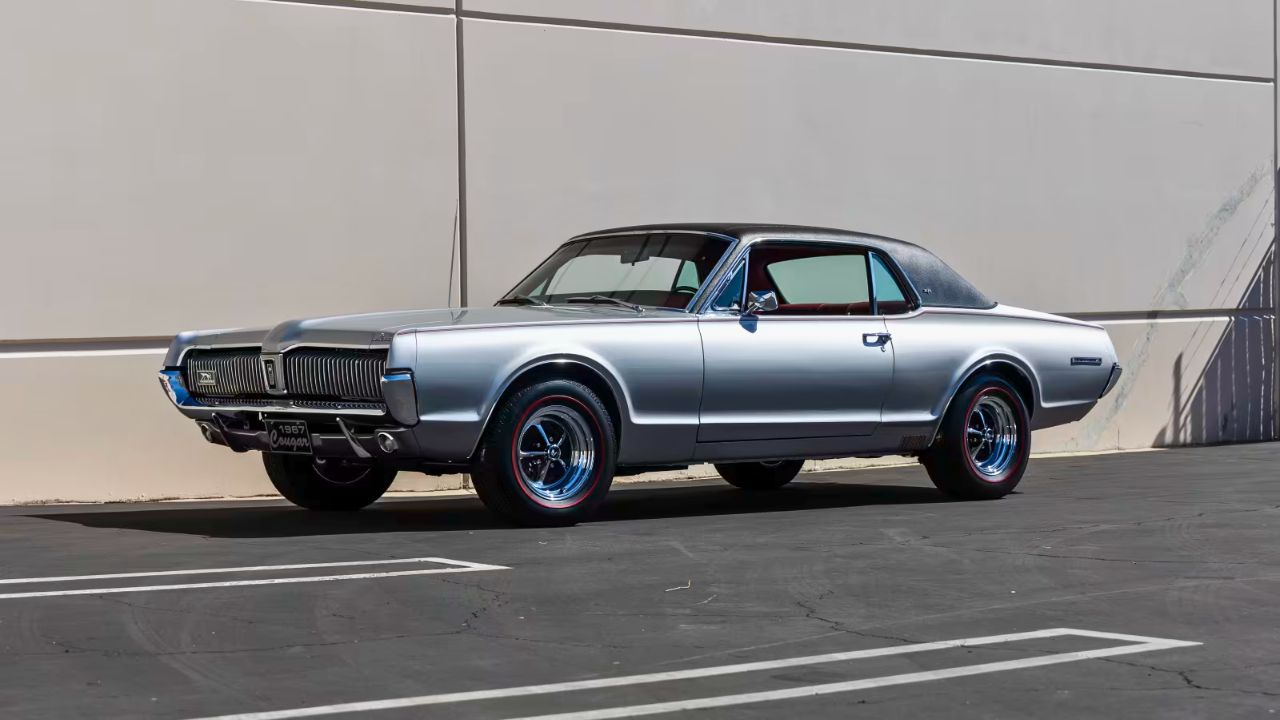
That realization led to the creation of the 1967 Mercury Cougar.
Although the Cougar shared much of its engineering with the Mustang, Mercury transformed the formula into something distinctly different. Rather than competing directly against Ford’s own pony car, the Cougar occupied a unique position in the market and attracted customers who might never have considered a Mustang.
The result was one of the most successful new-car launches in Mercury history.
More importantly, it proved that the pony car concept could appeal to a much broader audience than anyone initially imagined.
Mercury Needed Its Own Performance Image
During the 1960s, Mercury occupied an interesting place within the Ford Motor Company hierarchy.
The division sat between Ford and Lincoln, offering vehicles that emphasized additional comfort, styling, and prestige without reaching full luxury-car territory. Mercury buyers generally expected something a little more refined than what they could find in a typical Ford showroom.
As the pony car market exploded, Mercury executives realized they needed a competitor of their own.
However, simply rebadging the Mustang would not be enough.
Mercury’s customers expected a different experience. The company needed a vehicle that retained the excitement of a pony car while reflecting the division’s more upscale image.
The Cougar became the answer.
From the beginning, it was designed to offer something the Mustang intentionally did not.
The Cougar Was Longer and More Sophisticated
Although the Cougar shared its platform with the Ford Mustang, Mercury made several important changes.
The wheelbase was slightly longer, creating different proportions and contributing to a more mature appearance. Designers carefully reshaped the body, giving the Cougar a sleek and elegant look that contrasted with the Mustang’s youthful personality.
The differences were immediately noticeable.
Where the Mustang projected energy and excitement, the Cougar emphasized sophistication. The body lines appeared smoother and more refined, creating a vehicle that looked equally comfortable in front of a country club or on a winding back road.
Mercury wasn’t trying to build a Mustang clone.
The company was creating an alternative.
That distinction proved crucial to the car’s success.
Hidden Headlights Became a Signature Feature
One of the Cougar’s most distinctive styling elements was its hidden headlight system.
When the headlights were closed, the front end appeared as a clean grille stretching across the width of the car. The effect created a polished and upscale appearance unlike anything available on the Mustang.
The design added drama and sophistication simultaneously.
Drivers enjoyed the theatrical nature of the concealed headlights, while buyers appreciated the premium image they projected. Hidden headlights were often associated with more expensive automobiles, making the Cougar feel more exclusive than many competitors.
The feature quickly became one of the car’s defining characteristics.
Even today, it remains one of the easiest ways to identify a first-generation Cougar.
Mercury Focused on Interior Refinement
The differences extended well beyond the exterior.
Mercury devoted significant attention to the Cougar’s interior, understanding that comfort and presentation would play major roles in attracting buyers. Compared to many pony cars of the era, the Cougar offered a noticeably more upscale environment.
The dashboard design, trim materials, and overall attention to detail reflected Mercury’s ambitions.
While the Mustang emphasized sporty simplicity, the Cougar sought to create a richer ownership experience. Buyers received a cabin that felt more sophisticated without sacrificing the excitement associated with a sporty coupe.
This balance helped attract customers who wanted more than basic transportation.
The Cougar offered style and substance.
Standard V8 Power Changed the Character
Another major difference involved the engine lineup.
While early Mustangs were available with six-cylinder engines aimed at budget-conscious buyers, the Cougar launched with V8 power as standard equipment. This decision immediately positioned the car differently within the marketplace.
Mercury wasn’t chasing entry-level sales.
The company wanted the Cougar to feel premium from the start. Standard V8 power reinforced that message while ensuring every Cougar delivered respectable performance.
The strategy also simplified the car’s identity.
Buyers knew they were purchasing something more substantial than an economy-minded sporty coupe.
Performance was built into the formula.
That approach appealed strongly to Mercury’s target audience.
The XR-7 Elevated the Formula Further
Mercury expanded the Cougar’s appeal through the introduction of the XR-7 package.
This option transformed the Cougar into an even more luxurious and sophisticated vehicle. Additional trim, upgraded materials, and premium features pushed the car closer to the personal luxury segment while preserving its sporty character.
The XR-7 demonstrated how versatile the Cougar concept could be.
Buyers who wanted a traditional pony car experience could choose a standard model. Those seeking greater refinement could opt for the XR-7 and enjoy a level of comfort unusual within the segment.
Few competitors offered such flexibility.
Mercury successfully broadened the pony car formula.
The company discovered an audience that had been largely overlooked.
Performance Remained Important
Although the Cougar emphasized refinement, Mercury never forgot the importance of performance.
The available engine lineup included increasingly powerful V8 options capable of delivering strong acceleration and genuine driving excitement. Buyers could enjoy the upscale atmosphere without sacrificing capability.
This balance became one of the Cougar’s greatest strengths.
Many performance cars of the era focused heavily on speed while treating comfort as a secondary concern. Mercury pursued a more holistic approach, recognizing that many customers wanted both.
The Cougar delivered.
It felt mature without becoming boring.
That combination proved surprisingly effective.
Buyers Responded Immediately
The Cougar’s success was almost immediate.
Customers appreciated Mercury’s interpretation of the pony car formula, and sales exceeded expectations. The car quickly established itself as one of the division’s most important products and helped attract new buyers to Mercury dealerships.
Industry recognition followed as well.
The Cougar earned significant praise for its styling, innovation, and market positioning. Observers recognized that Mercury had successfully differentiated the car from the Mustang while still benefiting from shared engineering.
This achievement was not easy.
Many corporate siblings struggle to establish distinct identities.
The Cougar managed it from the very beginning.
It Expanded the Pony Car Market
One of the Cougar’s most significant accomplishments was proving that pony cars could appeal to a broader audience.
Before its arrival, many manufacturers viewed the segment primarily through a youthful and performance-oriented lens. Mercury demonstrated that there was also demand for sporty cars emphasizing comfort, refinement, and prestige.
This insight influenced the industry.
Manufacturers increasingly recognized that performance and luxury were not mutually exclusive. Buyers wanted variety, and the Cougar showed how effectively the market could be segmented.
The car helped redefine expectations.
Its influence extended beyond Mercury’s own lineup.
Collectors Appreciate Its Unique Identity
Today, the 1967 Cougar enjoys a loyal following among enthusiasts and collectors.
Part of that appeal comes from its styling. The hidden headlights, elegant proportions, and distinctive details continue attracting admiration decades later. Collectors also appreciate the car’s historical significance.
The Cougar wasn’t merely a rebadged Mustang.
It represented a genuinely different interpretation of the pony car concept.
That individuality has become increasingly valuable over time.
Enthusiasts recognize the effort Mercury invested in creating something unique.
The Pony Car for a Different Buyer
Looking back, the Cougar’s success stemmed from a simple but important observation.
Not every customer wanted the same thing from a sporty car. Some buyers valued refinement as much as performance, sophistication as much as excitement, and exclusivity as much as affordability.
Mercury built a vehicle specifically for those customers.
The result exceeded expectations.
More Than Just a Mercury Mustang
The 1967 Mercury Cougar offered buyers something the Mustang didn’t because it blended pony car excitement with a level of refinement, luxury, and sophistication rarely seen in the segment.
Its hidden headlights, upscale interior, standard V8 power, and elegant styling created a distinct identity that appealed to customers seeking a more mature performance car. While it shared engineering roots with the Mustang, the Cougar delivered a noticeably different ownership experience.
More than fifty years later, the car remains one of the best examples of how thoughtful design and market positioning can transform a familiar formula into something entirely new.
The Mustang may have created the pony car segment.
But the Cougar proved there was more than one way to define it.
More from Fast Lane Only