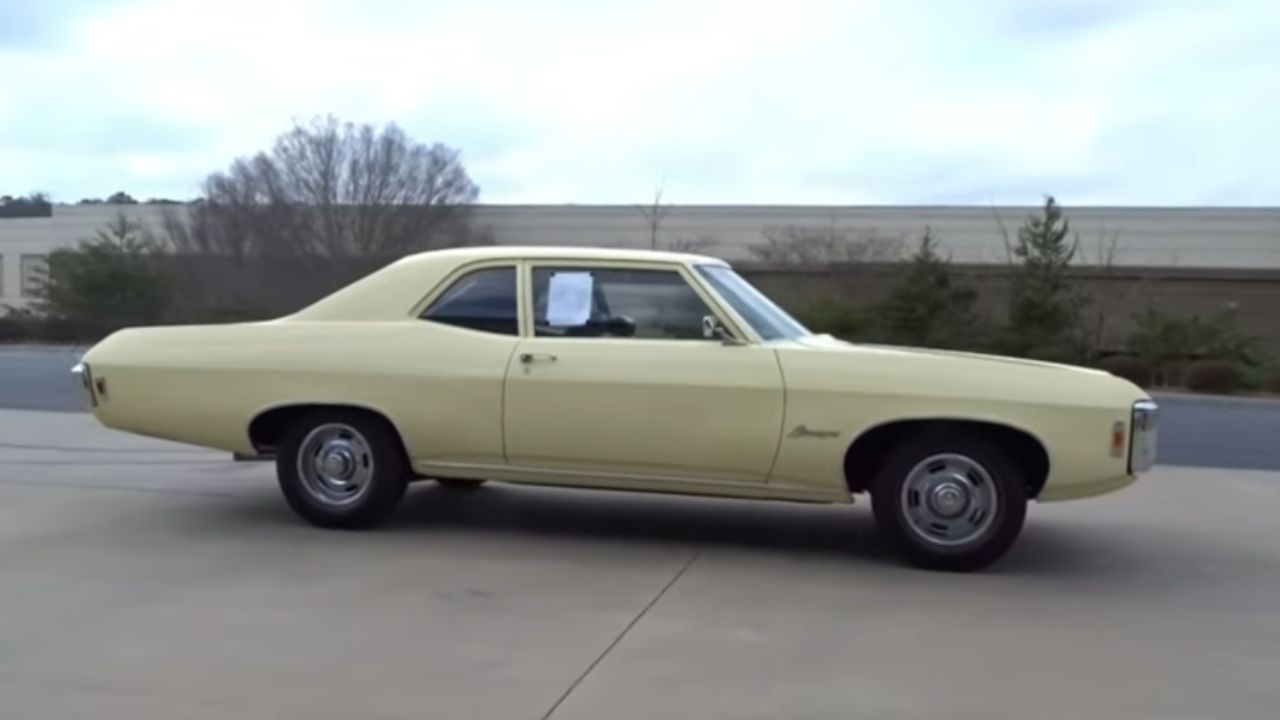
The 1969 Chevrolet Biscayne rarely appears on glossy posters or in auction headlines, yet it hides some of the most serious muscle Chevrolet ever bolted into a full-size sedan. Beneath its plain body and fleet-car image, the right Biscayne configuration could outrun many celebrated performance legends of its era. That gap between what the car looks like and what it can actually do is what makes it one of the great American sleepers.
Chevrolet achieved this by stripping away trim and frills while still allowing buyers to order the fiercest big-block engines. The result was a car that delivered far more power than its modest appearance suggested. For enthusiasts who understand what those option codes mean, the 1969 Biscayne is not a bargain-basement sedan at all, but a quiet statement about how performance and subtlety can coexist in one unlikely package.
What happened
For 1969, Chevrolet positioned the Biscayne as the entry-level full-size model, sitting below the Bel Air, Impala, and Caprice. It wore simple side moldings, basic interiors, and minimal brightwork. Police departments, taxi fleets, and budget-conscious families bought it for exactly those reasons. At the same time, Chevrolet allowed Biscayne buyers to check nearly the same performance boxes available on better-known muscle models.
The key was the big-block engine menu. In 1969, Biscayne customers could specify 427 cubic inch V8s that shared architecture and intent with Chevrolet’s serious performance hardware. Similar sleeper sedans from the late 1960s carried powertrains derived from NASCAR-spec engines, and Chevrolet followed that formula by pairing austere bodies with race-bred power. The Biscayne’s available 427s were not cosmetic upgrades; they were engineered for sustained high-speed work and brutal acceleration.
Those engines were backed by equally serious driveline choices. Buyers could combine the big-block with a heavy-duty four-speed manual transmission, aggressive rear axle ratios, and upgraded cooling and suspension components. On paper, a 1969 Biscayne so equipped mirrored the performance intent of Chevrolet’s halo models, but without the flashy stripes or vinyl roofs that drew attention on the street.
The result was a car that could embarrass many purpose-built performance machines while looking like a company car. Contemporary sleeper sedans from this period, including other full-size Chevrolets and rivals from Ford and Chrysler, often used the same recipe: base model body, top-tier engine. Enthusiast retrospectives on forgotten sleepers, such as a 1970 full-size sedan that delivered supercar levels of output, place the 1969 Biscayne squarely in that tradition.
In day-to-day use, most Biscaynes carried small-block V8s or even six-cylinder engines and lived out their lives in anonymity. Police-package cars logged hard miles and were retired without ceremony. Taxi-spec sedans were worn out by city traffic. The handful of enthusiasts who ordered 427-powered cars, however, created something very different: a full-size Chevrolet that could run with big-name muscle while looking like a fleet special.
Period ordering guides and surviving build sheets show how deliberately quiet the program was. There were no dedicated performance graphics, no special Biscayne-only stripes, and no marketing campaigns built around quarter-mile times. The car’s performance story was encoded in RPO (Regular Production Option) numbers and dealer knowledge. Those who knew what to ask for could assemble a devastating package, while the general public saw only another plain sedan.
That disconnect between marketing and mechanical reality is central to how the 1969 Biscayne ended up overshadowed by its own siblings. The Impala SS and Camaro Z/28 soaked up most of Chevrolet’s performance spotlight. The Biscayne, lacking badges and glamour, quietly shared their firepower with a smaller, more insider audience.
Why it matters
The 1969 Biscayne matters today for several intertwined reasons: it reframes what performance looked like in the muscle-car era, it highlights how manufacturers catered to informed enthusiasts, and it challenges modern assumptions about what a fast car should be.
To start, the Biscayne shows that peak late-1960s performance was not limited to mid-size coupes and pony cars. The same big-block technology that powered famous Chevelles and Corvettes also found its way into plain sedans. Similar patterns appeared across the industry, where unassuming four-door models were fitted with race-derived V8s that could surprise dedicated sports cars. The Biscayne is a clear Chevrolet example of that quiet horsepower migration.
The car also illuminates how much responsibility rested with dealers and buyers. Chevrolet did not spoon-feed the idea of a sleeper Biscayne through glossy brochures. Instead, the company offered a flexible order sheet and let motivated customers connect the dots. A buyer who understood the significance of a specific 427 code, a four-speed gearbox, and a certain rear axle ratio could build a car that rivaled or exceeded the performance of better-known muscle machines, while paying less and attracting less attention.
That strategy created a kind of underground performance culture. Police departments and highway patrol units, for example, sometimes specified heavy-duty powertrains in otherwise basic sedans to keep up with fast traffic. Enthusiasts who knew officers or dealers learned that the same mechanical combinations could be ordered for personal cars. The 1969 Biscayne became one of the most effective ways to access that hardware without the insurance penalties or social spotlight attached to overtly sporty models.
The Biscayne also reshapes how collectors and historians think about value. For years, the market focused on convertible and coupe variants of famous nameplates. Plain sedans were dismissed as parts donors or cheap transportation. As attention has shifted toward sleeper cars that delivered unexpected performance, the Biscayne’s stock has risen. The car’s low production numbers in high-performance trims, combined with the fact that many were driven hard and discarded, mean that surviving examples are rare.
That rarity is not just about numbers. It is also about authenticity. A genuine 427-powered 1969 Biscayne with its original drivetrain and documentation represents a very specific moment in American automotive culture. It shows how far a manufacturer was willing to go in giving customers access to serious power, even in an entry-level model. It also reflects the mindset of buyers who valued speed and subtlety over styling and status.
The Biscayne’s sleeper identity also speaks to a broader cultural theme: the appeal of underestimation. Many enthusiasts enjoy the idea of a car that looks ordinary but performs at a level that surprises onlookers. Modern performance sedans and wagons, from European Autobahn stormers to tuned family crossovers, owe part of their appeal to this same dynamic. The 1969 Biscayne stands as an early, and particularly pure, expression of that idea.
From a technical standpoint, the car illustrates how manufacturers leveraged shared platforms to create diverse personalities. Under the skin, the Biscayne shared chassis architecture and many components with more luxurious full-size Chevrolets. By pairing that hardware with the strongest engines in the catalog, engineers effectively created a lightweight, high-power variant without designing a new model line. The absence of extra trim and options reduced weight and complexity, which only amplified performance gains from the big-block V8.
Comparisons to other forgotten full-size sleepers, such as the 1970 sedan with, help place the Biscayne in context. Across the industry, these cars show that the muscle era was not only about flashy coupes. It was also about quietly radical configurations that blurred the line between family transportation and competition hardware.
The Biscayne’s story also intersects with the insurance and regulatory pressures that began to squeeze muscle cars at the turn of the 1970s. As premiums rose for obvious performance models, and as emissions and safety rules grew stricter, stealthy high-horsepower sedans became an appealing workaround. They allowed buyers to enjoy big-block power without waving a red flag at insurers. That window did not stay open long, which adds to the historical significance of the 1969 model year.
Ultimately, the car matters because it challenges surface-level judgments. In an era where performance is often telegraphed through aggressive styling, large wheels, and elaborate aero packages, the 1969 Biscayne reminds enthusiasts that true capability can hide behind unremarkable sheet metal. That lesson resonates with collectors who seek depth and story rather than just visual drama.
What to watch next
Interest in sleeper classics has been climbing, and the 1969 Biscayne sits near the center of that trend. Several factors will shape how this car is perceived and valued in the coming years.
One key area is documentation. Because the Biscayne looked so ordinary, many high-performance examples were modified, parted out, or cloned. Original build sheets, window stickers, and matching-number drivetrains will increasingly separate authentic factory big-block cars from later recreations. Collectors are already paying premiums for cars that can prove their configuration, and that gap is likely to widen as awareness grows.
Another factor is how the broader market treats four-door and post sedans. For a long time, collectors favored two-door hardtops and convertibles almost exclusively. That bias has started to soften as prices for halo models rise and as enthusiasts seek cars they can actually drive and share with family. The Biscayne, especially in four-door form, stands to benefit from this shift. It offers genuine period performance in a body style that was once dismissed but now feels refreshingly honest.
Enthusiast media and online communities will also play a role. As more stories highlight the performance credentials of cars like the Biscayne, and as owners share time slips and build details, awareness will spread beyond hardcore Chevrolet circles. Features that connect the car to other 1960s sleeper sedans help frame it as part of a broader movement rather than an isolated curiosity.
Restoration and modification trends bear watching as well. Some owners will continue to pursue factory-correct restorations, preserving original paint colors, interiors, and drivetrain specifications. Others will lean into the sleeper ethos by upgrading powertrains and chassis components while keeping the exterior bone-stock. Both approaches reinforce the core identity of the Biscayne as a car that hides its capability, but they will appeal to different buyers and may create distinct sub-markets.
On the technical side, the availability of reproduction parts and specialist knowledge will influence how many Biscaynes return to the road. Big-block Chevrolet engines enjoy strong aftermarket support, which makes mechanical restoration straightforward. The challenge often lies in sourcing correct trim pieces and interior components for a model that was not widely cherished when new. As reproduction support improves, more cars that might have been parted out could become viable restoration candidates.
There is also an emerging conversation about how to interpret performance heritage in an era of electrification and advanced driver aids. The Biscayne represents a raw, mechanical approach to speed: large displacement, rear-wheel drive, manual transmissions, and minimal electronic intervention. As modern performance cars rely more on software and complex systems, analog sleepers like the Biscayne may gain additional appeal as tactile, straightforward machines that connect driver and road without filters.
Events and gatherings focused on sleepers and oddball performance cars provide another stage for the Biscayne’s continued rise. As organizers create classes for factory-built sleepers or police-package specials, the car’s story gains more visibility. Seeing a plain 1969 sedan run strong times at a drag strip or cruise comfortably at highway speeds alongside modern machinery reinforces just how advanced its original specification was.
More From Fast Lane Only: