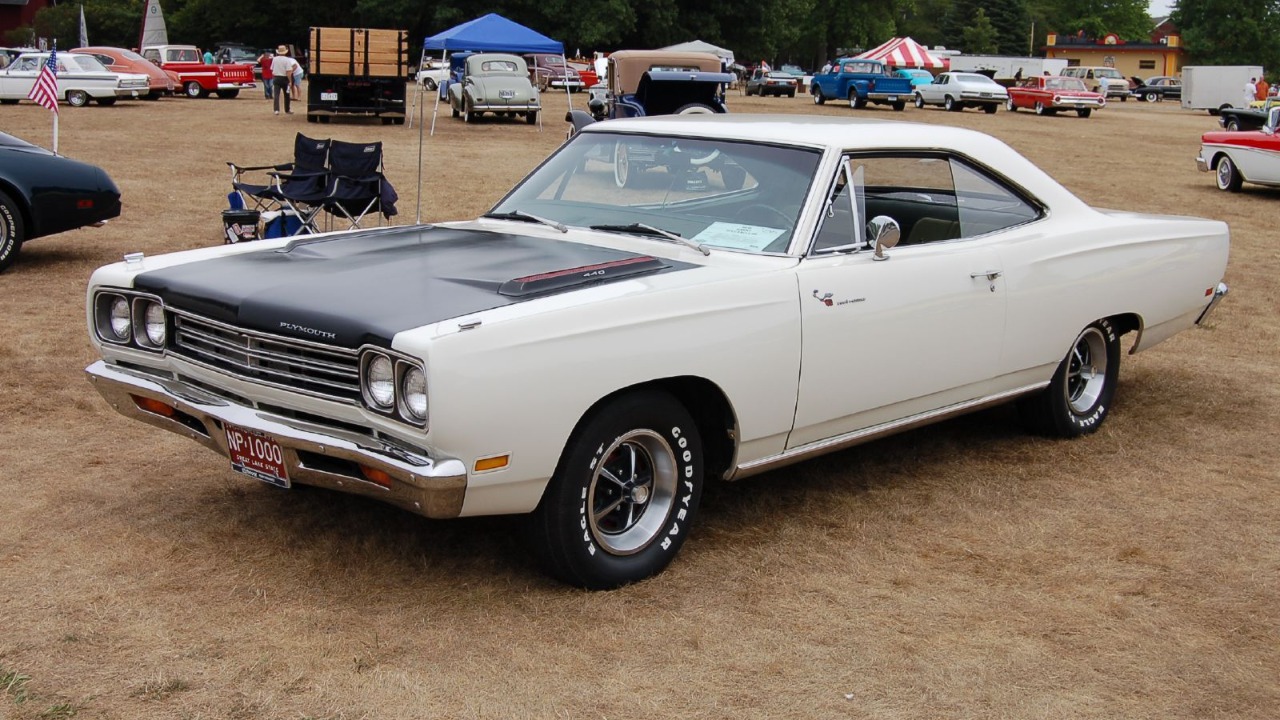
The late 1960s were filled with memorable muscle car names.
Manufacturers introduced increasingly powerful machines with names designed to sound fast, aggressive, and intimidating. The market gave enthusiasts cars like the GTO, Charger, Super Bee, Torino Cobra, and Chevelle SS. Each projected an image of performance and power.
Then there was the Plymouth Road Runner.
Unlike its rivals, the Road Runner didn’t take its name from a predator, a racing term, or some carefully crafted marketing slogan. Instead, one of America’s most successful muscle cars borrowed its identity from a cartoon bird.
The decision seemed unusual at the time and perhaps even risky. Yet it ultimately helped create one of the most recognizable performance cars of the muscle car era.
More than half a century later, the Road Runner remains a fascinating example of how an unlikely branding decision can become one of automotive history’s greatest success stories.
Plymouth Needed a Different Kind of Muscle Car
By 1968, the muscle car market had become crowded.
Nearly every American manufacturer offered high-performance models, and many of them were becoming increasingly expensive. Buyers could order powerful engines, special suspensions, unique trim packages, and a growing list of optional equipment.
The problem was that all those extras pushed prices upward.
At Chrysler, Plymouth executives recognized an opportunity.
Not every enthusiast wanted luxury features. Many simply wanted the biggest engine they could afford. They weren’t interested in decorative trim, fancy interiors, or prestige. They wanted raw performance at a reasonable price.
Plymouth’s answer was simple.
Build a stripped-down muscle car that emphasized speed rather than luxury.
The company chose the midsize Belvedere as the foundation and removed many nonessential features. The resulting car offered strong performance at a lower price than many competitors.
The concept was promising.
What Plymouth needed next was a memorable name.
The Marketing Team Faced a Challenge
Finding the right name proved more difficult than expected.
Traditional muscle car naming conventions weren’t particularly appealing for this project. Plymouth wanted something distinctive that would immediately capture attention and communicate the car’s playful personality.
The company explored numerous possibilities.
None seemed quite right.
Then someone suggested something unexpected: the Road Runner character from the popular Warner Bros. cartoons.
At first glance, the idea sounded absurd.
Why would a serious performance car take its name from an animated bird best known for outsmarting Wile E. Coyote?
Yet the more Plymouth’s marketing team considered the idea, the more it made sense.
The Road Runner character was fast.
Everyone recognized it.
And perhaps most importantly, it was fun.
The car was intended to be affordable, approachable, and entertaining rather than intimidating.
The cartoon bird fit perfectly.
Plymouth Had to License the Name
Unlike many automotive names created internally, the Road Runner wasn’t something Plymouth could simply adopt.
The character belonged to Warner Bros..
That meant Plymouth needed permission.
Company representatives approached Warner Bros. and negotiated a licensing agreement that allowed Plymouth to use the Road Runner name and likeness on the vehicle.
The deal reportedly cost Chrysler a relatively modest amount by modern standards.
In return, Plymouth gained one of the most recognizable cartoon characters in America.
The agreement also gave the car something few competitors could match: instant name recognition.
Even people who knew little about automobiles knew exactly what a Road Runner was.
The “Beep Beep” Horn Became Part of the Package
The licensing arrangement extended beyond badges and advertisements.
Plymouth also incorporated one of the cartoon’s most famous traits into the car itself.
Instead of a conventional horn, buyers could order a special horn that mimicked the Road Runner’s signature “Beep Beep” sound.
The feature became one of the most memorable aspects of the car.
Drivers delighted in pressing the horn button and hearing the familiar cartoon effect.
It reinforced the playful nature of the Road Runner and helped distinguish it from competitors that often took themselves very seriously.
The horn also demonstrated how thoroughly Plymouth embraced the concept.
This wasn’t merely a name borrowed for marketing purposes.
The company integrated the character into the vehicle’s identity.
The Car’s Mission Matched the Character
One reason the name worked so well is that the car itself reflected many qualities associated with the cartoon Road Runner.
The character was quick, efficient, and impossible to catch.
The Plymouth Road Runner aimed to deliver similar attributes on the street.
By eliminating unnecessary luxury features and focusing on performance, Plymouth created a lightweight, affordable muscle car that offered impressive acceleration for the money.
The standard engine was already respectable, but buyers could order increasingly powerful options, including Chrysler’s legendary 426 Hemi.
That combination of affordability and speed made the car exceptionally attractive to enthusiasts.
Like its animated namesake, the Road Runner was built to move.
Critics Initially Questioned the Name
Not everyone loved the idea at first.
Some observers wondered whether attaching a cartoon character to a muscle car might undermine its credibility.
The performance market often relied on images of toughness and aggression. Compared to names like Charger or Cobra, Road Runner seemed almost humorous.
Those concerns disappeared quickly once buyers encountered the car.
The Road Runner’s strong performance made it clear that the vehicle was more than a marketing gimmick.
Enthusiasts appreciated the combination of serious speed and playful branding.
Rather than diminishing the car’s appeal, the unusual name helped it stand out.
In a crowded marketplace, being memorable mattered.
The Road Runner was impossible to forget.
Sales Exceeded Expectations
Plymouth’s gamble paid off almost immediately.
The Road Runner became one of the biggest success stories of the muscle car era.
Buyers responded enthusiastically to the car’s straightforward formula. It delivered exactly what many performance enthusiasts wanted: maximum power for minimum cost.
Sales significantly exceeded expectations.
The Road Runner quickly evolved from an experimental budget muscle car into one of Plymouth’s most important performance models.
Its success also validated the unusual naming strategy.
What initially appeared risky turned into one of the most effective branding decisions in automotive history.
The Road Runner Helped Define the Muscle Car Era
The success of the Road Runner reflected broader changes occurring within the performance market.
As muscle cars became more expensive and increasingly loaded with options, many buyers appreciated Plymouth’s back-to-basics approach.
The Road Runner reminded enthusiasts that performance didn’t need to be complicated.
A powerful engine, a capable chassis, and an affordable price could still create a winning formula.
The cartoon-inspired branding simply made the package even more appealing.
In many ways, the Road Runner captured the spirit of the late 1960s muscle car movement better than some of its more expensive rivals.
It was fun, fast, and accessible.
A Licensing Deal That Became Legendary
The relationship between Plymouth and Warner Bros. remains one of the most unusual collaborations in automotive history.
Automakers frequently use names inspired by animals, aircraft, geography, or mythology. Borrowing a cartoon character was far less common.
Yet the partnership worked brilliantly.
The Road Runner character provided instant recognition and a sense of personality that competitors struggled to match.
At the same time, the car’s performance ensured that enthusiasts respected it as more than a novelty.
The two identities complemented each other perfectly.
One supplied charm.
The other supplied horsepower.
Why the Name Still Resonates Today
More than fifty years later, the Road Runner remains one of the most beloved names of the muscle car era.
Part of that appeal comes from the car’s performance history. Part comes from its affordability and role in Plymouth’s lineup.
But much of the enduring fascination stems from the name itself.
The decision to borrow the identity of a cartoon bird could easily have failed.
Instead, it gave the car a personality unlike anything else on the market.
The Road Runner wasn’t trying to appear intimidating or sophisticated.
It was simply trying to be fast and fun.
That authenticity helped it connect with buyers.
The Muscle Car With a Cartoon Connection
Looking back, it’s difficult to imagine the 1969 Plymouth Road Runner carrying any other name.
The cartoon character’s speed, popularity, and sense of humor perfectly matched the car’s mission.
What began as an unconventional licensing agreement evolved into one of the most successful branding partnerships in automotive history.
The Road Runner proved that muscle cars didn’t always need fierce names or intimidating images to succeed.
Sometimes all it took was a fast car, a memorable horn, and a cartoon bird known for leaving everyone else behind.
In an era filled with powerful machines, that unexpected source helped create one of the most memorable muscle cars Detroit ever produce
More from Fast Lane Only