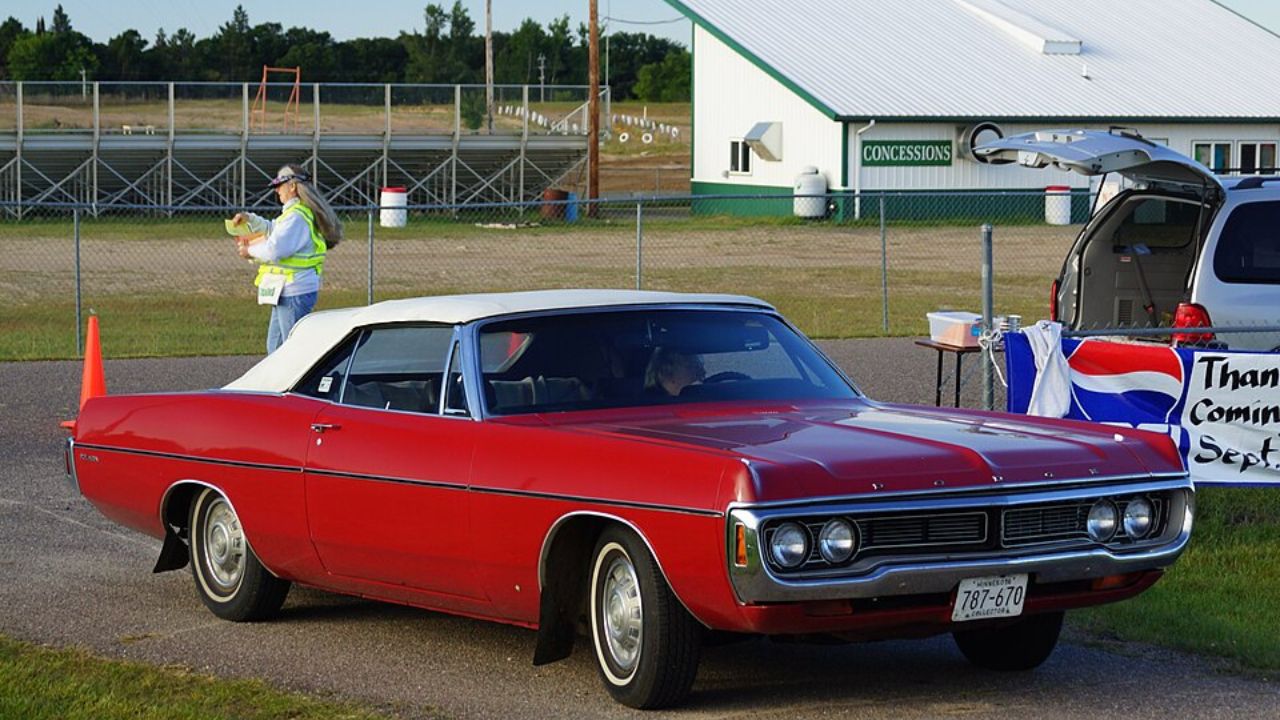
The 1970 Dodge Polara 440 arrived in showrooms as a full-size family sedan, yet it quietly packed the same big-block muscle that defined some of the era’s most feared street machines. Buyers might have expected a soft, highway-friendly cruiser, but the police-spec hardware and generous displacement turned the Polara 440 into an unlikely performance hero.
More than five decades later, that contradiction still resonates. In an age when performance is often packaged with spoilers and stripes, the big Dodge shows how understated sheet metal and serious mechanicals can surprise anyone who judges a car by its silhouette alone.
What happened
When Dodge launched the 1970 Polara, it sat at the heart of the brand’s full-size C-body line, aimed at families, fleets, and law enforcement. The Polara 440 badge did not refer to trim or appearance, but to the 440 cubic inch big-block V8 that could be ordered in both civilian and police configurations. In a period crowded with Charger R/Ts and Coronet Super Bees, this four-door or two-door cruiser looked like a background extra, yet its drivetrain placed it squarely in muscle territory.
The 440 V8 in the Polara shared its basic architecture with engines that powered more overt performance models. In high-performance tune, the 440 was known for strong torque, a broad powerband, and a willingness to move heavy cars with ease. In police-package form, the engine was paired with upgrades such as heavy-duty cooling, stronger suspension components, and more robust brakes. Together, these changes created a sedan that could carry a full load of passengers and still accelerate with authority, particularly in the midrange where patrol work and highway passing demanded real speed.
Many enthusiasts at the time were surprised by how effectively the Polara 440 translated that mechanical specification into real-world performance. Road tests of similar Mopar C-bodies with big-block power showed quarter-mile times that encroached on the territory of smaller, lighter muscle cars. The Polara’s long wheelbase and substantial curb weight did not erase the benefits of 440 cubic inches of displacement and a responsive automatic transmission. Instead, the car delivered a blend of brisk straight-line pace and high-speed stability that suited both police fleets and drivers who wanted discreet performance.
The sleeper character of the Polara 440 becomes even clearer when it is set beside other under-the-radar Mopars of the period. Enthusiasts often point to cars that hide serious power under unassuming exteriors, and a restored Moulin Rouge 1970 Plymouth Cuda with a built big-block has been highlighted as a modern example of a pink sleeper. The Polara 440 played a similar role in its own time, only with four doors, bench seats, and the visual language of a family car rather than a pony car.
For law enforcement agencies, the 1970 Polara 440 became a workhorse. Police-package versions were selected for their combination of durability, speed, and predictable handling. The long body and wide track gave officers a stable platform at pursuit velocities, while the 440 engine provided the punch to close gaps quickly. Civilian buyers who opted for the same displacement, especially in two-door hardtop form, effectively bought a muscle car dressed in formal attire.
Unlike highly optioned Chargers and Challengers, which shouted their intent with stripes, scoops, and aggressive marketing, the Polara’s advertising leaned on comfort, value, and practicality. That contrast between messaging and capability helped cement its reputation among those who knew what the 440 badge signified. On the street, a Polara 440 could leave unsuspecting rivals behind from a stoplight or surge past traffic on the interstate without any of the visual drama that usually accompanied such moves.
Why it matters
The 1970 Dodge Polara 440 matters today for several overlapping reasons. It captures a specific moment in American automotive history when full-size sedans still carried serious horsepower, just before insurance costs, emissions rules, and the fuel crises of the 1970s began to choke output. The car stands at the tail end of Detroit’s big-block era, a time when a family sedan could share major components with the manufacturer’s most aggressive performance line.
It also illustrates how performance can be packaged in ways that defy stereotypes. Modern enthusiasts often associate speed with compact coupes, low-slung sports cars, or high-dollar exotics. The Polara shows that a long, boxy sedan with generous chrome and a formal roofline can deliver similar thrills if the hardware under the hood is up to the task. That lesson echoes in contemporary “sleeper” builds, where owners intentionally pair plain exteriors with upgraded powertrains to surprise rivals at the track or on the street.
The car further offers insight into how manufacturers balanced competing demands from different customer groups. Dodge had to satisfy police departments that needed reliable pursuit vehicles, families that prioritized comfort, and performance-minded drivers who wanted speed without sacrificing space. The Polara 440, especially in its police-spec form, shows how a single platform could be tuned to serve all three roles. Heavy-duty cooling and suspension components developed for fleet use also benefitted civilian buyers who pushed their cars hard, giving the Polara a hidden depth of engineering that went beyond its brochure image.
Sleeper status also shapes how collectors and historians view the car today. While high-profile muscle cars command attention at auctions and in museums, full-size performance sedans often sit in the background. That relative obscurity has kept values more accessible, but it has also encouraged a small but passionate group of owners to preserve and restore these cars. For them, the appeal lies in the contrast between appearance and capability. A well-kept Polara 440 can cruise quietly to a show, then surprise onlookers when the hood is raised to reveal a big-block V8 that many expect to see in a more glamorous body.
From a cultural perspective, the Polara 440 also reflects changing attitudes toward authority and speed. In period, the sight of a big Dodge sedan in a rearview mirror carried a particular weight, especially in states where highway patrol fleets favored the model. The same hardware that made the car an effective pursuit vehicle also made it a coveted find on the used market, where former police cars sometimes found second lives in private hands. That cross-pollination between institutional and enthusiast use helped cement the legend of the “cop car” that could run with or outrun purpose-built muscle machines.
There is also a design story here. The 1970 Polara wore the crisp, fuselage-inspired lines that Chrysler designers favored at the time, with a prominent front fascia and sweeping body contours. While not as dramatic as a fastback Charger or a shaker-hood Challenger, the car had a certain authority on the road. Its proportions, long hood, and relatively short deck hinted at power without shouting about it. Combined with the 440 badge, those cues told a subtle story that only some observers could read.
In the broader narrative of performance sedans, the Polara 440 stands as an early chapter in a book that would later include cars like the Chevrolet Impala SS, Pontiac Bonneville with big V8s, and much later, modern Hemi-powered Chargers. Each of these models shows how manufacturers return periodically to the idea of a fast, full-size sedan that can carry people and luggage at high speed in comfort. The Polara’s role in that lineage helps explain why enthusiasts still discuss it when tracing the roots of contemporary performance four-doors.
The car also highlights the trade-offs that came with big-block power. Fuel consumption, weight distribution, and front-end heft all shaped the driving experience. The Polara 440 was not a canyon-carving sports sedan. Instead, it excelled at straight-line acceleration and high-speed cruising, with steady, predictable handling that suited long American highways. That specialization reminds modern readers that performance is not a single metric, but a set of characteristics tuned to specific uses and environments.
What to watch next
Interest in cars like the 1970 Dodge Polara 440 is likely to keep evolving as the collector market shifts and as enthusiasts look beyond the most obvious muscle icons. Several trends suggest where attention may go next.
For one, the growing appreciation for sleepers and under-the-radar builds gives full-size performance sedans new relevance. As highly optioned Chargers, Challengers, and Road Runners become more expensive, enthusiasts often turn to less celebrated models that share drivetrains or chassis components. The Polara 440 fits that pattern. Its combination of big-block power and relatively understated styling makes it a logical target for collectors who want authentic period performance without paying top-tier prices for a headline nameplate.
At the same time, the restoration and modification scene continues to blur the line between original specification and modern upgrades. Some owners aim to preserve police-package Polaras with correct engines, suspension parts, and interior details, treating them as historical artifacts that document how law enforcement agencies equipped their fleets. Others see the big C-body as a canvas for contemporary performance enhancements, from improved brakes and suspension geometry to fuel-injected crate engines that retain the spirit of the 440 while adding reliability and efficiency.
The way enthusiasts share stories about these cars is changing as well. Online communities, video channels, and social media feeds give owners of relatively obscure models a platform equal to that of more famous muscle cars. A well-documented Polara 440 build or a detailed history of a former highway patrol car can reach a global audience of fans who might never encounter such a vehicle in person. That visibility helps preserve knowledge about production variations, factory options, and period modifications that might otherwise fade with time.
The sleeper narrative that surrounds the Polara 440 also resonates with a new generation that enjoys subverting expectations. In a parking lot full of modern performance SUVs and sports coupes, a long, relatively plain 1970 sedan can still draw a crowd when the hood is opened or the engine is started. That showmanship, rooted in surprise rather than flashy styling, keeps the concept fresh. Similar enthusiasm drives interest in other period sleepers, from unassuming station wagons with big engines to sedans that share hardware with more glamorous siblings.
Looking ahead, regulatory and environmental pressures will continue to shape how often and where big-block classics can be driven. Owners of cars like the Polara 440 are already adapting through limited-use registration, careful maintenance, and, in some cases, reversible upgrades that reduce emissions or improve fuel economy without erasing the car’s character. Museums and private collections also play a role by preserving representative examples of these vehicles for future study and appreciation, even if road use becomes more restricted.
There is also a growing interest in documenting the stories of individual cars. A 1970 Polara 440 that served with a specific state police agency, or that spent decades in the same family, carries a narrative that extends beyond its mechanical specification. Enthusiasts and historians increasingly seek out build sheets, original sales invoices, and period photographs to reconstruct those journeys. Each documented story adds texture to the broader understanding of how these cars were used and valued in their own time.
More from Fast Lane Only