Today, the Chevrolet Vega is often remembered for the wrong reasons.
Mention the car at a gathering of automotive enthusiasts and the conversation will likely turn to durability problems, rust issues, or the mechanical challenges that affected many early examples. Over time, those problems came to define the Vega’s reputation, overshadowing much of the story behind its development.
Yet when the Vega debuted for the 1971 model year, Chevrolet believed it was introducing one of the most important vehicles in its history.
The company invested enormous resources into the project. Engineers developed new manufacturing techniques, experimented with innovative engine technology, and designed an entirely new compact car intended to compete with a growing wave of imported automobiles. Executives viewed the Vega as a forward-looking product that could help secure Chevrolet’s future in a rapidly changing marketplace.
The expectations were enormous.
Some inside General Motors believed the Vega would become one of the most successful compact cars ever built. It was designed to attract a new generation of buyers while showcasing advanced engineering and manufacturing ideas.
In many ways, the Vega’s ambitions were far larger than the reputation it would eventually acquire.
Understanding that contrast helps explain why the car remains one of the most fascinating automotive stories of the 1970s.
Chevrolet Faced Growing Competition
During the 1960s, American manufacturers dominated the domestic market.
Large cars, powerful V8 engines, and spacious interiors remained popular with consumers. However, imported vehicles were steadily gaining attention, particularly among buyers seeking economy, efficiency, and affordability.
Manufacturers from Japan and Europe were beginning to establish footholds in the United States.
Cars such as the Volkswagen Beetle demonstrated that many buyers were willing to consider alternatives to traditional American automobiles.
General Motors took notice.
Executives understood that compact cars would become increasingly important during the coming decade. The company needed a modern vehicle capable of competing directly against both imports and domestic rivals.
The Vega became the answer.
This Wasn’t Just Another Compact Car
Chevrolet already offered compact vehicles before the Vega arrived.
The Chevrolet Corvair and the Chevrolet Nova had filled important roles within the lineup.
The Vega, however, represented something entirely different.
Rather than adapting an existing design, General Motors created an entirely new platform specifically for the project.
The goal was ambitious.
Engineers wanted a compact car that felt modern, efficient, attractive, and competitive on a global scale. The vehicle needed to satisfy American buyers while also matching the strengths of increasingly popular imports.
This wasn’t intended to be a compromise product.
It was intended to be a world-class compact.
The Development Budget Was Enormous
One indication of GM’s confidence in the Vega was the amount of money devoted to its development.
The project received substantial investment in engineering, manufacturing, and tooling. New production facilities were constructed specifically to support Vega production.
Executives believed the compact car market represented a major growth opportunity.
As a result, they treated the Vega as a strategic priority rather than a niche product.
Few compact cars of the era received such extensive corporate attention.
The scale of the investment reflected the company’s expectations.
GM wasn’t merely launching another model.
It was attempting to redefine its position within an increasingly competitive segment.
The Engine Was Revolutionary on Paper
One of the Vega’s most innovative features was its engine.
Chevrolet developed a 2.3-liter inline-four unlike most American engines of the period. The powerplant utilized an aluminum block, helping reduce weight and improve efficiency.
This decision reflected broader industry trends.
Manufacturers worldwide were exploring lighter materials as a way to improve fuel economy and performance. Chevrolet wanted the Vega to appear technologically advanced, and the aluminum engine became a major part of that strategy.
On paper, the engine looked impressive.
It represented a significant departure from traditional American automotive engineering practices.
Many industry observers viewed the design as evidence that General Motors was willing to embrace new ideas.
Unfortunately, the engine would later become one of the Vega’s most controversial components.
The Styling Was Modern and Attractive
While engineering attracted significant attention, the Vega’s appearance also earned praise.
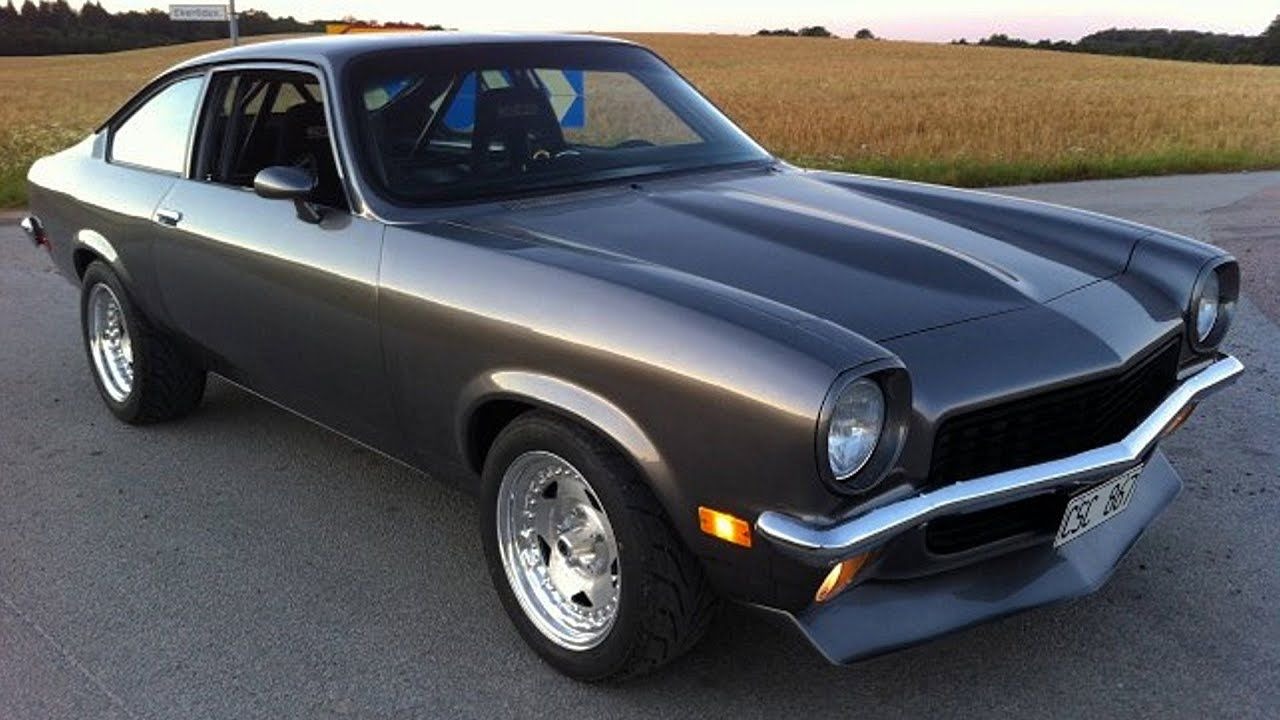
The car featured clean, contemporary lines that looked fresh compared to many domestic compacts of the era. Designers avoided excessive ornamentation, creating a simple and attractive shape that appealed to a broad audience.
The proportions worked particularly well.
The long hood and short rear deck gave the Vega a sporty appearance despite its economy-car mission.
Buyers could choose from multiple body styles, including coupes, hatchbacks, and wagons.
This flexibility broadened the vehicle’s appeal and helped Chevrolet target multiple customer groups.
At launch, many reviewers considered the Vega one of the most attractive compact cars available.
Early Reviews Were Encouraging
When journalists first tested the Vega, many came away impressed.
The car’s styling, road manners, and overall concept received positive attention. Reviewers often praised Chevrolet’s willingness to challenge imported competitors directly rather than relying solely on traditional domestic strengths.
The Vega’s engineering innovations generated particular interest.
The aluminum engine and advanced manufacturing techniques suggested that Chevrolet was thinking seriously about the future.
Some publications viewed the car as a major step forward for American compact-car design.
The enthusiasm extended beyond the automotive press.
Consumers responded positively as well.
Buyers Initially Embraced the Vega
The Vega’s early sales demonstrated considerable market interest.
Many buyers appreciated the combination of modern styling, compact dimensions, and Chevrolet brand recognition.
The timing appeared ideal.
Growing concerns about fuel economy and changing consumer preferences created opportunities for smaller vehicles. The Vega seemed well positioned to capitalize on those trends.
For a brief period, Chevrolet’s optimism appeared justified.
The company had invested heavily in the project, and customers were responding.
The future looked promising.
Unfortunately, long-term ownership experiences would tell a different story.
Problems Began to Emerge
As more Vega owners accumulated miles, reports of various issues began appearing.
Engine-related problems became particularly damaging to the car’s reputation.
The innovative aluminum engine, while impressive in theory, proved vulnerable under certain conditions. Durability concerns generated frustration among owners and attracted increasing attention from critics.
Rust also became a significant issue.
In many regions, corrosion affected vehicles sooner than buyers expected.
The combination of mechanical and durability problems gradually eroded public confidence.
The Vega’s image suffered accordingly.
What had begun as a showcase of innovation increasingly became associated with quality concerns.
The Reputation Overshadowed the Vision
One of the most unfortunate aspects of the Vega story is that later problems often obscured the ambition behind the project.
It became easy to focus exclusively on what went wrong.
Yet doing so ignores how much effort and creativity went into the car’s development.
The Vega represented a genuine attempt to rethink the American compact automobile. Chevrolet invested heavily in new technology, advanced manufacturing methods, and modern design concepts.
The company wasn’t content to build a conventional economy car.
It wanted something transformative.
That vision deserves recognition even if execution ultimately fell short.
The Vega Influenced Future Development
Despite its challenges, the Vega’s impact extended beyond its own production run.
The lessons learned from the program influenced future General Motors vehicles and manufacturing practices.
Engineers gained valuable experience working with lightweight materials and advanced production techniques.
The company also learned important lessons about quality control, durability testing, and customer expectations.
Many later vehicles benefited from those insights.
In that sense, the Vega served as an important developmental stepping stone.
Its failures were costly, but they were also educational.
Collectors Have Started Reconsidering It
In recent years, attitudes toward the Vega have become more nuanced.
Collectors and historians increasingly view the car through a broader lens.
Rather than seeing only the problems, many enthusiasts now appreciate the ambition behind the project. Well-preserved examples attract interest because they represent a significant chapter in General Motors history.
The Vega occupies a unique place within the automotive landscape.
It wasn’t merely a compact car.
It was an ambitious experiment undertaken by the world’s largest automaker during a period of tremendous industry change.
That historical significance continues to grow.
A Car Designed for the Future
Looking back, the 1971 Chevrolet Vega stands as a reminder that ambition and success are not always the same thing.
General Motors envisioned a compact car capable of competing with the best vehicles in the world. The company invested heavily in innovative engineering, modern manufacturing, and attractive design.
The goals were impressive.
The execution proved more complicated.
Problems with durability and quality ultimately overshadowed many of the Vega’s strengths.
Yet the scale of the original vision remains remarkable.
Bigger Dreams Than Its Legacy Suggests
The 1971 Chevrolet Vega began with ambitions far bigger than its reputation because Chevrolet viewed it as much more than an economy car.
It was intended to showcase advanced engineering, challenge imported competitors, attract new buyers, and help define the future of American compact automobiles.
Those aspirations were enormous.
While the Vega ultimately became better known for its shortcomings than its achievements, the story behind its development reveals a company willing to take risks in pursuit of innovation.
More than fifty years later, the Vega remains a fascinating example of how great ambitions can shape automotive history—even when the outcome doesn’t unfold exactly as planned.
More from Fast Lane Only