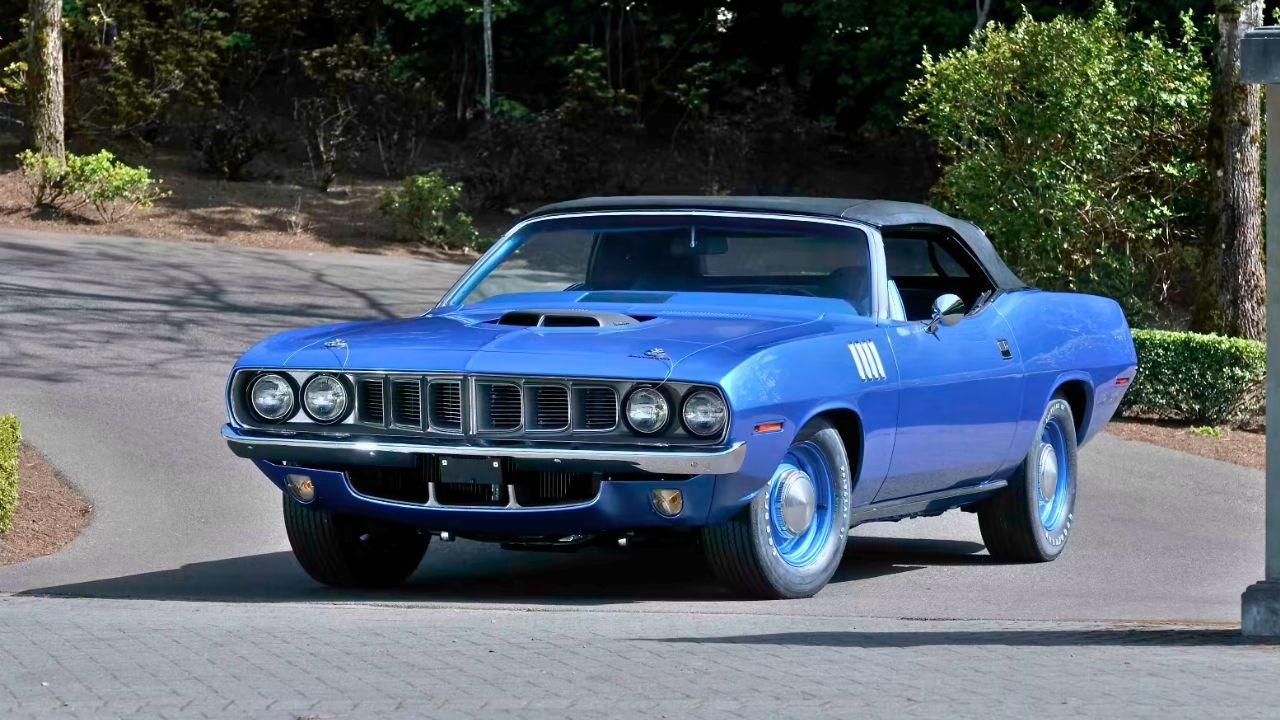
The 1971 Plymouth Hemi ’Cuda stands as a legendary icon in the muscle car world, celebrated not only for its raw power but also for its rarity. With only 11 units produced, this remarkable vehicle has become a holy grail for collectors and enthusiasts alike.
Historical Context of the Muscle Car Era
The muscle car boom in the 1960s and early 1970s was a defining moment in American automotive history. This era was characterized by a surge in consumer demand for high-performance vehicles that offered a thrilling driving experience. Automakers responded to this demand by introducing a variety of powerful models, each vying for dominance in the market. The introduction of the Plymouth Hemi ’Cuda came at a time when the automotive landscape was rapidly evolving, and competition was fierce among manufacturers like Ford, Chevrolet, and Pontiac.
During this period, the automotive industry witnessed innovations in design and engineering, leading to the development of vehicles that boasted impressive horsepower and torque. The Hemi engine, with its unique hemispherical combustion chambers, was a game-changer, providing the kind of raw power that muscle car enthusiasts craved. Key competitors of the Plymouth Hemi ’Cuda included the Chevrolet Camaro Z/28, Ford Mustang Mach 1, and the Pontiac GTO, each offering their own unique blend of performance and style.
The Birth of the Plymouth Hemi ’Cuda
The creation of the Plymouth Hemi ’Cuda was a result of careful design and engineering decisions that sought to fuse style with performance. The ’Cuda was initially introduced as a performance version of the Plymouth Barracuda, and its aggressive stance and distinctive features set it apart from other models. The decision to equip it with the Hemi engine was significant; this powerhouse provided unparalleled performance and became a hallmark of the brand.
Chrysler’s marketing strategies played a crucial role in promoting the Hemi ’Cuda. By emphasizing its racing pedigree and powerful engine, Chrysler positioned the car as a must-have for speed enthusiasts. The campaign successfully captured the spirit of the time, tapping into the cultural fascination with speed and performance. The Hemi ’Cuda was not just a car; it was a statement, a representation of freedom and rebellion that resonated with a generation.
Production Numbers and Rarity
The production numbers for the 1971 Hemi ’Cuda are staggering; only 11 units were made, making it one of the rarest muscle cars ever produced. In comparison, other muscle cars of the era had significantly higher production figures, which adds to the Hemi ’Cuda’s mystique. For instance, the Chevrolet Camaro Z/28 produced thousands of units, while the Pontiac GTO also saw strong production numbers. The limited availability of the Hemi ’Cuda creates an immense desire among collectors and enthusiasts, who consider it a valuable addition to any collection.
Several factors contribute to the rarity of the Hemi ’Cuda. First, its high price point meant that only a select group of buyers could afford it. Additionally, the 1971 model year saw the introduction of stricter emissions regulations and rising insurance costs, which led to a decline in muscle car production overall. As these challenges mounted, many manufacturers began to pivot away from high-performance models, further solidifying the Hemi ’Cuda’s status as a rare gem in automotive history.
Performance and Specifications
The performance metrics of the Hemi engine are nothing short of impressive. The 1971 Plymouth Hemi ’Cuda was equipped with a 426-cubic inch (7.0L) Hemi V8 engine, producing a staggering 425 horsepower and 490 lb-ft of torque. This power translated into exhilarating acceleration, with the capability to reach 0-60 mph in just over 5 seconds. The engine’s design, featuring aluminum heads and a unique ignition system, set it apart from competitors, delivering both raw power and reliability.
Compared to its predecessors, the 1971 model introduced several unique features that further enhanced its performance. For instance, it boasted a redesigned front grille and a more aerodynamic body that improved its handling. Real-world performance reviews from the time praised the Hemi ’Cuda for its incredible speed and agility on the road, with many automotive publications lauding it as one of the best muscle cars of its time. The combination of power and design made it a formidable contender on both the street and the racetrack.
Cultural Impact and Legacy
The Hemi ’Cuda has left an indelible mark on popular culture, appearing in various films, television shows, and even music. Its iconic design and powerful presence have made it a symbol of American muscle car culture. Movies like “Gone in 60 Seconds” and television series such as “The Dukes of Hazzard” have showcased the car, solidifying its place in the hearts of fans and collectors alike. The Hemi ’Cuda’s unmistakable roar and aggressive styling have made it a favorite among automotive enthusiasts, ensuring its legacy endures.
The car’s influence extends beyond the silver screen; it has also shaped the muscle car culture itself. Enthusiasts and collectors often cite the Hemi ’Cuda as a benchmark for performance and style, inspiring countless replicas and restorations. Its enduring legacy is evident in the ongoing appreciation for muscle cars at automotive events, where the Hemi ’Cuda often takes center stage, celebrated for its historical significance and unparalleled performance.
Collector’s Market and Value
The current market trends for the 1971 Plymouth Hemi ’Cuda reflect its status as a highly sought-after collector’s item. With only 11 units produced, the Hemi ’Cuda commands astronomical prices at auctions and private sales. Recent sales have seen these rare models fetch millions of dollars, with collectors willing to pay a premium for the opportunity to own a piece of automotive history. The rarity of the Hemi ’Cuda plays a significant role in its valuation; as fewer units remain, the demand continues to rise.
Factors affecting the car’s value include its condition, provenance, and any unique features or modifications. Originality is highly prized among collectors, with matching numbers and factory options significantly increasing a vehicle’s worth. Notable collectors, such as automotive magnate Jay Leno, have expressed their admiration for the Hemi ’Cuda, further driving interest in this legendary muscle car.
Restoration and Maintenance Challenges
Restoring a 1971 Plymouth Hemi ’Cuda can be both a rewarding and challenging endeavor. Common restoration practices include sourcing original parts, which can be difficult given the car’s rarity. Many enthusiasts turn to specialized suppliers and restoration experts who have extensive knowledge of the Hemi platform. It’s not uncommon for restorers to invest considerable time and resources into finding authentic components to maintain the car’s originality.
The availability of parts can be a significant challenge, as many original components are no longer manufactured. However, several companies specialize in reproducing parts for classic muscle cars, providing enthusiasts with the resources they need to restore and maintain their vehicles. For those looking to keep their Hemi ’Cuda in top condition, regular maintenance is essential. This includes routine checks on the engine, transmission, and other critical systems to ensure optimal performance and safety.
Future of the Hemi ’Cuda
As we look toward the future, the 1971 Plymouth Hemi ’Cuda is poised to remain a central figure in the collector’s market. Predictions suggest that its value will continue to climb as the demand for classic muscle cars grows among new generations of enthusiasts. The allure of powerful, high-performance vehicles is timeless, and the Hemi ’Cuda stands as a beacon of that legacy.
However, the rise of electric vehicles poses an interesting challenge to the traditional muscle car narrative. While some may question the future of combustion engines, the passion for classic muscle cars remains strong. Automotive events, car shows, and enthusiast gatherings continue to celebrate the rich history of vehicles like the Hemi ’Cuda, ensuring its legacy endures in the fabric of automotive culture.
More from Fast Lane Only