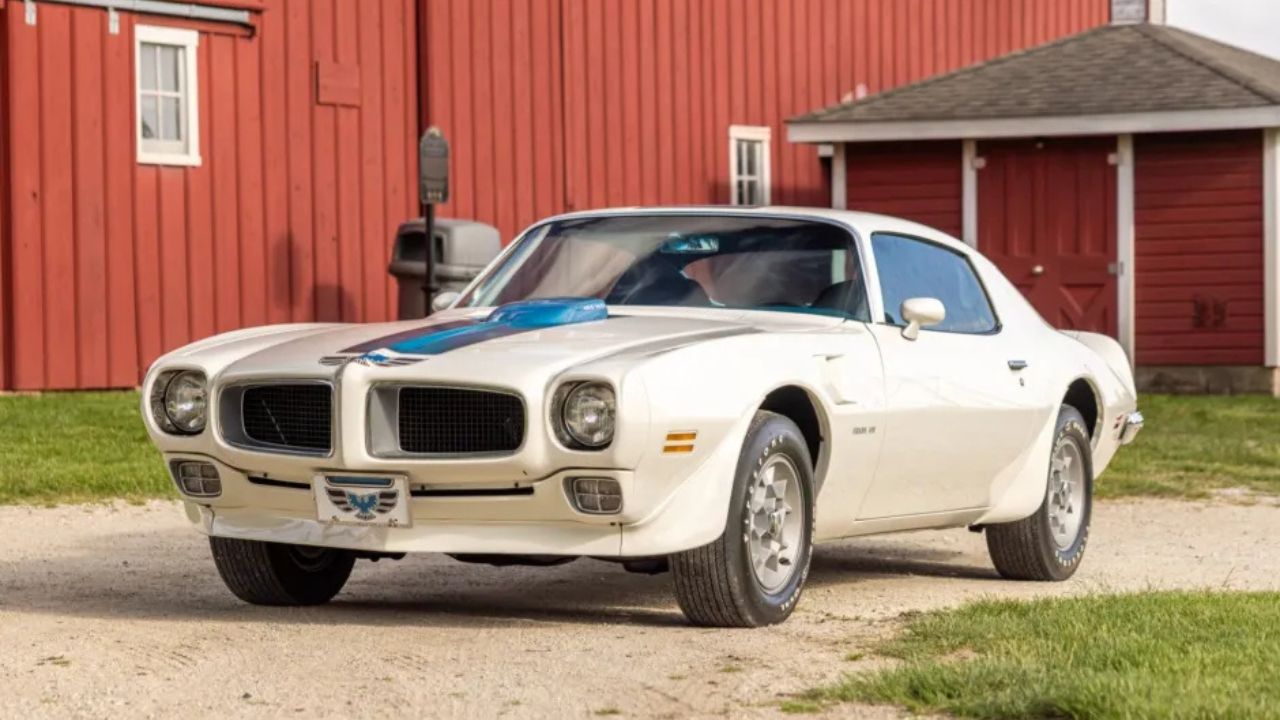
The 1971 Pontiac Trans Am fitted with the 455-cubic-inch V8 arrived at a turning point for American performance. Compression ratios were dropping, insurance rates were rising, and federal regulations were starting to bite, yet Pontiac still managed to deliver a street car with serious torque and unmistakable presence. That mix of brute low-end pull, aggressive styling, and surprising sophistication turned the 1971 Trans Am 455 into one of the most intriguing survivors of the muscle era.
More than five decades later, that blend of big-block force and emerging restraint helps explain why collectors and enthusiasts keep circling back to this specific model year.
What happened
For 1971, Pontiac reworked its Firebird Trans Am lineup around the new 455 HO engine. Displacing 455 cubic inches, this V8 used Pontiac’s own block, high-flow round-port cylinder heads, and a performance camshaft to deliver huge torque at relatively low rpm. Factory ratings listed 335 horsepower in gross terms, but the real story was the torque curve, which gave the Trans Am its hard-charging feel off the line.
This 455 HO was not just a bored-out carryover. Pontiac engineers differentiated it from other corporate big blocks, including Oldsmobile’s 455, with distinct head designs, intake layouts, and internal components. Comparisons of Pontiac and Oldsmobile engines highlight that Pontiac’s version leaned into high-flow breathing and performance tuning, while Oldsmobile focused more on smooth, broad power for heavier cars. In the Trans Am, the Pontiac 455 HO became a purpose-built performance centerpiece.
The Trans Am package wrapped that engine in one of the most dramatic shapes of the early 1970s. The second-generation Firebird body, introduced earlier in the decade, gained functional fender vents, a bold front spoiler, and a rear deck spoiler that improved stability at speed. A shaker hood scoop, bolted to the air cleaner and protruding through a cutout in the hood, telegraphed the car’s intent before the engine ever fired.
Cabin design mixed performance and comfort. The driver faced a full gauge cluster with a large tachometer, a three-spoke sport steering wheel, and high-back bucket seats. Buyers could choose a close-ratio four-speed manual or a heavy-duty automatic, both paired with performance rear axle ratios that took advantage of the engine’s torque.
Pontiac did not reserve the 455 solely for the Trans Am. The engine also appeared in more understated models such as the T-37, a relatively plain A-body that could be optioned into a sleeper. Surviving examples, including an unrestored 1971 T-37, show how Pontiac spread big-cube performance across its lineup, from humble coupes to the flagship Trans Am.
Period tests and later analysis consistently describe the 1971 Trans Am 455 as a torque-first car. It was not built to chase sky-high rpm or top-end speed records. Instead, it delivered a strong, immediate shove that made highway merges, passing maneuvers, and quarter-mile runs feel effortless. Contemporary muscle rivals often boasted similar or higher horsepower ratings, but the Pontiac’s broad torque band gave it a very different character.
Why it matters
The 1971 Trans Am 455 landed just as the classic muscle era was starting to fade. Insurance surcharges, unleaded fuel, and tightening emissions rules were already cutting into compression ratios and output figures. Against that backdrop, Pontiac’s decision to keep a 455-cubic-inch performance engine in the lineup looks almost defiant.
That stance paid off in real-world performance. Enthusiast analyses of period cars argue that this generation of Trans Am could in many situations, despite the GTO’s iconic status. The combination of the 455 HO’s torque, the Firebird’s relatively lighter body, and the Trans Am’s suspension tuning gave it a strong edge in acceleration and handling. In effect, Pontiac’s own halo muscle car was at risk of being outshined by a smaller, newer sibling.
Collectors have taken notice. Market analysis of the Firebird Trans Am shows that interest in these cars has grown as enthusiasts reassess early 1970s performance. While late 1960s GTOs and first-generation Camaros long dominated auctions and private sales, the second-generation Trans Am has steadily climbed, especially in high-spec, well-documented form. The 1971 model, with its combination of early styling and the 455 HO, sits near the center of that trend.
The car also represents a turning point in how American performance was delivered. Rather than relying solely on high compression and aggressive timing, Pontiac had to balance power with emerging emissions standards. The 455 HO’s engineering reflects that compromise. It retained large displacement and strong breathing, but with tuning that could survive the regulatory environment. Later Trans Ams would lean even harder into this balance, trading raw output for drivability and fuel economy.
By 1977, the Trans Am had evolved into a different kind of performance car. Output figures were lower, but the car’s image had grown larger than life. Coverage of the 1977 Trans Am highlights how the model shifted from pure muscle to a more all-around grand touring role, with a focus on style, comfort, and accessible performance. That shift only sharpens the contrast with the 1971 455 car, which still carried much of the raw attitude of the 1960s.
The 1971 Trans Am also matters in the broader story of Pontiac performance. The brand had already built its reputation on cars like the GTO and earlier Firebirds, but the 455 HO Trans Am proved that Pontiac could adapt its formula. The car’s success helped justify later experiments with high-output 455 engines, including the Super Duty variants that would arrive in the mid-1970s. Development work on the Trans Am SD-455 built on lessons learned from the 455 HO, particularly in block strength, oiling, and breathing.
For enthusiasts today, the 1971 Trans Am 455 stands as a benchmark for usable street performance. Its torque-rich character suits modern driving conditions, where quick bursts of acceleration are more relevant than sustained high-rpm runs. The chassis, with its relatively sophisticated suspension and disc brakes, also makes it more comfortable and confidence inspiring than some earlier muscle machines that relied heavily on straight-line speed.
What to watch next
Interest in early 1970s Trans Ams, especially the 455 HO cars, is likely to keep building as collectors look beyond the most obvious muscle icons. The supply of unmodified, numbers-matching examples is limited, and many cars were driven hard or modified during their first few decades on the road. That scarcity has already translated into rising values for well-preserved or properly restored examples.
Survivor-grade Pontiacs from this era, including models like the 1971 T-37, underscore how much originality matters in the current market. Cars that retain factory paint, interior, and drivetrains offer a reference point for restorers and a premium experience for collectors who want to see how these vehicles actually left the assembly line. As more enthusiasts focus on authenticity, the bar for restorations of 1971 Trans Am 455s will likely rise.
There is also a growing technical fascination with Pontiac’s big-inch V8s. Detailed comparisons of different 455 families have encouraged builders to treat the Pontiac 455 as a distinct platform rather than just another GM big block. That recognition supports a healthy aftermarket for parts tailored to these engines, from modern cam profiles to improved cooling and oiling components. As more owners choose to preserve factory-correct drivetrains while making reversible upgrades, the 455 HO’s reputation as a strong, tunable foundation should continue to grow.
Looking at Pontiac’s broader performance story, the 1971 Trans Am 455 sits at the start of a narrative arc that runs through the Super Duty cars and into the late 1970s. Later models, such as the 1977 Trans Am, leaned more on image and refinement, yet they still carried DNA from the 455 HO era. Enthusiasts tracking values and cultural relevance will likely keep comparing these generations, weighing raw performance against nostalgia and pop culture impact.
More From Fast Lane Only: