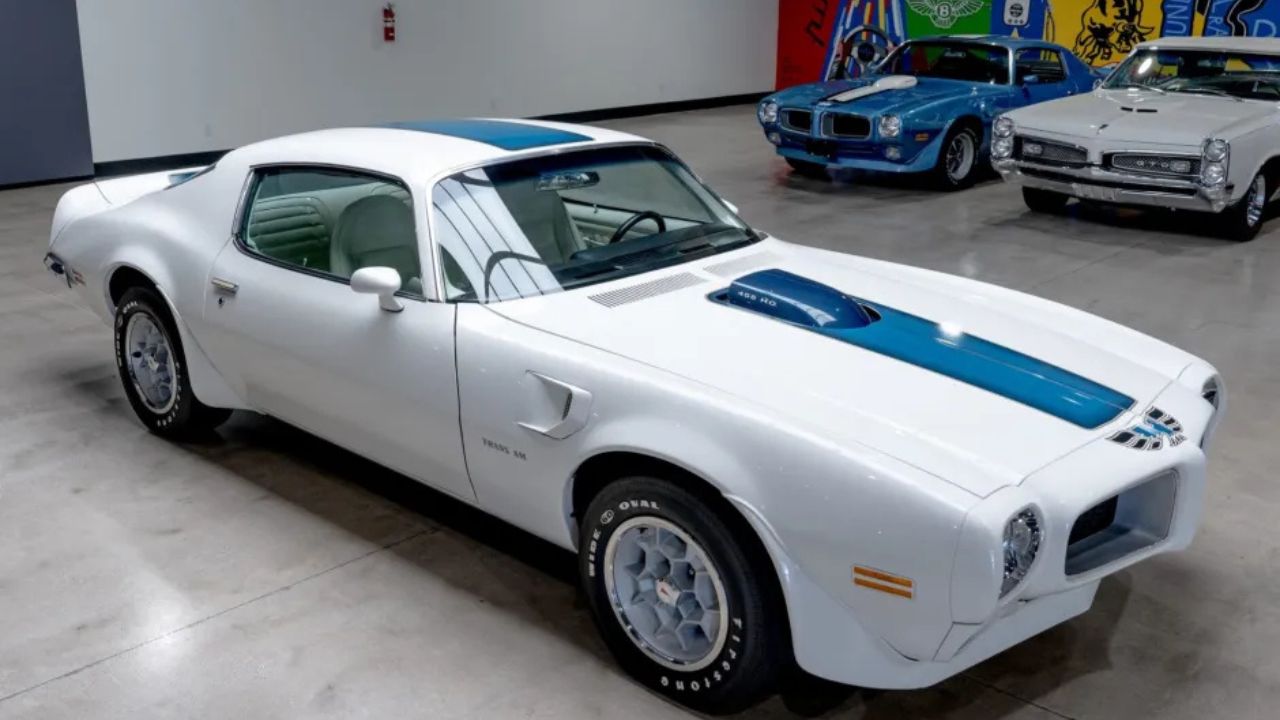
The 1972 Pontiac Trans Am 455 HO arrived just as Detroit’s first muscle era was fading, yet it managed to capture the last full-strength expression of Pontiac’s performance engineering. Built in small numbers during a year marked by strikes, insurance crackdowns, and new emissions rules, it became one of those rare cars that signal the end of an age rather than the start of another.
Half a century later, collectors and historians treat the 1972 Trans Am 455 HO as a turning point. It preserved much of the old-school muscle formula while quietly previewing the handling-focused, all-around performance cars that would follow.
What happened
By the early 1970s, Pontiac had already turned the Firebird Trans Am into its performance flagship, with the model’s evolution tracing a path from high-compression street bruiser to more balanced grand touring coupe. The second-generation Firebird that debuted for 1970 brought a sleeker body, a stiffer structure, and a more refined interior, setting the stage for the high-output 455 cubic inch V8 that would define the 1972 car. Enthusiast histories describe how the Trans Am line grew from an options package into a stand-alone symbol of Pontiac’s performance identity, with the 455 HO era singled out as a key chapter in that Trans Am history.
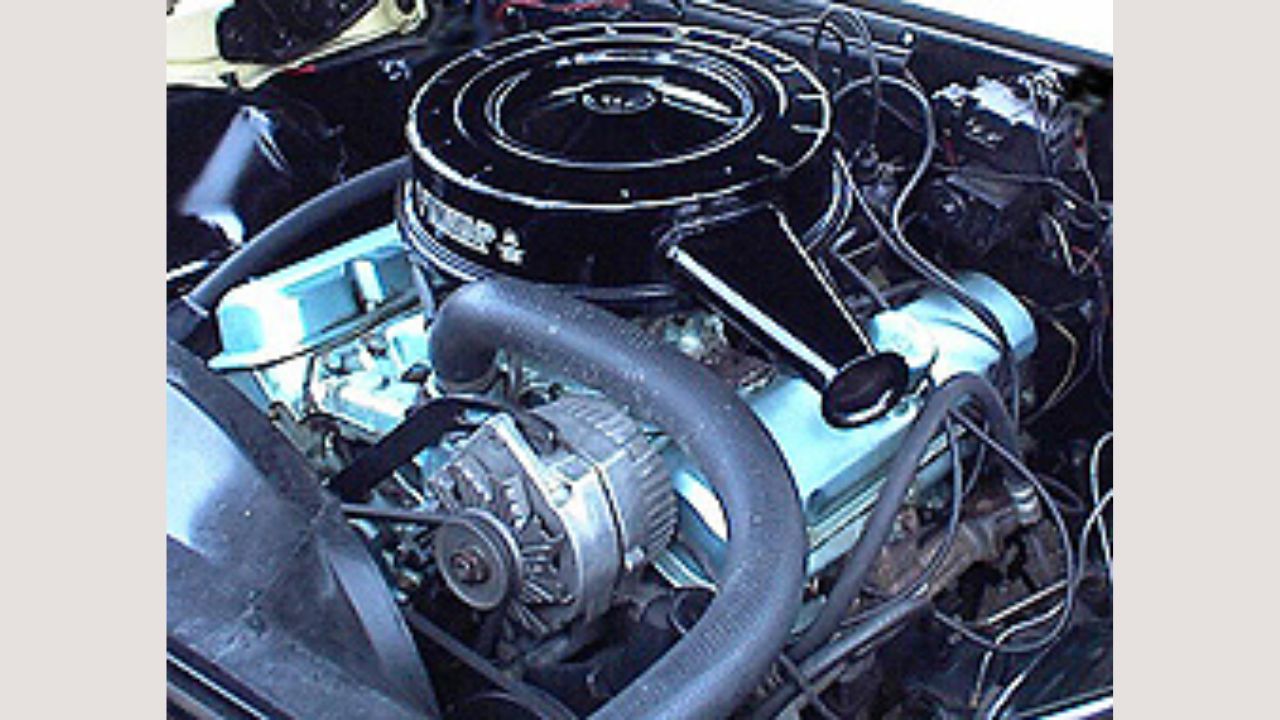
The 455 HO itself was a development of Pontiac’s big-block V8 strategy. Engineers combined large displacement with free-flowing round-port cylinder heads, a performance camshaft, and a functional cold-air shaker scoop. Even as official power ratings shifted from gross to net figures around this time, the 455 HO remained one of the strongest street engines available from a domestic manufacturer. Period specifications put the 1972 Trans Am 455 HO at 300 net horsepower and 415 pound-feet of torque, numbers that translated into serious real-world pace for a factory car saddled with rising curb weight and early emissions equipment.
Production circumstances turned the 1972 model into an unintended rarity. Labor disruptions at GM plants, combined with tightening federal regulations and aggressive insurance surcharges on high-performance cars, cut deeply into output. Only a small fraction of Firebird production left the factory as Trans Ams equipped with the 455 HO. While exact totals vary by source and body style, contemporary registries and model guides consistently rank the 1972 Trans Am among the lowest-production years of the early second generation.
Visually, the 1972 car kept the aggressive but relatively clean styling that had debuted for 1970. It wore the deep front spoiler, rear decklid spoiler, and functional fender vents that had become Trans Am signatures, along with bold striping and the now-iconic hood bird on some examples. Compared with later, more flamboyant versions, the 1972 design balanced subtlety with purpose, which is one reason many historians place it among the most desirable iterations of Pontiac’s legendary Firebird.
Underneath, Pontiac treated the Trans Am as more than a straight-line special. The 1972 model carried heavy-duty suspension components, quick-ratio power steering, front and rear stabilizer bars, and performance-oriented shocks. Four-wheel power disc brakes were not yet standard, but the package still delivered handling that compared favorably with domestic rivals. Period road tests praised the car’s ability to combine big-engine thrust with genuine cornering confidence, a trait that would become even more important as raw horsepower numbers declined later in the decade.
Why it matters
The 1972 Trans Am 455 HO sits at a crossroads in American performance history. It arrived just as the first wave of muscle cars was being squeezed by emissions laws, unleaded fuel, and safety regulations. At the same time, insurance companies had begun aggressively rating high-horsepower models, which pushed many buyers toward smaller engines and tamer option packages. Against that backdrop, Pontiac’s decision to keep a high-output 455 in the lineup for 1972 looks increasingly bold.
Enthusiasts and collectors value the car partly because it represents one of the last factory big-blocks that still felt like a true muscle engine. The 300 net horsepower rating might seem modest compared with late 1960s gross figures, but real-world performance remained strong. The engine’s broad torque curve allowed the Trans Am to pull hard from low rpm, suiting both street driving and the kind of long-distance, high-speed cruising that Pontiac engineers had in mind for their top Firebird.
Rarity amplifies that appeal. Low production numbers, combined with the fact that many cars were driven hard rather than preserved, mean that surviving 1972 Trans Am 455 HO examples are scarce. Collectors often rank them alongside earlier Ram Air IV cars and later limited-edition models when discussing the most desirable Trans Ams. The combination of big-inch power, relatively light emissions equipment, and the clean early second-generation styling creates a profile that is difficult to replicate in other years.
The 1972 model also matters because it captures Pontiac’s shift from pure dragstrip focus toward a more European-inspired performance philosophy. The company had already tasted success with handling packages on earlier GTOs and Firebirds, and by the early 1970s engineers were clearly thinking about balance. The Trans Am 455 HO was marketed as a car that could turn, stop, and cover long distances at speed, not just post quarter-mile times. That emphasis foreshadowed the way American performance cars would evolve once emissions rules and fuel crises made brute horsepower harder to deliver.
Historically, the 1972 Trans Am bridges two narratives. On one side is the classic muscle era, defined by cheap gas, high compression, and factory drag racing. On the other is the late 1970s and 1980s shift toward handling, aerodynamics, and eventually fuel injection. The 455 HO car still relied on carburetors and big displacement, yet its chassis tuning and all-around capability anticipated the later idea of a grand touring performance coupe. That dual identity helps explain why it commands such attention from both muscle car purists and fans of more modern performance benchmarks.
There is also the cultural memory attached to the early second-generation Trans Am. Later models would gain widespread fame through film and television, but the 1972 car laid the groundwork. Its aggressive stance, shaker hood, and racing-inspired graphics created a template that Pontiac would build on for the rest of the decade. Without the credibility established by cars like the 455 HO, the Trans Am might not have become the pop culture icon it later turned into.
What to watch next
For collectors and enthusiasts, the 1972 Trans Am 455 HO raises several forward-looking questions. One is how values will evolve as interest in analog, big-displacement performance cars continues to climb. With limited production and a clear historical story, the 1972 model is well positioned to remain a blue-chip piece of Pontiac history. Auction results already reflect strong demand for well-documented examples with original drivetrains and factory-correct options, and that trend is likely to continue as younger collectors seek out cars that combine period character with real performance.
Another factor is how restoration and preservation practices will shape the pool of surviving cars. Early second-generation Firebirds faced rust issues in many climates, and the Trans Am’s performance image meant many were modified heavily during their first decades on the road. As the 1972 455 HO gains status as a reference-grade collectible, there is growing emphasis on factory-correct paint, interior materials, and drivetrain components. That shift favors cars that avoided extensive customization, as well as those that can be carefully brought back to original specification.
The 1972 Trans Am 455 HO also offers a lens on how enthusiasts interpret the end of the classic muscle era. Some see it as the last gasp of traditional big-block power before compression ratios and output fell further in the mid-1970s. Others point to its chassis tuning and all-around capability as the start of a different performance story, one that would eventually lead to modern track-capable street cars. Both views can be true at once, which gives the car unusual narrative weight in automotive history.
More From Fast Lane Only: