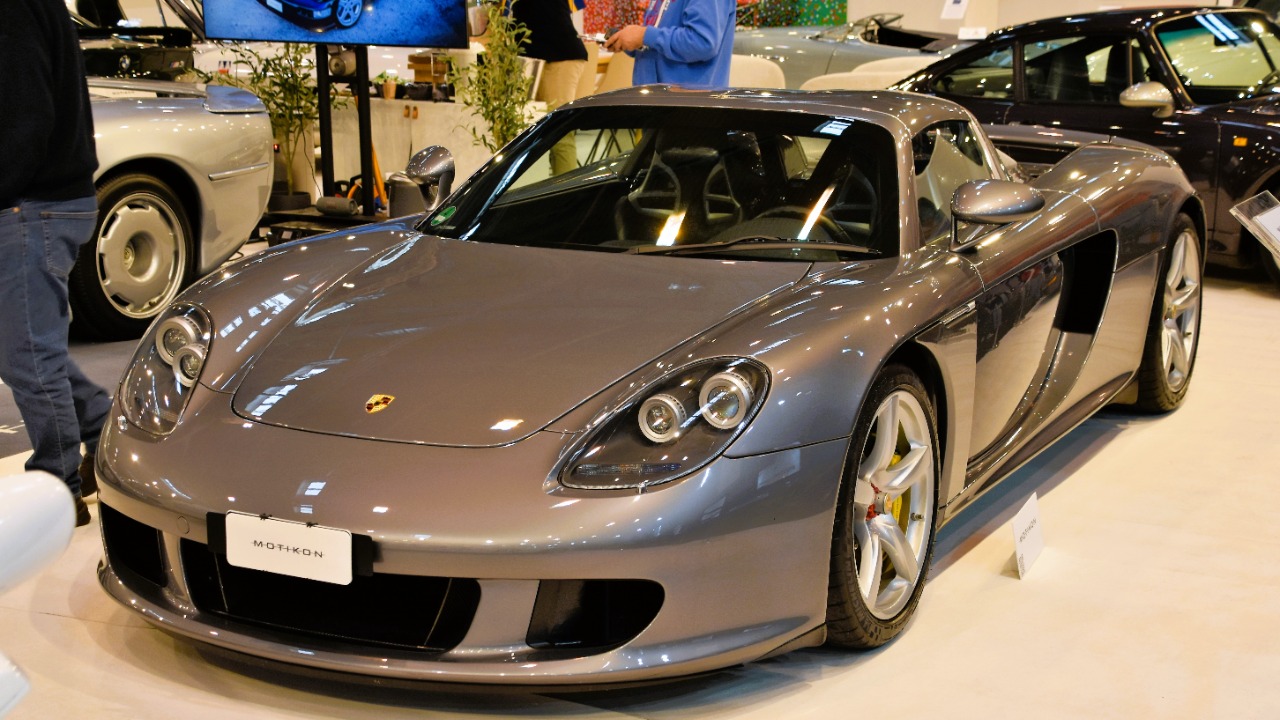
The 2004 Porsche Carrera GT arrived as a halo car with numbers that seemed almost abstract on paper, yet its reputation was built as much on how it behaved at the limit as on its performance figures. It was a rare supercar that did not simply reward skill but punished overconfidence, a machine that treated the driver as part of the hardware rather than an operator sitting above it.
Two decades on, the Carrera GT has become a reference point whenever enthusiasts talk about analog supercars that require real commitment. Its story is not only about speed and engineering, but also about how one model helped define what “respect” means in a car that can so easily outrun its driver.
What happened
From aborted race car to road legend
The Carrera GT’s character starts with its origin as a project linked to top-level endurance racing. Porsche developed a 5.7‑liter V10 that produced well over 600 horsepower, then wrapped it in a carbon fiber chassis with minimal electronic interference. The result was a road car whose core components came from a world where drivers expected unforgiving behavior and razor‑sharp responses.
Contemporary coverage grouped the Carrera GT with other analog exotics that demanded full attention from their owners. Lists of analog supercars often highlight how its race‑bred engine, manual transmission, and lack of stability control placed it in a different category from more approachable performance cars. The GT did not try to flatter the driver; it asked for skill, patience, and a willingness to learn its limits.
The hardware that shaped its reputation
On paper, the Carrera GT’s specifications read like a checklist of ingredients for an intense driving experience. The naturally aspirated V10 revved to a stratospheric redline and delivered its power with a sharp, rising surge rather than a smooth, turbocharged wave. The engine sat low and far back in the chassis, which helped balance but also meant that weight transfer under throttle changes could be sudden and dramatic.
A six‑speed manual gearbox, operated by a beech‑wood knob, sat at the center of the experience. The clutch, a compact ceramic unit, was notorious for its abrupt engagement. Owners and reviewers described how it required a delicate touch, especially in low‑speed maneuvering or hill starts. There was no dual‑clutch safety net, no automatic mode, and no soft calibration to disguise poor technique. Any mistake translates directly into a stall, a lurch, or a spike of revs.
The chassis used inboard suspension and extensive carbon fiber to keep weight low, but Porsche did not pair this with modern layers of electronic protection. There was no fully fledged stability control, and traction systems were limited compared with what later supercars would offer. This choice aligned the Carrera GT with other supercars that demand, where the driver’s inputs shaped the outcome far more than software ever could.
A car that punished casual driving
Those decisions made the Carrera GT exhilarating on a closed course in the hands of a practiced driver, but they also meant the car could be unforgiving on public roads. Sudden throttle lifts mid‑corner, aggressive downshifts without rev‑matching, or clumsy applications of power on cold tires could provoke snap oversteer. The car did not ease into a slide with gentle understeer; it pivoted quickly, with little warning for anyone who had not yet learned its language.
Period testers highlighted how the GT rewarded smooth, deliberate driving lines and punished abrupt steering corrections. The steering itself was unfiltered and heavy at low speeds, which added to the sense of physical involvement. Drivers needed to commit to a corner, manage weight transfer carefully, and trust that their inputs would be mirrored faithfully by the chassis.
Even straight‑line acceleration demanded discipline. With over 600 horsepower sent to the rear wheels and no sophisticated traction control keeping things tidy, full‑throttle starts could easily overwhelm the tires. Experienced owners often described rolling into the power rather than pressing the accelerator, especially on imperfect surfaces. Respect for the car’s immense capability became part of the ownership culture.
Manual supercar in a digital decade
By the time the Carrera GT arrived, the industry was already shifting toward paddle‑shifted transmissions and more comprehensive driver aids. That context is crucial. The GT did not just feel demanding because of its raw numbers; it felt demanding because it stood almost alone among its peers in refusing the digital safety net.
Later retrospectives on manual supercars often cite the Carrera GT as a defining example of how a stick shift paired with high power can create an experience that is both thrilling and intimidating. The car’s three‑pedal layout meant that every launch, every downshift, and every corner entry depended on the driver’s timing and coordination. There was no computer to smooth a missed heel‑and‑toe. A misjudged shift could unsettle the chassis at exactly the wrong moment.
In that sense, the Carrera GT marked a sort of high‑water mark for analog involvement. Later flagships from many brands would adopt dual‑clutch boxes and increasingly complex stability systems, trading some rawness for broader accessibility. The GT, by contrast, remained stubbornly focused on purity, even if that purity came with risk.
Why it matters
The meaning of “respect” in a 600‑horsepower car
Describing the Carrera GT as a car that “demanded respect” is not just colorful language. It captures a specific relationship between driver and machine. Respect here means an understanding of consequences, a recognition that the car’s abilities exceed the average driver’s reflexes, and a willingness to approach its limits gradually rather than in one leap.
In practical terms, that respect showed up in how owners used the car. Many sought professional instruction, track days, or closed‑course events to explore performance in a controlled environment. Stories from instructors who rode in Carrera GTs often describe students who arrived confident from modern sports cars, only to discover that the GT responded to impatience with sudden oversteer or braking instability.
The car’s reputation also influenced how enthusiasts talked about power figures. On paper, a modern all‑wheel‑drive supercar might match or exceed the GT’s acceleration. In reality, the older Porsche often felt more intimidating at similar speeds because it lacked the subtle corrections that newer systems provide. Respect, in other words, was less about the number on the spec sheet and more about how directly that number reached the pavement.
A benchmark for analog engagement
For enthusiasts, the Carrera GT became a benchmark for what an analog supercar could be. Its direct steering, high‑revving engine, and lack of intrusive electronics meant that every drive required concentration. That intensity appealed to drivers who felt that modern cars had become too insulated.
Comparisons with other analog icons often center on how each car communicates. Some rivals offered more progressive breakaway characteristics or slightly more forgiving suspension tuning. The Carrera GT, by contrast, delivered a sharper edge. Its combination of ceramic brakes, ultra‑stiff chassis, and aggressive tires produced enormous grip, but once that grip was exceeded, the transition was quick.
That behavior shaped the narrative around analog engagement. The car demonstrated that involvement is not only about feel and feedback, but also about the stakes attached to every decision. The GT’s reputation for punishing mistakes became part of its mystique, reinforcing the idea that true engagement comes with responsibility.
Safety debates and the human factor
The Carrera GT’s demanding nature also prompted broader discussions about safety and responsibility in supercars. As stories circulated about high‑profile crashes, debate grew over where the line should sit between driver freedom and electronic intervention. Some argued that a car with such capability should include more advanced stability systems. Others maintained that the GT’s purity was its defining trait, and that drivers who chose it accepted the associated risks.
Those debates highlighted a tension that still shapes performance car design. Engineers can build systems that mask clumsy inputs and keep a car stable in situations that would once have led to a spin. At the same time, each new layer of assistance can distance the driver from the consequences of their actions. The Carrera GT sat firmly on one side of that line, prioritizing authentic feedback over protection.
In the years since, many manufacturers have tried to balance these priorities. Adjustable stability modes, track settings, and configurable traction systems aim to offer both safety and involvement. Yet the Carrera GT remains a reference point whenever a new car is praised or criticized for being “too safe” or “too wild.” Its legacy shapes expectations about how much responsibility a manufacturer should place in the driver’s hands.
Collector value and cultural status
The car’s character has also had a clear impact on its place in the collector market. The Carrera GT is not just rare and visually striking. It is widely perceived as one of the last truly analog flagships from a major manufacturer, a car that could not be replicated under today’s regulatory and liability environment.
Collectors often talk about the GT in the same breath as analog legends from other brands, but its combination of manual gearbox, V10 engine, and minimal electronics gives it a unique position. That uniqueness has supported strong values and intense demand among buyers who want a car that feels fundamentally different from their modern, digitally assisted garages.
Culturally, the Carrera GT has become shorthand for a certain kind of seriousness about driving. References to it in enthusiast circles often serve as a litmus test. Someone who respects the GT’s capabilities and limitations is seen as understanding the responsibilities of high‑performance ownership. Someone who dismisses its reputation may be viewed as underestimating what a 600‑plus‑horsepower, rear‑drive, manual supercar can do when mishandled.
What to watch next
The fading of fully analog flagships
Looking forward, the conditions that produced the Carrera GT are unlikely to return. Emissions standards, safety regulations, and customer expectations have all shifted. Manufacturers now build hybrid and electric hypercars with power figures that dwarf the GT’s, yet those cars rely heavily on electronic management to remain controllable.
The trajectory of manual transmissions in high‑end performance cars illustrates this shift. As brands move toward automated gearboxes, the kind of intimate, three‑pedal connection found in the Carrera GT has become increasingly rare. The model stands as a reference in discussions about the last of their manual exotics, a reminder that the market for such cars has narrowed to a niche within a niche.
Future flagships are likely to continue down the path of electrification and advanced driver assistance. That does not mean they will lack character or excitement, but their relationship with the driver will be mediated through layers of code. The raw, unfiltered conversation that defined the Carrera GT is becoming a historical artifact.
How modern cars reinterpret “respect.”
Modern performance cars still talk about respect, but the term now often refers to understanding complex drive modes and appreciating the limits of electronic systems rather than mastering a tricky clutch or managing sudden oversteer. Owners are encouraged to learn how stability control stages intervene, how torque vectoring behaves, and how regenerative braking interacts with friction brakes.
More from Fast Lane Only
- Unboxing the WWII Jeep in a Crate
- 15 rare Chevys collectors are quietly buying
- 10 underrated V8s still worth hunting down
- Police notice this before you even roll window down
*Research for this article included AI assistance, with all final content reviewed by human editors.