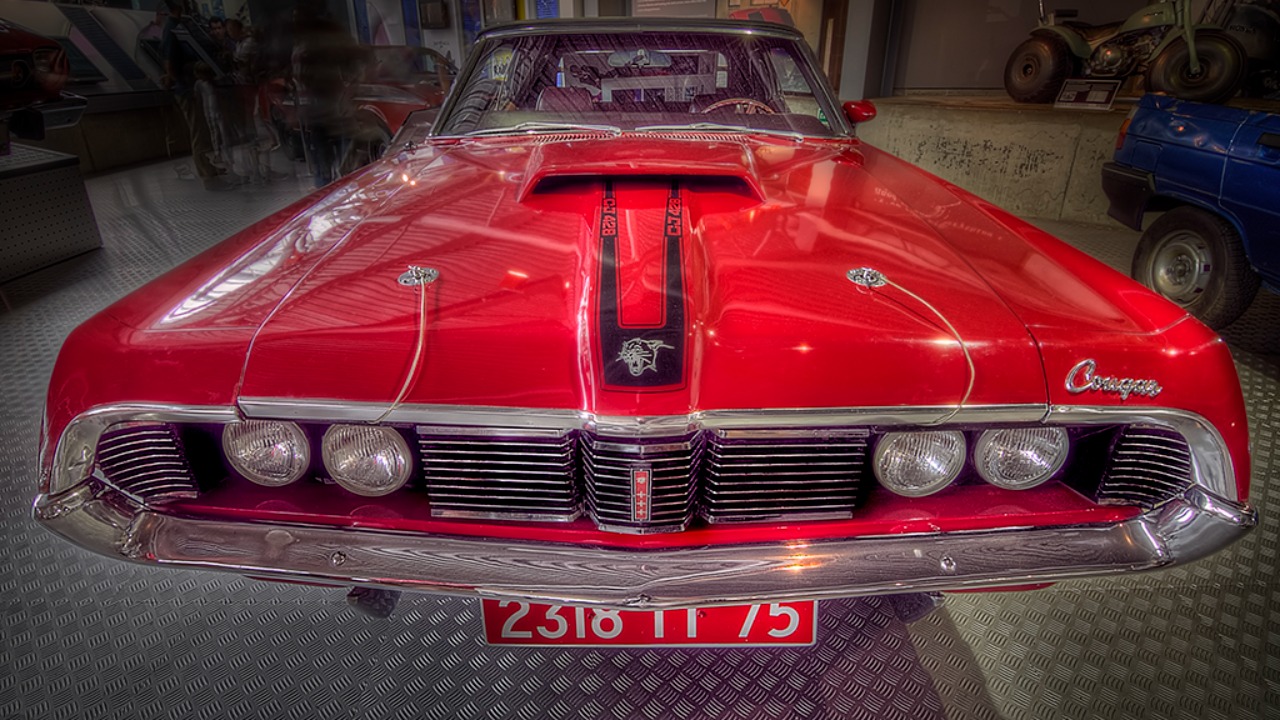
The Mercury Cougar XR-7 428 sat at the intersection of luxury and raw muscle, a car that tried to outgrow the Mustang’s shadow with more refinement and a bigger punch. When Mercury sold these cars new, the 428 option turned an already upscale coupe into a serious street weapon, and that combination of comfort and Cobra Jet power is exactly what drives collector interest and values today.
To understand what these cars are worth now, it helps to look back at how the 428 arrived in the Cougar lineup, how rare the high performance variants really were, and how condition and originality shape the modern market. From mid year launches to today’s valuation tools, the story of the Cougar XR-7 428 is one of limited supply, rising recognition, and careful scrutiny of each surviving example.
How the 428 Cobra Jet turned the Cougar into a quiet muscle car
Mercury did not start the Cougar story with the big block halo; the 428 came later as the brand chased performance buyers who wanted more sophistication than a Mustang. The turning point came when the 428 Cobra Jet arrived in the Cougar line on April 1, 1968, first as a mid year option that instantly changed the car’s character from stylish personal coupe to legitimate quarter mile threat. In factory literature and enthusiast documentation, the 428 is consistently tied to the Cougar nameplate as the engine that finally gave Mercury’s pony car the muscle credentials it needed.
On April 1, 1968, the company introduced the 428 Cobra Jet Ram Air as a mid year option, rated at 335 hp (250 k, 340 PS), a specification that put the Cougar squarely into big block territory and aligned it with the era’s most serious street machines. Period breakdowns of the option list show that the 428 Cobra Jet could be ordered in the Cougar with or without Ram Air, and that the engine’s arrival was treated as a distinct step up from earlier performance packages. Registry material for the 1969–70 cars later codified this heritage, noting that the 428 option is literally encoded in the fifth digit of the Cougar’s VIN, which is where The Cobra Jet Cougar Option is defined and where buyers and collectors still look to confirm a genuine Cobra Jet Option car.
The XR-7 package and the leap to 428 power
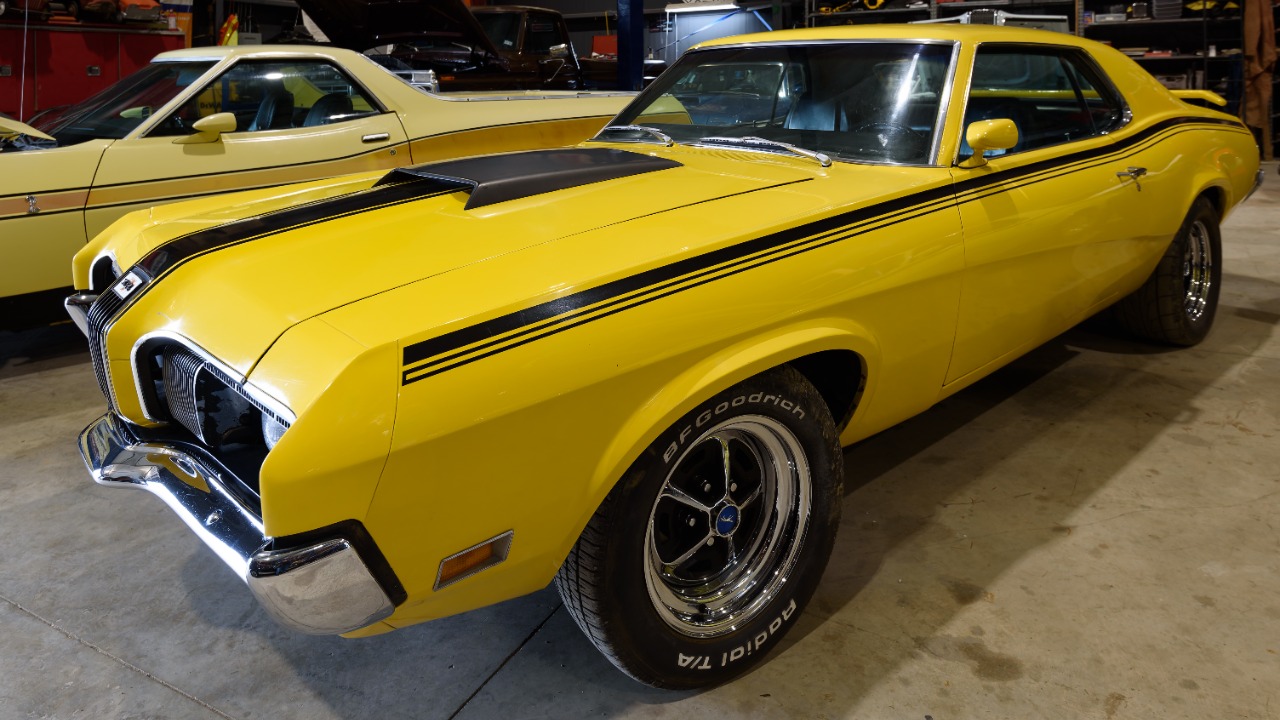
The XR-7 trim was Mercury’s way of pushing the Cougar upmarket, layering European style touches and extra equipment on top of the basic pony car formula. In 1968, the Mercury Cougar XR7 added features like upgraded interior materials and unique exterior details, and special appearance variants such as the XR7-G built on that foundation with performance oriented cues. Contemporary descriptions of the 1968 Mercury Cougar XR7 make clear that the XR7-G was a performance oriented appearance package, while the GT-E version paired the Cougar’s luxury image with serious hardware.
When the 428 arrived, it slotted into this hierarchy as the engine that turned the XR-7 from a sporty luxury coupe into a true muscle car. Documentation of the 1968 Cougar R-code option notes that the 428 Cobra Jet was introduced April 1, 1968 as a mid year change, and that this engine could be ordered in the Cougar outside of the GT-E program, reinforcing that the big block was not limited to a single halo model. Later commentary on the Mercury Cougar GT-E highlights that, once Equipped with the Cobra Jet, the 1968 Mercury Cougar GT became a genuine ground pounding performance car, which in turn elevated the XR-7’s reputation when specified with the same 428 hardware.
Rarity, registries, and the small pool of surviving 428 XR-7s
Part of the modern appeal of the Cougar XR-7 428 lies in how few were built and how even fewer survive in correct condition. Enthusiast reporting on the 1968 XR-7 variants notes that Only 619 XR7-Gs were made, a figure that underscores just how limited the high specification Cougars were even before factoring in engine choices. When the 428 Cobra Jet is added to the mix, the pool of cars shrinks further, which is why registry efforts and detailed option decoding have become central to the way collectors approach these models.
The Cougar Club’s registry for the 1969–70 428 Cobra Jet cars explains that the 1969–70 428 Cobra Jet option is simple to define because it is encoded in the fifth digit of every Cougar VIN as either R or Q, and that The Cobra Jet Cougar Option is therefore traceable on paper even before a car is inspected in person. Coverage of specific finds, such as a 1968 Mercury Cougar XR7 428 Cobra Jet tied to Rare Finds and framed around the question Could 1968 Mercury Cougar XR7 428 Cobra Jet Be Dyno Don Nicholson, reinforces how individual cars with documented histories can command outsized attention. In that case, the story notes that the car in question carried the 428 and that the narrative unfolded across Jun 26, 2017 and Jun 27, 2017, illustrating how a single well documented example can dominate discussion among enthusiasts.
Driving character: Competition Handling and the big block experience
Beyond the numbers, the 428 transformed how the Cougar XR-7 felt on the road, and Mercury backed that up with chassis upgrades that matched the engine’s output. Reports on the 1969 Cougar XR-7 Cobra Jet emphasize that All 428 CJ Cougars came with the Competition Handling package, which added higher rate springs and beefier shocks to keep the car composed when the big block was pushed. That package, combined with the XR-7’s more upscale interior, created a car that could cruise quietly yet still deliver the kind of acceleration buyers expected from a 428 powered machine.
Later reflections on similar cars, such as a Cougar XR7 coupe with a Cobra Jet V8 and 4 speed, place that driving experience in the broader context of tightening regulations. Commentary from Dec 9, 2021 notes that Emissions laws, safety laws, and gas prices were all conspiring to usher out the no holds barred horsepower wars of years past, which makes the earlier 428 powered Cougars feel like products of a brief window when big displacement and comfort could coexist without compromise. That sense of a closing era is part of what modern buyers are paying for when they seek out a well preserved XR-7 428, especially one that still carries its Competition Handling hardware and original drivetrain.
From showroom sticker to today’s market values
Half a century after Mercury sold these cars new, the market has started to price the Cougar XR-7 more in line with its specification and rarity, though it still often trails comparable Mustangs. Modern valuation tools suggest that a 1969 Mercury Cougar XR-7 in good condition with average specification typically trades around $32,300, a figure that reflects a solid driver with no major stories rather than a concours level restoration. That same valuation data notes that the highest sale price recorded for the model in the last three years was significantly higher, which hints at how exceptional examples, especially those with rare options, can break out of the average range.
Recent coverage of a 1968 Mercury Cougar XR-7 survivor underscores how originality and documentation can push values far beyond the baseline. Analysis of that car, published on Sep 18, 2025, points out that When it comes to market value, evidence pays, and that recent auctions show how mileage, condition, and originality in a Cougar XR-7 can command eye watering sums. When those traits intersect with a genuine 428 Cobra Jet or Cobra Jet Ram Air drivetrain, and when registry data confirms the car as a true Cobra Jet Option example, the market tends to reward the combination of rarity, performance, and authenticity.
How collectors separate a strong buy from an expensive mistake
For buyers chasing an XR-7 428 today, the spread between an average Cougar and a top tier example is wide enough that careful verification is essential. Registry guidance for the 1969–70 428 cars stresses that the 70 and 428 codes in the VIN and option list are the first line of defense against clones, and that the fifth digit R or Q is non negotiable for a real Cobra Jet Cougar. Enthusiast communities also lean heavily on period documentation of the 1968 R-code program, which describes how the 428 Cobra Jet was introduced April 1, 1968 as a mid year change in the Cougar, to cross check build dates and equipment against what the factory actually offered.
At the same time, the broader Cougar market shows that not every XR-7 needs a 428 to be desirable, which helps explain why a clean small block 1970 Mercury Cougar XR7 can still attract attention. A discussion from Nov 15, 2024 about a particularly tidy example, where one observer notes What a very nice nice ride and guesses it carries a 351ci engine, illustrates how condition, presentation, and tasteful stripes, spoilers, and decals can make even non Cobra Jet cars appealing. For the 428 XR-7s, those same fundamentals apply, but the stakes are higher: a car that combines documented big block power, Competition Handling hardware, and survivor level originality will sit at the top of the value curve, while anything with gaps in its story will be judged more harshly, even if it wears the right badges.