The Mercury Monterey arrived in 1950 as the top two-door in Mercury’s lineup. Six decades later, on January 4, 2011, the last Grand Marquis rolled off the line, and the brand went with it. In between, Mercury built cars that were plusher than a Ford, cheaper than a Lincoln and often more interesting than both.
That middle position made Mercury easy to overlook. Plenty of its models were simply Fords with extra chrome. Yet a handful brought real ideas to showrooms: a see-through roof, a rear window that dropped down for fresh air, and an Australian-built roadster with a turbo.
These eight are our picks for the Mercury models we rank among the best the brand ever made. Those rankings are our opinion. However, the years, engines and production figures come from the makers’ records, museum archives and the cars’ published histories.
1. 1950 Mercury Monterey coupe
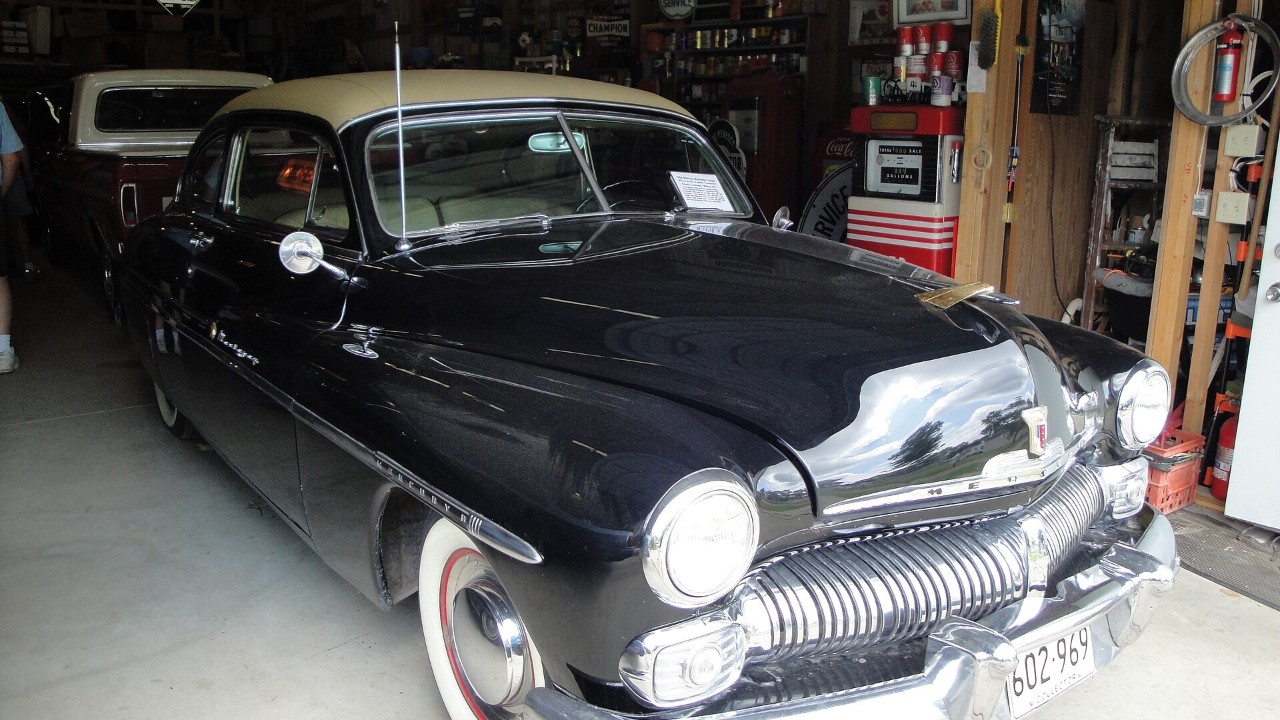
The first Monterey was Mercury’s dressiest two-door for 1950 and 1951. Mercury listed it as model 72C within the Mercury Eight series. Buyers could choose a roof covering in canvas or vinyl, and the two versions listed at $2,146 and $2,157. That was a small premium for a car that looked custom-made at the curb, so it is no surprise the name stuck around.
In fact, the standard equipment shows how hard Mercury pushed the luxury angle. Every Monterey got leather-faced seats, wool carpets, a two-toned dashboard and fender skirts. A gold winged ornament sat on the hood. Under it, a 255-cubic-inch flathead V8 did the work. Moreover, all-leather seats cost just $10 more.
We rank this coupe among Mercury’s best because it set the formula for everything that followed. It took a solid Ford-family chassis and gave it a dash of Lincoln flair. In our view, the 1950 Mercury Monterey coupe is the purest version of the brand’s idea. It looks as good parked as it did new, and the low, rounded body still draws a crowd at any show.
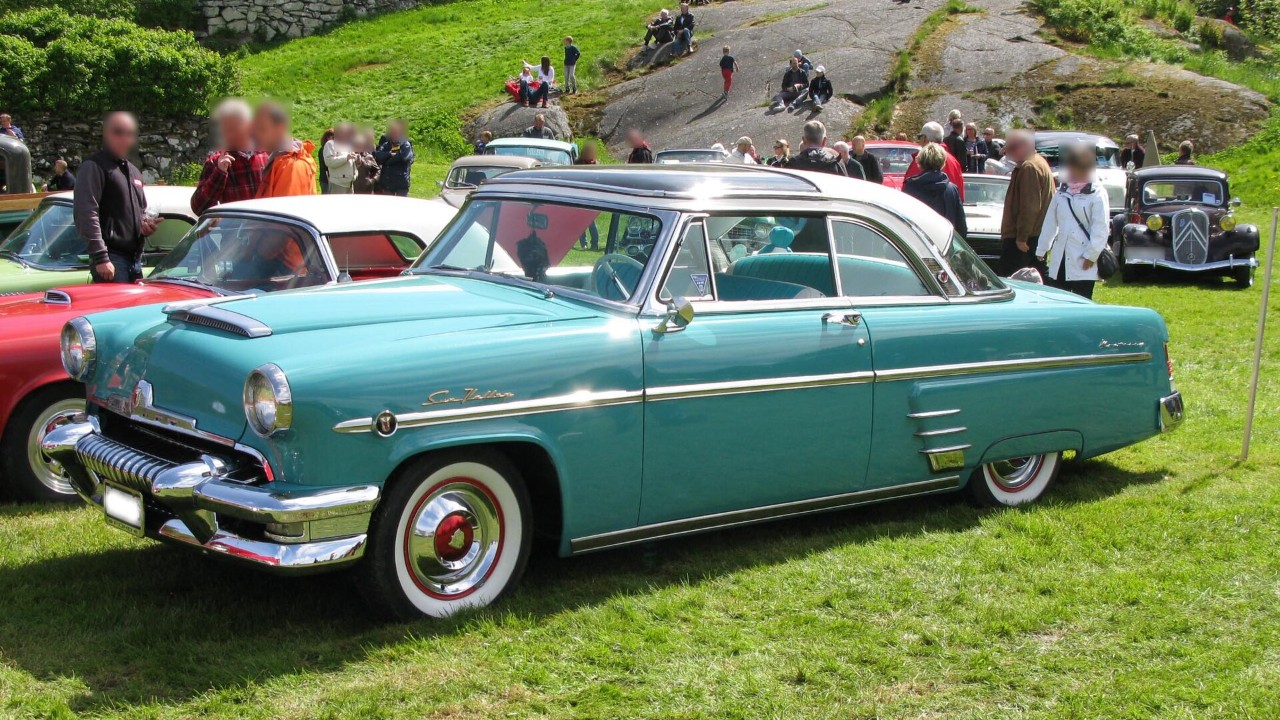
2. 1954 Mercury Sun Valley
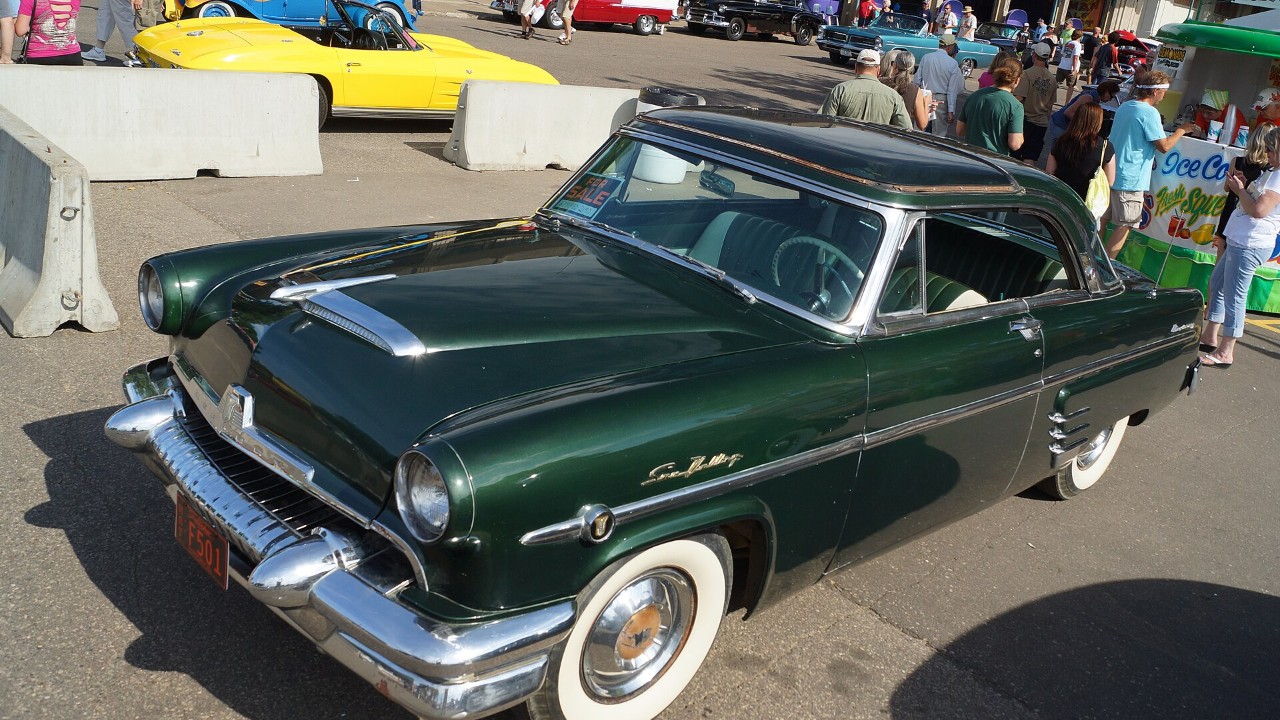
The Sun Valley was an unusual member of Mercury’s 1954 Monterey series. Its roof carried a green-tinted Plexiglas panel over the front half. According to The Henry Ford’s collection record, that window offered “a panoramic view of the sky.” The name came from the ski resort at Sun Valley, Idaho.
The glass roof was only part of the news. For 1954, the Mercury Monterey Sun Valley also got Ford’s new overhead-valve Y-block V8, rated at 161 horsepower. The Henry Ford lists the price at $2,562, a premium of $110 over a solid-roof Monterey coupe. It also notes that Mercury built fewer than 10,000 Sun Valley coupes that year.
Our take: the Sun Valley is a perfect snapshot of 1950s optimism, because it sold the sky as an option. A clear roof over a family coupe sounds simple today. In 1954, however, it was a bold move from a mid-priced brand, and it worked well enough to carry on for 1955. We’d put it near the top of any Mercury list for nerve alone, and for the view from the driver’s seat.
3. 1956 Mercury Montclair hardtop
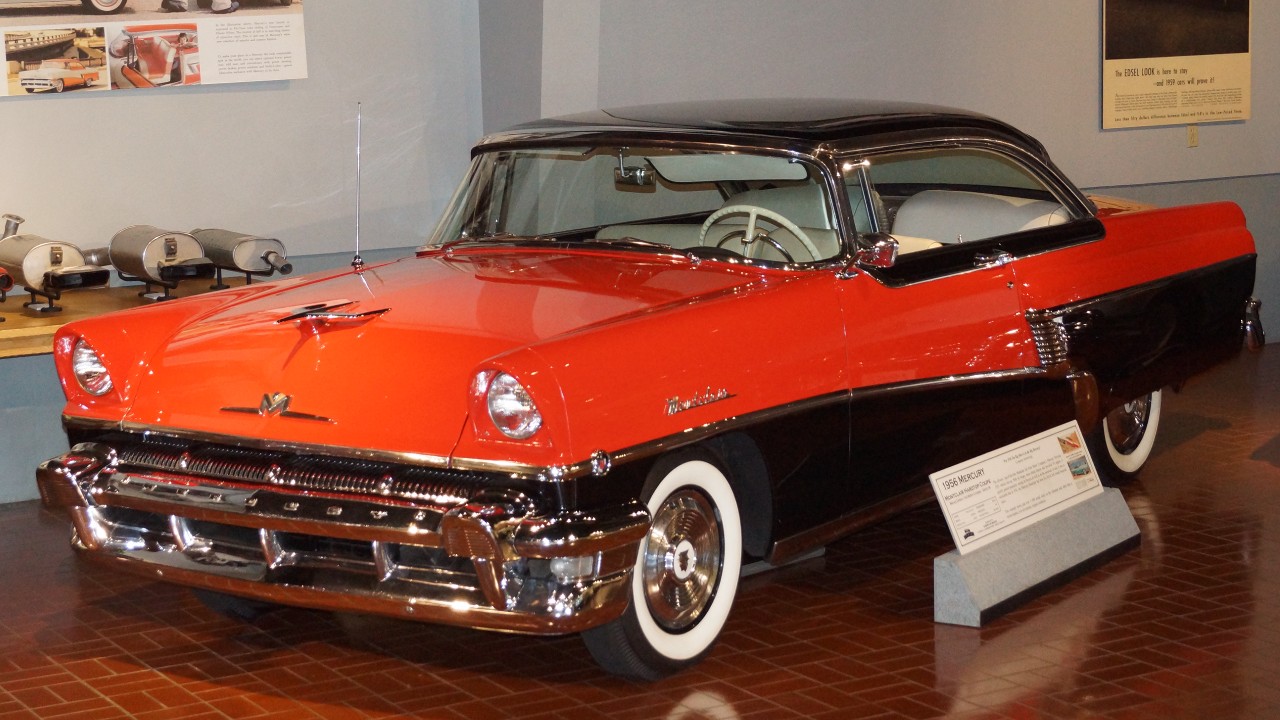
Mercury added the Montclair for 1955 as a premium line above the Monterey. For 1956, the hardtop gained real muscle. The 292-cubic-inch V8 grew to 312 cubic inches and 225 horsepower. An optional version with two four-barrel carburetors made 260 horsepower. As a result, a dressy Mercury hardtop now had real performance to match its looks.
The 1956 car also got a modern makeover underneath, which buyers could not see but certainly felt. It switched to a 12-volt electrical system and standard dual exhaust. Mercury’s version of Ford’s Lifeguard safety package added a deep-dish steering wheel and safety door locks. Meanwhile, buyers could pick from 31 two-tone and 28 Flo-tone paint combinations, so no two seemed alike in a parking lot. Mercury also swapped the old hood crest for a “Big M” emblem.
We rank the 1956 Montclair hardtop among the best because it balanced style, comfort and speed better than most mid-priced cars of its day. The pillarless roof makes the cabin feel open and light. In our opinion, it is the Mercury that best shows off the brand’s mid-1950s confidence, and its chrome side spear is pure period jewelry.
4. 1964 Mercury Comet Caliente
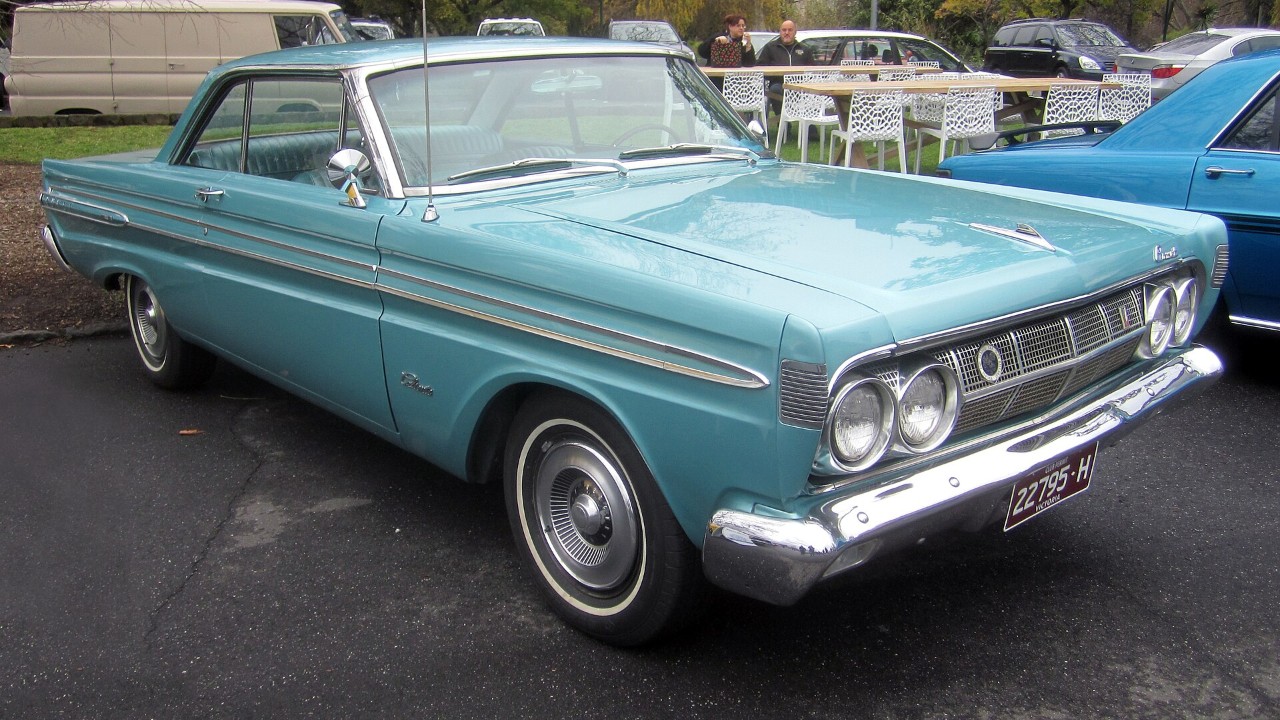
Mercury redesigned the Comet for 1964 with a squarer shape on the same unibody. Its new grille looked a lot like the Lincoln Continental’s. Mercury also renamed the trim levels that year. The Caliente sat at the top of the regular range, above the 404 and the 202, while the Cyclone became the performance model.
Engine choices also grew during the year. The 260 V8 was available from the start of production, and the new 289 arrived mid-year. That gave a Caliente buyer small-car handling with real V8 punch. Meanwhile, Ford built about 50 lightweight Comet Cyclones for 1964 with a twin-carburetor 427. Ronnie Sox and Don Nicholson drove them in A/FX drag racing.
Our take: the Caliente is the sweet spot of the 1964 Comet line. It looks upscale, drives lighter than a full-size Mercury and shares its basic shell with a drag-strip hero. In our view, a V8 Caliente hardtop is one of the most usable classic Mercurys you can own. It is easy to park and easy to live with, and it still feels special on a Sunday drive.
5. 1966 Mercury Park Lane Breezeway
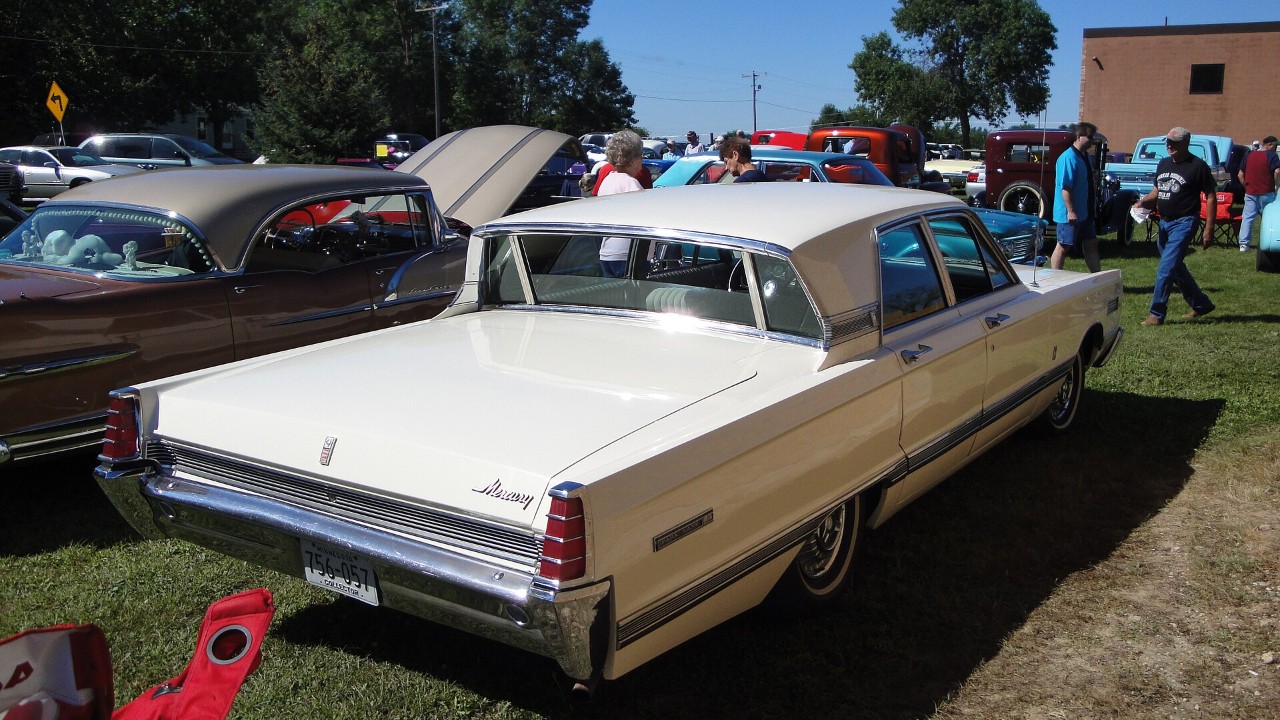
The Breezeway’s trick was a rear window that slanted backward and dropped down. According to Mac’s Motor City Garage, the idea first appeared on the 1955 D-528 concept. It then reached production on the 1957 Turnpike Cruiser. Lincoln made the retractable glass standard on its 1958–1960 Continental sedan and convertible, and Mercury brought it back with fanfare for 1963.
At first, the 1963 line had eight Breezeway models across the Monterey, Montclair and Park Lane trims. Over 92,000 sold that year. By 1965, Mercury limited it to four-door sedans, and sales fell to about 46,000. Fewer than 6,000 buyers chose the 1968 option. The reason was simple: air conditioning did the same job better.
We rank the Park Lane Breezeway among Mercury’s best because nobody else did it quite like this. Lowering the glass pulled stale air out of the cabin, though it could also draw in road fumes. In our view, the 1966 Park Lane is the most stylish way to enjoy one. It pairs the quirky roof with the top trim of the big Mercury line.
6. 1971 Mercury Cyclone GT
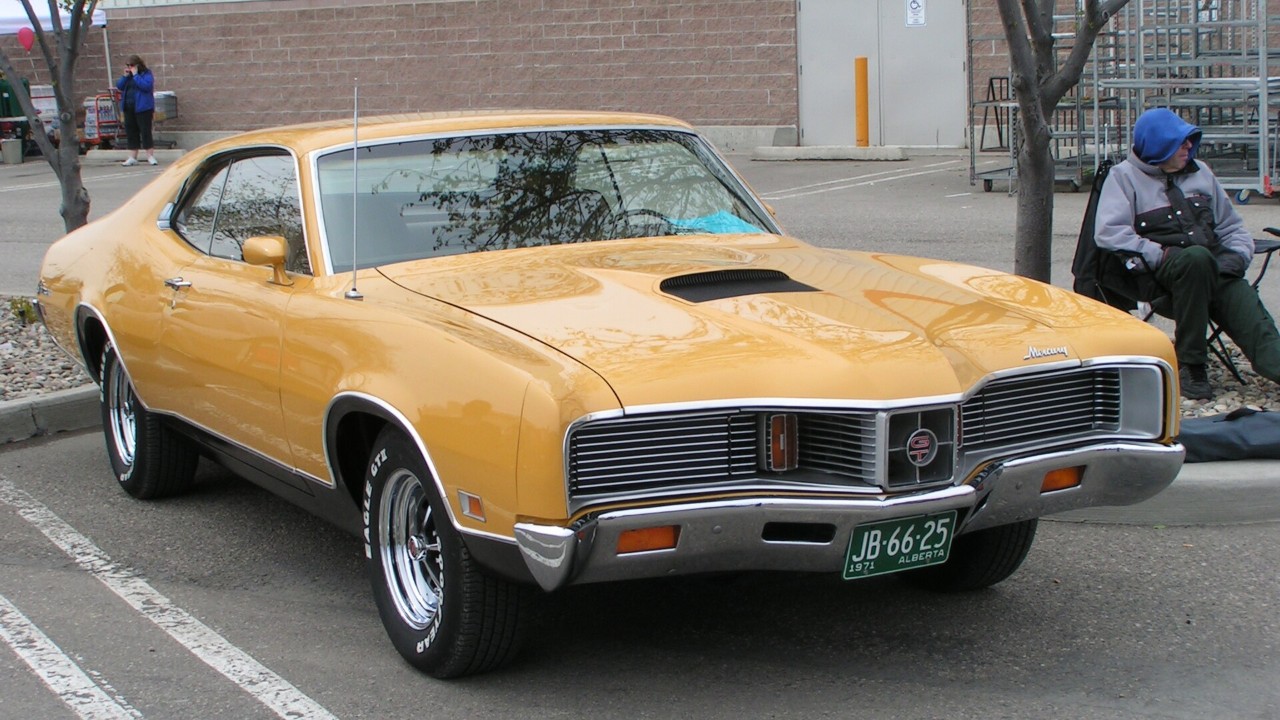
The 1971 Cyclone GT was the last of its kind. For that year, Mercury marketed the line as the Montego Cyclone. The center of the grille got a larger ring in its gunsight design, and the GT wore its own badge. We have covered how the 1971 Cyclone GT arrived just before an era ended, and the production numbers tell that story too.
Mercury built only 444 base Cyclones, 2,287 GTs and 353 Spoilers for 1971. Production of the Cyclone line ended after that model year. A 1972 Cyclone option package on the Montego followed, but only 30 were built. In other words, the GT was by far the most common of the final Cyclones, and that is still a small number.
Our take: the Cyclone GT is the grown-up muscle car of the group. It is the comfortable, well-dressed version of the last Cyclone, and Mercury built far more of them than the Spoiler. We think that makes it one of the smartest buys among late Mercury muscle. After all, it marks the end of a nameplate that began on the 1964 Comet.
7. 1991 Mercury Capri XR2
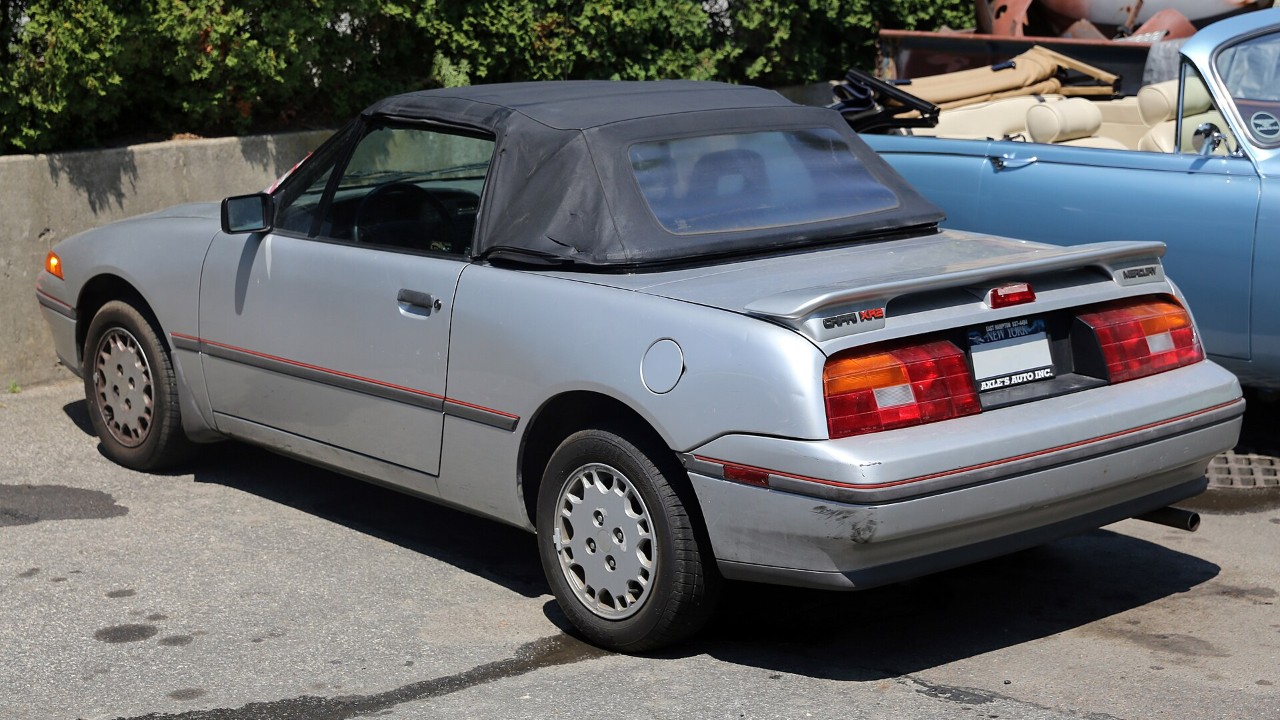
The third Capri was something new for Mercury: a small front-drive convertible built by Ford of Australia. Consumer Guide’s review says Mercury sold it from 1990 to 1994. By comparison, the base car used a 1.6-liter twin-cam four with 100 horsepower. The XR2 added a turbocharger, raising output to 132 horsepower and 136 lb-ft of torque.
For the driver, a five-speed manual was standard, and an optional lift-off steel hardtop turned it into a snug coupe for winter. It was not perfect. The rear “seat” had just 25.8 inches of legroom, and owners reported convertible top leaks. Check that the 1991–1992 airbag module recall was done, too. Still, a turbo roadster with four seat belts was a rare thing in a Lincoln-Mercury showroom.
We rank the Capri XR2 among Mercury’s best because it took a real risk. We have written about how the 1974 Mercury Capri brought European flavor to showrooms, and this one brought Australian flavor instead. In our view, the turbo XR2 is the one to find. It is quick, light and a lot more unusual than the small roadsters most people remember from that era.
8. 1995 Mercury Grand Marquis LS
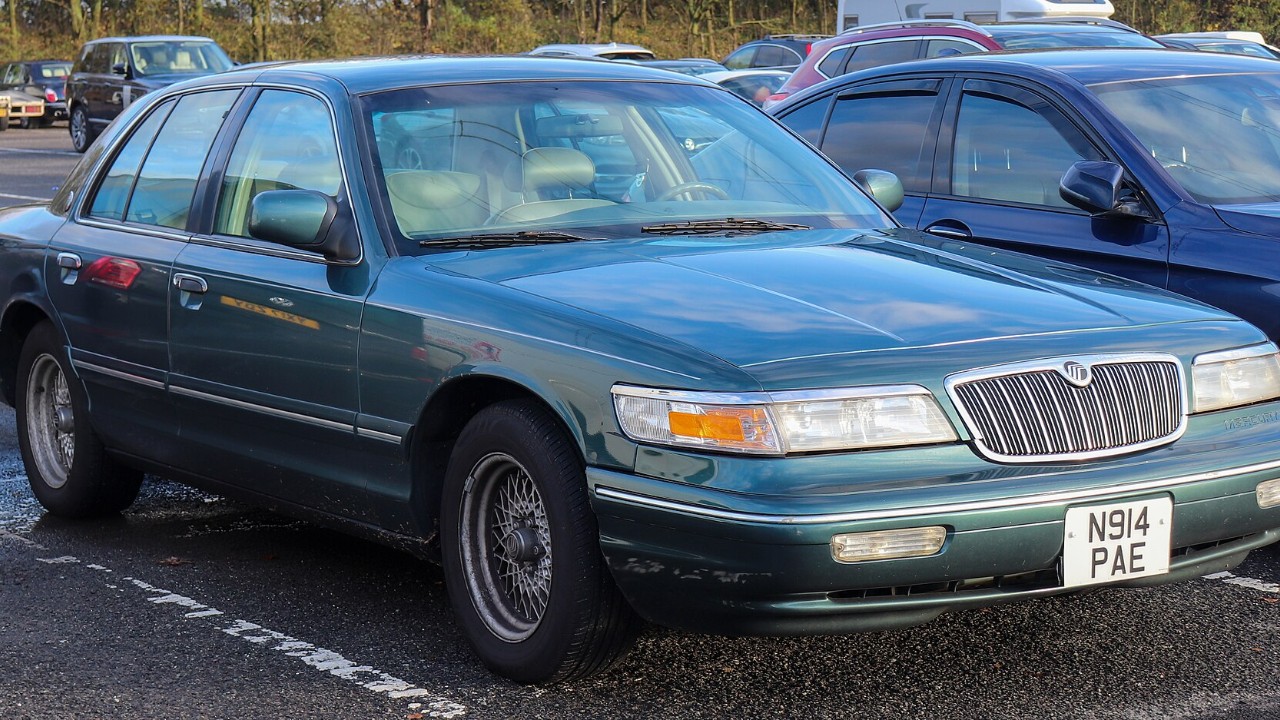
The Grand Marquis rode on Ford’s Panther platform and became the brand’s steady earner. For 1992, it got an all-new body and a 4.6-liter SOHC V8. That engine made 190 horsepower with single exhaust, or 210 with dual exhaust. The 1995 update added a larger, rounder grille, clear front lenses, a redesigned dashboard and the 4R70W automatic transmission.
The LS was the deluxe trim, and front cornering lamps set it apart from the base GS. In our eyes, those lamps are the quick giveaway on a used-car lot. Clearly, buyers liked the formula. The Grand Marquis outsold the Ford Crown Victoria in 1994 and 1997, despite the Ford’s police and fleet sales. Mercury built 688,107 of the 1992–1997 generation, and 94,202 of those came in 1995.
We rank the Grand Marquis LS among Mercury’s best because it did exactly what its buyers wanted for decades. It is quiet, roomy and simple to repair. In our opinion, a clean mid-1990s LS is one of the best-value classic cruisers you can buy. Ford built the last Grand Marquis, a white LS Fleet model, on January 4, 2011, after 2,716,679 had been made.
More from Fast Lane Only