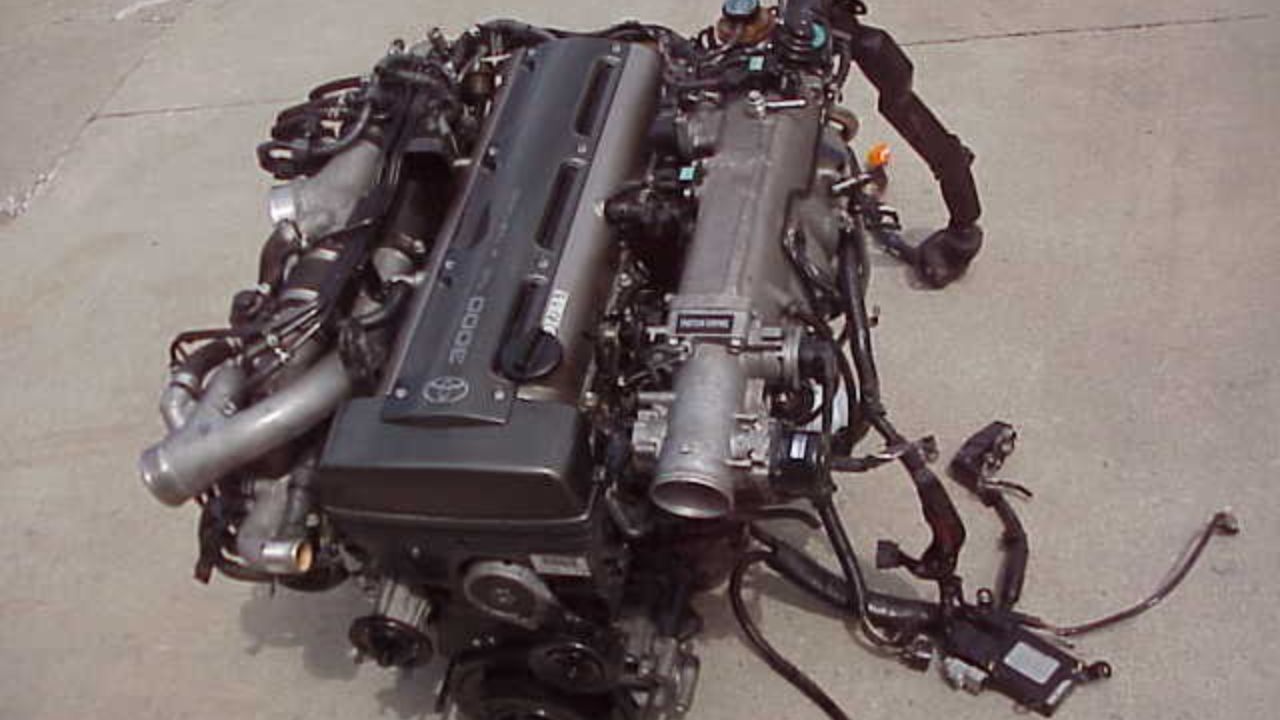
The Toyota 2JZ engine has become one of the most respected powerplants in automotive history, not just for its tuning potential but for its remarkable ability to survive extreme mileage and abuse. While enthusiasts often focus on its turbo strength, the real secret lies in a set of understated engineering decisions that gave it legendary durability.
Toyota designed the 2JZ with an overbuilt foundation for long-term reliability
When Toyota developed the Toyota 2JZ-GTE engine, the goal was not just performance, but long-term reliability under both daily driving and high-load conditions. Built during an era when Toyota emphasized engineering conservatism, the engine was designed with significantly more structural strength than required for stock output.
One of the key hidden advantages was its closed-deck iron block construction, which provided exceptional rigidity under high cylinder pressures. This design reduced cylinder wall flex, helping the engine maintain stability even under sustained boost. Combined with a robust forged steel crankshaft, the 2JZ was built to handle stress levels far beyond its factory tuning.
Internal strength gave the engine extreme tuning headroom
The Toyota 2JZ-GTE engine became famous in tuning circles because its internal components were engineered with unusually high safety margins. Even in factory form, the engine could tolerate significantly more power than it was originally rated for, making it a favorite among performance builders.
Under Toyota engineering philosophy, durability was prioritized over weight savings or cost reduction. This meant thicker castings, stronger internals, and conservative stress levels across moving parts. As a result, the engine could handle increased boost pressure with fewer immediate failures compared to many competing turbocharged engines of its era.
Cooling and oiling design helped prevent long-term failure
Another often overlooked strength of the Toyota 2JZ-GTE engine was its efficient oiling and cooling system design. Proper lubrication is critical in turbocharged engines, and the 2JZ was engineered with oil flow paths that prioritized consistent delivery under both low and high RPM conditions.
This robust lubrication strategy helped reduce wear on critical components such as bearings and turbocharger systems. Combined with strong thermal management, it allowed the engine to maintain stable operating conditions even under sustained performance driving, contributing significantly to its long service life.
Conservative factory tuning left massive performance headroom
Unlike many modern engines that operate close to their limits for efficiency and emissions, the Toyota 2JZ-GTE engine was conservatively tuned from the factory. This meant it was not pushed anywhere near its mechanical breaking point in stock form.
Under Toyota development strategy, this buffer allowed the engine to absorb additional stress from aging, varied fuel quality, and increased boost in modified applications. This is one of the reasons the 2JZ gained such a strong reputation for surviving modifications that would quickly destroy less robust engines.
The 2JZ legacy is built on durability hidden beneath simplicity
Today, the Toyota 2JZ-GTE engine is remembered not just as a tuning icon but as a masterclass in overengineering. Its combination of a strong block, forged internals, conservative tuning, and efficient oiling system created an engine that could withstand far more abuse than its original specifications suggested.
That hidden engineering philosophy is what cemented its legendary status. While many engines achieve short bursts of performance, the 2JZ earned its reputation by continuing to run strong long after expectations were exceeded, making it one of the most respected inline-six engines ever built.
More from Fast Lane Only