Ford’s LTD spent much of its life dismissed as a soft, chrome-laden family sedan, yet beneath the vinyl roofs and velour upholstery sat a series of quiet engineering decisions that gave it unexpected pace. From big block highway bruisers to Fox-platform sleepers, the LTD’s performance story is written in option codes, police packages, and chassis tweaks that rarely made the brochure.
Those hidden upgrades, often buried under the language of “luxury” and “comfort,” turned a supposedly sedate full-size into a car that could surprise both critics and rivals. Tracing those choices across two decades reveals how Ford used the LTD badge to smuggle serious hardware into a segment better known for opera windows than quarter-mile times.
From Brougham cruiser to “luxury sleeper”
When Ford introduced the LTD as its top-trim full-size, the official message centered on comfort and status, not acceleration. Contemporary descriptions of the 1970 model emphasize that it was Designed as Ford’s flagship, with a long, elegant body, vinyl roof options, bold chrome, and a spacious interior that fit the era’s idea of American luxury. Yet that same car has since been described as a “perfect blend of luxury and performance,” a combination that earned it a reputation as a “luxury sleeper” among enthusiasts who discovered how much power could be ordered under all that formality.
The formula was straightforward but effective: pair a refined cabin with serious V8 muscle and chassis tuning that was better than the styling suggested. Period commentary on the 1968 and 1969 models notes that while some observers preferred the sharper lines coming from Europe and Italy, the LTD’s updated “Brougham” approach still sold in large numbers, helped by the availability of strong engines and a suspension that could handle American highways at speed. The car’s success, even as pundits gave it little love, shows how buyers responded to a package that hid its performance potential behind a conservative exterior.
Big blocks behind the buttoned-down image
Long before the LTD name migrated to smaller platforms, Ford was already using it to cloak serious displacement. The 1966 Ford Galaxie 500 LTD 390 Big Block V8 is described as a full-size American cruiser that combined luxury with muscle, and that pairing of “500” trim and “390” cubic inches set the tone for what the LTD badge could represent. In that car, the LTD designation signaled an upscale interior and extra trim, but the “390” and “Big Block” labels told a different story to anyone who cared about straight-line speed.
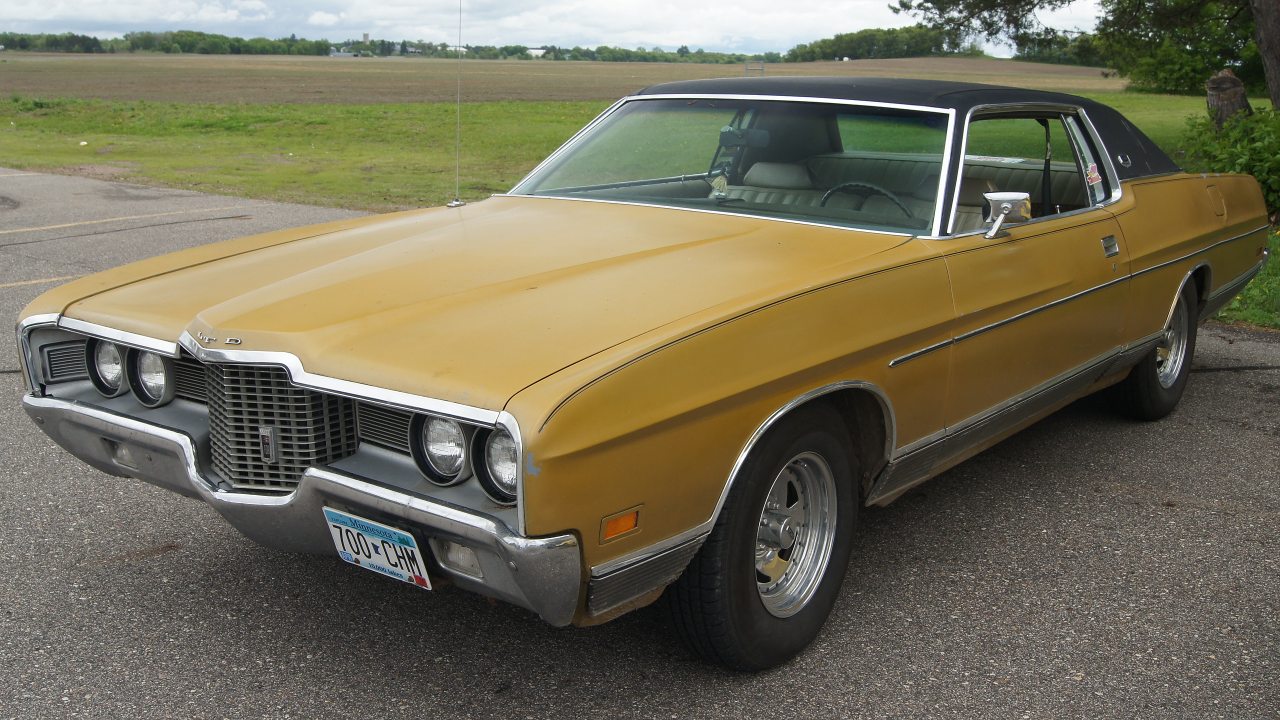
The same pattern continued into the early 1970s, when a 1971 Ford LTD equipped with a 429 cubic inch V8 was presented as a symbol of a time when full-size American cars were unapologetically powerful. That model featured a long, wide body, a fastback-style SportsRoof option, hidden headlights, and a wide eggcrate grille, all of which reinforced its presence as a luxury flagship. Yet the 429 under the hood meant that, despite its size, the car could deliver the kind of acceleration more commonly associated with dedicated performance models, turning the LTD into a highway overtaking tool that belied its formal image.
Land yachts with quiet strength
By the mid 1970s, the LTD had fully embraced its role as a “land yacht,” but the performance thread never disappeared. Descriptions of the 1974 and 75 Ford LTD models refer to them as “Luxurious” and “Standard Size” full-size land yachts, with the 75 cars in particular framed as big, comfortable cruisers that followed the discontinuation of the Galaxie line. Even in this era of softer suspensions and thicker sound deadening, the LTD’s size and available V8 power meant it could cover long distances at a pace that surprised those who judged it only by its plush ride and sheer bulk.
The 1976 Ford LTD Landau sharpened that dual character. Presented as a premium full-size offering that emphasized comfort, elegance, and quiet strength, the Ford LTD Landau sat at the top of the range. As the flagship trim, it wrapped occupants in luxury while still offering big block power and the kind of relaxed, high-speed capability that made it a favorite for interstate travel. The car’s marketing leaned heavily on its status and serenity, but the underlying hardware ensured that, when pressed, it could move with far more urgency than its formal styling suggested.
The Fox-platform LTD and the four-door Mustang idea
The most explicit expression of hidden performance in the LTD story arrived when Ford shifted the name onto the Fox platform. From the mid 1984 model year through 1985, the company offered a performance version of the LTD marketed as the LTD LX. Built on the same Fox architecture as the Mustang, The Ford LTD LX shared key underpinnings with that pony car, including the layout that allowed it to accept serious V8 power and more sophisticated suspension tuning than traditional full-size sedans.
One of the most telling examples of this strategy was the 1984 to 85 LTD police package, described as One of those niche models that combined the Mustangs 5.0 liter V8 with an enhanced suspension and upgraded brakes. This configuration, sometimes referred to as “the four door Mustang,” gave law enforcement a sedan that could keep pace with performance coupes while still carrying officers and equipment. The same basic idea informed the LTD LX sold to civilians, which used the venerable 5.0 in High Output form, a favorite among Ford enthusiasts once it emerged as the go-to V8 in the early 1980s. In effect, Ford had taken the family sedan silhouette and filled it with Mustang-grade running gear, creating a car that looked like a modest mid-sizer but drove like a performance machine.
Subtle hardware, serious intent
What made these LTD variants genuinely surprising was not only the engines, but the way Ford integrated performance hardware without shouting about it. The Fox-based LTD and LTD LX retained factory steering wheels and instrumentation that looked familiar to anyone used to Ford sedans of the period, much as other restomod projects have kept stock dashboards while hiding 140-mph speedometers and upgraded drivetrains. In the LTD’s case, the sleeper effect was deliberate: the exterior remained conservative, while the chassis and powertrain quietly borrowed from the brand’s more overtly sporting models.
This approach echoed a broader pattern in American performance culture, where Automakers in the 1960s and 70s had already learned to tuck serious capability into otherwise ordinary-looking cars. By the time the LTD nameplate was riding on the Fox platform, Ford had decades of experience balancing luxury and speed, from the early Galaxie-based LTDs with their 390 and 429 engines to the later Ford LTD Crown Victoria LX, described as a full-size American luxury sedan with classic proportions. Across those generations, the hidden performance trims and police packages turned the LTD into more than a comfortable cruiser. They made it a quiet statement that, in the right specification, a family sedan could carry the heart of a Mustang while still wearing a suit and tie.
More from Fast Lane Only