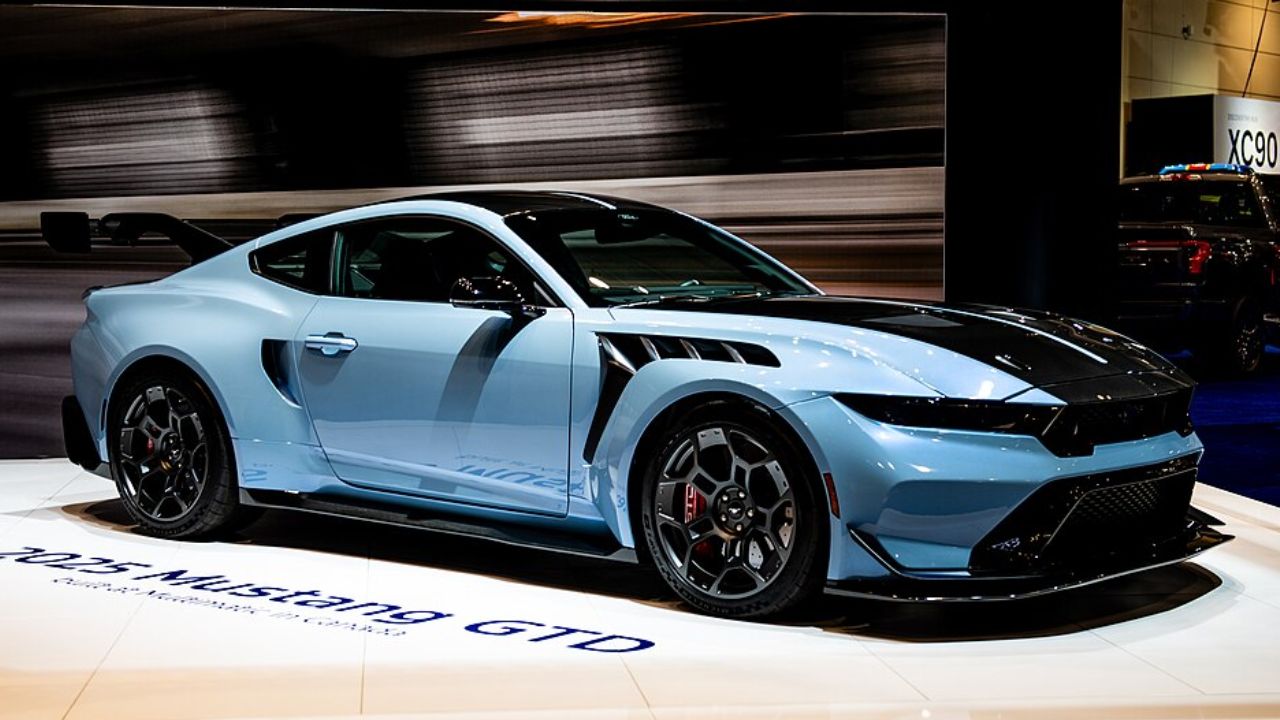
The recent reveal of the Ford Mustang GTD has sent shockwaves through the automotive community, showcasing unprecedented power and performance. As enthusiasts and experts alike digest this new information, questions arise about what this means for the future of performance vehicles and the Mustang legacy.
The Power Unleashed: Specifications of the Mustang GTD
The Ford Mustang GTD is powered by a 5.2-liter supercharged V8 engine, delivering a staggering 800 horsepower and 625 lb-ft of torque. This powertrain is a significant leap from previous Mustang models, such as the GT500, which boasted 760 horsepower. The GTD’s engine is paired with a dual-clutch automatic transmission that enhances acceleration, offering a 0-60 mph time of just 3.6 seconds. This performance metric not only positions the GTD as a formidable competitor but also redefines what a Mustang can achieve on the road.
When comparing the GTD to earlier iterations, the differences are striking. The Mustang GT, for instance, provides a respectable 450 horsepower, while the GT350 and GT500 aimed to push boundaries but never quite reached the GTD’s extreme power levels. With the GTD, Ford has raised the bar for muscle cars, merging traditional performance with cutting-edge technology, paving the way for a new era of automotive excellence.
Technological Innovations Behind the GTD
The engineering behind the Mustang GTD is nothing short of revolutionary. Ford has equipped the vehicle with advanced aerodynamics, including an adjustable rear wing that enhances downforce at high speeds. Additionally, the GTD incorporates a sophisticated suspension system derived from Ford’s racing heritage, allowing for superior handling and stability on the track. This level of engineering not only improves performance but also enhances the driving experience, ensuring that the GTD is as exhilarating on the road as it is on the racetrack.
One notable innovation is the integration of hybrid technology, a move that reflects the industry’s shift towards sustainable performance. While the GTD primarily relies on its powerful V8 engine, the potential for hybrid assistance could offer drivers improved efficiency without sacrificing performance. This hybrid approach opens discussions about the future of performance cars, especially as consumers become more environmentally conscious. Lightweight materials, such as carbon fiber used in the bodywork, further contribute to the GTD’s agility and responsiveness, making it a leader among its peers.
Market Positioning: Where Does the GTD Fit?
Positioned as a flagship model, the Mustang GTD enters a highly competitive segment of performance vehicles, facing rivals like the Chevrolet Corvette Z06 and the Porsche 911 Turbo. Each of these competitors boasts impressive performance metrics and brand loyalty, making it essential for the GTD to carve out its niche. Priced around $300,000, the GTD targets affluent enthusiasts who desire top-tier performance combined with the iconic Mustang heritage.
The target demographic for the Mustang GTD is likely to include seasoned car enthusiasts and collectors who appreciate the blend of tradition and innovation. This model not only appeals to those who have followed the Mustang legacy but also attracts a new generation of buyers looking for cutting-edge performance. With its expected market response, many analysts predict that the GTD will not only meet but exceed sales expectations, solidifying Ford’s position in the luxury performance market.
Performance Testing: Real-World Implications
Initial performance testing of the Mustang GTD has yielded promising results, with early reviews praising its acceleration and handling. On the track, the GTD has demonstrated exceptional cornering capabilities, thanks to its advanced suspension and lightweight construction. Real-world testing conditions reveal that the GTD handles like a true sports car, allowing drivers to push the limits while maintaining control.
However, as with any high-performance vehicle, long-term reliability and maintenance are vital considerations. While the GTD is designed for durability, prospective owners should be aware of the potential costs associated with maintaining such a powerful machine. Regular servicing, high-performance tires, and specialized parts could significantly impact the ownership experience, making it essential for buyers to prepare for the realities of performance vehicle ownership.
The Mustang Legacy: Evolution of an Icon
The Mustang has long been an American icon, representing freedom, power, and performance since its debut in 1964. Over the years, the brand has evolved, adapting to changing consumer preferences and technological advancements. The Mustang GTD, with its modern engineering and hybrid technology, represents a significant evolution while still honoring the brand’s storied past. This model aligns with the traditional Mustang values of performance and style but pushes the boundaries further than ever before.
As Ford looks to the future, the GTD’s impact on the Mustang lineup may be profound. It signals a shift towards innovation while still retaining the muscle car essence that has attracted generations of fans. The introduction of the GTD may pave the way for future Mustang models to incorporate advanced technologies, ensuring that the brand remains relevant in an ever-evolving automotive landscape.
Environmental Considerations: The Hybrid Debate
With the Mustang GTD’s hybrid powertrain, discussions surrounding environmental impact have become increasingly relevant. Hybrid technology, while offering improved fuel efficiency, has historically faced skepticism from traditional performance enthusiasts. However, Ford’s approach to integrating this technology into a performance vehicle represents a growing trend in the automotive industry.
Public perception of hybrid technology is gradually shifting as consumers become more aware of the environmental implications of their choices. While some enthusiasts may resist the idea of a hybrid Mustang, the benefits of reduced emissions and better fuel economy cannot be ignored. As regulatory standards become stricter, embracing hybrid technology may be essential for performance vehicles to thrive in the future.
Consumer Reactions: What Are Enthusiasts Saying?
The buzz surrounding the Mustang GTD has been palpable, with social media platforms lighting up with reactions from both fans and critics. Enthusiasts have expressed excitement over the vehicle’s specifications and innovations, particularly its impressive power and potential track capabilities. On platforms like Facebook, many have praised Ford for pushing the boundaries of what a Mustang can be.
Automotive journalists have also weighed in, with many experts highlighting the GTD’s significance in the performance car segment. Reviews from outlets like CarBuzz commend the GTD for its blend of tradition and innovation, recognizing it as a potential game-changer in the market. Anticipated demand is high, with many pre-orders expected as enthusiasts eagerly await the chance to experience this new iteration of the Mustang.
Future Developments: What’s Next for Ford?
Looking ahead, the success of the Mustang GTD could lead to exciting expansions within the Mustang lineup. Ford has hinted at the possibility of introducing additional performance variants, potentially incorporating more hybrid technologies or even fully electric options. As the automotive landscape continues to evolve, the Mustang must adapt to meet the expectations of a new generation of drivers.
Speculation is rife regarding future technologies and features that could appear in forthcoming models. With competitors continuously innovating, Ford’s strategic direction in the performance vehicle market will be critical. The Mustang GTD may serve as a foundation for future advancements, ensuring that the brand remains at the forefront of high-performance vehicles.
The Mustang GTD’s significance lies not only in its performance and specifications but also in its ability to adapt to the changing dynamics of the automotive industry. As we look towards an uncertain future, it’s clear that the Mustang legacy is in capable hands with the introduction of this groundbreaking model.
More from Fast Lane Only