For a brief window in the late 1960s and early 1970s, one unassuming four-door car could run with the era’s fiercest muscle cars while looking like a company car left in the airport lot. It carried the same big-block heart and quarter-mile numbers as the headline grabbers, yet it slipped through history with almost none of the spotlight. Today, that quiet contradiction has turned it into one of the most intriguing sleeper performance cars on the collector market.
At a time when muscle meant stripes, spoilers, and insurance headaches, this car offered a different deal: family-friendly packaging, understated styling, and performance that belonged in the staging lanes, not the carpool line. Its story shows how Detroit’s horsepower wars did not always arrive wrapped in flamboyant graphics, and why some of the most capable machines of the era are only now getting their due.
What happened
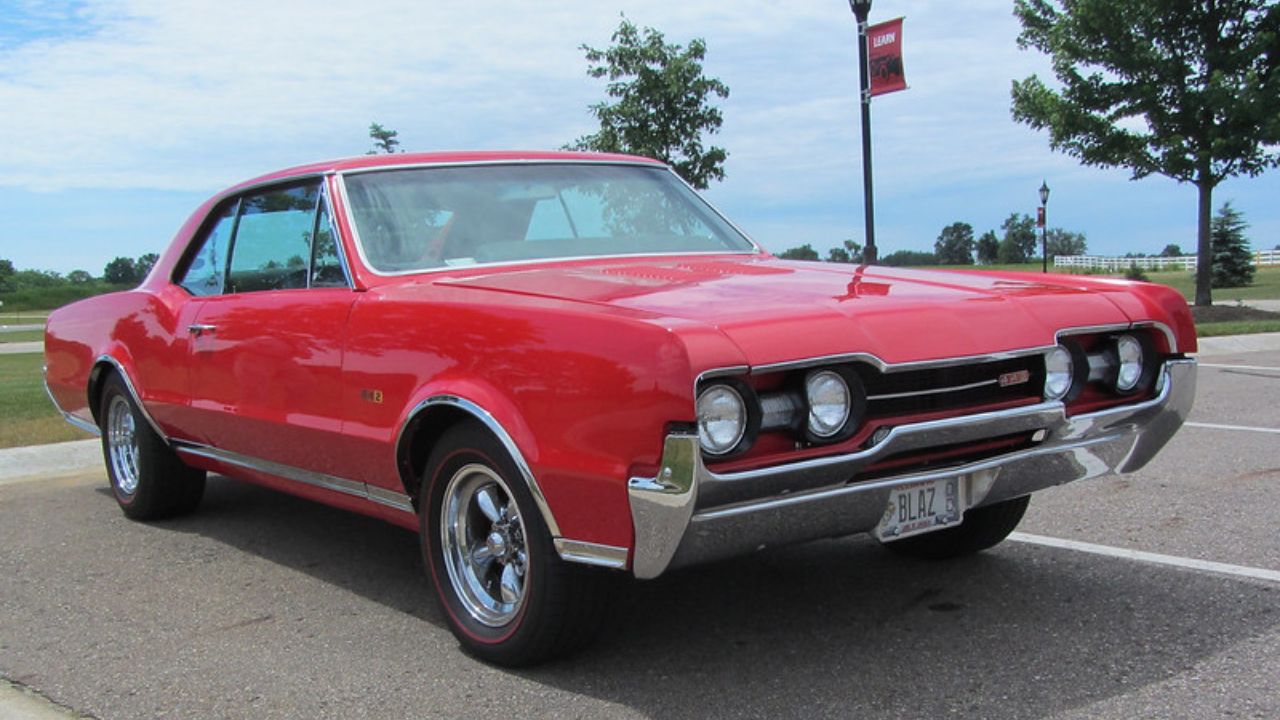
The car in question is the Oldsmobile 442-powered car, most closely associated with the late-1960s Oldsmobile Cutlass-based models that hid genuine muscle hardware behind conservative sheet metal. While Oldsmobile is now a defunct brand, enthusiasts have turned the brand’s sleeper-era output into a kind of treasure hunt, with collectors quietly chasing specific 442-spec car that combine big-block power, luxury trim, and four-door practicality. Modern coverage of Oldsmobile muscle highlights how these understated cars, often ordered by buyers who wanted speed without attention, have become some of the most desirable sleepers in the marque’s history.
In period, Oldsmobile’s performance reputation centered on the 442 coupe and convertible, but the same 400 and later 455 cubic inch V8s, heavy-duty suspensions, and performance gearing could be optioned into more formal body styles. That meant a buyer could order a four-door car with the same drivetrain as a 442, complete with dual exhaust, performance intake, and aggressive axle ratios, yet still arrive at the office in a car that looked like a mid-level executive’s commuter. The result was a factory-built contradiction: a muscle car in mechanical terms, wrapped in a car that did not advertise its capabilities.
Period test numbers for similarly equipped Oldsmobile intermediates show that with a 455 V8 and proper gearing, these cars could run quarter-mile times in the low to mid 14-second range, right in the territory of more overt muscle machines of the day. The car’s slightly higher weight and less aggressive tires might cost a few tenths, but the core experience remained the same: effortless torque, strong mid-range pull, and a top-end rush that felt out of place in a car with four doors and chrome hubcaps.
Contemporary enthusiasts group these Oldsmobile cars with a broader field of “sleeper” performance cars, vehicles that shocked onlookers by delivering far more speed than their appearance suggested. Coverage of forgotten sleepers often points to family cars and wagons that shared engines and chassis with headline muscle cars. In that context, the Oldsmobile 442-powered cars fit neatly beside other under-the-radar machines that were ordered by buyers who knew the option sheets well and preferred anonymity to showmanship.
The Oldsmobile formula mirrored a broader Detroit trend. Manufacturers realized that not every performance buyer wanted stripes and spoilers. Some wanted to keep insurance premiums manageable, avoid unwanted attention from law enforcement, or simply enjoy high performance as a private indulgence. By offering big engines and heavy-duty components in sedate bodies, companies like Oldsmobile tapped into a niche that bridged the gap between muscle cars and luxury cars.
In the years since, the spotlight has shifted. The most famous muscle coupes, with their bright paint and limited-production performance packages, became auction darlings. The cars that shared their mechanical DNA spent decades as used cars, then as budget enthusiast projects, and only recently as collectible artifacts. As coverage of underrated muscle has grown, attention has followed toward vehicles that combined serious performance with low-key styling, a pattern that matches the Oldsmobile car’s trajectory from overlooked to sought after.
Why it matters
The story of this Oldsmobile car matters because it challenges the default image of what a muscle car is supposed to look like. Popular culture has long defined the genre through coupes with long hoods, short decks, and loud graphics. Yet the hardware that created the muscle car myth, from big displacement V8s to performance rear axles and upgraded cooling systems, often found its way into cars that looked like they belonged in a corporate parking lot. The Oldsmobile 442-powered cars reveal how much of the muscle era unfolded away from the spotlight.
They also illustrate how performance and image became decoupled for a certain kind of buyer. Insurance companies in the late 1960s and early 1970s began to surcharge obvious muscle models, tracking nameplates and option codes that signaled high performance. A car with a big engine and minimal external badging could slip through those filters more easily than a garishly painted coupe. For some owners, the ability to enjoy 400-plus cubic inches of torque without the financial penalty associated with a famous muscle nameplate was a key part of the appeal.
That disconnect between appearance and capability is central to the “sleeper” identity. A sleeper car is defined less by its peak horsepower figure and more by the gap between what it looks like and what it can do. In that sense, a four-door Oldsmobile with a 455 V8 and bench seats embodies the concept. It looks like a family car, it drives like a muscle car, and it invites the kind of underestimation that makes surprise victories at stoplights or drag strips possible.
For historians and enthusiasts, the existence of such cars complicates any simple narrative about the muscle era as a parade of two-door icons. It shows that the performance arms race reached into every corner of the showroom, from wagons to luxury cars. The Oldsmobile example suggests that engineers and product planners were willing to package serious performance into almost any body style if a customer asked for it and the platform could handle the stress.
That flexibility also hints at how American car culture has always been shaped by the tension between show and go. Some buyers wanted to broadcast their performance credentials with stripes, hood scoops, and rear spoilers. Others preferred a car that blended in. The Oldsmobile car’s understated exterior, combined with a big-block engine and performance chassis, served the second group. Its appeal lay in the knowledge that the car could outrun expectations without advertising its capabilities.
The car’s modern collector status reinforces that point. As the most obvious muscle icons have soared in value, enthusiasts have begun to seek out alternatives that deliver similar performance and period character at a lower entry cost. The Oldsmobile cars that share components with the 442 offer that mix. They bring the same torque-rich engines and rear-wheel-drive dynamics, but their conservative styling and four-door layout kept them off the radar for decades. That relative obscurity has made them attractive to collectors who value authenticity and driving enjoyment over pure investment potential.
They also serve as a reminder that performance heritage does not always align neatly with brand stereotypes. Oldsmobile spent much of its history cultivating a reputation for comfort and refinement rather than raw speed. Yet the same division produced some of the era’s most potent big-block combinations, and it quietly installed them in cars that could keep pace with better-known street racers. Recognizing that history broadens the understanding of what brands like Oldsmobile contributed to American performance culture.
For modern drivers, the Oldsmobile car’s formula feels surprisingly current. Today’s performance market is filled with powerful cars that hide their capabilities behind restrained styling. Cars like the Dodge Charger Hellcat, Cadillac CT5-V Blackwing, and various European super cars have revived the idea that a family car can embarrass dedicated sports models. The Oldsmobile 442-powered cars represent an early chapter in that same story, a time when the idea of a high-horsepower four-door was still a subversive choice rather than a mainstream product line.
There is also a cultural angle. The muscle car image has long been tied to youth culture, rebellion, and a certain loud, extroverted attitude. A car that delivered similar straight-line performance without the attitude suggests a different kind of enthusiast: older, perhaps more established, but unwilling to give up speed. The Oldsmobile car becomes a symbol of that buyer, someone who wanted to merge adult responsibilities with the thrill of a big-block V8.
On the market, these cars illustrate how value follows stories as much as specifications. For years, they were simply old cars with thirsty engines. As the narrative around sleepers and underrated performance models has grown, their desirability has increased. Collectors now seek them for the same reason original buyers ordered them: they offer muscle car performance wrapped in a package that does not shout for attention. That combination of capability and discretion has proved surprisingly durable.
What to watch next
The future of the Oldsmobile 442-powered car in the collector world will likely track broader trends in how enthusiasts value sleepers and under-the-radar performance cars. As coverage of forgotten sleepers continues to spotlight overlooked models, awareness of these cars is likely to grow. Increased attention usually brings rising prices, especially for cars with documented performance options and original drivetrains.
One key factor will be the availability of accurate documentation. Because these cars did not wear their performance credentials as visibly as a 442 coupe, paperwork such as build sheets, window stickers, and factory order forms becomes critical. Collectors who can verify that a given car left the factory with a 400 or 455 V8, performance axle, and heavy-duty suspension will be better positioned as interest rises. Cars that lack documentation may remain more affordable, but they will also carry more uncertainty.
Another area to watch is how younger enthusiasts respond to the sleeper concept. Many of today’s performance fans grew up with turbocharged imports and modern sport compacts, where understated styling and surprising performance are already part of the culture. For that audience, a vintage four-door with a big-block V8 and steel wheels may feel like a natural extension of what they already appreciate. If that connection takes hold, demand for sleeper-era cars could extend beyond traditional muscle car circles.
There is also the question of how the broader market for underrated muscle evolves. Coverage of underrated modern muscle suggests a growing appetite for cars that deliver serious performance without the inflated prices of headline models. That mindset can easily transfer to classic iron. As the most famous muscle coupes become financially out of reach for many buyers, attention is likely to shift further toward cars that offer similar driving experiences at lower cost, including cars and wagons with shared mechanicals.
Parts support and restoration culture will play a role as well. The Oldsmobile V8 family shares components across many models and years, which helps keep mechanical upkeep manageable. Body and trim pieces for cars can be harder to source than for coupes, but a growing recognition of these cars’ significance could encourage reproduction efforts. The more feasible it becomes to restore a car to factory condition, the more likely enthusiasts are to invest in them.
More from Fast Lane Only