Most performance packages are marketed with loud badges and louder price tags. The one that fascinates enthusiasts most is the opposite: a quietly ticked option box that turned ordinary Detroit metal into something close to a factory prototype, often without the buyer fully understanding what they had. In the muscle era, a handful of cars left the factory with hidden hardware that would later send collectors scrambling to decode build sheets and fender tags.
That disconnect between what buyers thought they were getting and what the factory actually built still shapes how rare American performance cars are valued, authenticated, and fought over today. The story of those stealth upgrades is really about how paperwork, production quirks, and a few determined engineers created a shadow tier of muscle machines that almost disappeared in plain sight.
What happened
In the late 1960s and early 1970s, Detroit carmakers were juggling conflicting pressures. Insurance companies were cracking down on overt performance models, regulators were tightening emissions rules, and corporate policies often limited advertised horsepower. At the same time, engineers and racing departments wanted to keep building faster cars for the street and the track. The compromise frequently arrived as low-visibility performance packages that could be ordered through internal codes, dealer workarounds, or obscure option groups.
Some of the rarest American muscle cars existed not as standalone models but as hidden configurations of otherwise familiar nameplates. Production runs sometimes numbered in the dozens or low hundreds, and in a few cases just a handful of cars were built. Many left showrooms without stripes, spoilers, or loud graphics. To the casual eye, they looked like regular intermediates or pony cars, yet under the skin they carried engines, suspensions, and driveline parts that the brochures barely mentioned.
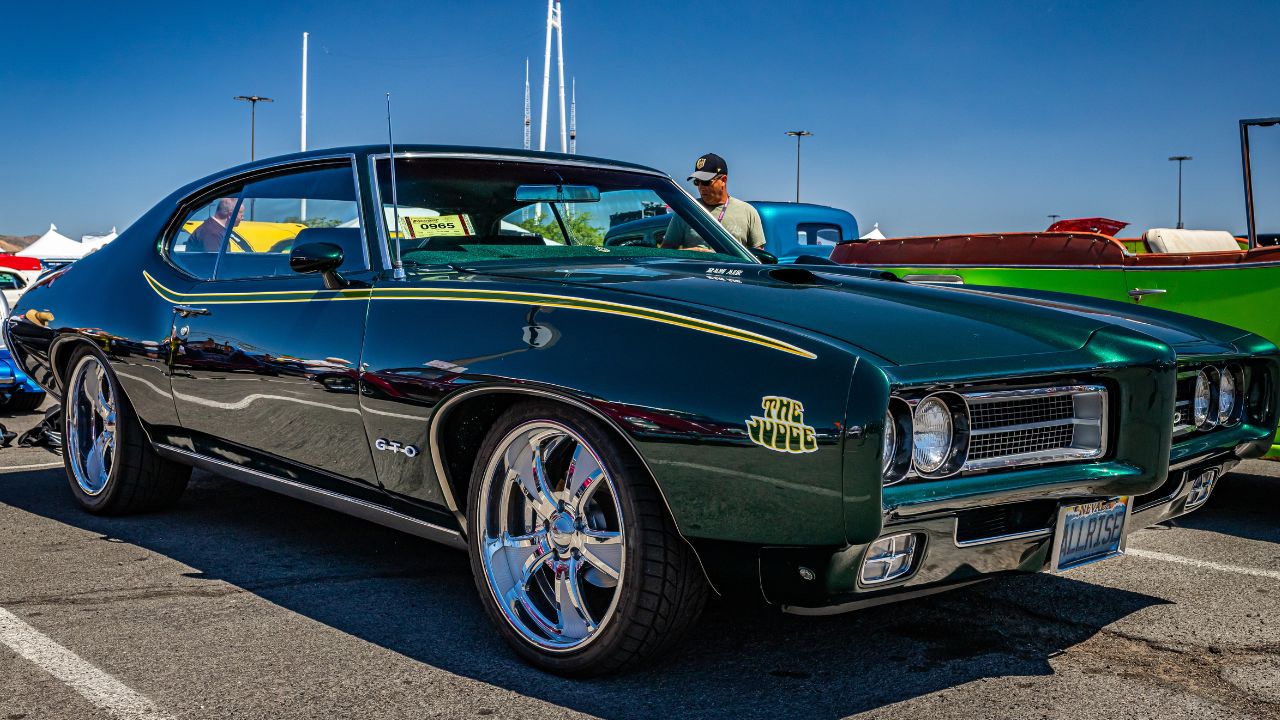
One of the clearest examples of this phenomenon comes from the Pontiac camp. The brand built a small number of GTO Judge convertibles with the Ram Air IV engine, a 400 cubic inch V8 that was essentially a race-bred powerplant. Total production of those Ram Air IV Judge convertibles amounted to only a few dozen cars, a figure that makes them rarer than many celebrated exotics. As outlined in an overview of ultra-rare muscle, these Pontiacs blended a mainstream body with hardware that only the most informed buyers even knew to request.
Ford followed a similar path with certain variants of the Mustang. Beyond the headline Boss and Shelby models, a series of low-production configurations paired big-block engines with subtle exterior trim. Some cars carried high-spec 428 or 429 engines backed by heavy-duty drivetrains and competition suspensions, yet wore minimal badging. They were ordered by drag racers, road racers, or well-connected dealers who understood Ford’s internal ordering codes and could navigate the system to secure parts that never appeared in consumer advertising.
Chevrolet and Chrysler brands also leaned on this quiet approach. High-performance Chevelle and Nova builds, often tied to Central Office Production Order (COPO) processes, used fleet or special-order channels to sneak powerful big-block engines into otherwise unassuming packages. On the Mopar side, limited runs of Dodge and Plymouth models received engine and chassis combinations that existed primarily to satisfy homologation rules for NASCAR or NHRA competition. Many of these cars were technically available to the public, but only buyers with inside knowledge or racing connections knew to ask for them.
The result was a split reality. On paper, the manufacturers could claim compliance with insurance and corporate edicts by keeping official performance numbers conservative and limiting flashy marketing. On the street and at the drag strip, owners who had stumbled into the right combination of option codes found themselves driving cars that performed well beyond what their window stickers suggested.
Why it matters
The legacy of those obscure performance packages is felt most directly in the collector market. Because so many of these cars were ordered in small numbers and often used hard, surviving examples are extremely scarce. Their value hinges on documentation, since outward appearances can be deceiving. A car that looks like a basic intermediate coupe might be worth a modest sum if it left the factory with a standard drivetrain, or several times that amount if paperwork proves it carries a rare engine and option package.
For Pontiac GTO Judge Ram Air IV convertibles, for example, the difference between a clone and an authentic car can represent hundreds of thousands of dollars. Collectors scrutinize build sheets, Protect-O-Plate tags, and factory invoices to verify that the car was delivered with the correct engine code, transmission, and axle ratio. Because production totals were so low, each authenticated example effectively becomes a known quantity within the enthusiast community, tracked by serial number and ownership history.
The same pattern applies to low-production Ford and Chevrolet builds. A Mustang that looks like a typical late-1960s fastback might, with the right codes on its data plate, be one of a small batch equipped with a top-spec big-block and competition suspension. A Chevelle that appears to be a basic SS could in fact be a COPO car with a race-intended engine. In each case, the true identity of the car is hidden in paperwork and casting numbers rather than exterior styling.
This reliance on documentation has reshaped how collectors and restorers approach American muscle. Originality and provenance now matter as much as paint and chrome. Cars are often restored back to their exact factory build specifications, including color and options that might seem unremarkable, because those details help confirm authenticity. Reproduction parts can replicate the look of a rare package, but without matching numbers and paperwork, the market treats such cars very differently.
The hidden-package story also influences how enthusiasts understand the broader muscle era, challenging the idea that performance was always loud and obvious. In reality, some of the most capable cars of the period were built for buyers who either wanted to fly under the radar or simply trusted a dealer’s recommendation without grasping the full implications. A customer might have walked into a Pontiac or Chevrolet showroom asking for “the fastest one” and driven away in a car that, decades later, would be recognized as one of a few dozen built.
There is a cultural dimension as well. These cars illustrate the tension between corporate caution and engineering ambition. Insurance surcharges and internal horsepower caps pushed official marketing toward milder images, yet engineers and racing departments quietly kept the performance flame alive through special-order channels and coded option groups. The result was a dual personality for many brands: public-facing restraint paired with a shadow catalog of parts and packages for those who knew where to look.
For modern enthusiasts, that duality has turned the hunt for information into a hobby of its own. Decoding fender tags, cross-checking casting dates, and tracking production figures has become part of the appeal. Owners share registry data, compare notes on anomalies, and occasionally uncover previously undocumented builds. The detective work turns each car into a historical artifact, not just a machine.
The story also informs current debates about what counts as “real” performance heritage. When contemporary manufacturers revive classic nameplates or issue limited-run performance models, they often reference the rarity and mystique of these earlier stealth packages. Yet the original cars were not always marketed as collectibles. Many were simply tools for racing or spirited driving, used hard and discarded when newer models arrived. Their modern status as blue-chip collectibles is as much a product of survival odds and documentation as it is of factory intent.
What to watch next
The fascination with hidden performance packages is shaping how the next generation of enthusiasts interacts with both classic and modern cars. Several trends are emerging that echo the muscle era’s shadow options, even if the technology and regulatory environment have changed.
One trend involves modern manufacturers experimenting with software and subscription-based performance upgrades that can be activated after purchase. While the sources here focus on historical muscle, the pattern is similar. A car might leave the showroom with hardware capable of more power or sharper responses, yet only buyers who pay for an additional software unlock or track package receive the full capability. In practice, that creates another tier of “stealth” performance, this time defined by digital codes rather than carburetors and camshafts.
Another development is the way the collector market continues to reward documented rarity, especially for cars that combined everyday usability with hidden capability. As more information surfaces about production totals and option combinations, some models that once seemed ordinary may gain new attention. Enthusiasts already scour old dealer records and factory microfilm for evidence of unusual builds, and that archival work often reveals small runs of cars that were never widely publicized.
Third, the preservation of knowledge around these obscure packages is becoming a community effort. Clubs and online registries track serial numbers, share restoration details, and maintain lists of known survivors. That collective memory helps prevent rare cars from being misidentified or parted out. It also gives younger enthusiasts a way to connect with a period they did not experience firsthand, through stories tied to specific cars and their unusual factory configurations.
At the same time, there is an ongoing debate about how far to go in chasing rarity for its own sake. Some collectors focus almost exclusively on the lowest-production variants, even when the performance difference compared with more common models is marginal. Others argue that the spirit of the muscle era lives as much in accessible, driver-focused cars as in the handful of ultra-rare builds. That tension influences pricing, restoration choices, and which cars receive the most attention at auctions and shows.
Looking ahead, the most interesting developments may come from the intersection of historical research and modern technology. As digitized archives grow and data tools improve, it becomes easier to map factory production patterns and identify anomalies. That could lead to more precise counts of how many cars were built with specific combinations of engines, transmissions, and options. In turn, it may confirm the status of certain models as near one-offs, or reveal that others are less rare than previously believed.
For owners of classic American muscle, the practical takeaway is straightforward. Documentation has never mattered more. Original build sheets, factory invoices, and matching-number drivetrains can transform a car’s standing in the market, especially when they point to an obscure performance configuration. For buyers, due diligence around paperwork and casting codes is essential, since cosmetic restorations can easily disguise an ordinary car as something rarer.
For manufacturers, the lesson from those hidden packages is more subtle. The mystique that surrounds them today did not come from flashy marketing or planned scarcity alone. It grew out of genuine engineering ambition, real-world performance, and the sense that some cars carried more capability than their badges suggested. As brands navigate a future of electrification, software-defined vehicles, and regulatory constraints, the most enduring special models are likely to be those that offer that same feeling of discovery, even if the “option code” now lives in software instead of stamped metal.
More from Fast Lane Only