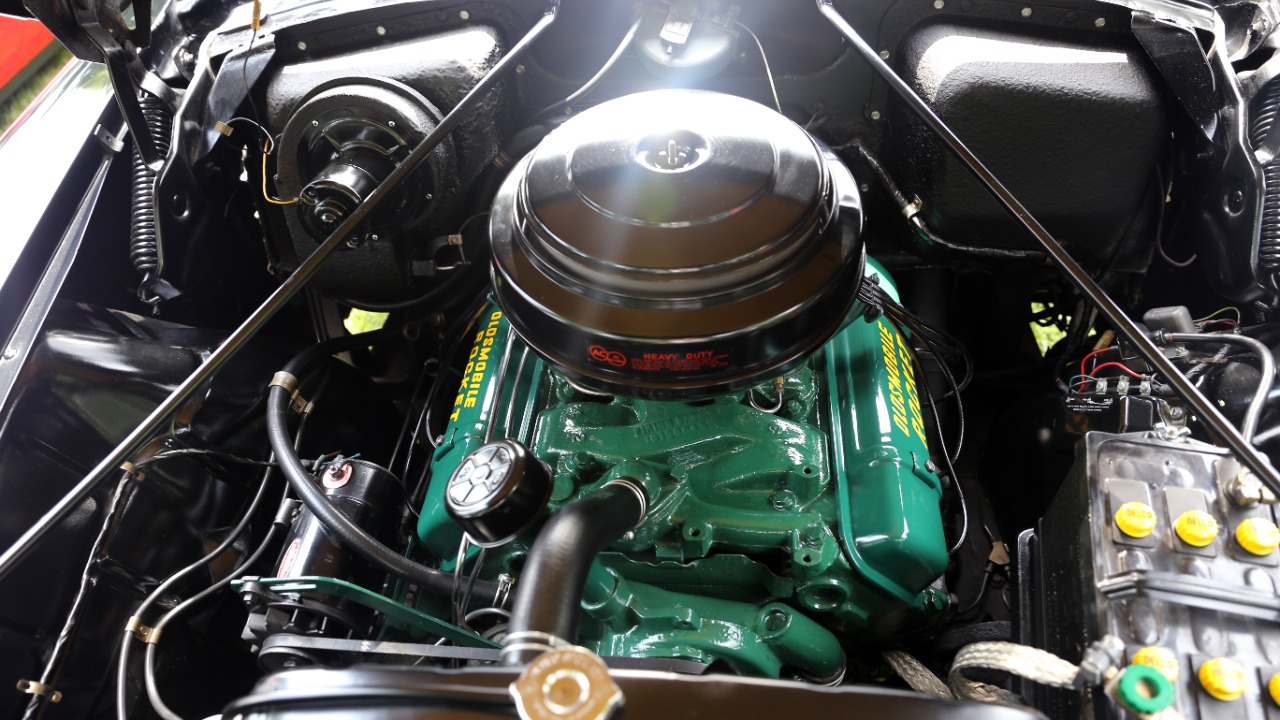
The Oldsmobile Rocket V8 is a legendary engine that transformed the automotive landscape in the 1950s. However, its journey to production was fraught with challenges, including internal company debates, technological hurdles, and market uncertainties. Understanding the intricacies behind its development reveals how a combination of visionary engineering and strategic decisions led to one of the most significant innovations in automotive history.
Background of Oldsmobile and the Automotive Industry in the 1950s
Oldsmobile, founded in 1897, has a rich history as one of the oldest automobile manufacturers in the United States. By the time the 1950s rolled around, Oldsmobile was known for its innovative spirit and commitment to quality. However, the automotive landscape was changing rapidly. The post-war era marked a significant shift in American culture, with consumers eager for new and exciting vehicles that reflected their aspirations. The demand for power and performance in cars was at an all-time high, and Oldsmobile was keen to capture a slice of this growing market.
During the 1950s, the American automotive industry was becoming increasingly competitive. Companies like Chevrolet, Ford, and Chrysler were aggressively marketing their own high-performance vehicles. This environment forced manufacturers to innovate continuously. As consumers began to favor performance over mere utility, the landscape shifted dramatically. The rise of muscle cars and the desire for speed and power led many companies, including Oldsmobile, to rethink their engine offerings. With the Rocket V8, Oldsmobile aimed to position itself at the forefront of this burgeoning segment.
The Development Process of the Rocket V8
The creation of the Rocket V8 was spearheaded by a team of talented engineers, including the likes of Charles Kettering and his successor, E. H. H. McGowan. Their vision was to develop a powerful and lightweight engine that could redefine performance standards. The initial design concepts were groundbreaking, incorporating features like overhead valves and a compact design that would allow for more efficient fuel combustion. This innovative approach was not merely about power; it was also about efficiency, a crucial factor for consumers in the rapidly changing market.
However, the path to production was not without its challenges. During the design and testing phases, the engineers faced numerous technical hurdles. From material limitations to engineering constraints, the team had to navigate a complex landscape of problem-solving. For instance, the desire to maximize horsepower while keeping the engine lightweight meant that they needed to experiment with new materials and designs, which often resulted in setbacks. Despite these challenges, the commitment to innovation kept the project moving forward, as the team remained focused on their goal of creating a truly revolutionary engine.
Internal Company Debates and Strategic Decisions
As the Rocket V8 project progressed, conflicting opinions emerged within Oldsmobile regarding its direction. Some executives were enthusiastic about the potential of the engine, believing it could propel the brand into a new era of performance. Others were more cautious, concerned about the risks associated with investing heavily in new technology during a time of market uncertainty. This internal debate highlighted the broader tensions within the automotive industry as companies navigated the balance between innovation and financial prudence.
The corporate culture at Oldsmobile also influenced the development of the Rocket V8. The management’s willingness to take risks was a double-edged sword. On one hand, it fostered an environment of creativity and innovation; on the other, it led to significant financial considerations that could have jeopardized the project. Ultimately, the decision to greenlight the Rocket V8 came down to a combination of market analysis and the persuasive power of its engineering team, who demonstrated the potential for significant returns on investment. The discussions were intense, but the vision of a powerful, market-ready engine ultimately prevailed.
Market Reception and Consumer Expectations
As Oldsmobile prepared to launch the Rocket V8, the market was already buzzing with anticipation. Industry forecasts suggested a growing consumer demand for high-performance vehicles, and the company was keen to capitalize on this trend. Early feedback from focus groups and test drives indicated that potential customers were excited about the prospect of a powerful engine that offered both performance and reliability. This positive reception gave the Oldsmobile team further confidence in the Rocket V8’s potential to succeed.
However, the competition was fierce. Rival engines from Ford and Chrysler were already making waves in the market, and Oldsmobile was under pressure to deliver something truly innovative. The Rocket V8 had to stand out not only in terms of performance but also in overall driving experience. The engineering team worked tirelessly to ensure that the engine not only met but exceeded consumer expectations. The result was an engine that delivered impressive horsepower and torque, allowing vehicles like the 1955 Oldsmobile 88 to accelerate with remarkable speed, setting the stage for a new era of performance in the automotive industry.
The Triumph of the Rocket V8 and Its Legacy
Eventually, the decision to move forward with the Rocket V8 was made, and the engine was officially launched in 1949. The factors that led to this outcome included a combination of strong market predictions, successful testing results, and a commitment from the engineering team. Initial reception was overwhelmingly positive, with consumers praising the performance and reliability of vehicles equipped with the new engine. The 1950s saw the Rocket V8 become a hallmark of Oldsmobile’s lineup, helping to establish the brand as a leader in performance and innovation.
The legacy of the Rocket V8 extends far beyond its initial launch. It set a new standard for performance engines, influencing not only Oldsmobile’s future offerings but also the broader automotive industry. The innovative design and engineering principles established with the Rocket V8 became benchmarks for subsequent generations of engines. Today, the Rocket V8 is remembered not just as an engine but as a symbol of Oldsmobile’s spirit of innovation and the transformative power of the automotive industry during a pivotal era in American history.
More from Fast Lane Only
- Unboxing the WWII Jeep in a Crate
- 15 rare Chevys collectors are quietly buying
- 10 underrated V8s still worth hunting down
- Police notice this before you even roll window down
*Research for this article included AI assistance, with all final content reviewed by human editors.