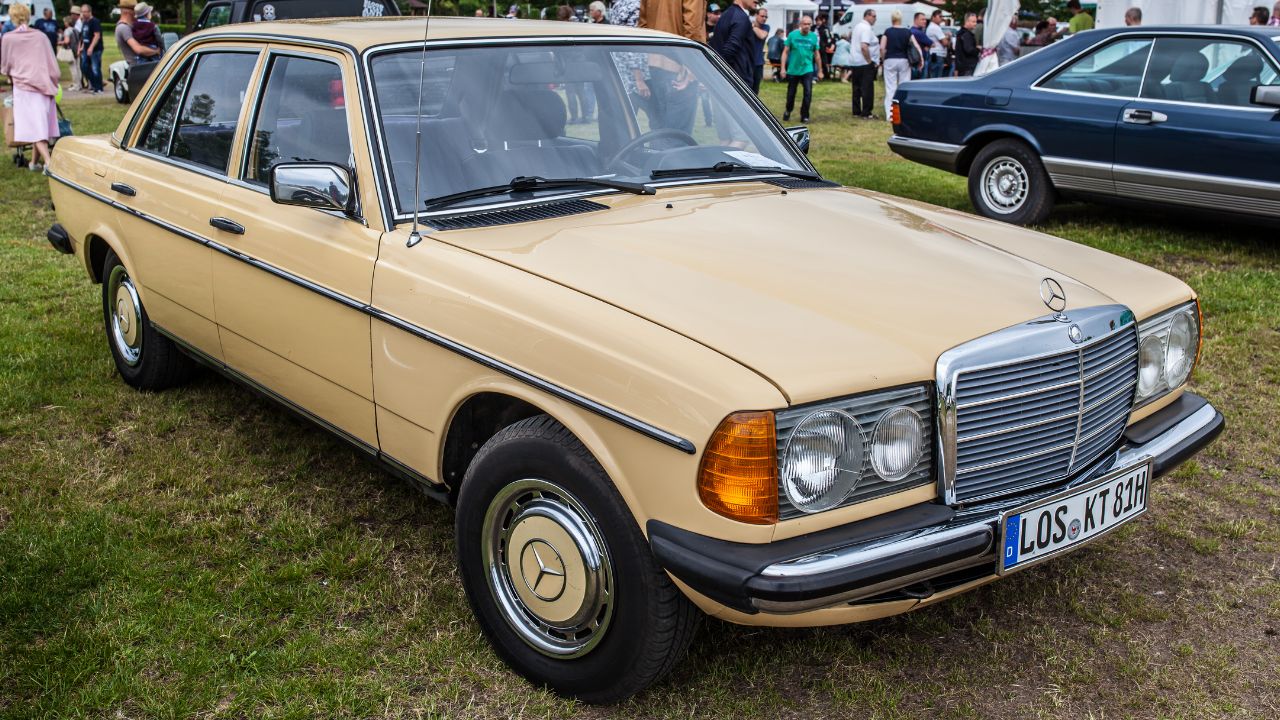
The Mercedes-Benz W123 is widely regarded as one of the most durable passenger cars ever built. While it earned praise around the world for its quality and engineering, its reputation became especially remarkable across Africa. In cities, villages, and remote regions alike, the W123 proved capable of surviving demanding roads, long distances, and decades of continuous use. Its legendary status was built not through advertising, but through a lifetime of dependable service.
Mercedes-Benz Built It to Last
Introduced in 1976, the W123 was engineered during an era when Mercedes-Benz placed exceptional emphasis on durability and longevity. The car featured a robust body structure, high-quality materials, and engines designed to deliver reliable performance over hundreds of thousands of miles with proper maintenance.
Both gasoline and diesel versions developed reputations for mechanical dependability, but the diesel models became especially admired for their simplicity and fuel efficiency. Their relatively straightforward fuel systems and sturdy construction made them well suited to regions where advanced repair facilities were not always available.
Rather than chasing cutting-edge technology, Mercedes-Benz focused on building a sedan that owners could rely on year after year.
That philosophy became the foundation of the W123’s enduring legacy.
Tough Conditions Proved Its Reliability
As W123s found their way across Africa through new sales and later used-vehicle imports, they quickly demonstrated their ability to withstand demanding conditions. Drivers regularly navigated rough roads, extreme temperatures, dusty environments, and long journeys between towns where mechanical assistance could be scarce.
Owners appreciated that routine maintenance often kept the cars operating reliably for many years. Skilled mechanics became familiar with the W123’s engineering, and the availability of replacement parts—both original and aftermarket—helped extend the lives of countless examples.
Many vehicles accumulated extraordinarily high mileage while continuing to serve as dependable daily transportation. Their reputation spread largely through word of mouth as drivers witnessed their remarkable longevity firsthand.
The W123 became known as a car that simply refused to quit.
It Served Communities in Countless Roles
The W123’s durability made it valuable in far more than private ownership. Across Africa, it became a common taxi, transporting passengers through busy cities and across rural highways. Government agencies, businesses, and aid organizations also relied on it for dependable transportation.
Families appreciated its spacious cabin and comfortable ride, while business owners valued its ability to cover long distances with relatively low operating costs. In many areas, a single W123 served multiple generations, passing from one owner to another while continuing to perform everyday duties.
Its adaptability allowed it to succeed in environments ranging from modern urban centers to isolated villages connected by unpaved roads.
Few passenger cars earned such widespread trust across so many different communities.
A Legacy That Continues Decades Later
Although production ended in the mid-1980s, the W123 remains a familiar sight in parts of Africa even today. Many examples continue operating as taxis, family cars, and privately owned classics, a testament to the strength of their original engineering.
Collectors worldwide also prize the W123 for its timeless styling, mechanical integrity, and reputation for exceptional longevity. Restored examples frequently appear at classic car events, while well-maintained originals continue proving that thoughtful engineering can stand the test of time.
Looking back, the Mercedes-Benz W123 became one of Africa’s most enduring vehicles because it consistently delivered what owners valued most: reliability, durability, and ease of maintenance. Those qualities allowed it to earn a place not only in automotive history but also in the everyday lives of millions who depended on it for decades.
More from Fast Lane Only
- Unboxing the WWII Jeep in a Crate
- 15 rare Chevys collectors are quietly buying
- 10 underrated V8s still worth hunting down
- Police notice this before you even roll window down
*Research for this article included AI assistance, with all final content reviewed by human editors