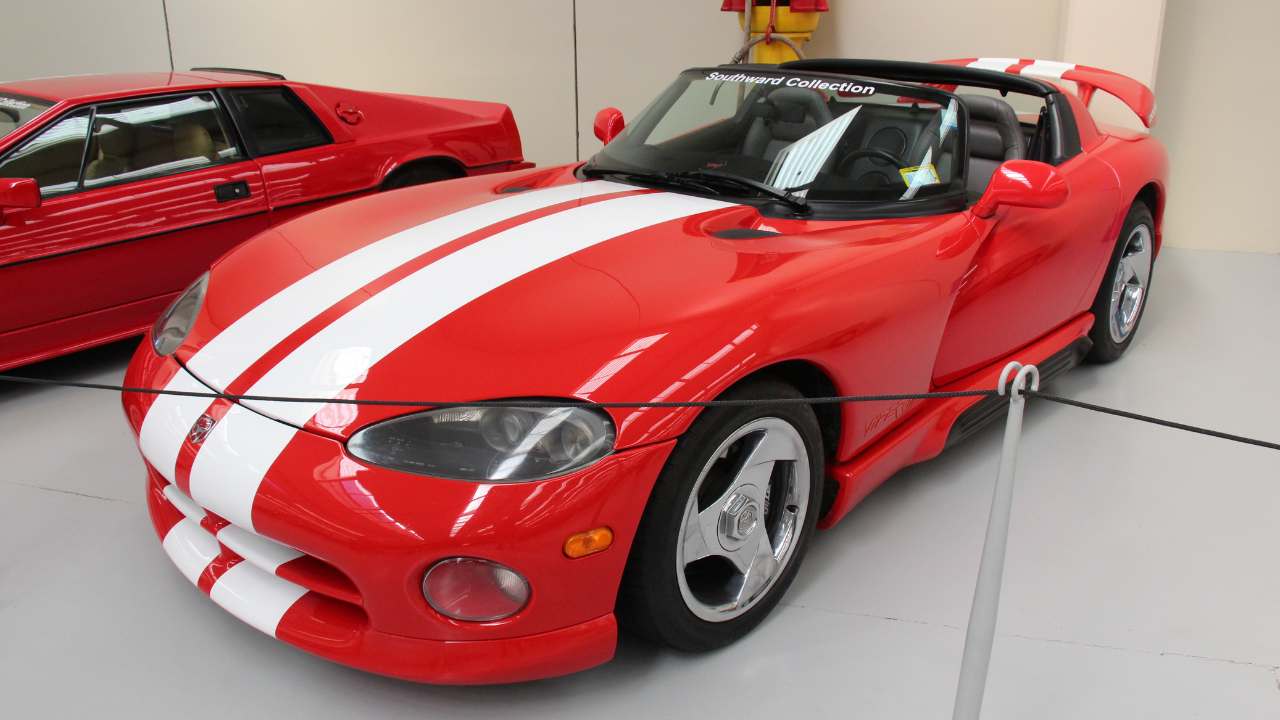
When the 1992 Dodge Viper reached showrooms, it looked like an impossible project that somehow became reality. Raw, unapologetic, and unlike anything else from an American automaker at the time, the Viper nearly disappeared before it even began. Behind its dramatic debut was a story filled with skepticism, persistence, and bold decisions.
A Radical Idea That Didn’t Fit Corporate Thinking
During the late 1980s, Chrysler was focused on practical vehicles that could generate reliable profits. Family sedans, minivans, and fuel-efficient models were viewed as safer investments than an expensive performance car. Many executives questioned whether building an extreme sports car made financial sense, especially for a company that had recently overcome significant financial struggles.
The proposal for the Viper challenged nearly every conventional business assumption. Instead of offering luxury, advanced electronics, or everyday comfort, the concept emphasized enormous power, lightweight construction, and a pure driving experience. Some decision-makers believed the market for such a vehicle was simply too small to justify production.
Supporters of the project argued that not every vehicle needed to generate massive sales volumes. Halo cars could reshape public perception of an entire brand, attracting attention that traditional family vehicles rarely received. They believed a dramatic sports car could restore excitement around Chrysler’s image and prove the company could still build something extraordinary.
As internal debates continued, the Viper remained far from guaranteed. Approval required convincing leadership that emotional appeal and brand prestige could be just as valuable as direct profits. Without that shift in thinking, the Viper might never have advanced beyond sketches and concept models.
Enthusiastic Engineers Refused to Let the Project Die
While executives debated costs and risks, engineers continued refining the sports car with remarkable determination. They envisioned a modern interpretation of classic American roadsters that emphasized mechanical simplicity rather than technological complexity. Their passion kept the project moving even when its future remained uncertain.
One of the defining goals was to eliminate unnecessary features that added weight or distracted from driving. Early versions lacked conveniences that buyers expected in premium cars, including exterior door handles, side windows, and even a permanent roof. The design focused entirely on delivering an unforgettable driving experience.
The engineering team also developed a massive V10 engine that immediately distinguished the Viper from competitors. The oversized powerplant became central to the car’s identity, producing immense torque and a character unlike anything else offered by domestic manufacturers. Its performance helped justify the vehicle’s uncompromising philosophy.
Their persistence gradually won over skeptics within Chrysler. As prototypes demonstrated impressive capabilities and generated excitement among enthusiasts, resistance softened. The engineers had transformed an unlikely proposal into a serious production candidate through relentless dedication and confidence in the concept.
Public Excitement Changed Executive Opinions
The turning point came when the Viper concept appeared before the public. Automotive enthusiasts, journalists, and industry observers responded with overwhelming enthusiasm. Rather than seeing an impractical toy, many viewed it as a bold statement that American performance had returned in dramatic fashion.
Positive reactions extended well beyond traditional sports car buyers. The concept attracted widespread media attention, creating valuable publicity for Chrysler before production had even been approved. Executives recognized that the excitement surrounding the vehicle offered marketing benefits impossible to achieve through conventional advertising campaigns.
The growing enthusiasm also demonstrated that buyers still appreciated vehicles built primarily for passion instead of practicality. The Viper became a symbol of confidence during a period when many manufacturers were becoming increasingly conservative with vehicle design. Public demand made it more difficult for executives to dismiss the project.
As enthusiasm continued building, internal doubts gradually gave way to opportunity. Leadership realized that the Viper had the potential to elevate Chrysler’s reputation far beyond the number of cars it would ultimately sell. That realization proved critical in securing the project’s future.
The 1992 Dodge Viper Became an American Performance Legend
When production finally began in 1992, the Dodge Viper stayed remarkably faithful to its original vision. It arrived without many modern driver aids, demanding skill and respect from anyone behind the wheel. That uncompromising nature became one of its greatest strengths rather than a weakness.
The Viper quickly established itself as one of America’s most recognizable performance cars. Its aggressive styling, thunderous V10 engine, and unmistakable personality earned admiration from enthusiasts around the world. Instead of chasing refinement, it celebrated raw performance in a way few modern sports cars dared.
Perhaps the greatest achievement of the Viper was proving that passion projects still had a place inside major automakers. Although it never became a high-volume seller, it transformed perceptions of Dodge and demonstrated that emotional appeal could strengthen an entire brand.
The strange story behind the 1992 Dodge Viper is ultimately one of persistence overcoming hesitation. Executive doubts nearly prevented its creation, but determined engineers, enthusiastic public support, and a willingness to embrace risk allowed one of America’s most iconic sports cars to reach production and leave a lasting legacy.
More from Fast Lane Only
- Unboxing the WWII Jeep in a Crate
- 15 rare Chevys collectors are quietly buying
- 10 underrated V8s still worth hunting down
- Police notice this before you even roll window down
*Research for this article included AI assistance, with all final content reviewed by human editors