America’s shift to mid-engine performance cars now forces every supercar builder to reassess long-held assumptions about power and prestige. The layout once reserved for European exotics now defines mainstream American flagships, and global rivals cannot ignore the changed landscape.
Detroit’s mid-engine pivot and its global shockwaves
American engineers treated front-engine muscle as sacred tradition, yet mid-engine flagships now signal a deliberate break from that heritage. Designers moved engines behind drivers to chase sharper balance, quicker lap times, and styling freedom that front-mounted layouts never allowed. Rivals abroad watched this transition closely, because American brands suddenly targeted the same buyers who previously favored Italian or German exotics. Supercar executives now study American chassis choices, aerodynamic tricks, and pricing strategies before finalizing their own halo projects. Analysts describe this shift as a structural change rather than a passing experiment, since manufacturers invested heavily in bespoke mid-engine platforms. European development teams quietly benchmark American mid-engine models on proving grounds, then adjust suspension tuning and electronic aids to stay competitive.
Global suppliers also feel the impact, because mid-engine packaging demands different cooling hardware, transmission layouts, and composite structures. Component makers now pitch compact dual-clutch gearboxes and rear-mounted hybrid modules to American and European brands simultaneously. Aerodynamicists refine underbody tunnels and rear diffusers that work across multiple mid-engine platforms, spreading research costs across continents. Marketing departments respond by emphasizing track capability and everyday usability together, since American buyers expect both attributes in expensive toys. Luxury dealers report that customers cross-shop American mid-engine cars with established European legends, rather than treating them as separate categories. That behavior pressures every supercar brand to justify its price, performance, and emotional appeal with greater clarity.
European exotics recalibrate performance benchmarks
European manufacturers long dominated mid-engine territory, so American entrants now push them to defend their reputations more aggressively. Engineers in Italy, Germany, and Britain refine powertrains, electronics, and aerodynamics to maintain clear performance gaps over new American challengers. Development teams chase quicker acceleration, higher cornering grip, and shorter braking distances without sacrificing comfort or craftsmanship. Executives quietly acknowledge that American pricing undercuts many European rivals, so they emphasize exclusivity and bespoke options more strongly. Some brands introduce limited-run track specials that showcase extreme aerodynamics and stripped interiors, reinforcing their image as purist performance leaders. Others double down on grand touring comfort, arguing that refinement and heritage justify premiums over raw numbers alone.
European designers also respond stylistically, because American mid-engine silhouettes now occupy similar visual territory on public roads. Studios experiment with sharper creases, bolder lighting signatures, and more aggressive rear diffusers to keep their cars instantly recognizable. Interior teams integrate larger digital displays and advanced driver aids, since American buyers increasingly expect cutting-edge technology in every segment. Chassis engineers refine adaptive dampers and rear-wheel steering systems to deliver both agility and long-distance comfort. Brand strategists highlight motorsport pedigrees, using racing programs to validate engineering choices and differentiate from newer American competitors. Collectively, these moves show how European exotics treat America’s mid-engine surge as a serious competitive threat rather than a novelty.
Italian design houses weigh heritage against innovation
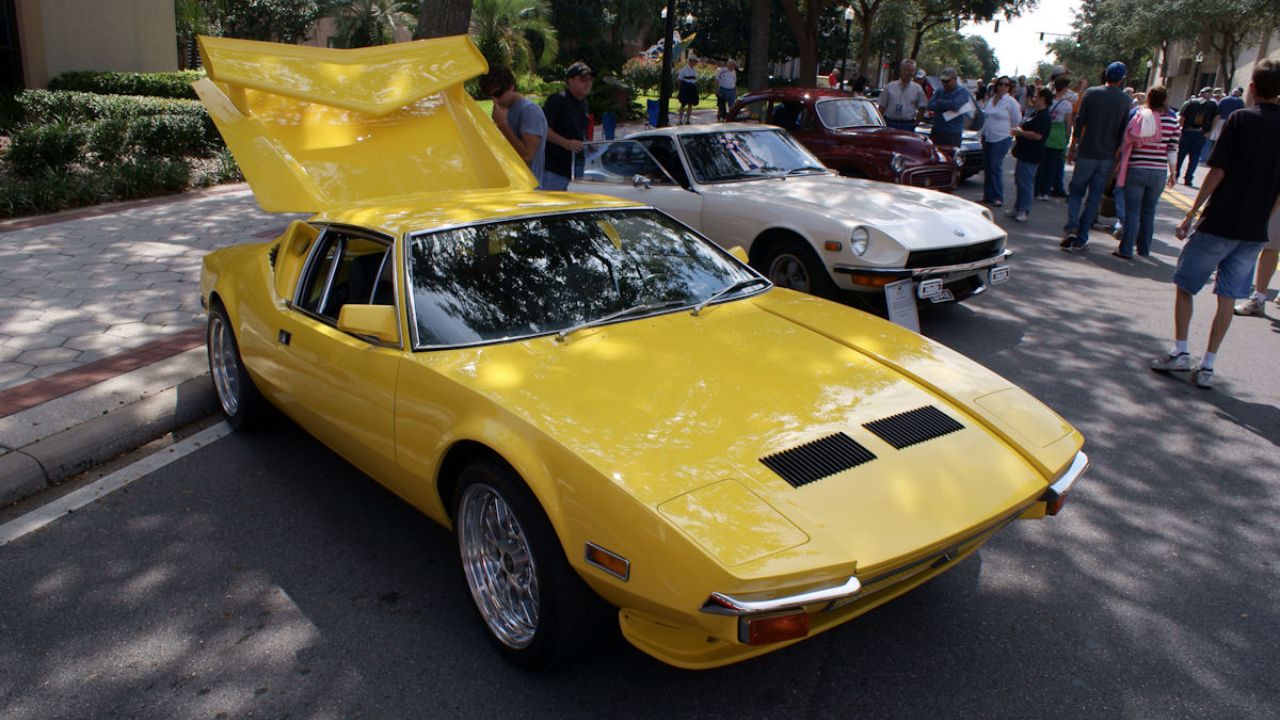
Italian supercar makers built their legends on mid-engine silhouettes, so America’s embrace of that layout carries symbolic weight in Modena. Designers there now face a delicate balance between honoring classic proportions and pushing futuristic experimentation. Styling chiefs protect signature cues like low noses, dramatic side intakes, and sculpted engine covers that showcase mechanical drama. At the same time, aerodynamic demands and cooling requirements force them to carve deeper channels and bolder vents into bodywork. Customers increasingly expect active aerodynamic elements that adjust wings and flaps for stability, efficiency, and track performance. Italian brands therefore integrate moving components carefully, preserving visual elegance while delivering measurable performance gains.
Interior artisans in Italy confront similar tensions, because digital interfaces risk overwhelming traditional craftsmanship. They integrate configurable screens and advanced connectivity while preserving hand-stitched leather, metal switchgear, and distinctive driving positions. Engineers package hybrid systems around mid-mounted engines, routing batteries and electric motors to maintain weight distribution and cabin space. That packaging challenge grows more complex as emissions rules tighten and performance expectations climb simultaneously. Italian executives publicly celebrate their heritage, yet privately acknowledge that American mid-engine cars reset expectations for usability and reliability. Their response blends nostalgia and innovation, using modern engineering to keep familiar silhouettes relevant in a crowded performance landscape.
German precision engineering targets everyday usability
German performance brands view America’s mid-engine push as validation of their long-standing focus on balanced handling and engineering rigor. Their response centers on everyday usability, because many buyers now demand supercar performance without traditional compromises. Engineers refine dual-clutch transmissions for smoother low-speed behavior, reducing the jerkiness that once plagued high-strung gearboxes. Suspension teams calibrate adaptive dampers to absorb rough pavement while preserving precise body control during aggressive driving. Interior specialists prioritize intuitive controls and clear instrumentation, avoiding overly complex menus that frustrate owners. Safety engineers integrate advanced driver assistance systems, arguing that supercar buyers deserve the same protection as luxury sedan customers.
German marketing departments highlight long-distance comfort and reliability, positioning their mid-engine offerings as practical choices for frequent use. They emphasize service networks, warranty coverage, and parts availability, areas where some exotic rivals historically struggled. Track-focused variants still appear, but they often share platforms with more civilized siblings that handle commuting duties. This dual-character approach resonates strongly with American buyers who want one car that covers multiple roles. As American mid-engine models improve refinement, German brands push further into technology leadership, including sophisticated stability systems and configurable driving modes. Their strategy treats mid-engine architecture as one tool among many, rather than a singular defining trait.
British boutique builders defend analog character
British low-volume manufacturers confront America’s mid-engine surge from a different angle, leaning on analog character and driver involvement. Their cars often prioritize lightweight construction, manual transmissions, and minimal electronic intervention. Engineers chase purity by reducing mass, simplifying interiors, and tuning suspensions for feedback rather than isolation. Designers favor compact footprints and simple surfaces, avoiding overly ornate styling that might age quickly. Customers attracted to these brands often value feel and engagement more than outright lap times. American mid-engine models therefore represent competition on price and performance, but not necessarily on philosophy.
These British builders still adapt selectively, because regulations and customer expectations evolve constantly. Some introduce limited driver aids and improved infotainment to satisfy safety rules and connectivity demands. Others experiment with hybrid assistance that preserves manual gearboxes while adding low-end torque and emissions benefits. They watch American mid-engine developments closely, particularly regarding materials and manufacturing techniques that could reduce costs. However, they resist copying mainstream approaches, preferring to occupy a niche where authenticity matters more than broad appeal. Their survival strategy depends on convincing enthusiasts that analog experiences deserve protection in a world increasingly dominated by digital performance.
Future supercars blend electrification with mid-engine heritage
Electrification now shapes every serious discussion about high performance, and mid-engine layouts must adapt to new packaging realities. Engineers experiment with placing battery packs along central tunnels or underfloors while keeping engines near the cabin. This configuration preserves familiar weight distribution while accommodating electric motors on front or rear axles. Hybrid systems allow supercars to deliver silent urban running and explosive acceleration on demand. Manufacturers also explore fully electric halo models that borrow visual cues from traditional mid-engine cars. These vehicles rely on clever software to simulate weight transfer and throttle response once governed by combustion engines.
Regulators worldwide tighten emissions and noise standards, so supercar makers treat electrification as necessity rather than optional experiment. American mid-engine pioneers now influence how brands integrate charging hardware, thermal management, and regenerative braking into performance platforms. Suppliers develop compact inverters, high-density batteries, and lightweight wiring looms tailored for extreme duty cycles. Designers face new challenges, since electric powertrains remove the visual drama of exposed engines and exhausts. They respond with illuminated elements, transparent panels, and sculpted battery housings that create fresh focal points. As these technologies mature, the distinction between American and European approaches may blur, leaving character and brand story as primary differentiators.